Hunting the Blue Range Primitive Area
Venturing into the Blue Range Primitive Area for a hunt isn't your average weekend jaunt; it's a commitment to a truly wild experience, where the land itself dictates the terms. Many hunters feel overwhelmed by the sheer scale and untamed nature of Arizona's wilderness, wondering if they're truly prepared for what lies beyond the trailhead. This guide is here to demystify hunting in the Blue Range Primitive Area, equipping you with the knowledge to plan, prepare, and execute a successful, ethical, and unforgettable backcountry hunt in this magnificent corner of Arizona.
Understanding the Blue Range Primitive Area's Unique Challenges
The Blue Range Primitive Area, often just called "the Blue Range" by those who know it, isn't just another chunk of public land. It's a vast, rugged expanse straddling the Arizona-New Mexico border, mostly within Arizona's Apache-Sitgreaves National Forests. What makes it "primitive" isn't just its remoteness, but its official designation, which means a few very important things for hunters. This isn't a place for casual exploration; it's where you go to shed the modern world and embrace true wilderness.
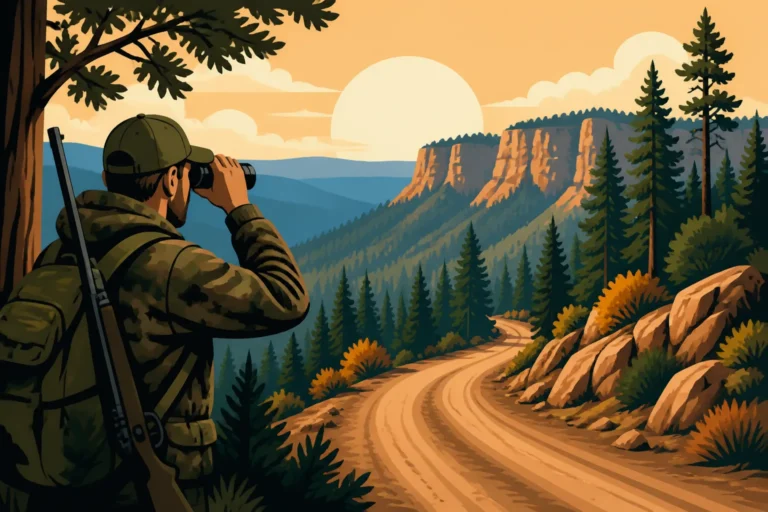
First, let's talk about the terrain itself. We're talking about deep canyons, towering ponderosa pine and mixed conifer forests, and elevations that can quickly climb and drop, sometimes by thousands of feet within a short distance. The Blue Range is defined by its dramatic topography, carved by centuries of water and wind. This isn't flat, open desert; it's a maze of ridges, draws, and steep slopes that demand respect and significant physical conditioning. The sheer scale can feel intimidating, and rightfully so. You'll find yourself questioning every route choice and every step, which is part of the experience.
The "primitive" designation means that motorized vehicles are generally prohibited beyond designated access roads on its periphery. There are no paved roads cutting through, no campgrounds with hookups, and very few maintained facilities of any kind within its core. Access is typically by foot or horseback, often on trails that range from well-defined to barely discernible. This immediately sets a Blue Range hunt apart from many others, requiring a full commitment to self-sufficiency and genuine backcountry skills. You won't find easy access to cell service, either, so don't count on instant communication if you run into trouble.
Essential Planning and Preparation for a Blue Range Hunt
Successfully hunting the Blue Range Primitive Area hinges almost entirely on meticulous planning and thorough preparation. This isn't a place you just show up to with a loose idea and a positive attitude; it demands forethought, skill, and the right gear. Many hunters underestimate the physical and logistical demands, leading to challenging situations, or worse, leaving their tag unfilled simply because they couldn't access prime areas or stay comfortable enough to hunt effectively.
Navigating the Remote Access Points
Accessing the Blue Range is often the first hurdle. There are typically only a handful of trailheads that serve as entry points, and even getting to these trailheads can be an adventure in itself, often requiring travel on rough, unpaved forest roads. These roads might be closed seasonally due to snow or heavy rains, so always check conditions before you go. Reading an Arizona Forest Service Road Map is absolutely vital here. You need to understand where the official trailheads are, what condition the access roads are in, and what the travel regulations are for those specific areas.
Once you leave your vehicle, you're on foot or horseback. This means your planning needs to include not just the hunt itself, but the journey into the hunting grounds. How far can you realistically hike or ride in a day with a full pack? What are your resupply options, if any, for a longer hunt? This is where tools like onX Hunt become invaluable. You can download offline maps to your phone, mark potential campsites, identify water sources, and most importantly, stay aware of your position relative to the primitive area boundaries and private land inholdings. Imagine being miles deep, thinking you're on public land, only to realize you've crossed onto a small private parcel due to outdated paper maps – onX Hunt can prevent that kind of headache.
Physical Conditioning and Backcountry Gear
I can't stress this enough: hunting the Blue Range is physically demanding. You'll be climbing steep grades, descending into canyons, and covering significant mileage, often off-trail, all while carrying a pack. If you're planning a multi-day trip, your pack will be heavy with gear, food, and water. Proper physical conditioning is not just about comfort; it's about safety and your ability to perform when that animal finally steps out. Start training months in advance. Think about Preparing Physically for a Desert Hunt, even though this is high country, the exertion level is comparable to a tough desert hunt.
Your gear list for the Blue Range will look a lot like a serious backpacking trip. Every item needs to earn its place in your pack. Lightweight shelter, a reliable water filter or purification tablets, a sturdy backpack, and high-quality, broken-in boots are non-negotiable. Temperatures can swing wildly, from warm days to freezing nights, sometimes in the same 24-hour period. Layering for Rim Country Temperature Swings is critical to staying comfortable and preventing hypothermia or overheating. Don't skimp on optics either; a good pair of binoculars and a spotting scope will be your best friends for picking apart distant hillsides.
Here's a quick comparison of gear considerations for a standard hunt versus a Blue Range Primitive Area hunt:
| Feature | Standard Vehicle-Accessible Hunt | Blue Range Primitive Area Hunt |
|---|---|---|
| Shelter | Truck camper, tent near vehicle, RV | Lightweight backpacking tent, tarp shelter |
| Water | Bottled water, refill at camp/vehicle | Water filter/purifier, collapsible bladders, knowledge of natural sources |
| Food | Cooler, fresh meals, cook stove | Lightweight dehydrated meals, compact stove, bear canister/bag |
| Navigation | Phone GPS, vehicle GPS, paper map | Redundant GPS (phone with offline maps like onX Hunt, dedicated GPS unit), compass, paper map |
| First Aid | Standard kit in vehicle, small personal kit | Comprehensive wilderness first aid kit, trauma essentials |
| Communication | Cell phone, FRS radios | Satellite messenger (Garmin InReach, Zoleo), two-way radios for partners |
| Packing Out Meat | Quartering at vehicle, ATV/truck access to retrieval | Lightweight game bags, pack frame, multi-day pack-out plan |
| Footwear | Sturdy hiking boots, camp shoes | Waterproof, supportive, broken-in backpacking boots, gaiters |
| Clothing | Layers for daily temps, backup sets | Merino wool/synthetic layers, rain gear, insulation for cold nights |
Food and Water Logistics
The Blue Range is vast and dry in many areas, even at higher elevations. While you might find seasonal springs or seeps, relying solely on these without prior knowledge or backup is a gamble. You must carry sufficient Water You Must Carry on a Day Hunt for your daily needs, and then some. For multi-day trips, a robust water filtration system is essential, along with a strategy for locating and confirming safe water sources. Water Sources That Concentrate Arizona Desert Game exist, but they can be few and far between, and heavily utilized by wildlife. This means finding them can be a boon for hunting, but also requires careful planning to ensure your own supply. Dehydrated meals are your friend here, reducing weight and bulk.
Hunting Tactics and Mindset for Primitive Areas
Hunting in a primitive area demands a different approach. You're not just looking for game; you're immersing yourself in an ecosystem where your presence is minimal, and the animals are truly wild. This is where patience, keen observation, and an understanding of animal behavior truly shine.
Mastering Navigation and Orientation
In country this rugged and remote, getting lost isn't just an inconvenience; it can be dangerous. Your navigation skills need to be sharp. Always carry a traditional map and compass as a backup to your digital devices. Learn to use them. While onX Hunt provides incredible detail for E-Scouting an Arizona Unit Before the Season and real-time location, batteries die, and technology can fail. A detailed paper map (waterproofed, of course) and the ability to orient yourself without electronics is a core wilderness skill. Mark your camp, mark your entry points, and always be aware of your escape routes.
Effective Hunting Strategies in Primitive Terrain
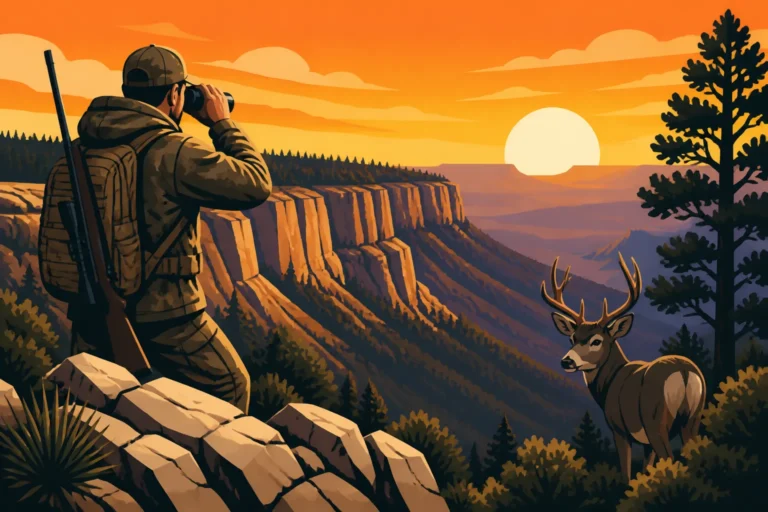
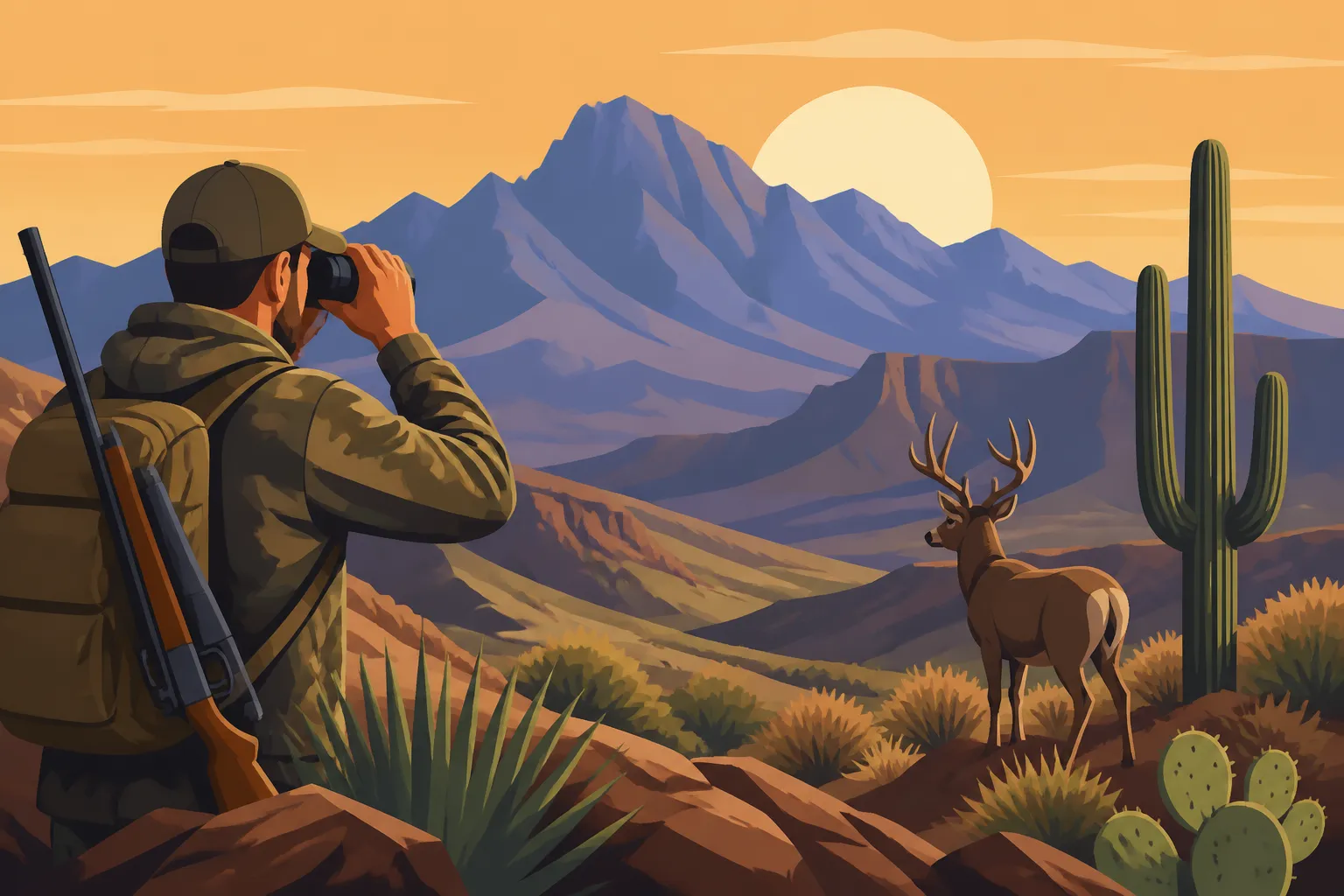
Spot-and-stalk is often the most effective method in the Blue Range, especially for species like elk and deer. The broken terrain offers countless opportunities to glass large areas from high vantage points, then plan a strategic approach. This requires top-tier optics and the patience to sit and glass for hours. Knowing your glassing grid and method is important. When you do spot an animal, the stalk itself will be physically demanding, often involving navigating steep slopes, thick timber, and rocky ground.
Still hunting through the dense timber and along the edges of clearings can also be productive, especially during the rut when animals are on the move. Move slowly, deliberately, and pay attention to the wind – it swirls unpredictably in these canyons. Calling can be effective for elk during the rut (think late September for Arizona Elk on the Mogollon Rim hunts), but be prepared for them to hang up in heavy cover, testing your patience and your ability to move quietly.
For species like Merriam's Turkey Through Arizona's High Country, listening for gobbles at dawn and then planning a strategic setup is key. For deer, both What Makes a Coues Deer Different (if you're at lower elevations) and Mule Deer Across Northern Arizona will utilize the diverse habitat, from the steep timbered slopes to the more open ridges. Scouting ahead of time, even virtually with satellite imagery, can help identify key bedding areas, travel corridors, and feeding grounds.
Species to Pursue and Season Considerations
The Blue Range Primitive Area is a true gem for big game hunters, offering opportunities for several highly sought-after species. Understanding their habits and the best times to pursue them is crucial.
Elk Hunting in the Wild Blue Range
Elk are arguably the most popular big game animal in the Blue Range. This area holds significant numbers of Rocky Mountain Elk, known for their impressive size. Early archery seasons, particularly in September, are prime for bugling activity, offering thrilling opportunities for close encounters. Rifle seasons later in the fall can be very challenging due to the vastness of the area and the elk's ability to disappear into the thickest timber. Successful elk hunts here often involve hiking deep into drainages and basins that see less pressure, or climbing to high ridges to glass remote feeding areas at dawn and dusk. Expect to work hard for every opportunity, and be prepared for a difficult pack-out if you connect.
Deer Hunting: Mule Deer and Coues Whitetail
Depending on the specific unit and elevation, the Blue Range can offer hunting for both mule deer and Coues whitetail. Mule deer tend to inhabit the higher, more timbered country, especially where there are openings and natural browse. They can be elusive, often holding tight in heavy cover. Spot-and-stalk is a favored tactic. Coues deer, known as the "gray ghost," are smaller and typically found in the lower, brushier elevations with oak brush and junipers. They are notorious for disappearing into thin air, and glassing is paramount. Early archery seasons for deer can be productive, as can late rifle seasons during their rut.
Black Bear and Mountain Lion Opportunities
Black bear are common in the Blue Range, especially in areas with abundant oak brush and berry bushes, which provide forage. Bear tags are often available over-the-counter (OTC) in specific units, though hunters must be aware of harvest limits and unit closures, which are often communicated through the Arizona Game and Fish Department website. Similarly, mountain lions roam throughout the area, though they are much harder to target specifically. Lion tags are also often OTC, but harvesting one usually requires hounds or a lucky encounter. These predators are an integral part of the ecosystem, and encountering one adds an extra layer of wildness to any hunt.
Merriam's Turkey
The high-elevation forests of the Blue Range are prime habitat for Merriam's turkey. Both spring and fall seasons offer opportunities. Spring turkey hunting involves listening for gobblers at first light and attempting to call them in. Fall hunts can be more challenging, often involving locating flocks and then breaking them up to call individual birds back in. The sheer beauty of a Merriam's turkey strutting through a sun-dappled ponderosa forest is an experience in itself.
In a place like the Blue Range, with its limited access and truly wild nature, services like GoHunt can be particularly useful for researching unit data, draw odds (if you're applying for a limited-entry elk or deer tag), and historical harvest success rates. Checking Arizona Draw Odds Before You Apply can help you determine the best units and seasons to focus your energy on for a primitive area experience.
Navigating the Challenges of a Blue Range Hunt
Even with the best preparation, the Blue Range Primitive Area will throw challenges your way. It's the nature of true wilderness, and learning to adapt is part of what makes these hunts so rewarding.
Weather Extremes and Unpredictable Conditions
Arizona's weather, even in the high country, can be incredibly volatile. Summer monsoons bring intense thunderstorms, flash floods, and lightning, which can make travel treacherous and turn dry washes into raging rivers. Fall can bring everything from warm, sunny days to sudden snowstorms. Being prepared for all conditions is not just smart; it's essential for survival. This means packing quality rain gear, extra insulation, and understanding how different weather patterns will affect game movement and your ability to hunt.
Dealing with Downed Game in Primitive Terrain
This is where the rubber truly meets the road. If you're fortunate enough to harvest an animal deep in the Blue Range, the real work begins. There's no vehicle access to aid in retrieval. Every ounce of meat, every piece of antler, has to be packed out on your back, or with the aid of pack stock if you've brought them. This process can take multiple trips and days, especially for a large elk. Knowing how to efficiently quarter an animal in the field, properly cool the meat in game bags, and load a pack frame are crucial skills. Consider bringing lightweight gambrels or rope to hang meat off the ground. This physically demanding task can be made easier with a hunting partner, so consider a group hunt for safety and efficiency. Packing an Elk Out of Rim Country Alone can be an monumental task, so don't underestimate it.
Respecting the Wilderness Ethic
Hunting in a primitive area demands the highest level of wilderness ethics. This means practicing Leave No Trace principles rigorously. Pack out everything you pack in, including all trash and spent casings. Minimize your impact on the land. Bury human waste properly. Respect wildlife and other users of the primitive area. The solitude and wildness of the Blue Range are its greatest assets, and it's up to every hunter to help preserve that.
Ultimately, a hunt in the Blue Range Primitive Area is more than just about filling a tag; it's about connecting with the wild, testing your limits, and experiencing Arizona's backcountry in its most raw form. It's tough, it's demanding, but for those willing to put in the effort, it offers an unparalleled adventure.
Disclaimer
This article is for general informational purposes only and does not constitute professional advice. Laws, prices and regulations vary by location and change over time. Consult a qualified professional for guidance on your specific situation.