Arizona Elk on the Mogollon Rim
There's nothing quite like the dream of an Arizona elk hunt, but for many, the reality of navigating vast public lands and understanding the behavior of these magnificent animals can feel overwhelming. The Mogollon Rim, with its towering Ponderosa pines and rugged canyons, holds some of the state's most coveted elk country, but unlocking its secrets requires careful planning and a deep dive into what makes this region tick. This comprehensive guide will equip you with the knowledge to approach hunting Arizona elk on the Mogollon Rim, from understanding their habitat to refining your tactics and preparing for the challenges ahead.
Understanding the Mogollon Rim Elk Habitat
The Mogollon Rim isn't just a geographical feature; it's a dynamic ecosystem that cradles some of Arizona's most robust elk populations. If you want to consistently find elk here, you need to think like an elk, and that starts with knowing their home turf intimately.
The Geography of the Rim
Imagine a giant, forested staircase cutting across central Arizona—that's the Mogollon Rim. This impressive escarpment, stretching for hundreds of miles, creates a dramatic transition zone from the lower desert to the high-elevation plateaus. You'll find yourself moving through dense Ponderosa pine forests, vast meadows, and deep, shadowed canyons carved by ancient waterways. It's a land of rolling hills interspersed with abrupt cliffs and basalt flows, creating countless pockets of cover and feeding grounds. This varied terrain means elk have everything they need: protection from the elements, diverse forage, and escape routes. The complex system of draws and drainages provides natural travel corridors and hidden bedding areas, making it crucial for hunters to study maps and understand the lay of the land before ever stepping foot in the woods.
The elevation changes dramatically as you move from the base to the top of the Rim, influencing everything from vegetation type to water availability. In the higher reaches, you'll encounter cooler temperatures and more consistent moisture, leading to lush grazing. As you descend into the canyons, the environment becomes drier, often characterized by juniper and piñon pine. Recognizing these shifts helps you pinpoint where elk might be during different times of the day or year. These natural transitions also create natural funnels and pinch points that savvy hunters can exploit.
Seasonal Elk Movements and Food Sources
Elk on the Mogollon Rim are creatures of habit, but those habits are heavily dictated by the seasons. In the warm summer months, you’ll often find them higher up on the plateau, taking advantage of the cooler temperatures and abundant green forage, like tender grasses and forbs. This is where they put on the bulk they need for the rut and the coming winter. As hunting seasons begin in the fall, particularly with the archery and early rifle hunts, you might still find them in these high-country havens, especially if consistent monsoon rains have kept the feed lush.
However, as winter approaches and snow begins to blanket the higher elevations, elk will start their migration to lower, more protected wintering grounds. These areas, typically on the southern slopes of the Rim or in deeper canyons, offer less snow and easier access to browse. Understanding these general seasonal shifts is absolutely critical for successful hunting. A good strategy involves scouting both high and low country to predict their movements, particularly if an early cold snap or heavy snow occurs. Don't forget that a lack of rainfall can also drastically alter patterns, concentrating elk around reliable water sources.
Water's Critical Role for Rim Elk
In a semi-arid state like Arizona, water is not just important; it's a lifeline for all wildlife, and elk are no exception. On the Mogollon Rim, you'll find a mix of natural springs, ephemeral creeks, and man-made stock tanks that serve as vital watering holes. During dry periods, especially in the early archery seasons or during a drought year, these water sources can act as magnets, drawing elk from miles around. Identifying consistent water sources on your map and then scouting them in person is often the first step in locating elk.
However, relying solely on static water sources can be a trap. Elk are smart, and they know where hunters congregate. While a stock tank might be a hot spot at dawn, mid-day, or dusk, elk might also prefer more secluded, less disturbed springs or seeps in thick timber during daylight hours. The key is to understand how water availability influences their travel routes and bedding areas. Knowing where they drink, you can often deduce their general path from bedding to feeding and back again. For a deeper dive into this critical element, check out this guide on Water Sources and Ethics in Arizona Desert Hunting.
Arizona Elk Seasons and Draw Odds on the Rim
Drawing an Arizona elk tag, particularly for the prime Mogollon Rim units, can feel like winning the lottery. It's a system that rewards patience and strategic application, but it also presents a steep learning curve for those new to the state.
Navigating Arizona's Elk Draw System
Arizona operates on a bonus point system designed to give loyal applicants a better chance over time. There are two main draw cycles annually. Elk and antelope applications are typically due in February, while deer, sheep, and bison are in June. For a detailed breakdown, you'll want to review Arizona Runs Two Draw Cycles, February and June. The difficulty of drawing a quality elk tag on the Rim cannot be overstated; some hunts take well over a decade's worth of points for residents, and even longer for nonresidents. Nonresidents are capped at 10% of total tags issued, making their odds even slimmer.
Understanding how the bonus point system works is paramount. You earn a point for every year you apply and are unsuccessful. These points essentially increase your chances in the draw. Arizona uses a "Bonus Point Pass" system where a percentage of tags (the first 20%) are allocated based purely on who has the most points, after which the remaining tags are distributed in a random draw. Even if you don't plan to hunt every year, applying for a bonus point is a smart move to build preference over time. Keep an eye on the official Arizona Game and Fish Department (AZGFD) website for specific deadlines; The Arizona Elk Application Deadline Date is usually in early to mid-February.
Archery, Muzzleloader, and Rifle Opportunities
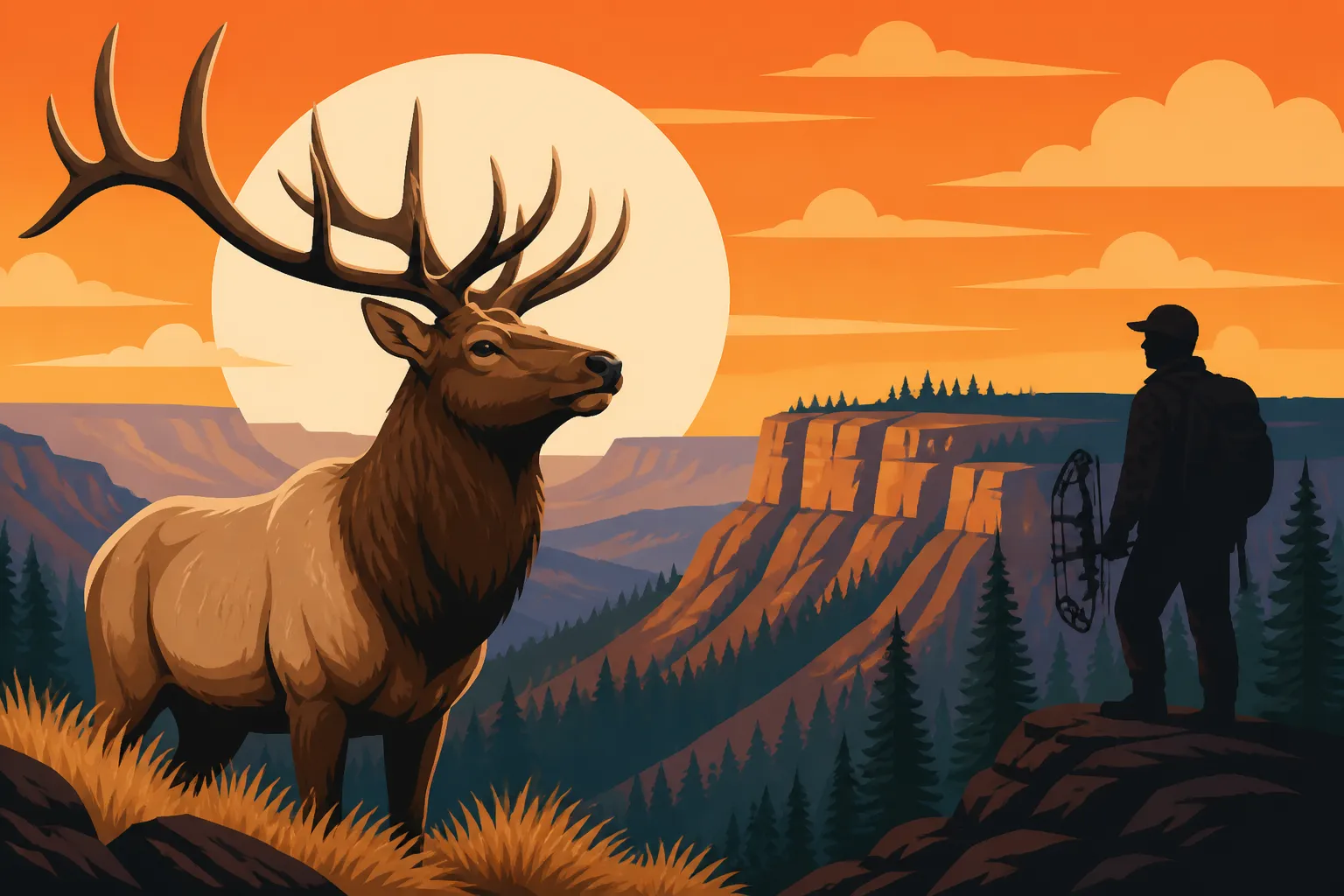
The Mogollon Rim offers diverse hunting opportunities depending on your weapon of choice, each with its own charm and challenge. Archery seasons often coincide with the early phases of the rut in September, providing a thrilling chance to call in bugling bulls. This requires extreme patience, stealth, and a commitment to getting within bow range. Success rates can be lower, but the experience of being in the woods with screaming elk is unparalleled.
Muzzleloader seasons typically follow, often hitting the tail end of the rut or early post-rut periods. These hunts can offer a blend of calling opportunities and more traditional spot-and-stalk tactics. While muzzleloaders have limited range compared to modern rifles, the challenge and primitive weapon aspect add a unique dimension to the hunt. Rifle seasons are generally later in the fall, often after the peak rut. These hunts usually boast higher success rates due to the weapon's range and the colder weather that can concentrate elk, but they also tend to be more crowded. Each weapon type brings a different dynamic to the hunt, and your choice should align with your hunting style and expectations. For a complete overview of season timing and specific hunt codes, reference Arizona Elk Season Structure by Hunt Code.
Over-the-Counter Options and Leftover Tags
When it comes to elk on the Mogollon Rim, "over-the-counter" (OTC) tags are virtually non-existent for prime hunts. Unlike deer or javelina, Arizona's elk populations are carefully managed through the draw system to maintain herd health and quality. Any general OTC elk tags available are usually for very specific, often undesirable, units or seasons that have extremely low harvest potential or are aimed at depredation control in agricultural areas, not the high country of the Rim.
Leftover tags are equally rare for quality elk hunts. After the draw, any tags not issued or accepted are sold on a first-come, first-served basis. However, for desirable units like those on the Mogollon Rim, these tags are snatched up in minutes, if not seconds, by those with fast internet connections and a dedicated plan. It's a long shot at best. Therefore, for serious elk hunting on the Rim, the primary and almost exclusive pathway is through the draw. Focus your efforts on understanding the bonus point system and applying strategically year after year. To learn more about this frantic process, consult Arizona Leftover Tag Sales After the Draw.
Proven Tactics for Mogollon Rim Elk
Hunting elk on the Mogollon Rim is a chess match against a magnificent, intelligent animal in rugged terrain. It requires a blend of patient observation, strategic movement, and sometimes, the right vocalizations.
Glassing and Locating Bulls
In many parts of the Mogollon Rim, especially where the terrain opens up into vast meadows or offers expansive views into canyons, glassing is your most powerful tool. This isn't just a casual glance through binoculars; it's a dedicated, systematic approach to covering ground with your optics. You'll want quality binoculars (10×42 or 12×50 are common choices) and a reliable spotting scope mounted on a sturdy tripod. From a high vantage point, systematically break down the landscape into grids, slowly scanning for movement, the tell-tale glint of an antler, or a patch of hide among the trees. Early morning and late evening are prime times, as elk move from bedding to feeding areas.
The key is patience. Set up your glassing station before first light and commit to hours of scanning. Pay close attention to shaded areas, the edges of timber, and around water sources. Many elk are found not by seeing the whole animal, but by catching a small, subtle detail. It's a skill that improves with practice, but it's essential for covering vast amounts of ground efficiently. For tips on maximizing your optical advantage, check out Optics Power for Arizona's Long Desert Sightlines. You might also find techniques from Glassing Grids for Arizona Coues Deer applicable, even though it's for a different species, the core principles of systematic glassing remain the same.
Calling During the Rut
When the elk rut ignites on the Mogollon Rim, the forests come alive with bugles, and calling becomes an incredibly effective tactic. However, successful calling isn't just about making noise; it's about understanding the language of elk and adapting to their mood. Locator bugles are great for pinpointing where bulls are, especially at dawn, but once you're close, a more nuanced approach is needed. Aggressive challenge bugles can draw in dominant bulls looking for a fight, but use them sparingly; too much, too soon, can push wary animals away.
Cow calls and mews are often more effective, especially for drawing in less dominant bulls or stopping a bull that’s on the move. A two-hunter calling setup can be incredibly deadly: one caller stays back, imitating a hot cow or satellite bull, while the shooter moves forward, ready for the bull to come in to the call. This mimics a real-life scenario and gives the bull a target to focus on that isn't the hunter. Always play the wind, and be ready for an elk to come in silently. If you want to delve deeper into the art of calling these magnificent creatures, the insights from Calling Bulls on Arizona's Mogollon Rim are invaluable, and you can also learn specific strategies for Bugling Against Cow Calling in September.
Still Hunting and Stalking Timbered Areas
While glassing is excellent for open country, a significant portion of the Mogollon Rim is covered in dense Ponderosa pine and mixed conifer forests where visibility is limited. Here, still hunting and stalking become the primary tactics. Still hunting involves moving incredibly slowly, taking only a few steps at a time, and then pausing for extended periods to scan, listen, and simply be in the woods. Your senses become your best allies. Listen for the snap of a twig, the rustle of leaves, or the distant sound of an elk chewing.
Always move into the wind or crosswind to prevent your scent from reaching the elk. Focus on areas with good cover, game trails, and natural funnels. Look for fresh tracks, droppings, and rubs—these are all clues that elk are or have recently been in the area. When you spot an elk, use terrain features and vegetation to close the distance silently, moving only when the animal's head is down or obscured. It's a demanding, slow-motion dance that requires immense patience and attention to detail.
Essential Gear and Preparation for a Rim Elk Hunt
A successful elk hunt on the Mogollon Rim is as much about preparation as it is about execution. The ruggedness of the terrain and the unpredictable Arizona weather demand careful consideration of your physical state and your equipment.
Physical Conditioning and Mental Toughness
Hunting elk on the Mogollon Rim is no walk in the park; it's a physically demanding endeavor that will test your limits. You'll be climbing steep grades, descending into deep canyons, and covering miles over uneven, rocky ground, often at elevations where the air is thinner. This isn't the place to show up out of shape. Start a rigorous training regimen months in advance, focusing on cardiovascular endurance (hiking with a weighted pack, running, stair climbing) and strength training, especially for your legs and core. Don't forget to practice hiking in the boots you plan to wear.
Beyond the physical, mental toughness is crucial. Elk hunting often involves early mornings, long days, unexpected challenges, and the potential for setbacks. There will be frustrating days when you don't see an elk, or when a stalk goes sideways. The ability to stay positive, remain focused, and push through discomfort is just as important as your physical conditioning. A strong mind can often compensate when the body starts to falter. If you want to dive into preparing your body for the rigors of a hunt, read Preparing Physically for a Desert Hunt, which offers principles that extend to all Arizona hunting scenarios.
Optics, Pack Systems, and Navigation Tools
Your gear can make or break a Mogollon Rim elk hunt. We’ve already touched on optics, but it’s worth reiterating: invest in the best binoculars and spotting scope you can afford. They are your eyes in the vast landscape. Beyond optics, a robust pack system is non-negotiable. You’ll need a comfortable daypack for essentials like water, snacks, extra layers, and first-aid, but also consider a dedicated pack frame or a larger pack with a meat shelf for packing out an animal. Make sure it fits well and is capable of carrying heavy loads.
Navigation is equally critical. While cellular service is spotty at best on the Rim, a reliable GPS unit or a robust mapping app on your phone (like the one offered by GoHunt) is essential. Download offline maps of your hunting unit well in advance. Carry a compass and a physical map as a backup, and know how to use them. The Mogollon Rim's dense timber and complex drainages can easily disorient you, so don't leave navigation to chance. GoHunt's mapping features, in particular, can be invaluable for pinpointing water sources, identifying public vs. private land boundaries, and marking crucial waypoints like potential bedding areas or game trails.
Weather Readiness and Camp Logistics
The weather on the Mogollon Rim can be famously unpredictable, even within a single day. You might start your morning in freezing temperatures, experience warm, sunny conditions by midday, and then be caught in a sudden monsoon thunderstorm or snow flurry in the afternoon. Layering is key: wear moisture-wicking base layers, insulating mid-layers, and a waterproof/windproof outer shell. Always pack extra warm layers, even if the forecast looks mild. For a comprehensive guide on staying comfortable, refer to Layering for Rim Country Temperature Swings.
If you're planning a multi-day backcountry hunt, your camp logistics need to be dialed in. A sturdy, reliable tent that can withstand wind and rain is essential. Plan your food carefully, prioritizing lightweight, calorie-dense options. Water filtration or purification systems are crucial, as carrying all your water is rarely feasible. Think about hygiene, waste disposal, and how to safely store food away from bears and other critters. A well-planned camp allows you to focus on the hunt, not on struggling with discomfort or logistical nightmares.
Post-Harvest Considerations and Ethical Hunting
The moment you harvest an elk on the Mogollon Rim is a culmination of hard work, but it’s also the beginning of an entirely new set of challenges and responsibilities. Being prepared for these post-harvest steps is a critical part of ethical hunting.
Field Dressing and Meat Care in the Field
Elk are large animals, and proper field dressing is paramount to preserving the meat, especially in Arizona's often-warm conditions, even in the high country. As soon as the animal is down, begin the field dressing process. This involves quickly removing the internal organs to allow the carcass to cool. The goal is to get as much heat out of the animal as possible, as rapidly as possible. Even in cooler fall temperatures, heat trapped within the muscle mass can spoil meat surprisingly fast.
Once field dressed, quartering the animal and getting the meat into breathable game bags is the next crucial step. Hang the quarters in a shaded, well-ventilated spot to continue cooling if you can. If you're on an early season hunt, or if temperatures are unusually warm, every minute counts. Having a plan for this phase is non-negotiable. For excellent advice on keeping your hard-earned meat fresh, look at Getting Meat Cooled on an Early Season Hunt.
Packing Out Your Elk
This is where the physical conditioning and mental toughness truly come into play. Packing out an elk from the rugged terrain of the Mogollon Rim can be one of the most physically demanding tasks a hunter will ever face. It's often multiple trips, carrying heavy, awkward loads over steep, uneven ground. Breaking the elk down into manageable quarters (and boning out if necessary to reduce weight) is essential. A good quality pack frame is invaluable here.
Consider how far you are from the nearest accessible road. If you're deep in a wilderness area, you might be looking at miles of packing. In some cases, if allowed and practical, hiring a pack out service with horses or mules can save your body, but it’s an expense to budget for. Always make sure you have enough water for yourself and your hunting partners during this arduous process. For strategies on tackling this monumental task, Packing an Elk Out of Rim Country Alone offers solid insights.
Reporting Requirements and Ethical Practices
Arizona has mandatory reporting requirements for harvested big game animals, including elk. After you successfully harvest an elk, you are typically required to contact AZGFD within a specific timeframe, often 24 to 48 hours, to report your kill. This allows the department to collect vital data for herd management. Make sure you understand these requirements before you head into the field, as failure to comply can result in citations.
Beyond the regulations, ethical hunting practices are the cornerstone of our tradition. This means ensuring a quick, clean kill through proper shot placement, making every effort to recover a wounded animal, and respecting the land by leaving no trace behind. It also involves respecting other hunters and non-hunters you may encounter on public land. The privilege of hunting Arizona elk on the Mogollon Rim comes with the responsibility to uphold the highest standards of ethics and sportsmanship. Taking the time to understand principles from a resource like The Ethically Hunting Arizona Course Explained can reinforce these important values.
Mogollon Rim Elk Hunting Seasons at a Glance
Navigating the various elk hunting seasons on Arizona's Mogollon Rim can be complex due to the draw system and specific hunt codes. Here's a simplified overview comparing the typical characteristics of each weapon type.
| Season Type | Typical Timing | Pros | Cons | Success Rate (General) | Physical Demand |
|---|---|---|---|---|---|
| Archery | September (Peak Rut) | Thrilling rut action, calling opportunities, less pressure (early) | Demanding close-range stalks, lower success odds | Moderate-Low | High |
| Muzzleloader | Late September – October | Good rut/post-rut potential, unique primitive weapon challenge | Limited range, can be variable weather, moderate pressure | Moderate | High |
| Early Rifle | October (Post-Rut) | High success potential, good weather (often) | Very high competition for tags, can be crowded | High | Moderate-High |
| Late Rifle | November – December | Good for finding concentrated elk in colder weather, less rut focus | Colder weather, potential for snow, elk may be less vocal | Moderate-High | Moderate |
Disclaimer
Please note that hunting regulations, seasons, and draw processes can change. Always consult the most current Arizona Game and Fish Department regulations booklet and official website for the definitive and up-to-date information before planning any hunt. This guide is for informational purposes only and should not be considered a substitute for official sources.