White Mountains Elk Country
For many Arizona hunters, the White Mountains represent the pinnacle of elk hunting, a true test of grit and skill in stunning high-country terrain. Getting a coveted tag, let alone finding a bull, in this sought-after region can feel like a daunting task. This guide aims to demystify hunting in Arizona's White Mountains, offering insights into the landscape, elk behavior, and effective strategies to help you pursue these majestic animals.
The Unique Geography and Habitat of White Mountains Elk Country
The White Mountains of eastern Arizona are a striking contrast to the Sonoran Desert. Here, high-elevation forests, alpine meadows, and volcanic formations create an ideal environment for elk. This region, encompassing vast stretches of the Apache-Sitgreaves National Forests and the Fort Apache Indian Reservation, offers diverse habitats that support a thriving elk population, drawing hunters from across the country. Understanding these geographical nuances is paramount to successful hunting.
Elevation and Terrain Features Defining Elk Habitat
The White Mountains boast elevations ranging from around 6,000 feet in the lower valleys to over 11,000 feet at Mount Baldy. This dramatic elevation change creates varied terrain, from gently rolling timbered hillsides to steep, rugged canyons and sprawling plateaus. Elk here are master navigators of this diverse landscape. They'll utilize the dense stands of ponderosa pine and mixed conifer forests for bedding and security cover during daylight hours, often dropping into the cooler, deeper canyons as hunting pressure increases. The highest elevations, often above timberline, are less frequently used by elk except for transitory movements or during specific seasons, while the extensive road systems, particularly within the Apache-Sitgreaves National Forest, offer hunters access deep into these areas.
Understanding how the elevation dictates vegetation, and in turn, elk movement, is a critical piece of the puzzle. Higher elevations often hold snow longer, delaying spring green-up but providing crucial moisture through the dry summer months. Elk will often follow these green-ups. Conversely, lower elevation foothills, while not traditionally "White Mountain" elk habitat, can hold transitional animals or provide early-season opportunities if hunters are willing to explore the fringes of what's considered prime country. This is a far cry from the Glassing Arizona's Sky Islands for Coues Deer, where different terrain demands different approaches.
Vegetation Zones and Vital Water Sources
The White Mountains are characterized by several distinct vegetation zones that contribute to their rich biodiversity and support robust elk populations. At lower elevations, you'll find pinyon-juniper woodlands and open grasslands, gradually transitioning into vast ponderosa pine forests, often interspersed with Gambel oak and aspen groves. As you climb higher, the landscape shifts to mixed conifer forests featuring Douglas fir, white fir, and Engelmann spruce, eventually giving way to alpine meadows and sparse tundra at the highest peaks. These varied zones provide different forage at different times of the year, with elk moving between them based on food availability, weather, and pressure.
Water is an equally vital, if not more critical, resource, especially in the often-arid Arizona landscape. The White Mountains are blessed with numerous natural springs, seeps, perennial streams like the Little Colorado River, and many stock tanks and man-made water catchments. These water sources act as magnets for elk, particularly during dry spells or early archery seasons when temperatures can still be high. Concentrating your scouting efforts around these water holes can be incredibly effective, but it's important to be aware of Water Sources and Ethics in Arizona Desert Hunting as they apply to these areas. Elk will often bed within a mile or two of a reliable water source, making these areas prime for morning and evening ambushes or for tracking.
The Impact of Wildfire on Elk Habitat
Wildfire is a natural, albeit sometimes devastating, part of the White Mountains ecosystem. While large-scale fires can initially displace wildlife and alter landscapes, they often create nutrient-rich new growth that significantly benefits elk and other grazers in the long run. After a burn, sunlight can reach the forest floor, stimulating the growth of forbs, grasses, and young aspen, all highly palatable to elk. These areas can become prime feeding grounds within a few years of a fire.
However, hunting in burn scars requires a different approach. The lack of dense canopy means less shade, making midday hunting challenging, particularly during warmer early seasons. Visibility is often improved, which can be a blessing for glassing but also makes stealth more difficult. Elk will adapt, using remaining pockets of timber or moving into adjacent unburnt areas for security. Hunters need to research recent fire maps and understand how elk might be using these regenerating landscapes. The mosaic of burnt and unburnt areas can create new travel corridors and bedding sites that didn't exist before, offering unique opportunities for observant hunters.
Elk Behavior and Seasonal Patterns in the White Mountains
Understanding the annual cycle of elk in the White Mountains is essential for predicting their movements and maximizing your hunting success. Elk are creatures of habit, but their patterns are heavily influenced by the season, weather, available forage, and hunting pressure. Their behavior changes dramatically from the quiet anticipation of early archery to the full-blown chaos of the rut and the challenges of late-season hunts.
Understanding the Rut Timing for Optimal Hunting
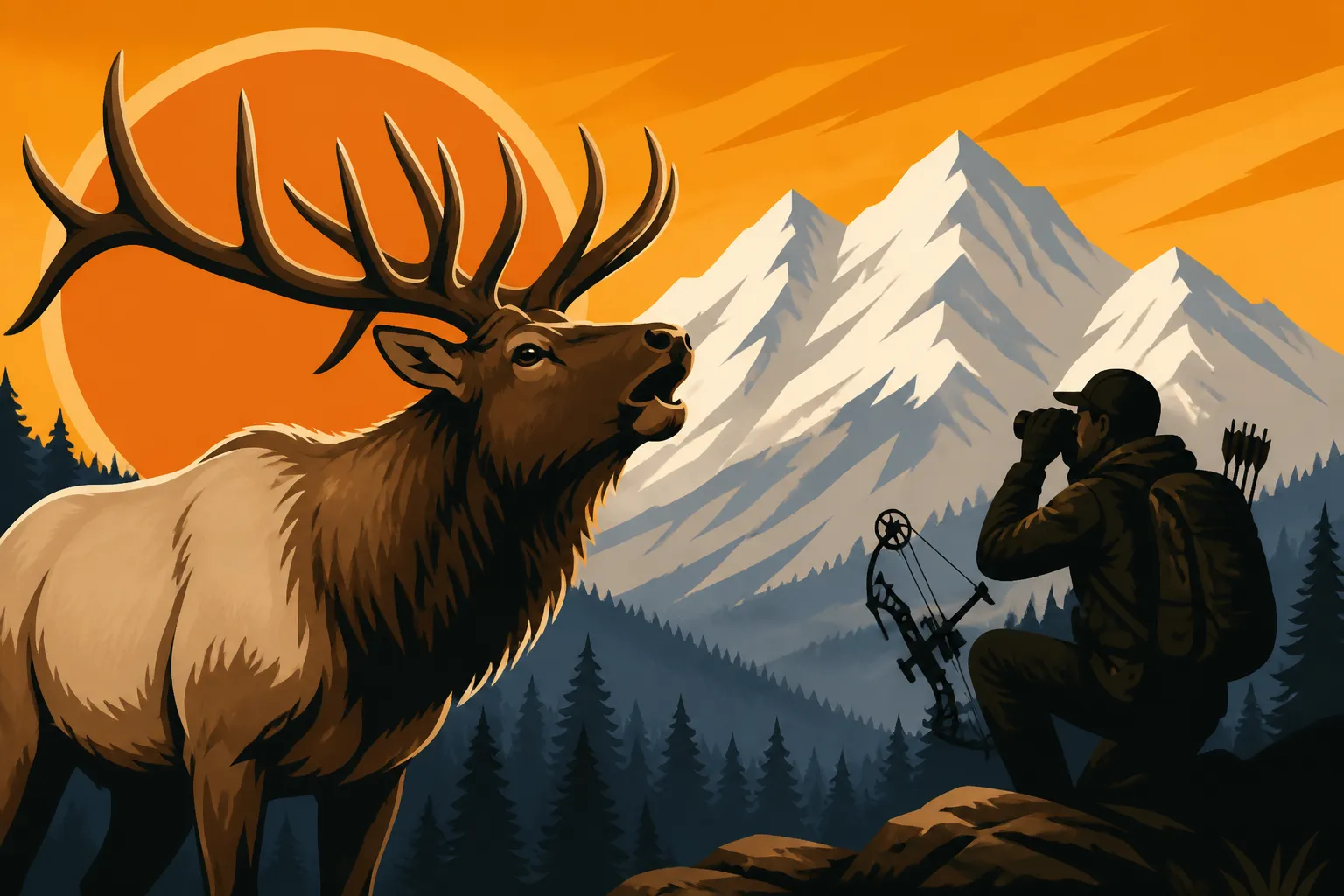
The elk rut in the White Mountains typically peaks from mid-September into early October, aligning with many of the coveted archery and muzzleloader seasons. This is when bull elk are at their most vocal and active, bugling across the mountains in search of cows and challenging rival bulls. For many, this is the most exciting time to hunt, as the sounds of bugling bulls echo through the timber. However, predicting the exact peak of the rut can be tricky; it's influenced by factors like moon phase, temperature, and individual herd dynamics.
During the rut, bulls become less cautious, often exposing themselves more readily as they chase cows or engage in sparring matches. This heightened activity makes calling techniques incredibly effective. Hunters can use a variety of calls—bugles, cow calls, and even social mews—to locate and draw in bulls. However, as the season progresses and bulls become "call-shy" from continuous hunter interaction, more subtle strategies might be necessary. Knowing When the Elk Rut Peaks on the Rim can provide a good general guide, but local conditions in the White Mountains might vary slightly.
Migration and Wintering Habits
As temperatures drop and snow begins to accumulate in the high country, White Mountains elk undertake seasonal migrations to lower elevations where forage is more accessible and snow depths are less severe. These wintering grounds are typically in the pinyon-juniper woodlands or lower ponderosa stands on south-facing slopes, which receive more sunlight and melt snow faster. This migration often isn't a single, dramatic movement but a gradual shift as weather dictates.
For hunters, understanding these migratory corridors and wintering areas can be crucial for late-season rifle hunts. Elk will often use the same travel routes year after year, especially if they offer good cover and easy passage. Scouting these transitional zones before the season can reveal pinch points, saddles, and benches where elk pause during their descent. These movements are critical for population health, allowing the high country to recover and providing relief from harsh winter conditions. While you won't be hunting these deep wintering grounds directly during primary seasons, knowing where the elk go helps predict their general direction of travel as seasons change.
Year-Round Elk Activity and Pressure Influence
Even outside of the rut and migration, elk in the White Mountains maintain daily and seasonal routines influenced by their environment. During the spring and summer, they are focused on feeding and growing, often in higher elevation meadows and open timber where succulent grasses and forbs are plentiful. Calving occurs in late spring to early summer, and cows will be protective of their calves, often forming smaller, nursery herds. Bulls, after shedding their antlers in late winter, grow new racks throughout spring and summer, often forming bachelor groups in remote, undisturbed areas.
Hunting pressure, both during and outside of legal seasons (from shed hunters, hikers, etc.), significantly impacts elk behavior. Heavily pressured elk quickly become nocturnal or seek refuge in the thickest, most inaccessible timber and wilderness areas. This is why thorough preseason scouting is invaluable. Using mapping tools, like those found on GoHunt, to identify areas with limited access or challenging terrain can reveal sanctuaries where elk might retreat once hunting season opens. Knowing that you might be dealing with Calling Bulls That Have Heard It All on public land underscores the need for diverse strategies and stealth.
Key Hunting Units and Access Considerations in the White Mountains
The White Mountains region encompasses several highly sought-after elk hunting units in Arizona, each with its own characteristics, draw odds, and challenges. These units are managed by the Arizona Game and Fish Department (AZGFD) and offer varying levels of public access, from extensive road systems to rugged wilderness. Researching these units thoroughly is a critical first step for any hunter.
Top Units Known for Elk Hunting
When people talk about White Mountains elk hunting, several units immediately come to mind for their reputation for quality bulls and healthy populations. Unit 1, Unit 27, and Unit 3C are consistently mentioned as prime elk country. Unit 1, often considered one of Arizona's premier units, boasts vast tracts of ponderosa and mixed conifer forests and is known for producing trophy-class bulls. Access here is generally good, with a network of Forest Service roads, but it also has substantial wilderness components that hold unpressured elk.
Unit 27, further south, offers incredibly rugged terrain in its wilderness areas, particularly the Blue Range Primitive Area, requiring significant physical effort but rewarding solitude and big bulls. Unit 3C, while experiencing more pressure due to its proximity to population centers, still offers excellent hunting opportunities, especially for those willing to get away from the roads. Each unit presents a unique blend of habitat and challenges. Using resources like GoHunt can provide detailed draw odds, harvest statistics, and unit-specific reports that help hunters make informed decisions on where to apply for Arizona Elk Season Structure by Hunt Code.
| Unit Number | Primary Habitat | Typical Terrain | Main Access Points | Notable Features |
|---|---|---|---|---|
| Unit 1 | Ponderosa, Mixed Conifer | Rolling hills, deep canyons | Forest roads, wilderness | High trophy potential, large area |
| Unit 27 | Mixed Conifer, Pinyon-Juniper | Very rugged, steep canyons | Limited road access, vast wilderness | Physically demanding, remote |
| Unit 3C | Ponderosa, Aspen, Grasslands | Rolling hills, some canyons | Extensive road system, private land mix | Good populations, higher pressure |
Public Land Access and Road Systems
The vast majority of the White Mountains elk country lies within the Apache-Sitgreaves National Forests, providing excellent public land access for hunters. This means millions of acres are open for hunting with a valid Arizona hunting license and tag. The Forest Service maintains an extensive network of roads, ranging from well-graded gravel roads suitable for two-wheel drive vehicles to rugged, rocky tracks requiring high-clearance 4x4s. These roads are your primary means of accessing hunting areas, but they also bring with them increased pressure near their vicinity.
It's crucial to obtain current Forest Service Motor Vehicle Use Maps (MVUMs) for the specific unit you plan to hunt. These maps clearly delineate which roads are open, which are closed seasonally or permanently, and which are designated for specific types of use. Veering off designated roads can lead to hefty fines and habitat damage. Hunters often find the most success by getting away from the main thoroughfares, even if it means hiking a few miles from the nearest legal parking spot. Understanding Motorized Travel Rules on Arizona Public Land is not just about compliance, but also about effective hunting strategy.
Wilderness Area Considerations
Several wilderness areas are found within the White Mountains, most notably the Mount Baldy Wilderness, Blue Range Primitive Area, and parts of the Bear Wallow Wilderness. These areas offer a truly wild and challenging hunting experience, characterized by a lack of motorized access, few developed trails, and an abundance of rugged terrain. For those seeking solitude and the chance at a truly unpressured bull, wilderness areas can be golden. However, they demand significant physical conditioning, excellent navigation skills, and a willingness to pack out an animal over many miles.
Hunting in a wilderness area means packing in everything you need on your back or with pack animals, and the same goes for packing out your game. This is where physical preparation becomes non-negotiable, and understanding Packing an Elk Out of Rim Country Alone provides a glimpse into the demands. Special regulations often apply in wilderness areas, such as prohibitions on mechanized equipment (including game carts) and restrictions on group sizes or camping. Always check the specific regulations for the wilderness area you intend to hunt, as they are designed to preserve the wild character of these irreplaceable landscapes.
Strategies for Hunting Elk in the White Mountains
Hunting elk in the White Mountains requires a blend of patience, persistence, and a willingness to adapt your strategy to the conditions and the elk's behavior. It's a game of chess, not checkers, where understanding the landscape and the animal you're pursuing gives you the edge. From glassing vast landscapes to mastering the nuances of elk vocalizations, success often comes down to precise execution and deep knowledge.
Glassing and Locating Elk from Afar
For many seasoned elk hunters in the White Mountains, the day begins long before sunrise, with binoculars and spotting scopes pointed at distant hillsides. Glassing is an incredibly effective strategy, especially in units with open parks, meadows, or burn scars that offer expansive views. Instead of blindly walking through the woods, an efficient hunter will find a high vantage point—a ridge, a knob, or a specific overlook—and methodically pick apart the opposite slopes for signs of elk. This involves slowly scanning for horizontal lines that don't belong, the flick of an ear, or the glint of an antler in the first light.
High-quality optics are not a luxury here; they are a necessity. A good pair of 10x or 12x binoculars on a tripod, complemented by a powerful spotting scope (20-60x or even 27-80x), will save you countless miles of walking and significantly increase your chances of locating elk. Patience is key when glassing; spend at least 30-45 minutes thoroughly examining a single area before moving your optics to the next. Elk often move into feeding areas at first light and then bed down in shaded timber as the sun climbs higher. Knowing where they're likely to feed and where they'll seek cover helps narrow your search. This is similar to Why Arizona Coues Hunting Is a Glassing Game, just on a grander scale.
Calling Techniques for Pressured Bulls
The White Mountains are a popular destination for elk hunters, meaning bulls often hear a lot of calling pressure, especially during the archery and early muzzleloader seasons. While aggressive bugling can work, especially early in the rut, pressured bulls often become wary and might "hang up" out of sight, unwilling to commit. Therefore, a nuanced approach to calling is often more effective. This might involve using softer, more realistic cow and calf mews to pique their curiosity, or subtle bugles to challenge a bull without being overly aggressive.
Sometimes, the most effective strategy is a "silent approach" with calling only used to locate a bull, and then a quiet stalk initiated. Other times, a two-person calling setup can be devastatingly effective, with one caller acting as the primary aggressor or cow, and the shooter positioned silently forward, ready for the bull to commit. Learning to read a bull's responses is paramount: is he coming in aggressively? Is he circling downwind? Or is he simply answering from a distance without moving? Adapt your calling based on his reaction. Mastering various calls and knowing when not to call is a skill that comes with experience.
Still Hunting and Tracking in Dense Timber
When elk aren't vocal, or when they've been pushed into thick timber due to pressure, still hunting and tracking become invaluable tactics. Still hunting involves moving through the woods incredibly slowly and deliberately, pausing frequently (often for 5-10 minutes or more) to scan your surroundings, listen for subtle sounds, and use your binoculars to pick apart the shadows. This is a game of extreme patience and quiet movement. The goal is to spot the elk before it spots you, often catching them bedded or slowly feeding in their security cover.
Tracking takes still hunting a step further, focusing on following fresh sign—tracks, droppings, rubs, and beds—to determine the elk's direction of travel and recent activity. In the White Mountains' diverse terrain, especially after a rain or in soft dirt, tracking can be highly productive. Look for consistent, fresh tracks, paying attention to the stride length and depth of impressions to gauge the size and age of the animal. When you pick up fresh tracks, slow down, hunt into the wind, and assume the elk is just ahead. This method requires a keen eye for detail and the ability to interpret subtle signs left behind by moving animals, helping you to move quietly on Terrain That Hides an Approach in Desert Country.
Challenges and Considerations for White Mountains Elk Hunters
Hunting elk in the White Mountains is an incredibly rewarding experience, but it’s far from easy. The terrain is demanding, the weather can be unpredictable, and the elk themselves are cunning and adapt quickly to pressure. Addressing these challenges head-on with thorough preparation and realistic expectations is key to a safe and successful hunt.
Weather Extremes and Proper Preparation
The White Mountains are famous for their dramatic weather swings, sometimes within a single day. Early season hunts (late August, early September) can see scorching daytime temperatures reaching into the 80s or even 90s degrees Fahrenheit, only to drop into the 40s or 30s overnight. Monsoon thunderstorms are common in July and August, bringing heavy rains, lightning, and flash floods that can make roads impassable. Conversely, late-season hunts can be characterized by significant snowfalls, freezing temperatures, and icy conditions that drastically alter elk movement and access.
Proper layering of clothing is essential for any hunt here. Start with a good wicking base layer, add insulating layers like fleece or down, and top it with a waterproof/breathable outer shell. Always carry rain gear, even if the forecast looks clear, and pack extra warm clothes for unexpected cold snaps. Hydration is also paramount, especially during warmer hunts; carry plenty of water or a reliable filtration system. Preparing for Heat Management on an Arizona Early Season Hunt is just as important as having traction devices for icy trails in November.
Hunting Pressure and Effective Scouting
Due to the White Mountains' reputation for quality elk, hunting pressure can be significant, especially during popular seasons and around easily accessible areas. Road hunters are common, and units with extensive road systems often see elk pushed deep into thicker cover or nocturnal patterns very quickly. Dealing with this pressure effectively means being willing to work harder and smarter than the average hunter.
This starts with comprehensive preseason scouting. Utilize digital mapping tools (like GoHunt's mapping features) to identify areas with limited road access, rugged terrain, or remote wilderness boundaries where other hunters are less likely to venture. Look for hidden pockets of timber, small overlooked canyons, or benches away from main trails. E-scouting can identify potential bedding areas, feeding zones, and water sources, which you can then verify with boots on the ground. A good Scouting an Arizona Unit Before the February Deadline strategy applies here, even if the application is for a different species. The more you know about your unit before the season starts, the better equipped you'll be to escape the crowds and find unpressured elk.
Physical Demands and Logistics of the Hunt
Elk hunting in the White Mountains is physically demanding. You'll be navigating steep ascents and descents, often at elevations where oxygen is noticeably thinner, and covering many miles each day. Carrying a heavy pack with your hunting gear, water, and emergency supplies adds to the challenge. If you are fortunate enough to harvest an elk, the real work begins: quartering the animal in the field and packing hundreds of pounds of meat and antlers out of rugged terrain, often over long distances.
Adequate physical conditioning is non-negotiable. Start a rigorous workout regimen months before your hunt, focusing on cardiovascular endurance, strength training, and hiking with a weighted pack. Logistical planning is also critical. Ensure your vehicle is in top condition and capable of handling rough Forest Service roads. Plan for communication in areas with no cell service (satellite messenger or inReach is highly recommended). Have a solid plan for meat care, especially if hunting in warmer weather, including coolers, ice, and possibly a butcher contact. Overlooking these practical elements can turn an otherwise successful hunt into a logistical nightmare.
Disclaimer
Hunting is an activity with inherent risks. This guide provides general information for educational purposes only and is not a substitute for official regulations, professional instruction, or personal judgment. Always consult the most current Arizona Game and Fish Department regulations before hunting. Ethical and safe hunting practices are the responsibility of each individual hunter.