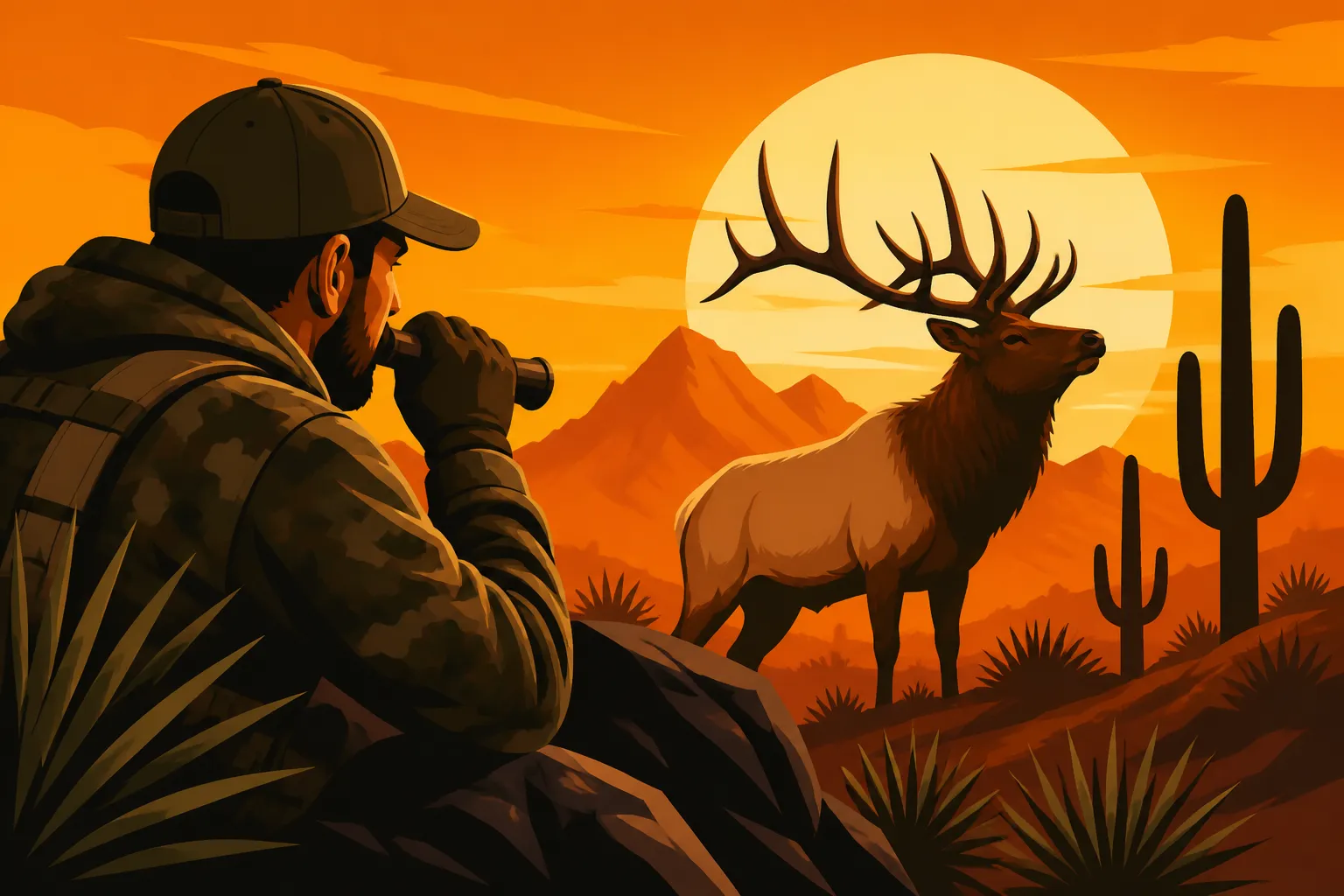
Calling Bulls That Have Heard It All
There are few things more frustrating in elk hunting than pouring your heart and soul into a bugle, only to be met with dead silence. You know there are elk in the area, you've seen the fresh sign, but they just aren't talking back. It's a common dilemma, especially in units that see a lot of hunting pressure, where bulls quickly learn to clam up. This guide is all about equipping you with the strategies and mindset needed to coax a response, and hopefully, close the distance on those wary Arizona bulls that have heard it all before.
Understanding Pressured Bulls and Their Behavior
When you're chasing elk in Arizona, especially during the more popular rifle or even early archery seasons, you're often dealing with animals that have already had a run-in or two with hunters. These aren't the naive bulls you see on TV shows from wilderness areas; they're educated, they're smart, and they've adapted. Their silence isn't a lack of presence; it's a defense mechanism.
The Silent Treatment: Why Bulls Go Quiet
Imagine you're an elk. You've been bugling, strutting, and gathering your cows, living your best life. Then, suddenly, human calls start echoing through your timber. Maybe a few of your buddies got shot, or you just had a close call yourself. What do you learn? That loud, aggressive bugling might just attract trouble. Pressured bulls learn this lesson quickly. They’ll often:
- Go nocturnal: The most obvious shift. They feed and move heavily under the cover of darkness, bedding down early in thick cover long before daylight.
- Move into thicker, nastier terrain: Areas with heavy timber, steep canyons, or dense brush offer refuge. They'll choose these spots over open meadows or easily accessible areas.
- Reduce vocalizations: This is the big one for callers. They might still bugle, but it will be softer, less frequent, and often from deep within their secure bedding areas. They might also respond with soft cow calls instead of bugles, trying to identify the source of the sound without giving away their position.
- Become "call shy": They hear a bugle, and instead of challenging it or investigating, they bolt in the opposite direction. They've associated human-sounding calls with danger. This is why aggressive calling often backfires in pressured areas.
It's not that they don't want to interact; it's that survival instincts kick in. They've learned that discretion is the better part of valor, and sometimes, silence is the safest play.
Reading the Signs of Hunt Pressure
Before you even make your first call, it's crucial to understand the level of pressure in your chosen unit. This isn't just about hunter numbers; it's about how the elk are reacting. Reading a Herd Unit Management Plan can give you some insights into historical harvest success and population dynamics, but real-time observation is key.
Look for physical evidence of other hunters:
- Vehicle traffic: Are roads heavily used? Are there multiple trucks parked at trailheads?
- Boot tracks: Fresh boot tracks, especially off-trail, indicate recent human activity.
- Spent cartridges: While not always a sign of current pressure, it shows the area sees hunting.
- Displaced elk sign: If you find fresh elk tracks or droppings in areas they wouldn't normally frequent (like extremely thick, steep, or marginal habitat), it suggests they've been pushed out of their preferred zones.
Observe elk behavior:
- Non-responsiveness: The most obvious sign for callers. If you make soft, realistic calls and get no answer for extended periods, despite seeing fresh sign, it's a good indicator of pressure.
- Skittishness: If you bump elk, do they simply trot away, or do they crash through the timber at full speed, blowing out of the country? The latter suggests high pressure.
- Bedding habits: Are elk bedding in incredibly dense, inaccessible areas, or are they still using more open, visible spots? Pressured elk will opt for security above all else.
- Timing of activity: Are all fresh tracks and droppings appearing only in the very early morning or late evening? This points to nocturnal activity.
Leveraging mapping tools, like those offered by GoHunt, can also help you identify areas that might see less pressure. Look for roadless areas, steep terrain, or places that require a significant hike to access. Often, the harder it is for hunters to get to, the less pressured the elk will be. These areas might be where you find Elk Country Along the Mogollon Rim that receives slightly less disturbance.
Adapting Your Calling Strategy
Once you've determined you're dealing with pressured elk, it's time to throw out the aggressive, "roaring bull" playbook. Your goal isn't to challenge them; it's to convince them you're a safe, non-threatening, and potentially interesting elk to investigate.
Less Is Often More: Subtle Vocalizations
The biggest mistake hunters make with pressured elk is calling too loudly and too often. Think about it: if every human call they hear is a roaring bugle, they'll learn to associate that sound with danger. Instead, lean into subtlety.
- Soft Cow Calls: This is your bread and butter. A few soft, inquiring cow mews or chirps can often be enough to pique a bull's interest without raising alarm. These calls mimic a lone cow looking for company, something far less threatening than a dominant bull. Remember, your goal is to make them feel safe to approach. Practice making these calls sound as natural and unforced as possible. You want to sound like a real elk, not a human with a reed call.
- Calm Glunks and Grunts: These are close-range, contented sounds elk make while feeding or moving casually. If you're close to a bedding area, a soft glunk can sometimes draw a bull to check you out, especially if he thinks it's another elk slipping in unnoticed.
- Minimal Bugling: If you bugle at all, make it sound like a young, subordinate bull or a questioning growl. Avoid full-throated, challenging bugles. A soft, raspy chuckle or a short, questioning whine can be used to gauge interest, but always follow up with cow calls.
- Patience is a Virtue: After calling, wait. And then wait some more. Pressured elk won't come charging in. They'll circle, they'll listen, they'll try to scent check you. Give them ample time to decide. Often, the silence after a soft call is more effective than continuous calling.
The principle here is to sound like an elk that's just going about its business, making sounds that don't scream "hunter." You're trying to appeal to their curiosity or their breeding instinct in the most non-threatening way possible. This strategy is particularly effective for Cow Calling Pressured Arizona Bulls where a soft approach is often the only one that yields results.
Decoy Setups and Positional Advantage
When elk are wary, they're going to try to get downwind of you. It's their primary defense mechanism. Using a decoy can help exploit this behavior and give you an edge.
- Bull Decoys (Subordinate): A full-size bull decoy, especially a smaller, non-dominant one, can be incredibly effective when used with soft calling. Position the decoy so the approaching bull can see it before he can scent you. As he circles downwind to get a better look or smell, he'll be focused on the decoy, giving you a shot opportunity.
- Cow Decoys (Single): A simple cow decoy can also work wonders, especially if you're trying to simulate a lone cow that has broken away from the herd. The bull might approach more cautiously, but the visual confirmation combined with subtle calls can be very enticing.
- Strategic Positioning: Always set up with the wind in your favor, anticipating how a bull will approach. If you expect them to circle downwind, put yourself and your shooter in a position that intercepts them before they get your scent. Use natural terrain features like ridges, draws, or dense timber to funnel their approach or break up your silhouette.
- Elevated Positions: If possible, calling from a slightly elevated position can give your sound more carry and make it seem more natural, as if coming from another animal moving through the terrain. However, ensure you have good cover to conceal your movement.
Remember, the decoy is meant to draw their attention and focus away from your actual position, buying you precious time and opportunity. Combined with soft calls, it creates a visual and auditory illusion that can be hard for a pressured bull to resist.
Advanced Tactics for Wary Elk
Sometimes, even with subtle calling and good positioning, those Arizona bulls need a little extra convincing. These tactics rely on understanding elk psychology and leveraging different calling scenarios.
The Art of the Lone Cow Call
When the woods are quiet, and you know there are bulls around but they're not talking, a series of soft, lonely cow calls can be your secret weapon. This isn't just about making noise; it's about painting a picture.
- Scenario: You're working a secluded basin where you've found fresh tracks and beds, but no vocalizations. Instead of blasting a bugle, make 2-3 soft, drawn-out cow mews. Think of a cow that's lost her herd, feeling a little vulnerable.
- Execution: Wait 10-15 minutes, listening intently. If nothing, move 50-100 yards and repeat. This simulates a moving cow. The key is extreme patience. Pressured bulls might take 30 minutes to an hour to respond, sometimes just with a soft huff or a distant chuckle.
- The Response: If a bull eventually responds, even softly, do not immediately bugle back. Respond with another soft cow call, perhaps a little more urgent, as if you're excited to hear him. Let him do the work of closing the distance. Many times, these bulls will come in silently, so be ready.
- Location, Location: Focus this tactic in areas where elk feel safe – thick timber, north-facing slopes, or deep canyons. These are the places where a bull might feel secure enough to investigate a "lonely" cow. Using insights from E-Scouting an Arizona Unit Before the Season can help pinpoint such overlooked spots.
Incorporating Locator Bugles at the Right Time
While aggressive bugling can be detrimental, a well-placed locator bugle still has its place, even with pressured elk. The timing and intensity are everything.
- Purpose: A locator bugle isn't meant to draw a bull in, but rather to get him to reveal his position. You're not challenging him, you're just making noise in a non-threatening way that might get a "courtesy bugle" back.
- Timing: The best times are often at first light or last light, when elk are typically more vocal. During the midday lull, it's generally best to remain silent or use only soft cow calls. If you're scouting an area, a locator bugle mid-morning might help confirm presence without spooking them too badly if you're planning a later stalk.
- Sound: Use a relatively soft, short bugle, maybe a challenge bugle that quickly tapers off into a chuckle, as if a bull is just passing through. Avoid drawn-out, screaming bugles. Sometimes, a single, sharp "bark" from a challenging bull call can get a response without over-committing.
- Placement: Bugle from a ridge or an area with good sound travel, but always have a follow-up plan for what you'll do if you get a response. Often, after a locator, you'll want to switch immediately to silent mode or soft cow calls and try to close the distance. Learning Bugle Timing Across the Mogollon Rim can provide valuable context for when elk are naturally more inclined to vocalize, even if pressured.
Two-Hunter Calling Dynamics for Pressured Animals
Hunting with a partner, especially in pressured areas, can significantly increase your success rates. The dynamic allows for more realistic setups and better control over the elk's approach.
- Caller as Decoy: The caller positions themselves 50-100 yards behind the shooter, off to one side. The caller's job is to focus the bull's attention, while the shooter is positioned for the shot. When the bull approaches, he'll be looking for the "elk" making the noise (the caller), exposing himself to the shooter.
- Silent Approach for the Shooter: The shooter needs to move quietly and carefully to their position. Any noise from the shooter can blow the setup. The caller can provide cover noise with soft cow mews if needed.
- Reading the Bull's Approach: The caller should constantly communicate (non-verbally if possible, or via whispered radio) the bull's direction and speed to the shooter. This helps the shooter anticipate the shot opportunity.
- Mimicking a Small Herd: With two callers, you can create the illusion of a small, active group of elk. One hunter can make soft cow mews, while the other might add a very soft chuckle or grunt. This can make the scenario seem more natural and less threatening than a single, aggressive bugle. This strategy is precisely what Two-Hunter Calling Setups That Actually Work is all about – leveraging teamwork for success.
- Dealing with the Downwind Circle: Knowing that pressured bulls will always try to get downwind, the caller and shooter can strategically place themselves to intercept this circle. For instance, the caller might be slightly upwind, and the shooter downwind of the caller, anticipating the bull's movement.
Mastering Your Tools and Timing
Success with pressured elk often boils down to attention to detail in every aspect of your hunt, not just calling.
Call Selection for Realistic Sounds
Your calls are your instruments; they need to produce realistic, varied sounds.
- Diaphragm Calls: These are invaluable for their versatility. You can produce soft mews, chirps, growls, and bugles without much movement, keeping your hands free for your bow or rifle. Practice to ensure your diaphragm calls sound consistently clear, not raspy or squeaky unless that's the intended effect.
- Open Reed Calls: Excellent for producing realistic cow and calf sounds. Brands like Phelps Game Calls or Primos often have models that excel at these softer tones.
- Tube Calls (Bugle Tubes): Essential for adding realism to your bugles, especially the deep, resonant tones. Use it sparingly with pressured bulls, primarily for subtle locator bugles or light chuckles.
- Minimal Aggression: Avoid calls that are designed for extremely loud, aggressive bugling if you're primarily hunting pressured areas. Focus on calls that allow for a wide range of soft, nuanced sounds.
The key is practice. Spend time perfecting your calls, not just in volume, but in tone, duration, and inflection. Listen to real elk vocalizations online or in nature to truly understand what you're trying to replicate.
When to Call, and When to Shut Up
This is perhaps the most critical lesson in hunting pressured elk: knowing when not to call.
- Early Morning/Late Evening: These are prime times for soft calling. Elk are typically on the move, feeding, and more receptive to subtle vocalizations.
- Midday Lull: During the middle of the day, when elk are typically bedded, silence is often golden. If you're going to call, make it extremely soft, almost imperceptible, mimicking contented feeding sounds or a single, lonely mew. This is when Reading Fresh Elk Sign in Ponderosa Timber becomes critical, as you might be close to a bedding area and need to be extra cautious.
- Approaching a Bedded Area: If you suspect elk are bedded in a particular thicket, approach with extreme stealth. You might try one or two very soft cow mews once you're within shooting range, but continuous calling will likely blow them out.
- When a Bull is Approaching Silently: This happens often with pressured animals. They'll sneak in without making a sound. If you get a response to a soft call, and then silence, but you feel like he's still coming, do not call again. Be ready. Keep your eyes peeled and your weapon up. The next sound you hear might be him breathing.
- The "One-and-Done" Rule: With pressured elk, often one or two soft, realistic calls are all you need. If you get a response, go silent or offer another soft call only if he hangs up. If you get no response after a few attempts, it's time to move and try a different spot. Over-calling guarantees they’ll know something is up.
Remember, elk communicate through silence just as much as through vocalizations. By understanding their language of silence, and adapting your calling, you dramatically increase your chances of success in Arizona's more challenging units. Sometimes, simply finding a water source like a Hunting a Stock Tank During Early Archery can be enough to find less pressured animals who still need to drink.
| Strategy Component | Aggressive Calling (Less Pressured) | Subtle Calling (Pressured) |
|---|---|---|
| Primary Goal | Challenge, assert dominance, draw in quickly | Reassure, pique curiosity, draw in cautiously |
| Call Type | Loud bugles, growls, aggressive cow calls | Soft mews, chirps, glunks, soft chuckles |
| Frequency | Frequent, continuous if responsive | Infrequent, spaced out, minimal |
| Volume | Loud, attention-grabbing | Soft, conversational, barely audible |
| Decoy Use | Often with aggressive challenges | Small bull/cow, focused on diverting attention |
| Hunter Setup | Can be more flexible | Critical for wind advantage, caller 50-100yds back |
| Elk Response | May charge in, vocal | May come in silently, circle downwind, very cautious |
| Patience Level | Moderate to High | Extreme patience required (30-60 min waits) |
Disclaimer
Hunting carries inherent risks, and conditions in the field can change rapidly. Always prioritize safety, follow all Arizona Game and Fish Department regulations, and respect private land boundaries. The information provided here is for educational purposes and should not replace proper hunter education or professional guidance.