Elk Country Along the Mogollon Rim
Hunting elk in Arizona's famed Mogollon Rim country is a dream for many, but the sheer scale of the landscape and the elusive nature of these magnificent animals can feel overwhelmingly daunting. It’s easy to feel lost amidst the vast Ponderosa forests and deep canyons, wondering where an elk might even begin to hide. This comprehensive guide is here to unravel the mysteries of hunting the Mogollon Rim, offering seasoned insights and practical strategies to help you navigate its unique terrain and increase your chances of finding success on your next Arizona elk adventure.
Understanding the Mogollon Rim's Unique Elk Habitat
The Mogollon Rim isn't just a geographical feature; it's a dynamic, living ecosystem that dictates how elk live, travel, and thrive. To truly hunt this region effectively, you need to understand the fundamental building blocks of its habitat and how elk interact with them throughout the year.
Geographic Features and How They Dictate Elk Movement
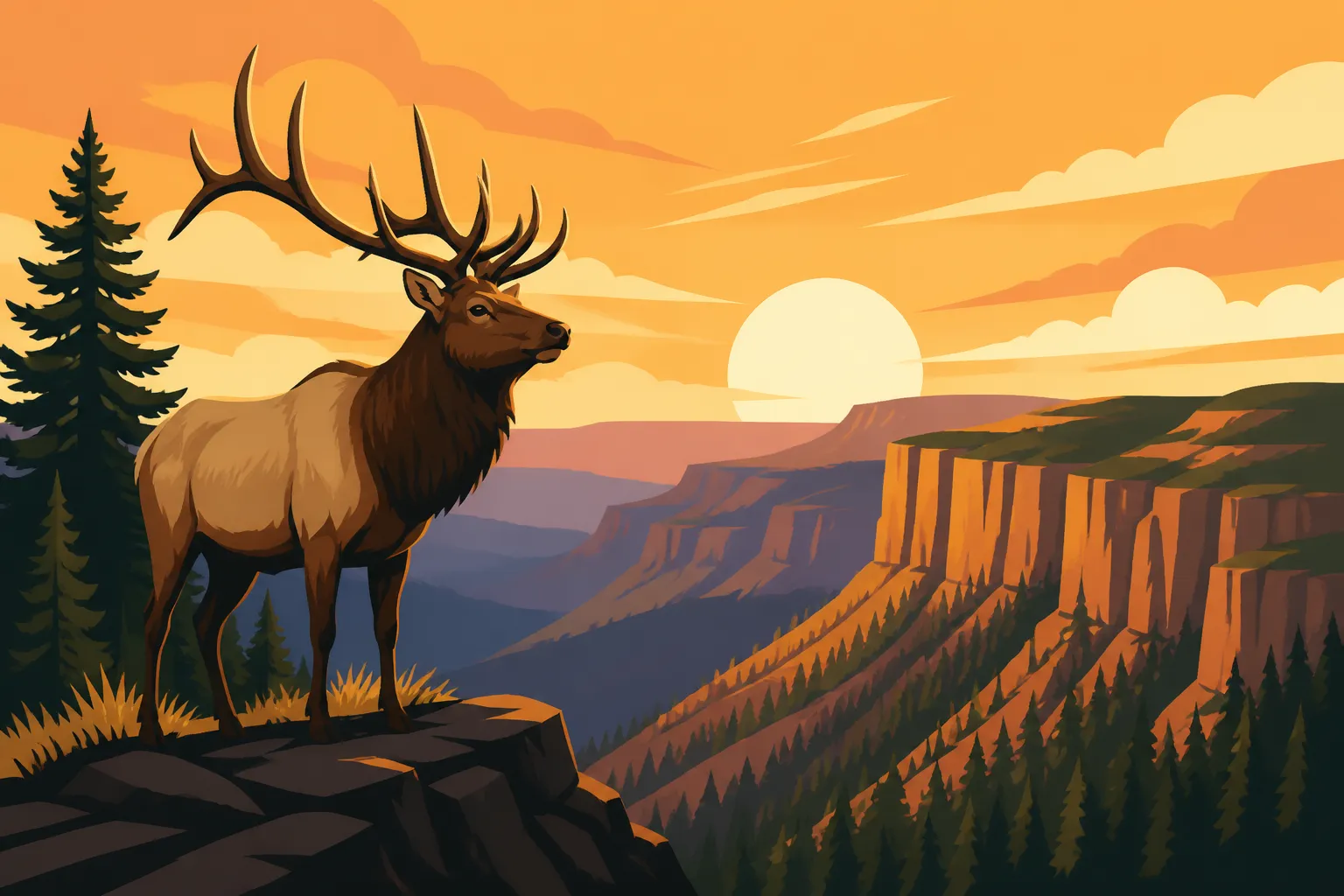
The Mogollon Rim is a dramatic escarpment, a steep cliff face that stretches for hundreds of miles across central Arizona. This isn't flat, easy-to-traverse ground. We're talking about massive elevation changes, from the relatively flat plateau on top down into deep, winding canyons below. These features aren't just scenic; they are critical in understanding elk movement. Elk will use the breaks and saddles along the Rim as travel corridors, moving between feeding grounds on top and sheltered bedding areas below. Think of the smaller fingers and draws that run off the main Rim as highways for elk. They offer cover, direct routes to water, and escape routes. Learning to identify these natural funnels and pinch points, perhaps by E-Scouting an Arizona Unit Before the Season, is paramount.
The sheer scale of the Rim means that elk often move vertically, especially when pressured. During the day, they might be bedded in thick timber on north-facing slopes, catching the cool air and escaping the sun. As evening approaches, they might traverse up or down a steep canyon face to reach more open meadows for feeding. Recognizing how these distinct elevation bands dictate elk behavior is crucial. For instance, a plateau unit might have elk feeding on grasslands at dawn, but as soon as the sun hits, they'll drop into the nearest deep canyon or patch of timber, making them seemingly vanish. It's a game of anticipating their vertical movements almost as much as their horizontal ones.
Don't underestimate the role of small, seemingly insignificant features like rock outcroppings or dense pockets of oak brush. These can offer critical thermal cover in winter or shade in the summer, making them ideal bedding locations. The terrain is a puzzle, and each piece – from the grand canyon walls to the smallest rock bench – plays a role in where an elk chooses to be. Your job, as a hunter, is to learn to read these signs and understand the language of the land.
Vegetation Zones and Forage for Arizona Elk
The Mogollon Rim is a melting pot of vegetation, offering a diverse buffet for elk. Up on the plateau, you'll find expansive Ponderosa pine forests, often with a relatively open understory. These areas provide excellent cover and, during certain times of the year, offer pine needles, mushrooms, and various grasses as forage. The beauty of these forests is their silence – if you're stalking, the soft forest floor can be your friend.
As you move into the canyons and breaks, the vegetation changes dramatically. You'll encounter dense oak brush, juniper, and pinyon pine. This scrubby, thick cover is where elk often feel most secure. They'll browse on the acorns from the oak, the needles from the juniper, and other forbs that thrive in these more sheltered environments. These areas are tough to hunt, demanding patience and slower movement, but they often hold the biggest, most pressured bulls. Knowing what elk are currently feeding on will give you a significant advantage, helping you pinpoint specific areas to focus your efforts.
Even grasslands, especially those interspersed with timber, play a vital role. These open areas are prime feeding grounds at dawn and dusk. Elk will move out of the thick timber to graze, making these edges perfect ambush points. However, these spots also make elk vulnerable, so they'll use them cautiously, always remaining close to the safety of the trees. Identifying these transition zones between different vegetation types is key. For a comprehensive overview of elk distribution, checking resources like GoHunt can provide valuable insights into specific unit characteristics.
Water Sources and Their Critical Role
In Arizona, water is life, and for elk on the Mogollon Rim, it's no different. While the Rim is generally wetter than the desert lowlands, natural springs, seeps, and stock tanks are still magnets for elk, especially during the warmer early seasons. Finding these reliable water sources can often be the first step in locating elk. They'll typically water at least once a day, often in the evening or early morning, making these locations high-traffic areas.
Stock tanks, particularly those maintained for cattle, are another crucial water source. While they might seem less "wild," elk use them just as readily as natural springs. These tanks often have well-worn game trails leading to them, which can give you a clear indication of elk presence. However, hunting water sources comes with ethical considerations, especially if other hunters are already present or if the elk are becoming overly pressured. Always be aware of Water Sources and Ethics in Arizona Desert Hunting to ensure you're hunting responsibly.
During the monsoon season, temporary water holes might pop up, scattering elk somewhat. However, as these dry up, elk will consolidate around perennial sources. This phenomenon can make early season archery hunts particularly challenging but also rewarding, as elk are often more concentrated around the remaining water. Pay close attention to recent rainfall and forecast information as you plan your hunt; it can dramatically alter elk distribution. Identifying these critical water points on a map before you even set foot in the woods, or by simply driving some of the Rim Country Forest Roads Worth Knowing, is a non-negotiable step in your scouting process.
Key Behaviors of Mogollon Rim Elk Through the Seasons
Elk are creatures of habit, but those habits shift dramatically with the seasons, influenced by forage, water, breeding cycles, and hunting pressure. Understanding these seasonal shifts is fundamental to being in the right place at the right time.
Early Season Patterns (Archery and Muzzleloader)
The early archery and muzzleloader seasons on the Mogollon Rim, typically in August and September, present a unique set of challenges and opportunities. Elk are often still in their bachelor groups, or cows are with their calves, and they haven't yet felt significant hunting pressure. Their primary focus is on feeding and watering, trying to put on as much weight as possible before the rut and winter. This means they'll often be found in areas with lush forage, moving between dense bedding cover and open feeding grounds.
During these warmer months, thermals play a huge role. Elk will often feed in lower elevations or open parks in the cool mornings and evenings, then climb to higher, cooler, north-facing slopes or thick timber to bed for the day. Their sense of smell is incredible, and they rely heavily on the wind and thermals to protect themselves. A common frustration is busting elk after a long stalk because the thermals shifted at mid-morning, carrying your scent directly to them. This makes early morning and late evening hunts most productive, when thermals are more predictable (rising in the morning, falling in the evening).
Water sources, as discussed, become absolute magnets. Sitting a water source during the middle of the day can be surprisingly effective, especially if you can get in undetected and remain still. But be prepared for the heat and the insects! You'll need to stay hydrated and keep your scent profile as low as possible. Consider the unit you've drawn and if it's one of Where Elk Water During Early Archery for better insights.
The Rut's Influence on Elk Location and Calling Strategies
Ah, the rut! This is what many hunters dream of on the Mogollon Rim. Typically peaking in late September and early October, the rut completely changes elk behavior. Bulls, previously solitary or in bachelor groups, become vocal, aggressive, and often less cautious as they seek out cows. The bugles echoing through the canyons are an unforgettable sound. This is when Calling Bulls on Arizona's Mogollon Rim becomes a primary strategy.
During the rut, elk are less concerned with ideal feed and more focused on breeding. This means they can be found almost anywhere, following cow herds. Ridge tops, open meadows, and dense timber can all hold bugling bulls. The key is to locate the cows, as the bulls will follow. Listen for cow calls and chirps, in addition to the booming bugles. However, be aware that not all bugles mean a bull is coming in. Some are challenges, some are locator calls, and some are just expressions of dominance. Understanding Bugle Timing Across the Mogollon Rim can help you interpret what you're hearing.
Hunting pressured bulls during the rut can be tricky. They've heard it all. Sometimes, a subtle approach, using soft cow calls, or even staying completely silent and letting them come to you, can be more effective than aggressive bugling. If you encounter a bull that's "hung up" and won't commit, a second hunter mimicking a satellite bull or even another cow can often be the trick. You might need to use some clever tactics when Cow Calling Pressured Arizona Bulls. The rut is exhilarating, but it demands adaptability and a deep understanding of elk communication.
Late Season Challenges and Wintering Grounds
As the rut winds down and rifle seasons open, elk on the Mogollon Rim face increasing hunting pressure and the onset of colder weather. Their behavior shifts back towards survival: feeding, gaining weight, and seeking refuge. Late season hunts, typically in November and December, are often defined by colder temperatures, and sometimes, early snow. This changes everything.
Elk become much more wary during the late season. They will retreat to the thickest, nastiest cover they can find, often on steep, remote slopes that are difficult for hunters to access. Their movements become more nocturnal, feeding under the cover of darkness and bedding down well before dawn. Snow can actually be your friend, making tracking easier and quieting your approach, but it also makes conditions tougher for you. You'll need to be prepared for Layering for Rim Country Temperature Swings and potentially rougher weather.
Finding success in the late season requires covering a lot of ground, meticulous glassing into known bedding areas, and often, still-hunting through thick timber. Focus on areas away from roads and trails, where elk are less likely to be disturbed. These hunts are physically demanding and require immense patience, but the rewards can be incredible. A late-season bull, often solitary and reclusive, is a hard-earned trophy. Understanding where the biggest bulls are typically found, such as in Which Arizona Units Produce the Biggest Bulls, can guide your late-season unit selection.
Strategies for Successfully Hunting Elk on the Rim
Hunting elk on the Mogollon Rim is not a passive endeavor. It demands preparation, physical conditioning, and a methodical approach. You can't just wander out there and expect success; you need a strategy.
The Importance of Scouting and E-Scouting
Before you even think about setting foot on the Rim, scouting is absolutely critical. This involves both "boots on the ground" scouting and extensive e-scouting from home. E-scouting using satellite imagery and topographic maps is your first line of attack. Look for the key features we discussed: elevation changes, dense timber, water sources, and natural funnels. Identify potential bedding areas (north-facing slopes, thick cover), feeding areas (open parks, oak flats), and travel corridors (saddles, draws). Tools like GoHunt can be invaluable here, allowing you to layer different map types and identify public land boundaries.
Once you have potential spots identified, it’s time for "boots on the ground" scouting, ideally several weeks or months before your hunt. Walk those areas, look for fresh sign: tracks, droppings, rubs, and wallows. This confirms that elk are using the area and helps you understand their travel patterns. Take note of prevailing wind directions, thermals, and potential ambush points. While Scouting an Arizona Unit Before the February Deadline often focuses on the draw, the principles of pre-season scouting apply universally to preparing for your hunt.
A crucial part of scouting involves understanding access. How will you get to your hunting grounds? Are roads open or seasonally closed? What's the closest legal parking? Don't leave these details to chance. Know your Mogollon Rim Access for Arizona Hunters inside and out. The more you know about your unit before the season, the less time you'll spend guessing and the more time you'll spend hunting.
Glassing Techniques for Expansive Rim Country
The Mogollon Rim is vast, and you simply can't walk it all. That's where quality optics and effective glassing techniques come into play. Investing in a good pair of binoculars (10x or 12x) and a high-quality spotting scope (20-60x or higher) with a sturdy tripod is non-negotiable. Often, a "Coues deer setup" will serve you well for elk in this terrain. The principle is the same: let your optics do the walking.
Find a vantage point that allows you to see a large area, ideally encompassing different habitat types (timber, open parks, canyon breaks). Set up your tripod and methodically grid-glass the area. Don't just scan; pick apart the landscape inch by inch, looking for horizontal lines in a vertical world (the back of an elk), unnatural shapes, or even just a flicker of movement. Pay extra attention to shaded areas, the edges of timber, and bedding thickets. It's amazing what you can pick out with patience and a good scope.
Morning and evening are prime glassing times, when elk are most active. But don't discount mid-day glassing, especially into thick bedding areas where a bedded elk might occasionally shift, allowing you to spot it. Patience is the key. You'll spend far more time behind glass than with your rifle or bow at the ready. Think of glassing as your primary hunting method; the stalk only comes after you've successfully located your quarry.
Approaching Elk in Rugged Terrain
Once you've spotted an elk, the real work begins: the approach. This is where many hunts fall apart, often due to impatience or neglecting fundamental hunting principles. The three most critical factors are wind, thermals, and cover. Always, always, always approach with the wind in your favor. Elk have an incredible sense of smell, and even a slight shift in wind can doom your stalk. Watch for swirling winds, especially in canyon bottoms.
Utilize the terrain to your advantage. Use draws, ridges, and dense timber to break up your silhouette and mask your movement. Never skyline yourself. Move slowly, deliberately, and quietly. If you're hunting with a bow, you need to get much closer than with a rifle, which means every step matters. Take advantage of natural noise, like a gust of wind or rustling leaves, to mask your movement. You might find some useful strategies in Terrain That Hides an Approach in Desert Country, as many principles apply to Rim country too.
Finally, patience is paramount. A successful stalk can take hours, sometimes even an entire day. There will be times when you need to freeze for long periods, waiting for an elk to move behind a bush, or for the wind to settle. Don't rush the shot; wait for the clear, ethical opportunity. Elk on the Mogollon Rim are incredibly wary, and the terrain often favors them. Respect their senses and their home, and you'll increase your chances of getting within range.
Overcoming Common Mogollon Rim Hunting Obstacles
The Mogollon Rim is stunningly beautiful, but it's not an easy place to hunt. Hunters often face specific challenges that can make or break a trip. Being prepared for these obstacles is half the battle.
Dealing with Hunting Pressure
One of the biggest frustrations, especially during rifle seasons, is hunting pressure. The Mogollon Rim is a popular destination, and well-known areas can see a lot of hunters. Elk learn quickly, and pressure makes them more nocturnal, more secretive, and more likely to retreat into the thickest, hardest-to-reach cover. It's a real bummer to finally locate a bull, only to have another hunter spook it before you can get close.
To mitigate pressure, focus on units or areas that are harder to access. This might mean hiking miles from the nearest road, or exploring areas that require significant elevation changes. Look for areas with limited road systems or those designated as wilderness, where motorized travel is restricted. This forces other hunters to work harder, and the elk will often seek these sanctuaries. E-scouting can help you identify these "back-pocket" areas.
Another strategy is to hunt smarter during the middle of the day. While many hunters are back at camp for lunch, pressured elk might be shifting their beds or moving quietly through thick cover. This is when a slow, deliberate still-hunt through dense timber can pay off. It requires immense focus and patience, but you'll often encounter less competition. Remember, the elk are there; you just have to be willing to go where others aren't, and be present when others aren't.
Navigating the Terrain and Physical Demands
Let's be honest: hunting the Mogollon Rim is physically demanding. You're going to be climbing steep inclines, navigating rocky ground, and traversing thick timber. It's not a stroll in the park. Many hunters underestimate the physical toll it takes, especially if they're not accustomed to hunting at higher elevations or in rugged country. The frustration of being physically drained when you finally get on an animal is real.
Physical preparation before your hunt is non-negotiable. Start a fitness routine months in advance that focuses on cardio, leg strength, and endurance. Hiking with a weighted pack, especially up hills, is excellent preparation. Being in shape not only makes the hunt more enjoyable but also allows you to hunt harder, cover more ground, and, crucially, retrieve an animal if you're successful. Nobody wants to be the person who can't pack out their hard-earned elk. Preparing Physically for a Desert Hunt has many applicable tips, even if the terrain is different.
Footwear is also critical. Invest in high-quality, broken-in hiking boots that provide ankle support and traction on rocky, uneven terrain. Blisters and sore feet will ruin a hunt faster than almost anything else. The right gear makes a huge difference, allowing you to focus on the hunt, not your discomfort.
Weather Variables and Their Impact
Arizona weather, even on the Rim, can be notoriously unpredictable. While most people think of Arizona as endlessly sunny, the Rim can experience everything from scorching heat in early archery season to sudden monsoon thunderstorms, and even early snowfalls in the late season. This variability can be a huge source of frustration for unprepared hunters.
Early season hunts can be sweltering, making hydration and heat management critical. Monsoon storms, which often roll in during August, can turn forest roads into impassable mud pits, trapping vehicles and making access impossible. Always check the forecast and road conditions before heading out, and have a recovery plan for your vehicle. For specific information, check for current advisories on Monsoon Road Conditions in Rim Country.
Late season hunts can bring freezing temperatures and snow. While snow can be advantageous for tracking, it also makes hiking harder and drastically increases the risk of hypothermia if you're not properly equipped. Layering your clothing is essential for managing these temperature swings. Always carry emergency gear, extra water, and food, regardless of the forecast. Being prepared for any weather contingency is not just smart; it's essential for safety and success on the Mogollon Rim.
Disclaimer
This article is for general informational purposes only and does not constitute professional advice. Laws, prices and regulations vary by location and change over time. Consult a qualified professional for guidance on your specific situation.