White Mountains Elk Hunting Overview
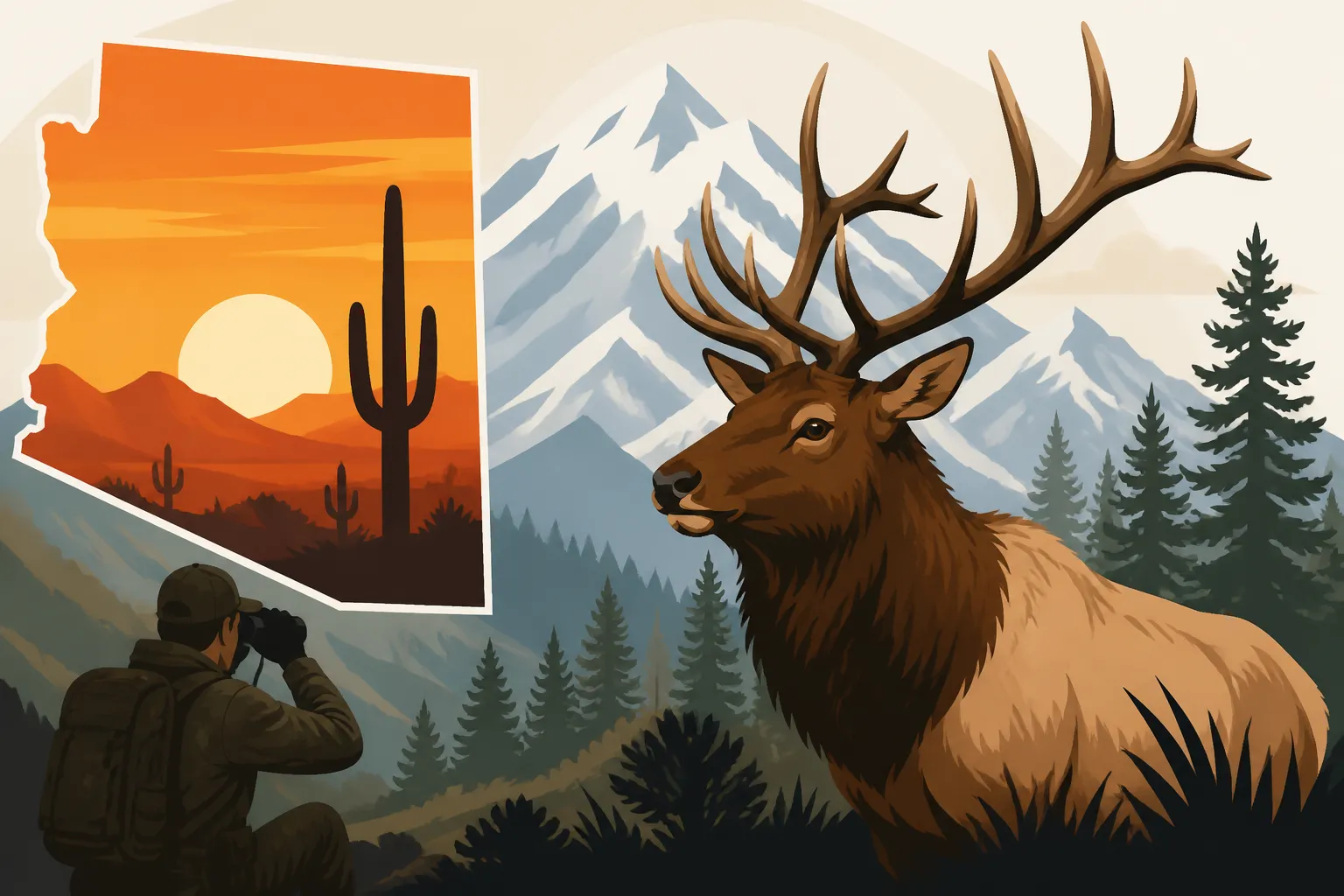
Hunting elk in Arizona's White Mountains is a dream for many, but the reality often hits hard: vast, rugged terrain, temperamental weather, and elusive animals can make it feel like you're searching for a ghost. This guide is dedicated to demystifying the White Mountains elk hunt, offering insights into their behavior, the unique challenges of the habitat, and the proven strategies that can help you finally connect with one of these magnificent animals.
The Unique Challenge of White Mountains Elk Hunting
The White Mountains region of Arizona, including areas within the Apache-Sitgreaves National Forests and surrounding lands, presents a distinct set of challenges and rewards for elk hunters. This isn't your flat, open prairie hunt; it's a dynamic landscape that demands respect, preparation, and a keen understanding of the ecosystem.
Navigating the Terrain and Ecosystem
Imagine dense stands of Ponderosa pine giving way to dark timber, then opening into vast meadows dotted with aspen groves, all laced with deep canyons and steep ridges. This is the White Mountains. Elevations often range from 7,000 to over 11,000 feet, creating a varied landscape where elk can find everything they need – sometimes scattered widely, sometimes concentrated in specific pockets. You'll encounter volcanic rock formations, expansive grasslands, and thick oak brush, all demanding different approaches. The sheer scale of the landscape can be overwhelming, making it critical to break down your hunting area into manageable sections. Understanding how water sources and natural barriers, like impassable canyons, funnel elk movement is absolutely vital. You might start your day glassing a distant hillside, then find yourself still-hunting through a thick timber patch, constantly adapting to the micro-environments you encounter. It's a physically demanding hunt, where every rise and fall in elevation tests your endurance, but the rewards of spotting a mature bull in this stunning setting are unparalleled. When you're looking at maps and planning your approach, understanding the nuances of the terrain is your first step to success. You can find excellent public land opportunities across this region, including much of the White Mountains Public Ground in Arizona.
The Rhythms of Elk Life in High Country
Elk in the White Mountains are keenly attuned to the seasons, their movements and behavior dictated by forage, water, and breeding cycles. During the early archery seasons, for example, elk might be found higher on the plateaus, seeking cooler temperatures and abundant feed. As the rut approaches in September, the woods come alive with bugles, and bulls become more vocal and less cautious. However, these are still wild elk in a vast country; they don't always stick to the textbook. Understanding "when the elk rut peaks on the Rim" can give you a general idea, but local variations due to weather, pressure, and specific herd dynamics always come into play. Post-rut, elk might move into darker timber for recovery and then eventually down to lower elevations as winter sets in, seeking thermal cover and less snow-covered browse. Their travel corridors often follow drainages, saddlebacks, and benches, offering consistent routes between bedding, feeding, and watering areas. This is why paying attention to historical weather patterns and current conditions is so important. A dry year might push elk to specific waterholes, while a wet year could disperse them widely across lush meadows. Each season brings a different puzzle, and solving it requires constant observation and adaptability.
Strategic Pillars for Success: Scouting and Calling
Success in the White Mountains often hinges on two critical skills: diligent scouting and effective calling. You can't just show up and expect elk to appear; you have to put in the work to find them and then speak their language.
Mastering the Art of Pre-Season Scouting
The value of scouting cannot be overstated, especially for an Arizona elk hunt. This isn't just about finding elk; it's about understanding where they're likely to be during your hunt dates, why they're there, and how you can get to them. E-scouting, using tools like GoHunt, has become an indispensable first step. You can spend hours poring over satellite imagery, topo maps, and public land layers, identifying potential bedding areas, feeding grounds, water sources, and travel corridors. Look for changes in vegetation, north-facing slopes for bedding, and benches or saddles that connect different parts of the mountain. I've spent countless evenings virtually "walking" through units, marking waypoints for glassing points, potential water sources, and access roads.
| Scouting Method | Pros | Cons | Best Use Case |
|---|---|---|---|
| E-Scouting (e.g., GoHunt) | Time-efficient, covers vast areas, identifies key features (water, cover, access), useful for remote units. | Lacks real-time animal sign, doesn't account for wind/thermals on the ground, can be deceiving on terrain steepness. | Initial broad planning, remote unit research, identifying potential hotspots before a physical visit. |
| Ground Scouting | Confirms e-scouting findings, reveals fresh sign (tracks, rubs, droppings), allows for thermal and wind assessment, familiarizes you with actual terrain. | Time-consuming, physically demanding, limited to areas you can physically access, can spook animals if not careful. | Verifying e-scouting, finding current elk activity, establishing a feel for the unit, practicing approaches. |
After your e-scouting homework, nothing beats boots on the ground. A scouting an Arizona unit before the February deadline can give you a huge advantage. Visit your unit during the off-season, hike into those areas you marked, and look for actual sign – rubs from previous years, old beds, trails, and water sources. Even if you don't see elk, understanding their movement patterns is gold. Pay attention to how the wind swirls in certain canyons or how thermals change throughout the day. This intelligence gathered beforehand is what truly prepares you for the hunt itself. It helps you decide where to place your camp, where to start your day, and even what approach to take for a particular drainage.
Effective Calling in Mountain Environments
Calling bulls on Arizona's Mogollon Rim shares many similarities with the White Mountains, where the terrain often carries sound long distances, but also swallows it in thick timber. During the rut, knowing how and when to use locator bugles versus aggressive challenge bugles, or subtle cow calls, can be the difference between a distant reply and a bull charging into your lap. Often, a soft cow call is all it takes to pique a bull's interest, especially if he's already had some pressure. Aggressive bugling can work, but it can also intimidate smaller bulls or make pressured animals skirt around you.
A key aspect of calling in the White Mountains is understanding the acoustics of the landscape. A bugle from a ridgetop can carry for miles, but once you drop into a canyon, your sound may not travel far at all. Using natural topography to your advantage, such as calling from an elevated position to broadcast sound, or using thick timber to muffle your approach, is crucial. Sometimes, silence is the best call. After a series of calls, waiting patiently and listening for faint replies or the rustle of an approaching animal can be more effective than constant, loud calling. Furthermore, remember that the wind and thermals will carry your scent and sound. Always position yourself so that any approaching animal will come in downwind, or at least across the wind, from your setup. Many times, you'll hear a bull respond, and then it's a game of "cat and mouse" to close the distance, using the terrain to remain unseen and unheard.
Essential Gear and Physical Preparation
Hunting in the White Mountains is physically and mentally demanding. Being properly equipped and in top physical condition isn't just about comfort; it's about safety, endurance, and ultimately, success.
Equipping Yourself for Mountain Hunts
Your gear needs to be robust, reliable, and appropriate for the fluctuating conditions of Arizona's high country. Optics are paramount. A good pair of binoculars (10x or 12x) and a high-quality spotting scope are not optional; they are your primary tools for locating elk in vast landscapes. Consider something like a 15x or 20-60x scope on a sturdy tripod. Remember, White Mountains elk country often means glassing huge swaths of timber and distant meadows. Beyond optics, layering for Rim Country temperature swings is crucial. Mornings can be freezing, midday can be scorching, and afternoon thunderstorms are common. Think moisture-wicking base layers, insulating mid-layers, and a waterproof/windproof outer shell.
Footwear is another non-negotiable item. You'll be covering many miles over uneven, rocky, and potentially wet terrain. Invest in comfortable, broken-in, sturdy boots with excellent ankle support. A well-fitting pack is also vital, capable of carrying water, food, extra layers, first-aid, and all the tools you'll need for a day or even an overnight spike camp. Think about a pack that can also handle hauling out meat if you're successful. Don't forget navigation tools like a GPS unit, a compass, and maps (both paper and digital). Cell service can be spotty to non-existent in many areas.
Building the Stamina for Arizona's High Country
Forget couch-to-5K; this is more like couch-to-mountain-goat. Hunting the White Mountains demands excellent cardiovascular fitness, strong legs, and core strength. You'll be hiking at elevation, often with a heavy pack, up and down steep grades. Building a practice routine before opener that includes uphill climbs, endurance training, and stretching will pay dividends. Start months in advance, incorporating exercises that mimic hunting movements: weighted hikes, step-ups, lunges, and core work.
Think about training with the actual weight you'll be carrying in your pack. The thin air at higher elevations can leave even conditioned athletes breathless, so spending time at altitude beforehand, if possible, can help your body acclimate. If not, focus on maximizing your fitness at home. Beyond physical conditioning, mental toughness is equally important. There will be long days without seeing animals, unexpected weather shifts, and moments of doubt. The ability to push through fatigue, stay positive, and maintain focus is a huge advantage. This hunt isn't just about the shot; it's about the journey, the grind, and the dedication it takes to pursue these animals in their challenging home.
Understanding Regulations and Draw Dynamics
Navigating the Arizona Game and Fish Department's regulations and draw system can feel like its own hunt. But understanding these processes is as critical as knowing where to find elk.
Deciphering Arizona's Elk Draw System
Arizona's elk tags are highly coveted and awarded through a lottery draw system, split into two main cycles: one for elk and antelope, and another for deer, bighorn sheep, and bison. For White Mountains elk, you'll be primarily looking at the February deadline. The system utilizes a bonus point system, where applicants earn a point for each year they apply and are unsuccessful. This increases your odds in subsequent draws. However, Arizona caps nonresidents at ten percent of every hunt, which makes drawing a tag even more challenging for out-of-state hunters. This ten percent limit can affect both the "Bonus Point Pass" and the "Random Pass" that follows. Many applicants use platforms like GoHunt to research draw odds by unit, giving them a realistic picture of what units might be attainable based on their bonus points. It's a system that rewards patience and consistency. Some hunters apply for years, accumulating points, before they finally draw a dream tag. Others opt for "point-only" applications in lean years to keep building their bank.
Arizona Elk Season Structure by Hunt Code is complex, with different weapon types and season dates allocated to specific units. It’s absolutely essential to read the regulations booklet thoroughly for the year you intend to apply. Hunt codes specify the unit, weapon type (archery, muzzleloader, general rifle), and dates. This is why many hunters will scout an Arizona unit before the February deadline, not just for elk sign, but to truly understand its boundaries and potential.
Respecting the Rules and the Resource
Arizona has clear guidelines for ethical hunting and wildlife management. These rules are designed to ensure fair chase and the long-term health of the elk population. For example, there are specific legal shooting hours and blaze orange in Arizona requirements, depending on the season and weapon. For general rifle seasons, wearing blaze orange is often mandatory. Archery hunts usually have different regulations.
Beyond the formal rules, ethical conduct is paramount. This includes proper field dressing in desert heat, especially in early seasons, and knowing the meat salvage requirements for big game. You must also respect private property and tribal lands. While much of the White Mountains is public, knowing how to spot a reservation boundary on a map is vital to avoid trespassing. Furthermore, understanding motorized travel rules on Arizona public land, including seasonal road closures, is critical for accessing your hunting areas without breaking the law or damaging the resource. Remember, we are guests in these animals' homes, and our actions reflect on all hunters. Using trail cameras for scouting is legal in Arizona, but there are strict baiting and trail camera rules in Arizona that hunters must adhere to. Ultimately, a successful and responsible hunt means not just taking an animal, but doing so ethically, legally, and with profound respect for the wild places and creatures we pursue.
Disclaimer
This article is for general informational purposes only and does not constitute professional advice. Laws, prices and regulations vary by location and change over time. Consult a qualified professional for guidance on your specific situation.