Locator Bugles for Finding Bulls at Dawn
The pre-dawn hours in Arizona’s elk country can feel both exciting and overwhelming. You’re standing in the crisp, cool air, the stars still bright overhead, but the vastness of the forest or high desert can make you feel incredibly small, wondering where on earth those elusive bulls are bedded. This guide is all about mastering the art of the locator bugle – a crucial skill for pinpointing those big game animals when the world starts to wake up, helping you turn those silent mornings into actionable hunting opportunities.
Understanding the "Why" and "When" of Locator Bugles
Before you even think about putting a call to your lips, it’s critical to understand the philosophy behind a locator bugle. This isn't about challenging a bull to a fight, at least not initially. It's simply about getting them to announce their presence, to give away their location without putting undue pressure on them right off the bat. The "why" is pure reconnaissance, and the "when" is about leveraging specific environmental and behavioral cues.
The Purpose of a Locator Bugle
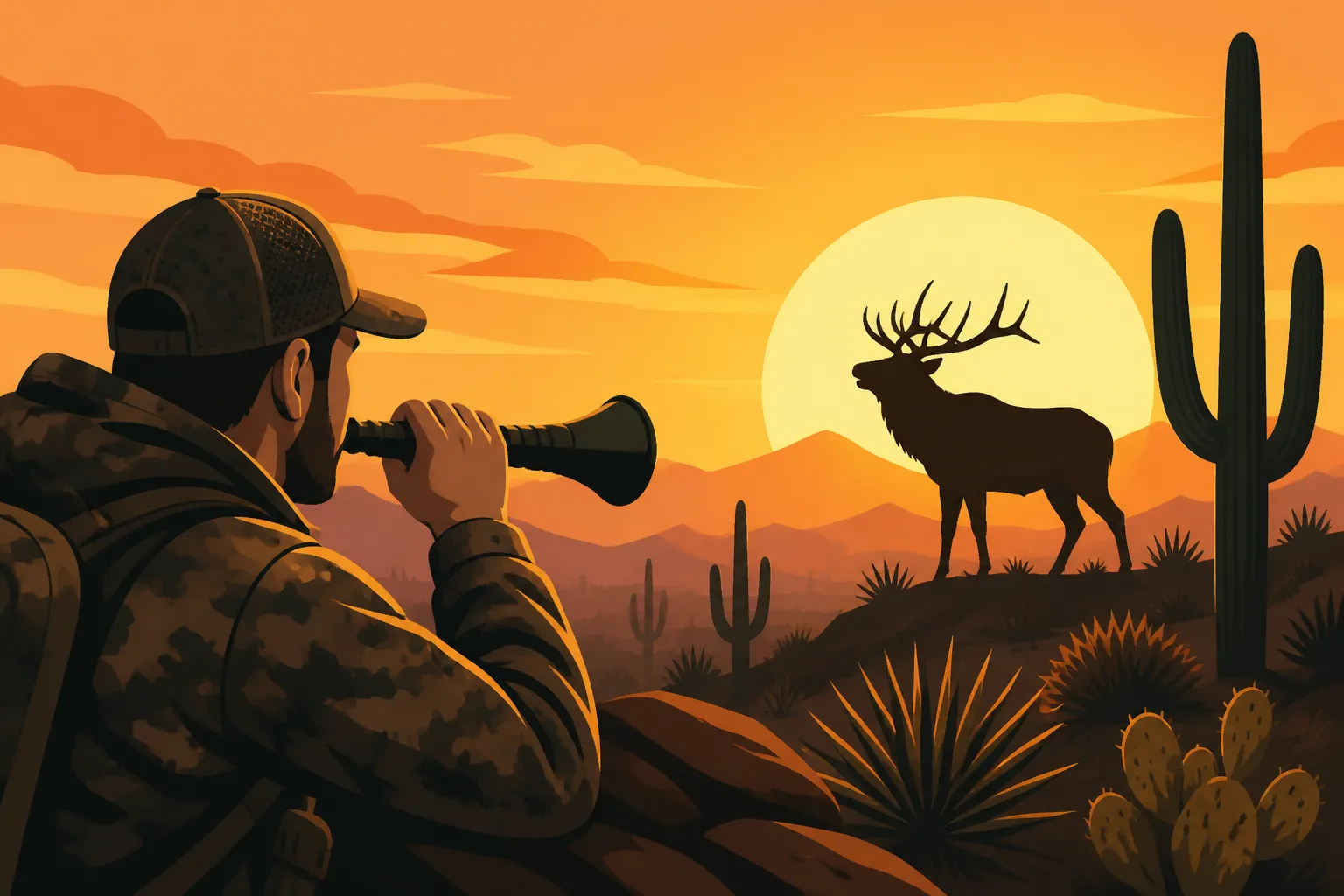
Think of a locator bugle as a gentle knock on the door, not a battering ram. Its primary goal is to elicit a response from a bull, often one that's still comfortably bedded, without necessarily drawing him in or making him feel threatened. You’re not trying to call him to you, but rather to get him to tell you where he is. This is especially true during the early morning hours, just as daylight begins to creep over the horizon. Bulls are often vocal at this time, settling into their daytime beds, and a well-placed, subtle bugle can often get them to "stretch their pipes" one last time before going quiet for the day. It’s a way to cut through the silence and identify a starting point for your morning hunt. This initial contact is vital, as it directs your efforts rather than having you wander aimlessly through prime elk habitat.
A common frustration for hunters is walking for miles, only to stumble upon fresh sign or hear a distant bugle too late in the morning. Locator bugling aims to preempt that. By knowing where a bull is, you can plan your approach, consider wind direction, and strategize a stalk, rather than react to a surprise encounter. It helps you prioritize areas. For instance, if you're hunting in unit 23, knowing where the elk are vocalizing can tell you which canyon or ridge to focus your attention on, saving you precious time and energy.
Optimal Conditions and Timing for Locator Bugling
Timing is everything in elk hunting, and locator bugling is no exception. The golden window for success usually begins about 30-45 minutes before first light and extends for roughly an hour after the sun has fully risen. This is when elk are typically most vocal as they transition from their nocturnal feeding to their daytime bedding areas. The cool, stable air of dawn also helps sound travel farther and more clearly, making it easier for your bugle to be heard and for you to hear a response.
However, conditions can vary significantly depending on where you are in Arizona. In the higher elevations of the White Mountains, the air might hold sound differently than in the more open, ponderosa pine forests of the Mogollon Rim. If you’ve done your preseason scouting, perhaps even using a tool like GoHunt to analyze terrain and potential bedding areas, you'll have a better idea of how sound will carry in your chosen unit.
The rut cycle also plays a huge role. During the peak of the rut, bulls are more inclined to respond to any sound, whether it's a challenge or a cow call. Earlier in the season, or during the post-rut, they might be much more tight-lipped. That’s why understanding Bugle Timing Across the Mogollon Rim is so crucial. A bull that's hot on the heels of cows will respond differently than one simply moving from feed to bed. Rain or fog can also muffle sound, while clear, still mornings are ideal. Always consider the weather and current elk behavior when deciding when and how aggressively to use a locator bugle.
Technique and Strategy for Effective Locator Bugling
Simply blowing into a bugle tube isn't enough. There's an art and a science to it. Your goal is to sound like an elk, but not necessarily a dominant bull looking for a fight, unless you're confident in your ability to follow up with an aggressive play. For locator bugles, subtlety and authenticity often yield the best results.
Types of Bugles and Calls
When it comes to locator bugles, you generally want to start with something less aggressive. A common mistake is to rip out a full-blown, challenging bugle right away. This can intimidate silent bulls into staying quiet or even push them away. Instead, consider these options:
- Lone Bugle (Soft, Questioning): This is often your go-to. It’s a soft, drawn-out bugle, perhaps with a slight chuckle at the end, but without the intense squeals or grunts of a dominant bull. It sounds like a bull checking in, seeing who else is around. This is usually what I start with when trying to locate. You're not trying to pick a fight; you're just saying, "Hey, anyone out there?"
- Chirps and Mews (Cow/Calf Sounds): Sometimes, a series of soft cow mews or calf chirps can be more effective than a bugle, especially if the bulls are pressured or hesitant to bugle themselves. Bulls often respond to these social calls, either with a soft bugle or by just moving closer to investigate, giving away their position. These are less threatening and often pique a bull's curiosity. A bull might not want to challenge another bull, but he might very well want to check out a lonely cow.
- The "Hooch" or Grunt: This is a soft, deep grunt that a bull makes. It's often used as a quiet communication within a herd. It doesn't travel far, but if you're in an area you suspect holds elk, a few soft hooch calls might elicit a nearby, hesitant response without broadcasting your presence too widely.
Remember, the goal is to get a response, not necessarily to immediately call them in. You're mapping their location. Vary your calls; don't just stick to one sound. Sometimes, a quiet chuckle or a lost cow moan can break the silence better than a piercing bugle, especially with Cow Calling Pressured Arizona Bulls.
Positioning and Sound Projection
Your physical position and how you project your sound are just as important as the call itself. Elk have incredible hearing, and sound travels differently through various terrains.
- Elevated Positions: Whenever possible, find a high point – a ridge, a knoll, or even a slight rise – before you bugle. This allows your sound to travel further and helps you hear distant responses that might otherwise be muffled by terrain features. It also gives you a better vantage point for listening. The higher you are, the less likely a slight change in terrain will block an incoming response. Many hunters spend time e-scouting before the season, utilizing platforms like GoHunt for detailed topographic maps to identify these natural sound amplifiers.
- Facing Away: When you bugle, sometimes it's effective to turn your back slightly to the direction you think elk might be. This diffuses the sound a bit, making it harder for a bull to pinpoint your exact location, especially if you get an immediate response and need to move. It creates a more natural, less direct sound source.
- Sound Direction: Don't just blast your bugle in one direction. Spin slowly, bugling every 45-60 degrees, to cover a wider area. Pause for a few minutes after each rotation to listen intently. Use your hands to cup your ears to amplify distant sounds. The vastness of Arizona’s units means you need to cover ground, but also cover sound space effectively. This is where understanding how Elk Country Along the Mogollon Rim differs from other terrain types becomes vital; thick timber will absorb sound more readily than open meadows.
- Wind Awareness: Always be acutely aware of the wind. Sound travels with the wind, but more importantly, elk rely heavily on their sense of smell. You never want your scent to reach a bull you're trying to locate. If the wind is blowing towards a likely bedding area, change your position. This might mean making a wider loop or waiting for thermals to shift. Understanding how thermals rise and fall at dawn is paramount. At first light, cool air usually sinks down drainages. As the sun rises, it warms the ground, and thermals begin to rise. Planning your bugling positions around these thermal shifts is a game-changer.
Pairing Locator Bugles with Cow Calls
While a solo locator bugle can be effective, pairing it with subtle cow calls can often increase your success rate, especially when hunting more wary or pressured elk.
- The "Silent Cow" Strategy: Sometimes, after a soft locator bugle, instead of waiting for a bull to bugle back, you might follow up with a series of soft cow mews. This makes it sound like a small, dispersed herd. A bull might not want to challenge a lone bull, but he might be very interested in investigating a group of cows. This is particularly effective if you suspect the bull is already with his cows and feels secure.
- Delayed Response: Don't immediately follow your bugle with a cow call. Give it a minute or two. Let the silence hang. This gives a bull time to process your sound and decide whether to respond. If nothing, then perhaps a few soft mews. This mimics natural elk behavior more closely.
- Separated Sounds: If hunting with a partner, one person can bugle from one position, and the other can make soft cow calls 50-75 yards away. This creates the illusion of a small, scattered herd, which can be very enticing to a bull looking to gather more cows or challenge a rival that seems to be "stealing" his harem. This tactic makes the scenario more believable to the wary ears of an Arizona bull.
Reading the Elk's Response and Adjusting Your Approach
Getting a response is just the first step. The true skill lies in interpreting that response and using it to inform your next move. Every bugle, every chuckle, every grunt tells a story, and you need to be fluent in elk language.
Interpreting Elk Replies
Not all responses are created equal. A bull’s bugle can convey everything from aggression to curiosity, and even boredom.
- Weak or Distant Bugle: This usually means the bull is either far away, not very interested, or perhaps a younger, smaller bull. It's a location indicator, but not one that suggests an immediate charge. You’ll want to adjust your position to get closer, using the wind and terrain to your advantage.
- Strong, Confident Bugle (without grunts/chuckles): This bull is likely larger and more dominant, or at least feels secure. He's letting you know he's there. He might be interested, but not necessarily aggressive. This is a good sign; you’ve got a responsive bull.
- Aggressive Bugle (with grunts, chuckles, rakes): This is a bull ready for a confrontation. He’s likely dominant, possibly has cows, and he’s telling you to stay away. This can be a great sign for an aggressive play, but it also means he’s likely to approach cautiously, circling downwind. If you're hoping for a Calling Bulls on Arizona's Mogollon Rim scenario, this is what you want.
- Silent Approach: Sometimes, the best bulls won't bugle back at all, especially if they’re pressured. They might simply move in silently to investigate the source of the sound. This is where patience and meticulous listening are crucial. After your locator bugle, listen for subtle sounds: footsteps, branches breaking, or even the distinct scent of elk. This is why paying attention to details like Reading Fresh Elk Sign in Ponderosa Timber during your scouting efforts can tell you where to expect silent approaches.
- Multiple Responses: If you get multiple bugles, try to determine if they are from different bulls or a single bull moving. Sometimes, younger satellite bulls will bugle in response, while the herd bull stays quiet but moves to round up his cows. This information is vital for deciding which direction to move.
Differentiating Real Bulls from Hunters
This is a scenario every Arizona elk hunter has faced: you bugle, and immediately get a response that sounds… off. It’s a common frustration, especially on public land.
- Sound Quality: Hunter bugles often sound too perfect, too uniform, or lack the authentic rasp and depth of a real bull. They might also have a metallic or artificial quality from the call device itself. Real elk bugles have a raw, organic sound.
- Cadence and Pauses: Real bulls have natural cadences, often pausing, grunting, or chuckling at unpredictable intervals. Hunters might have a more predictable, rhythmic bugle.
- Location and Movement: If a bugle sounds too close to a road or a common hiking trail, it's often another hunter. If you get a response, then move, and the "bull" seems to move exactly with you or mirrors your exact actions, it's highly likely to be a human.
- Visual Confirmation (if safe): If you suspect it's another hunter, a quick scan with binoculars can often confirm it. Look for blaze orange, human movement, or vehicles. If in doubt, back out and try a different area. It’s always better to be safe than sorry, and the vastness of the Arizona wilderness often means there's another opportunity nearby. Knowing how to use Optics Power for Arizona's Long Desert Sightlines can help confirm what you're hearing.
Adjusting Your Stalk Based on Responses
Once you’ve located a bull and interpreted his response, it’s time to move. This isn’t a blind charge; it’s a calculated stalk based on his communication.
- Aggressive Bull: If a bull is screaming back aggressively, he might be willing to come to you. You can try a more aggressive calling sequence, perhaps with some raking sounds (scraping a stick against a tree to simulate a bull raking his antlers). But always be prepared for him to circle downwind. Position yourself so the wind is in your favor as he approaches.
- Cautious or Distant Bull: If the bull is hesitant or far off, close the distance quietly. Use the terrain to conceal your movement. Approach slowly, stopping often to listen and recalibrate. This is where that understanding of Terrain That Hides an Approach in Desert Country really pays off. Once you’ve cut the distance by half or more, try another soft locator bugle or some cow calls to gauge his continued interest.
- Silent Bull: If you suspect a bull has gone silent but is still in the area, or is moving towards you cautiously, stop calling and let him come. Focus entirely on listening for subtle sounds of his approach. Get ready, nock an arrow or shoulder your rifle, and be prepared for him to appear. This often happens with older, smarter bulls who have heard it all. You can use mapping resources like GoHunt to visualize potential approach lanes for silent bulls.
- Wind and Thermals are Your Boss: No matter what kind of response you get, your number one priority is managing your scent. Always approach from downwind, or ensure that thermals are carrying your scent away from the elk’s suspected location. If the wind changes, you need to change your approach, even if it means a long, circuitous route. Trying to force an approach with bad wind is a recipe for failure in Arizona.
Here's a quick summary of common locator bugle scenarios and how to react:
| Scenario | Bull's Response (Auditory) | Likely Behavior | Recommended Action |
|---|---|---|---|
| Early Dawn Locator | Soft, distant bugle or chuckle | Bedded, checking in, not aggressive | Move quietly to cut distance, re-evaluate wind, try another soft call in 15-20 minutes. |
| Dawn Locator with Cow Calls | Excited bugle, frequent chuckles/grunts | Alert, possibly with cows, interested | Be ready, position for a shot, prepare for an aggressive approach. Maintain wind advantage. |
| Locator in Pressured Area | No immediate response, then soft mew | Wary, curious, moving silently | Go silent, listen intently for movement. Assume a silent approach. Check wind frequently. |
| Locator with Follow-up | Aggressive, challenging bugle, raking | Dominant, ready to confront, has cows | Return an equally aggressive bugle, set up for a fight. Be prepared for a quick, direct approach. |
| Overcast/Foggy Conditions | Muffled, hard to pinpoint | Sound distorted, difficult to judge | Focus on very short-range calls and physical scouting. Rely more on visuals and fresh sign. |
Common Mistakes and How to Avoid Them
Even seasoned hunters can make mistakes when locator bugling. Understanding these pitfalls can save you from blowing an opportunity.
Overcalling and Sounding Unnatural
One of the biggest blunders is calling too much or sounding artificial. Elk are incredibly smart, and they can tell when something isn't right.
- Less is More: You're not having a conversation; you're trying to get a ping. One or two well-executed locator bugles are often sufficient to get a response. If a bull responds, let him do most of the talking initially. Excessive calling can make you sound desperate, or worse, like an easily located target, which will make savvy bulls hang up or flee.
- Authenticity Over Volume: Don't try to make your bugle the loudest in the forest. Focus on making it sound like a real elk. This means practicing with different calls, paying attention to the nuances of real elk sounds, and knowing the capabilities of your specific call. A bull will respond to a realistic soft call more readily than a piercing, artificial one.
- Vary Your Tones: Just like humans, elk don't make the exact same sound every time. Vary the pitch, duration, and intensity of your bugles. Mix in a few chuckles or grunts, then some cow mews. This creates a more dynamic and believable scenario. If you're using a single note, flat bugle every five minutes, you're signaling "human."
Ignoring Wind and Thermals
We've touched on this, but it bears repeating: scent control and wind direction are paramount. This isn't just about avoiding detection; it's about being able to make an ethical shot.
- The Unseen Predator: Elk rely heavily on their sense of smell, and they can detect human scent from hundreds of yards away, even if you’re using scent-eliminating sprays or wearing carbon clothes. The wind is the ultimate scent carrier.
- Thermals are Predictable: In the mornings, cold air (and your scent) typically flows downhill. As the sun warms the earth, thermals reverse and start moving uphill. Understanding this daily cycle is critical for any elk hunt in Arizona. Always position yourself so that your scent is blowing away from where you expect the elk to be or where they've responded from. Many hunters use applications like GoHunt which integrate weather data, including wind direction forecasts, to help plan their approach.
- The Downwind Circle: If a bull is bugling consistently and seems interested, he will almost certainly try to circle downwind of your position to get your scent. He wants to know exactly what he’s dealing with before committing. Be prepared for this. Have a partner ready to move and intercept, or anticipate his circle and set up your shot lane accordingly.
Not Using Terrain to Your Advantage
Arizona's varied landscape offers incredible opportunities for concealment, but only if you use it wisely.
- Blind Calling: Avoid bugling from completely open areas where you have no cover. If a bull charges in, you want natural barriers to break up his line of sight and give you time to draw or raise your weapon. Use trees, rocks, and changes in elevation to your advantage.
- Sound Barriers: Sometimes, a small knoll or a dense stand of pines can act as a natural sound barrier, allowing you to get closer to a bugling bull without being immediately spotted or pinpointed. Bugle from just behind these features.
- Escape Routes: Always have an exit strategy. If the bull comes in too hot, or you realize it’s another hunter, know where you can move silently to break contact or reposition safely. This awareness of your surroundings is crucial, especially when moving through unfamiliar areas during Scouting an Arizona Unit Before the February Deadline.
- Navigating for Success: Whether you're hunting the rugged canyons for Coues Deer Are Arizona's Signature Whitetail or glassing Mule Deer Across Arizona's Northern Plateaus, understanding your surroundings, including potential escape routes and ambush points, is crucial. For elk, especially, this means knowing the most likely routes a bull will take to approach or flee, and positioning yourself accordingly.
Ultimately, locator bugling at dawn in Arizona is a learned skill that improves with practice and experience. It’s about being patient, listening more than you call, and always respecting the incredible senses of these majestic animals. Good luck out there, and may your mornings be filled with the thrilling sound of a distant bull!
Disclaimer
Hunting is an inherently dangerous activity. This guide provides general information and recommendations only. Always consult and strictly adhere to the most current Arizona Game and Fish Department regulations and local land use rules. Safety should be your absolute top priority in the field.