Arizona Bison on the Kaibab and House Rock
Hunting Arizona bison is a truly monumental undertaking, a once-in-a-lifetime dream for many, and a logistical puzzle for those fortunate enough to draw one of the incredibly rare tags. You've heard the whispers of these majestic animals roaming wild in some of the state's most remote and breathtaking landscapes, and the idea of pursuing such an iconic species is undeniably alluring. This comprehensive guide is designed to peel back the layers of mystery surrounding Arizona's bison hunts, offering a deep dive into the specific units of the Kaibab Plateau and House Rock Wildlife Area, the intricate draw process, essential preparations, and critical hunting strategies to help you realize this incredible adventure.
The Mystique of Arizona's Wild Bison
There's something inherently powerful and deeply rooted in North American history about the American bison. They represent a connection to a wilder past, a symbol of resilience and untamed spirit. For hunters, the opportunity to pursue bison in a free-ranging, fair-chase environment, especially in a state as diverse and challenging as Arizona, is a truly unparalleled experience. It’s not just about the harvest; it’s about immersing yourself in a landscape where these giants roam, understanding their behavior, and proving your mettle against an animal built for survival.
Why Bison Hunting is a Unique Challenge
Unlike chasing elk through timber or glassing for Coues deer in the sky islands, bison hunting presents a distinct set of physical and mental challenges. These animals are massive, capable of absorbing a tremendous amount of lead, and possess an almost supernatural ability to disappear into seemingly open country. Their sheer scale means that when you do harvest one, the work has only just begun. It's an endurance event, demanding peak physical condition, precise marksmanship, and a deep understanding of animal anatomy. You're not just hunting an animal; you're engaging with a piece of living history, an animal that once dominated the continent. The pursuit often takes you to rugged, remote areas where weather can turn on a dime, adding another layer of complexity.
Understanding Arizona's Bison Populations
Arizona is home to two primary, free-ranging bison herds, each with its own unique history and management strategy, which we'll delve into shortly. The existence of these herds is a testament to dedicated conservation efforts that brought these animals back from the brink of extinction. Historically, bison were nearly wiped out across the West by the late 19th century. Arizona's populations today are carefully managed by the Arizona Game and Fish Department (AZGFD) to maintain healthy herd numbers, prevent overgrazing, and ensure genetic diversity. These hunts are a critical tool in that management, providing funding and allowing for selective harvest that benefits the overall health of the herd. Understanding the specific herd you're applying for, whether it's the Kaibab herd or the House Rock herd, is crucial as their habitats and genetic backgrounds differ, influencing hunt dynamics and success rates.
Where Giants Roam: Kaibab and House Rock
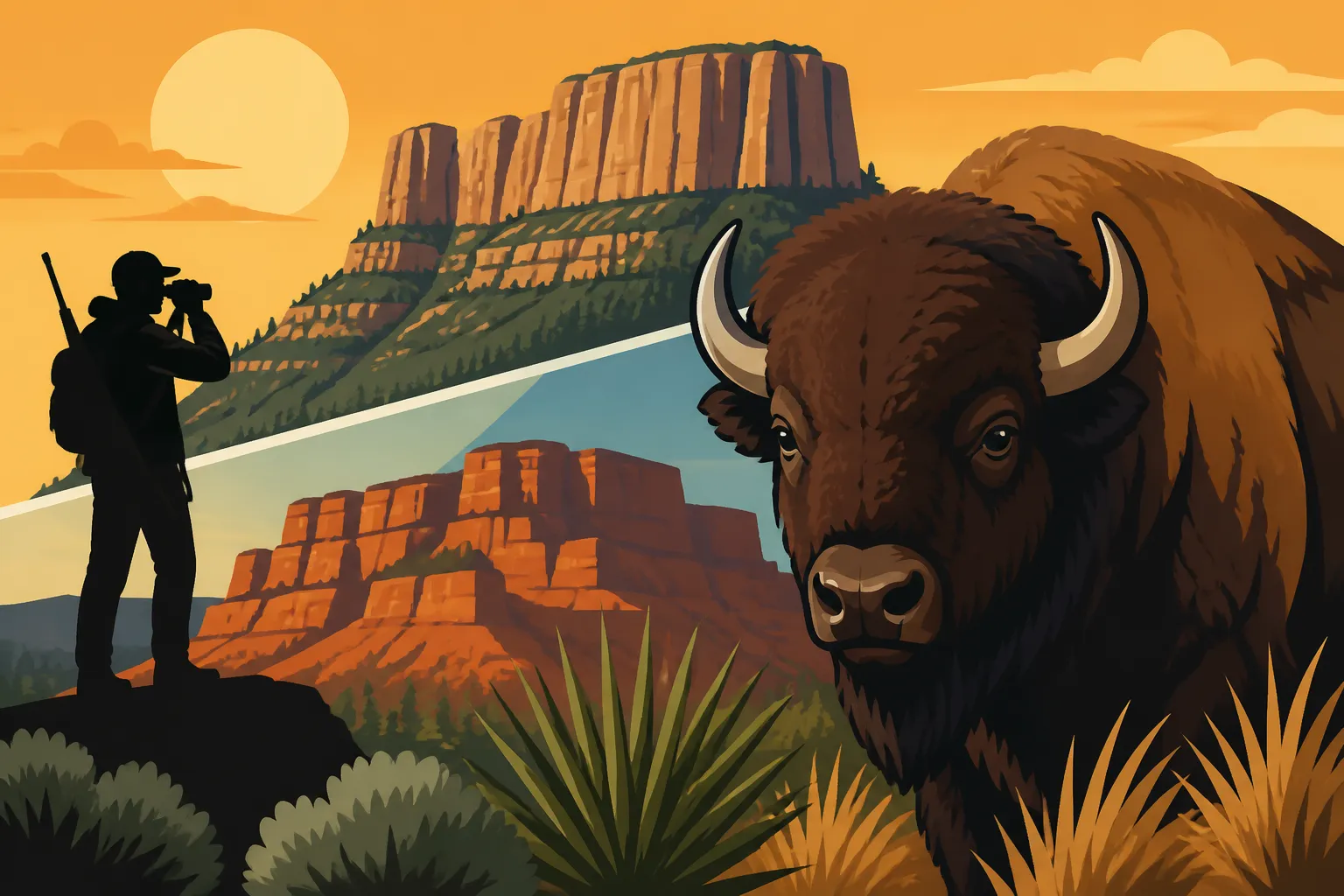
Arizona's bison herds are concentrated in two distinct, iconic landscapes, each offering a vastly different hunting experience. Both areas are visually stunning and demand respect from hunters, but their unique characteristics shape everything from access to hunting tactics.
The Grandeur of the Kaibab Plateau Herd
The Kaibab Plateau, located north of the Grand Canyon, is a legendary hunting ground for many species, and its bison herd adds to its mystique. This herd traces its origins back to the early 1900s when bison were introduced to the area, some of which had a genetic mix of domestic cattle. Over a century, these animals have adapted to the rugged ponderosa pine forests, aspen groves, and open meadows of the Kaibab. Accessing this region can be incredibly challenging, especially during late season hunts when snow can close roads and make travel treacherous. You're often dealing with significant elevation changes, dense timber, and vast stretches of remote wilderness. The sheer scale of the landscape makes locating these animals a formidable task, often requiring extensive glassing and covering many miles on foot. When you're out here, you're truly in wild country, far from paved roads and easy resupply. The Kaibab herd, while robust, faces unique challenges due to its proximity to Grand Canyon National Park, leading to specific management considerations for animals that stray from traditional hunting grounds.
The Ruggedness of the House Rock Wildlife Area
East of the Grand Canyon, nestled against the Vermilion Cliffs, lies the House Rock Wildlife Area. This area is distinctly different from the Kaibab, characterized by expansive grasslands interspersed with juniper and pinyon pine woodlands. The House Rock herd is renowned for its purer genetic lineage, stemming from Yellowstone National Park bison introduced in the 1940s. Access to House Rock is generally more straightforward than the Kaibab, with more open country and a network of dirt roads. However, don't let "easier access" fool you; this is still wild, unforgiving country. The open nature of the terrain can make stalks incredibly difficult, as bison have excellent eyesight and can spot movement from a long distance. Wind is a constant factor here, swirling unpredictably among the rolling hills. The House Rock area offers a classic Western bison hunting experience, often involving long-range glassing, careful planning of approaches, and a lot of patience. The landscape, while less timbered than the Kaibab, still offers plenty of draws and canyons for bison to seek cover, making them elusive despite the open vistas.
| Feature | Kaibab Plateau Herd | House Rock Wildlife Area Herd |
|---|---|---|
| Location | North of Grand Canyon, Coconino Plateau | East of Grand Canyon, Vermilion Cliffs |
| Primary Habitat | Ponderosa pine forests, aspen, meadows, high elevation | Grasslands, juniper, pinyon pine, rolling hills, lower elevation |
| Genetic Lineage | Mixed with some domestic cattle genetics | Pure Yellowstone National Park lineage |
| Access | More challenging, especially with snow; dense timber | Generally more open, dirt roads; long visibility |
| Hunting Style | Spot-and-stalk in timber, tracking, rugged | Long-range glassing, careful open-country stalks |
| Weather | Significant snow, cold, elevation | Wind, dry, can be very warm to cold depending on season |
| Tags Issued | Typically fewer tags, highly coveted | More tags, but still extremely limited |
Navigating the Arizona Bison Draw
Securing an Arizona bison tag is widely considered one of the toughest draws in Western big game hunting. It's not for the faint of heart, or for those expecting quick success. This is a commitment to a multi-year, often multi-decade, bonus point strategy.
The Application Process and Deadlines
Arizona operates on two primary draw cycles for big game, and bison tags fall into the February deadline cycle, alongside elk and antelope. This means you'll need to submit your application well in advance, typically by the second Tuesday of February. The application itself is handled through the Arizona Game and Fish Department's online portal. It’s imperative to double-check all deadlines and requirements in the current year's hunt regulations booklet, as details can sometimes change. You'll need an Arizona hunting license purchased beforehand, which is valid for a full year.
When you're submitting your application, you'll need to decide which hunt code you're applying for – that means choosing between the Kaibab and House Rock hunts, and often specific weapon types or seasons within those areas. This is where meticulous research really pays off. Tools like GoHunt can be invaluable resources for looking at historical draw odds, understanding unit boundaries, and planning your strategy. They aggregate data that can help you make an informed decision on which hunt code to apply for, though with bison, the odds are always incredibly slim. Keep in mind that Arizona Caps Nonresidents at Ten Percent of Every Hunt, meaning out-of-state hunters face even steeper odds for these already rare tags. You might also want to review "Arizona Runs Two Draw Cycles, February and June" to understand the full scope of the state's application calendar, even though bison are strictly in the February cycle.
Understanding Draw Odds and Bonus Points
Let's be blunt: Arizona bison draw odds are brutal. You're talking about a fractional percentage chance in most years, even with a pile of bonus points. The state uses a bonus point system designed to reward loyalty and persistence. Every year you apply for a species and are unsuccessful, you accrue another bonus point for that species. These points increase your statistical chance of drawing a tag in future applications, but they do not guarantee a tag. You can also purchase a bonus point without applying for a hunt, which is a common strategy for hunters who know they'll need many years to build up enough points to even be competitive.
Many hunters accumulate 20, 25, or even 30+ points before they finally draw a bison tag. This long game requires patience and a willingness to commit to the process for the long haul. Utilizing resources that break down the "Arizona Bison Draw Odds" by unit and point level can give you a realistic picture of the challenge ahead. It’s also wise to consider the different hunt types, such as "Arizona Fall Bison Against Spring Bison", as draw odds can vary slightly between early and late season, or specific weapon types. While it's largely a numbers game, understanding these nuances can help refine your application strategy with services like GoHunt. Don't be discouraged by the odds; think of it as an investment in a potential future adventure of a lifetime.
Tag Costs and What to Expect
Drawing a bison tag is one hurdle; affording it is another. These are not inexpensive hunts, and the state charges a substantial fee for the tag itself, particularly for nonresidents. Beyond the cost of your annual Arizona hunting license, a bison tag can run into the thousands of dollars. For non-residents, the price is significantly higher than for residents. This financial commitment needs to be factored into your long-term planning, especially if you're playing the bonus point game for many years.
These costs cover the management and conservation efforts that sustain these magnificent animals, ensuring that future generations will also have the opportunity to pursue them. It’s a significant investment, but for those who successfully draw, the experience itself is considered priceless. Always check the current year's regulations for the precise fee structure, as these numbers can adjust over time. Be prepared for your credit card to be charged immediately if you are successful in the draw, so ensure you have sufficient funds available.
Gear Up: Preparing for Your Bison Adventure
Once you've beaten the odds and drawn that coveted Arizona bison tag, the real work begins. Proper preparation, both physical and in terms of equipment, is paramount for a successful and safe hunt.
Physical and Mental Conditioning
Let's be brutally honest: hunting a bison is an athletic event. These hunts often take place in remote, rugged country, and once you've located an animal, you could be in for a long, difficult stalk. More importantly, once the animal is down, the physical exertion required for field dressing and packing out hundreds of pounds of meat is immense. You'll be dealing with significant weight in challenging terrain, potentially at high elevations or in extreme temperatures.
Think about comprehensive training that goes beyond just walking. Incorporate strength training focusing on your back, legs, and core. Practice hiking with a loaded pack, simulating the weight you'll carry once you start quartering your animal. Cardio is critical – long hikes, trail running, and stair climbing will build the endurance you need. Don't forget flexibility and balance training to navigate uneven ground. Mentally, prepare for discomfort, fatigue, and the possibility of unexpected challenges. Being able to push through when you're exhausted and still make good decisions is a hallmark of a successful hunter. A great resource to get you started on this journey is to consult an article on "Preparing Physically for a Desert Hunt," as many of the principles of enduring tough Arizona conditions apply, even if bison are often in higher, more timbered areas.
Essential Hunting Equipment
Your gear choices can make or break a bison hunt. You need reliable, robust equipment that can withstand the rigors of the Arizona backcountry.
- Rifle and Ammunition: Bison are incredibly tough. A minimum of a .300 Winchester Magnum is often recommended, with many opting for .338 Winchester Magnum or larger. The key is heavy, controlled-expansion bullets designed for deep penetration. Practice extensively with your chosen setup to ensure pinpoint accuracy, as shot placement is critical.
- Optics: High-quality binoculars (10×42 or 12×50) are essential for spotting bison at long distances, especially in the more open House Rock terrain. A powerful spotting scope (20-60x) is equally important for evaluating animals and planning your approach. Rangefinders are non-negotiable for accurate shot placement.
- Navigation: While you might have a guide, reliable navigation is still your responsibility. A GPS unit or a smartphone with detailed hunting apps (like GoHunt for its mapping layers) is crucial. Carry spare batteries, and always have a physical map and compass as a backup. Knowing how to read a map and use a compass can literally be a lifesaver in remote areas.
- Clothing: Layering is key. Arizona weather can be unpredictable, with significant temperature swings from day to night, especially at higher elevations or during shoulder seasons. Waterproof outerwear is a must. Dress in durable, quiet fabrics that won't snag on brush.
- Camp Gear: Depending on your hunt style, you might need a full backcountry camp setup – sturdy tent, warm sleeping bag, cooking system, and ample water filtration/storage.
Logistics: From Travel to Camp
Planning the logistics of an Arizona bison hunt is almost as involved as the hunt itself. These areas are remote, and you need to be self-sufficient.
- Vehicle: A reliable 4×4 truck or SUV with good ground clearance is essential. You'll be driving on rough dirt roads, and mud or snow can create serious challenges. Carry a spare tire (or two), a jack, tire repair kit, and recovery gear like a shovel and tow strap.
- Fuel: Top off your tank whenever you have the opportunity. Carry extra fuel in approved containers, as gas stations can be hundreds of miles apart in these remote regions.
- Water: Water is life in Arizona. Plan to carry significantly more water than you think you'll need, both for drinking and for field dressing. Consider a large water storage container for camp and hydration packs for hunting.
- Food: Pack non-perishable, calorie-dense foods that are easy to prepare. Dehydrated meals are excellent for backcountry scenarios.
- Emergency Supplies: A well-stocked first-aid kit, satellite communication device (SPOT or inReach), fire starter, headlamp, and emergency blanket are non-negotiable. Cell service will likely be nonexistent.
- Meat Care: Crucially, bring plenty of game bags, coolers, and ice. You’ll need to get the meat cooled quickly, especially if hunting in warmer weather. We'll discuss this in more detail later.
Thorough preparation in all these areas will drastically improve your chances of a safe, successful, and enjoyable bison hunt. It's a testament to the fact that a big game hunt is as much about the planning as it is about the trigger pull.
Stalking the Plains Boss: Bison Hunting Strategies
Actually locating and successfully harvesting an Arizona bison requires a blend of patient observation, strategic movement, and precise execution. These animals are incredibly tough, and their behavior demands a thoughtful approach.
Scouting and Locating Herds
Long before opening day, dedicated scouting, both physically and with modern tools, is crucial. E-scouting can give you a significant advantage. Using satellite imagery and topographical maps, you can identify potential bedding areas, feeding grounds, and travel corridors. This is where tools like GoHunt mapping applications shine, allowing you to mark waypoints, measure distances, and understand the terrain from your living room. Consider potential water sources, as these can be magnets for bison, especially in dry periods. Looking at historical harvest data can also provide clues on areas where bison tend to frequent.
Once in the field, it's all about patient glassing. Bison, despite their size, can be surprisingly adept at blending into their surroundings, especially in timbered areas or against the backdrop of rolling hills. Find a high vantage point and systematically comb the landscape with your binoculars and spotting scope. Look for subtle movements, dark shapes against lighter backgrounds, or the tell-tale sign of a herd feeding. Pay attention to wind direction, as bison have an excellent sense of smell. Tracks and droppings are obvious signs, but also look for rubbed trees or fresh wallows, indicating recent bison activity. Remember, in units like the House Rock, where the terrain is more open, long-range glassing is paramount. For more detailed information on maximizing your preseason efforts, consider reading "E-Scouting an Arizona Unit Before the Season".
The Approach and Shot Placement
Once you've located a bison you intend to pursue, the stalk becomes the most critical phase. Bison are not known for their incredible speed over long distances, but they can move surprisingly fast in short bursts, and a spooked herd can disappear quickly. Always play the wind, using terrain features like draws, ridges, and dense vegetation to conceal your movement. Move slowly and deliberately, taking advantage of every bit of cover. Unlike deer or elk, which often offer broadside shots in the ribs, a bison's vitals are positioned further forward and lower in their massive chest cavity, protected by a dense shoulder blade and thick hide.
The ideal shot placement for a bison is the crease behind the shoulder, aiming for the heart and lungs, or a brain shot if conditions allow for absolute precision and ethical certainty (though this is much harder). A head-on shot is incredibly risky due to the thick skull. A high shoulder shot can drop an animal in its tracks by damaging the spine, but requires precise placement. Be prepared to shoot from various positions – kneeling, prone, or using shooting sticks. Avoid shooting into the hump, as this is mainly muscle and fat, and a poor shot will only wound the animal and make recovery incredibly difficult. Take your time, control your breathing, and ensure you have a stable rest.
Tracking and Recovery
Bison are incredibly tough animals, and even a well-placed shot may not result in an immediate drop. Expect the animal to run, often a considerable distance. After the shot, give the animal time, especially if it appears to be hit hard but not down. Wait 15-30 minutes if you believe it's a heart/lung shot, or longer if you're unsure. Mark the precise spot where the animal was standing and the direction of travel. Then, begin tracking methodically. Look for blood, broken branches, disturbed earth, or scuffed rocks. Bison leave large tracks, but in dense cover or on hard ground, they can still be difficult to follow.
If there's snow on the ground, tracking becomes easier, but the cold adds urgency to the recovery process. If you lose the trail, spread out your hunting party and grid search the area. Bison can travel further than you'd expect, even when mortally wounded. It's not uncommon for them to head for the thickest cover available. Having a plan for bringing help and extra resources to aid in tracking is a smart move. Remember, a downed bison is not the end of the work; it’s the beginning of a monumental task that requires teamwork and a commitment to recover every pound of meat.
After the Harvest: Ethical Care and Regulations
Congratulations, you've harvested an Arizona bison! Now, the real work, and potentially the most strenuous part of the entire hunt, begins. Ethical treatment of the animal and adherence to regulations are paramount.
Field Dressing and Meat Care
A bison is a truly massive animal, often weighing upwards of 1,500 to 2,000 pounds. Field dressing one is not like field dressing a deer. You'll need multiple people, strong knives, and possibly a small saw. The priority is to get the hide off and the body cavity open as quickly as possible to allow the meat to cool. This is especially critical if you're hunting in warmer conditions, even during late season hunts, as the sheer mass of muscle retains heat for a long time. You might even have to break the animal down into quarters and smaller pieces while it's still largely intact on the ground.
Have large, clean game bags ready. Hang the quarters if at all possible to allow air circulation, but this often isn't feasible with bison due to their immense weight. Focus on getting the meat out of the sun and into coolers with ice as rapidly as possible. This is where pre-planning with a substantial ice supply and large coolers becomes absolutely essential. For insights into managing your harvest in challenging conditions, articles like "Field Dressing in Desert Heat" and "Getting Meat Cooled on an Early Season Hunt" offer valuable tips that can be adapted for bison, even if the terrain and temperatures differ. Failing to properly cool the meat can lead to spoilage, which is an unfortunate and unethical waste of a magnificent animal.
Tagging and Reporting Requirements
Arizona Game and Fish Department regulations are very clear about tagging and reporting. Immediately upon harvesting your bison, you must detach and validate your tag. The tag must be securely affixed to the animal. It's usually attached to the horn, ear, or leg, and must remain with the meat until it reaches its final destination or is processed. Pay close attention to any "evidence of sex" requirements, which usually mean a portion of the animal's reproductive organs must remain naturally attached to the carcass or a major cut of meat. This ensures that law enforcement can verify the legality of the harvest.
Beyond immediate tagging, Arizona typically requires mandatory reporting of bison harvests. This often involves checking in at a designated AZGFD office or check station within a specific timeframe, usually 24 to 48 hours. This allows biologists to collect critical data such as age, sex, and sometimes tissue samples, which are vital for ongoing herd management and research. Always consult the current year's hunting regulations for the precise details and deadlines for reporting your specific hunt code. Understanding "How Soon You Must Tag a Downed Animal" is not just a recommendation; it's a legal requirement that protects both you and the resource.
Transporting Your Trophy
Transporting a bison harvest is a significant logistical challenge. You're dealing with hundreds of pounds of meat, bones, hide, and potentially a skull. Your vehicle needs to be capable of handling this weight. Ensure your coolers are large enough and you have a good system for keeping the meat cold during transit, especially if you have a long drive home.
If you plan to have the hide tanned or the skull mounted, special care is needed. The hide will need to be properly caped and salted to prevent spoilage. The skull might need to be cleaned and protected. Discuss these details with your taxidermist and meat processor in advance. If you're a nonresident, be aware of any specific regulations regarding the interstate transport of game meat or parts. This is where having a clear plan for processing and transport even before you leave for your hunt will reduce stress and ensure your hard-won trophy is preserved correctly.
The Future of Arizona's Bison: Conservation and Management
The very existence of healthy, free-ranging bison herds in Arizona is a testament to sound conservation practices. These magnificent animals are not just a hunting opportunity; they are a vital part of the state's natural heritage, and their continued well-being depends on ongoing, proactive management.
AZGFD's Role in Herd Health
The Arizona Game and Fish Department plays an indispensable role in monitoring and managing both the Kaibab and House Rock bison herds. Biologists regularly conduct aerial surveys to estimate population numbers, assess herd composition (calf-to-cow ratios, bull-to-cow ratios), and track overall health. This data is critical for setting harvest quotas and developing management plans that ensure sustainable populations. They also focus on maintaining genetic diversity within the herds and work to minimize conflicts with other wildlife or human populations. Habitat improvement projects, such as prescribed burns or water developments, are also part of their comprehensive approach to supporting these unique animals. Their diligent work ensures that these herds thrive, balancing ecological needs with recreational opportunities.
The Value of Bison Hunts for Conservation
While often misunderstood by the non-hunting public, regulated hunting is a cornerstone of modern wildlife conservation. The fees generated from bison tag applications and licenses directly fund AZGFD's management efforts, from population surveys to habitat work. Without these funds, the resources available for wildlife conservation would be significantly diminished. Furthermore, controlled hunts help to manage herd numbers, preventing overpopulation that could lead to overgrazing, habitat degradation, and increased disease transmission. By carefully selecting which animals can be harvested, managers can also influence herd dynamics, ensuring a healthy age structure and strong genetics. Each bison hunter becomes a direct contributor to the long-term viability of these majestic herds, making your incredible journey much more than just a personal adventure.
Public Involvement and Ethical Hunting
The future of Arizona's bison, like all wildlife, depends on informed public involvement and adherence to ethical hunting practices. As a bison hunter, you have a responsibility to conduct yourself in a manner that upholds the highest standards of fair chase and respect for the animal and the resource. This means knowing and following all regulations, from "Arizona Legal Shooting Hours for Big Game" to proper tagging and reporting. It also means committing to a clean, ethical harvest and a full recovery of the animal, ensuring no meat is wasted.
Staying informed about wildlife management issues, understanding the current "Reading the Arizona Hunt Regulations Booklet," and participating in public comment periods are ways all citizens, hunters and non-hunters alike, can contribute to the conservation of these magnificent animals. By embracing ethical hunting and supporting science-based management, we ensure that the awe-inspiring experience of wild bison in Arizona remains a possibility for generations to come. The journey to hunt bison is long and challenging, but the reward is not just a trophy or meat, but a deeper connection to nature and a profound appreciation for the conservation efforts that make it all possible, perhaps even with the help of a professional guide as discussed in "What a Guided Arizona Bison Hunt Involves" for those who draw and seek expert assistance.
Disclaimer
Hunting is an inherently dangerous activity. This guide provides general information and should not replace professional instruction, thorough research of current regulations, or personal judgment. Always prioritize safety, adhere to all local, state, and federal laws, and respect wildlife and the environment. Regulations can change, so consult the latest Arizona Game and Fish Department rules and regulations before planning any hunt.