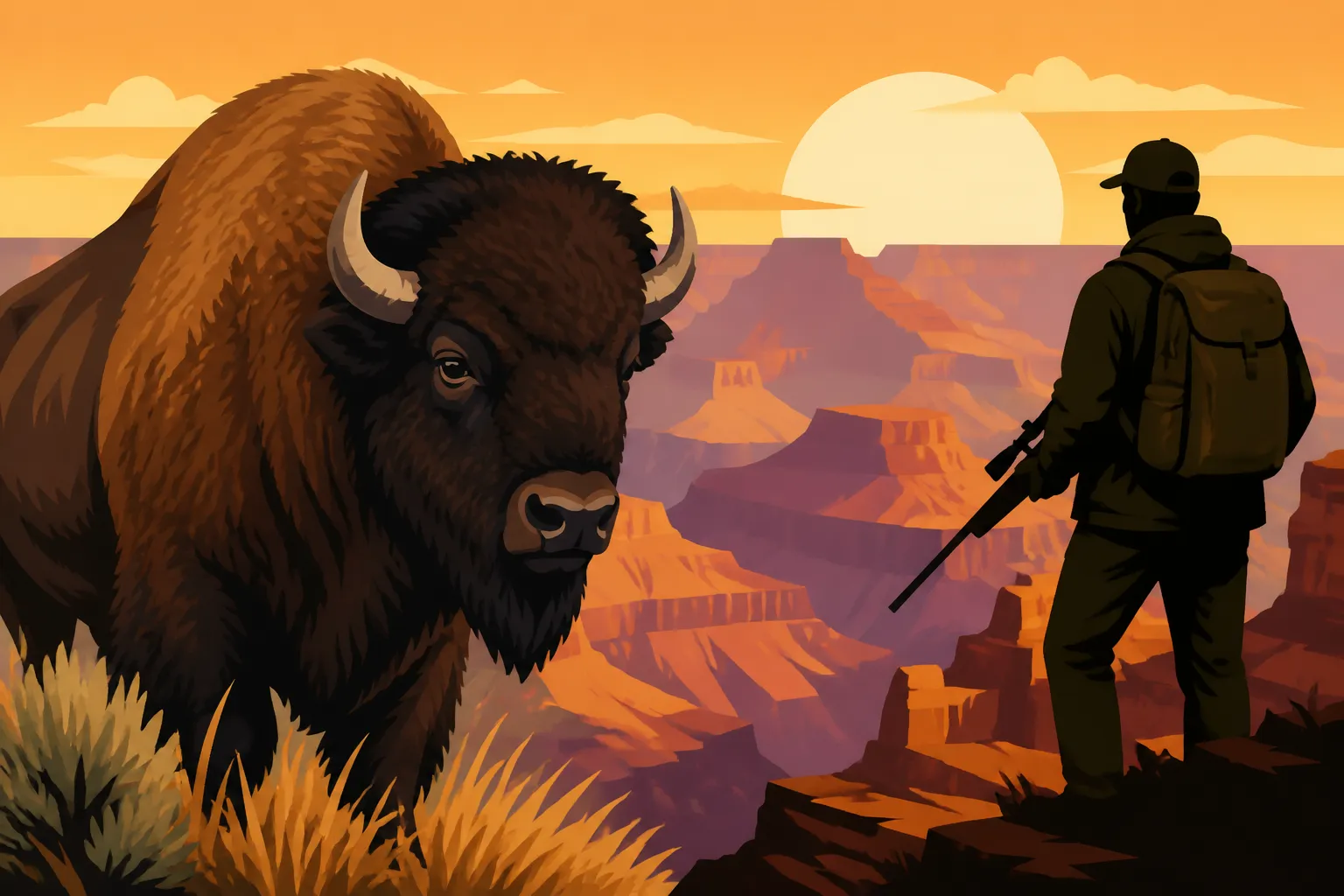
Bison in Grand Canyon National Park
For those of us fascinated by Arizona's diverse wildlife, the story of bison roaming the remote reaches of the Grand Canyon National Park's North Rim is both captivating and complex. This unique situation presents a delicate balance between preserving an iconic species, managing its ecological footprint, and navigating the complexities of land management across various agencies. This guide will delve deep into the history, impact, and ongoing management efforts surrounding these magnificent animals, offering a clearer picture for anyone interested in their future.
Understanding the Grand Canyon Bison Herd
The presence of bison in and around the Grand Canyon National Park might seem unexpected to some, conjuring images of the sweeping plains rather than rugged canyon country. However, these animals have established a significant population, particularly on the park's North Rim, creating a fascinating and often challenging management scenario for wildlife agencies.
Origins and Introduction
The bison herd on the Kaibab Plateau, which includes portions of the Grand Canyon National Park, isn't native to this specific area in the way elk or deer are. Their story begins in the early 20th century, a time when conservationists were actively working to save bison from near extinction. In the early 1900s, a rancher named Charles "Buffalo" Jones brought a small herd of bison from Texas to the House Rock Valley, just northeast of the Grand Canyon. His vision was to cross-breed them with cattle, an experiment that ultimately proved unsuccessful. When his venture folded, the Arizona Game and Fish Department (AZGFD) eventually acquired the remaining bison in 1926.
These bison were allowed to roam and multiply, eventually expanding their range onto the adjacent Kaibab National Forest and, critically, into the northern reaches of Grand Canyon National Park. Over the decades, without significant natural predators in this specific ecosystem and with abundant forage on the plateau, their numbers swelled. It's a testament to the resilience of bison, but also a classic example of how well-intentioned introductions can have unforeseen consequences for an ecosystem.
Population Growth and Distribution
For many years, the bison herd's numbers grew steadily. Without consistent management intervention, what started as a few dozen animals blossomed into a population estimated to be well over several hundred, sometimes approaching or even exceeding a thousand animals. This growth wasn't just confined to the House Rock Wildlife Area; the bison increasingly used the high-elevation meadows and forests of the Kaibab Plateau, including the sensitive North Rim area of the Grand Canyon.
The park boundary itself means little to a roaming herd of bison. They move freely between the national park, national forest, and Bureau of Land Management (BLM) lands, making unified management a real puzzle. Their preferred habitat within the park tends to be the meadows and forested areas of the North Rim, particularly in units like Unit 9 and the Kaibab Plateau North of the Grand Canyon, where they find suitable forage and water. This migration back and forth highlights the critical need for collaborative management between the National Park Service (NPS) and the AZGFD. Understanding Where the Free-Ranging Bison Herds Live is crucial for appreciating the scope of this management challenge.
Genetic Considerations
When discussing any introduced population, especially one derived from a small founding group, genetic health is often a key concern. The Grand Canyon bison herd, originating from a small group brought from Texas, might have some genetic limitations compared to larger, more diverse wild populations. Historically, there were concerns about potential hybridization with cattle due to the initial ranching efforts, though extensive genetic testing has largely dispelled these fears.
Current genetic assessments indicate that the Grand Canyon bison herd is, in fact, remarkably pure-bred American plains bison. This genetic purity is a significant conservation success, considering the history. However, a small genetic bottleneck might still exist from the initial founding group. Ongoing monitoring ensures that the herd maintains its genetic integrity while population numbers are managed to prevent inbreeding or other issues that could arise from an isolated, rapidly growing population. The goal is to sustain a healthy, robust herd that thrives within appropriate ecological limits.
The Ecological Impact of Bison
The sheer size and grazing habits of bison mean that a large, unmanaged herd can have a profound impact on the delicate ecosystems of the Grand Canyon's North Rim. This isn't just about how many blades of grass they eat; it's about altering entire plant communities and affecting other wildlife.
Vegetation Changes and Overgrazing
Bison are prodigious grazers. They are built to consume large quantities of grasses and forbs, and a dense population can quickly overtax an area's vegetation. On the North Rim, the bison concentrate in certain meadow systems and forested clearings where preferred forage is abundant. Over time, this concentrated grazing can lead to significant changes in plant composition. Highly palatable species might be grazed down to the roots, struggling to recover, while less desirable or invasive plants could proliferate.
This overgrazing isn't just about aesthetics; it reduces the food available for native herbivores like deer and elk. It can also compact soil, hindering water infiltration and nutrient cycling, and increasing erosion potential, particularly on slopes leading into the canyon itself. The long-term health of these meadows and forest understories depends on managing bison numbers to allow vegetation to recover and thrive.
Water Sources and Riparian Areas
Water is a precious commodity in any arid environment, and the Grand Canyon is no exception, even on the relatively wetter North Rim. Bison, like all large mammals, require regular access to water, and their presence can significantly impact springs, seeps, and other riparian areas. When bison congregate around these vital water sources, they can trample sensitive stream banks, muddy the water, and degrade the vegetation that stabilizes these areas.
Riparian zones are disproportionately important for biodiversity, supporting a vast array of plant and animal species in a concentrated area. Damage to these areas by large numbers of bison can negatively affect everything from amphibians and insects to birds and other mammals that rely on these fragile habitats. Management efforts often focus on dispersing bison away from the most sensitive springs or limiting their access through strategic fencing or hazing.
Impact on Other Wildlife
While bison are magnificent, their unchecked numbers can create competition for resources with other native wildlife. Mule deer and elk, which also inhabit the Kaibab Plateau and North Rim, compete with bison for forage. If bison populations are too high, there simply might not be enough food to sustain healthy populations of all these species, potentially leading to declines in deer or elk numbers, or impacting their body condition and reproductive success.
Beyond direct competition for food and water, bison can also alter habitat structure that benefits other species. For instance, dense grazing can reduce cover for smaller animals, or modify the availability of nesting sites for ground-nesting birds. The Grand Canyon is home to a diverse array of species, and maintaining the ecological balance means ensuring that one species does not negatively impact the health and viability of others, especially when that species was introduced. This complex web of interactions underscores why active management of the bison herd is so crucial for the overall health of the park's ecosystem.
Management Strategies for Grand Canyon Bison
Given the ecological impacts and the unique jurisdictional challenges of managing a herd that roams between national park, national forest, and state land, a multi-faceted approach to bison management has been developed. The goal is primarily to reduce the bison population within the national park boundary to a more ecologically sustainable level, typically around 200 animals, while maintaining a healthy free-ranging herd on adjacent lands.
Initial Relocation Efforts
Early management strategies often focused on non-lethal methods to reduce the bison population inside Grand Canyon National Park. One of the primary techniques employed was live capture and relocation. This involved corralling bison, often through baiting and hazing operations, and then transporting them to other locations. Some bison were moved to tribal lands, while others found homes on other conservation areas or even private ranches that could provide suitable habitat.
These relocation efforts, while effective for individual animals, proved to be incredibly labor-intensive, expensive, and logistically challenging for the large numbers of bison that needed to be moved. It's not a simple task to capture a wild bison, let alone hundreds, and safely transport them. While some relocation still occurs, it became clear that it couldn't be the sole solution to bring the herd down to target numbers within the park boundaries. The sheer scale of the population required additional, more efficient strategies.
Public Hunting Programs
Recognizing the limitations of relocation and the rapid growth of the herd, the National Park Service, in cooperation with the Arizona Game and Fish Department, initiated a public hunting (or "reduction") program within the Grand Canyon National Park boundary. This was a significant and somewhat controversial step for a national park, where hunting is generally prohibited. However, the unique circumstances of the bison herd, its non-native status to the park itself, and its ecological impact led to this decision.
The program works by allowing a select number of carefully vetted volunteer "sharpshooters" and permitted hunters, often through a lottery system, to harvest bison within designated areas of the park. These are not typical public hunts in the traditional sense; they are highly controlled and monitored operations aimed at meeting specific population reduction targets. The meat is salvaged and often donated, ensuring that the animals are not wasted. This approach provides a much more efficient and cost-effective means of population control compared to extensive relocation efforts. Information on applying for such opportunities, including details about Arizona Bison Draw Odds, is typically released through AZGFD channels and often involves a rigorous application and selection process. Hunters often use resources like GoHunt to understand application strategies and draw success rates for these unique permits.
Collaborative Conservation Efforts
The management of the Grand Canyon bison herd is a prime example of interagency cooperation. The National Park Service, responsible for the Grand Canyon, and the Arizona Game and Fish Department, which manages wildlife statewide, work in close concert. This collaboration extends to research, population monitoring, habitat assessment, and the implementation of management actions.
Additionally, other entities like the Kaibab National Forest and the Bureau of Land Management are involved, as bison utilize their lands too. This integrated approach is critical because bison don't respect administrative boundaries. Agreements and joint operational plans ensure that management efforts are consistent and effective across the landscape. The shared goal is to manage the overall Kaibab Plateau bison population at a level that is healthy for the herd and sustainable for the ecosystem, balancing the needs of wildlife with the integrity of the natural environment. Understanding and utilizing resources like Reading a Herd Unit Management Plan can provide deeper insights into these collaborative efforts.
Hunting Opportunities and Management Outside the Park
While hunting within Grand Canyon National Park is a unique, managed reduction effort, traditional hunting for bison occurs on state and federal lands outside the park, primarily in the House Rock Valley. These hunts are highly sought-after and represent a significant management tool for the Arizona Game and Fish Department.
The Arizona Bison Draw Odds and Permits
Drawing a bison tag in Arizona, particularly for the House Rock herd, is one of the most challenging and coveted hunts in the state. The Arizona Bison Draw Odds are notoriously low, often requiring many years of applying to accumulate enough bonus points to have a realistic chance. Arizona runs its draw cycles for big game, including bison, through a system that includes two main application periods, with species like elk and antelope having a deadline in February, and others like deer, sheep, and bison in June. You can learn more about these processes in articles like Arizona Runs Two Draw Cycles, February and June.
The number of permits issued each year is very limited and carefully determined by AZGFD biologists based on population surveys and management objectives for the House Rock herd. These permits are typically for either bull or cow bison, and they are allocated through a lottery system that heavily favors applicants with the most bonus points. For non-residents, the challenge is even greater, as Arizona caps nonresidents at Arizona Caps Nonresidents at Ten Percent of Every Hunt, meaning only a small fraction of total tags go to out-of-state hunters. This rarity makes a successful draw a truly once-in-a-lifetime achievement for many hunters.
House Rock Wildlife Area Management
The House Rock Wildlife Area is the historical home of the Kaibab Plateau bison herd and remains a critical area for their management. Here, the AZGFD manages the herd as a huntable population, similar to how they manage elk, deer, or bighorn sheep. This means actively monitoring herd health, conducting aerial surveys to estimate populations, and setting harvest quotas to keep numbers within ecological carrying capacity.
Hunting in the House Rock Wildlife Area is a traditional big game hunt, adhering to all standard Arizona hunting regulations. Unlike the more controlled reduction efforts within the Grand Canyon, hunters here are typically seeking to fill their tag in a more open, free-ranging environment. This management strategy helps to control the overall population that can then move onto other adjacent public lands, including the Kaibab National Forest and, eventually, the Grand Canyon. Detailed information on Hunting Bison on House Rock Wildlife Area provides a deeper dive into these specific opportunities.
Understanding Harvest Quotas
The concept of harvest quotas is central to bison management outside the park. The AZGFD establishes specific quotas for bulls and cows each year based on scientific data. These quotas are designed to achieve multiple management objectives:
- Population Control: Keeping the overall herd at a healthy, sustainable level that doesn't overgraze its habitat.
- Herd Health: Selective harvesting can help maintain a balanced age and sex structure within the herd, promoting robust genetics and preventing disease outbreaks that can occur in overcrowded populations.
- Hunter Opportunity: Providing regulated hunting opportunities while ensuring the long-term viability of the bison population for future generations.
These quotas are dynamic and can change from year to year depending on survey results, drought conditions, and other environmental factors. Hunters interested in applying for these tags rely on published reports and the Arizona Game and Fish website for the most up-to-date information, often using tools like GoHunt to track historical draw odds and application strategies. The careful balance between managing a thriving wildlife population and providing challenging hunting experiences is at the core of this quota system.
Accessing Bison Areas and Safety
Whether you're visiting the Grand Canyon's North Rim as a tourist hoping to glimpse a bison or are one of the few fortunate hunters with a permit, understanding access and safety is paramount. These are large, wild animals in rugged terrain.
Navigating the North Rim Area
The North Rim of Grand Canyon National Park, while offering breathtaking views and cooler temperatures than the South Rim, is also more remote and less developed. Access to much of the area frequented by bison involves navigating unpaved forest roads within the Kaibab National Forest Access in Arizona and sometimes even primitive tracks within the park itself. Roads can be seasonal, closing during winter months due to heavy snow, and can become impassable during summer monsoons.
For visitors, sticking to marked trails and designated viewpoints is generally safe. However, for those specifically seeking bison, or permitted hunters, understanding topographical maps and utilizing GPS units with public land layers (like those found on GoHunt) is essential. Much of the area is forested, with meadows interspersed, making sightings both challenging and rewarding. Having a good understanding of the specific unit boundaries is critical, especially for hunters, to ensure they are on legal ground. E-Scouting an Arizona Unit Before the Season can be incredibly helpful for planning.
Wildlife Viewing Ethics and Safety
Observing bison in their natural habitat is an incredible experience, but it comes with critical responsibilities. Bison are powerful, unpredictable wild animals, and they are not to be approached. The National Park Service strongly emphasizes maintaining a safe distance—at least 25 yards (the length of two school buses) from bison and other large animals.
Key safety tips include:
- Never approach, feed, or harass bison. They can charge without warning.
- If a bison is on or near a trail, give it a wide berth or wait for it to move. Do not try to push it off the trail.
- Be aware of your surroundings. Bison can be surprisingly quiet when moving through the forest.
- Understand their behavior. Head down, pawing the ground, or a raised tail can indicate agitation.
- Carry bear spray (where legal and appropriate for other wildlife) and know how to use it. While not a "bear" encounter, bear spray can be effective against an aggressive bison at close range.
For hunters, safety protocols are even more stringent, with detailed briefings and rules provided by the Arizona Game and Fish Department and the National Park Service staff managing the hunts.
Planning Your Trip
Planning a trip to see or hunt bison in the Grand Canyon region requires careful preparation. Due to the remoteness and the specific nature of the experience, consider the following:
| Aspect | Consideration for Visitors | Consideration for Hunters |
|---|---|---|
| Seasonality | North Rim is generally open mid-May to mid-October. Roads may close earlier due to snow. | Hunt dates are specific to the permit. Prepare for varying weather from early fall to late winter. |
| Accommodation | Lodging and camping reservations book up far in advance. Dispersed camping available on National Forest land. | Expect primitive camping or spike camps for remote units. Book lodging well ahead if needed. |
| Water | Bring plenty of water, as sources are limited and can be contaminated. | Plan to pack in all water or filter reliably. Water sources can be scarce. |
| Navigation | Carry maps, compass/GPS, and know how to use them. Cell service is unreliable. | Essential to have detailed topo maps, GPS (GoHunt app is great here), and backup navigation. |
| Vehicle | High-clearance 4×4 recommended for many backcountry roads. | Absolutely necessary for accessing most hunt units. Carry spare tire, tools, and extra fuel. |
| Emergency Prep | Let someone know your itinerary. Carry a satellite communication device. | Critical for remote hunts. Satellite phone/inReach, first-aid kit, emergency shelter. |
| Permits | No special permit for viewing bison, but park entrance fee applies. | Specific hunt permit and valid Arizona hunting license required. Adhere to all hunt-specific regulations. |
Whether you're drawn by the majestic presence of these animals for viewing or pursuing a coveted tag, a successful and safe experience hinges on thorough planning and a deep respect for both the bison and the incredible landscape they call home.
Disclaimer
The information provided in this guide is for general informational purposes only and is not intended as legal advice or a substitute for official regulations. Hunting regulations, seasons, and access rules in Arizona, particularly concerning special management areas like Grand Canyon National Park, can change frequently. Always consult the most current Arizona Game and Fish Department regulations, Grand Canyon National Park rules, and any specific permit conditions before planning any activity involving bison or other wildlife.