Unit 9 and the Kaibab Plateau North of the Grand Canyon
Every Arizona hunter, and many from across the country, dreams of drawing a tag for Unit 9, especially when it comes to chasing a mule deer buck. It’s a unit shrouded in legend, often spoken of in hushed tones around campfires, and for good reason. The sheer vastness and the incredible potential for a true trophy can feel overwhelming, almost intimidating, for those who haven't experienced it. Getting a tag here is notoriously difficult, and once you have it, the reality of hunting such an iconic landscape sets in. This guide aims to pull back the curtain on Unit 9 and the Kaibab Plateau, diving deep into its unique terrain, wildlife, and the strategies you'll need to prepare for, whether you're dreaming of a tag or lucky enough to hold one in your hand.
Introduction to Arizona's Legendary Unit 9 and the Kaibab Plateau
For many, Unit 9 isn't just another hunting unit; it's the pinnacle of Arizona mule deer hunting. Nestled north of the Grand Canyon, this area, often referred to as the Kaibab Plateau, holds a mystique that few other places can rival. It’s a place where history and legend intertwine, shaped by decades of intensive game management and the sheer raw beauty of the landscape. But what exactly makes this unit so special, and why does it command such reverence among the hunting community?
Why Unit 9 Holds Such Mystique for Hunters
The mystique of Unit 9 primarily stems from its reputation for producing enormous mule deer bucks. We're talking about deer that can make your heart pound just seeing a photo. This isn't a new phenomenon; the Kaibab has been a proving ground for big bucks for over a century. Early conservation efforts and subsequent habitat management, albeit sometimes controversial, led to an explosion in deer numbers and, eventually, a reputation for quality animals. Hunters aren't just looking for a deer here; they're often chasing a deer of a lifetime. The draw odds are incredibly tough, meaning that those who do finally punch their ticket know they've won a lottery, and they approach the hunt with a level of dedication that matches the unit's legendary status. It’s a unit that demands respect, meticulous planning, and a deep understanding of its unique challenges. The idea of walking in the footsteps of previous hunters who've taken truly magnificent animals adds to the allure, creating a sense of connection to a rich tradition.
The Grand Canyon's Shadow: A Unique Ecological Zone
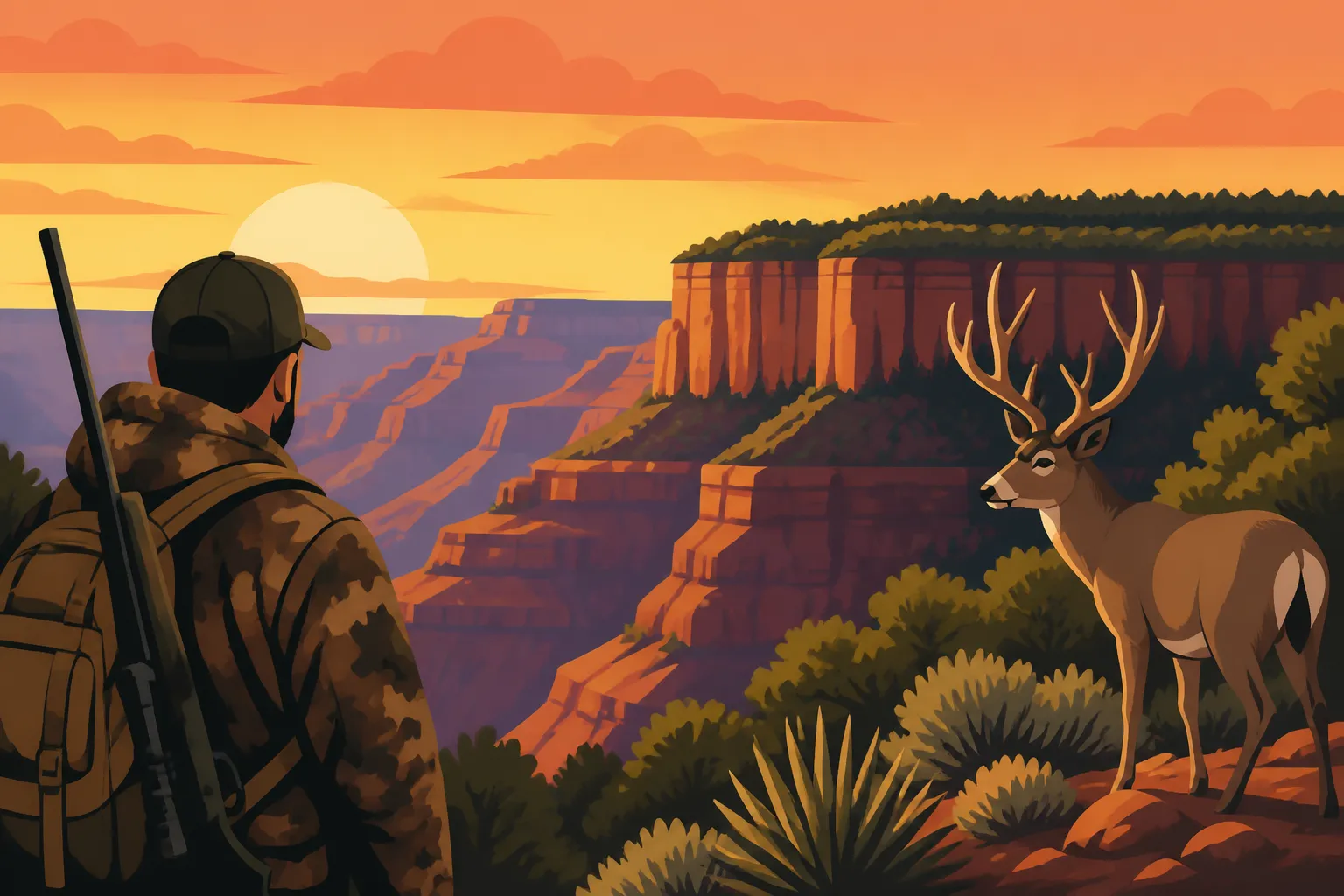
What truly sets the Kaibab Plateau apart ecologically is its isolation. Essentially an "island in the sky," the plateau is bordered by the vast chasm of the Grand Canyon to the south and lower, drier desert country to the east, west, and north. This geographic isolation, combined with its high elevation, creates a distinct ecosystem. Ponderosa pine forests dominate the landscape, interspersed with aspen groves, oak brush, and pockets of pinyon-juniper. This unique blend of vegetation provides ideal browse and cover for mule deer and elk. The Grand Canyon itself acts as a natural barrier, limiting movement and concentrating game within the unit. The deep canyons and broken topography create thermal pockets and varied aspects, offering deer and elk distinct bedding and feeding areas throughout the day. Understanding how the terrain interacts with weather patterns, from early season heat to late season snow, is crucial here. Mule Deer Across Arizona's Northern Plateaus is a good read if you want to understand the larger context of mule deer hunting in this unique environment.
Understanding the Kaibab Plateau's Landscape and Habitat
The Kaibab Plateau is not a monolithic block of forest; it's a dynamic tapestry of ecological niches. From dense timber to sprawling meadows, dramatic canyons to subtle draws, every feature plays a role in how deer and elk utilize the landscape. To successfully hunt here, you need to understand these nuances and how they influence animal behavior.
Forests, Canyons, and Meadows: A Hunter's Terrain
Imagine vast stands of towering ponderosa pines, their golden bark glowing in the morning light, their needles carpeting the forest floor. These are the backbone of the Kaibab's forest, providing critical cover and thermal regulation. Interspersed within these pines are vibrant aspen groves, especially at higher elevations, which turn brilliant gold in the fall, providing both forage and cover. Then there are the oak brush thickets, particularly important for browse, and the pinyon-juniper zones that often act as transitional areas between the higher plateau and the lower, drier country surrounding it. Hunters will spend countless hours traversing these varied environments. The key isn't just walking through them; it's understanding why a deer might be in a particular type of cover at a particular time of day. Are they feeding in a meadow at dawn, bedding in thick timber during the heat of the day, or using a pinyon-juniper slope to transition between feeding and bedding? The Arizona Strip Mule Deer Reputation shares insights into how mule deer thrive in similar broken, high-desert country.
Beyond the trees, the Kaibab is etched with an intricate network of canyons and draws. These aren't always grand, sprawling canyons like the Grand Canyon itself, but smaller, more intimate features that can hide entire herds of deer. These topographical breaks offer shelter from wind, sun, and other hunters. They also serve as natural travel corridors, funnels, and escape routes. Learning to read these features on a map, perhaps using a mapping application like onX Hunt to identify drainages and terrain changes, is absolutely critical. Glassing into these hidden pockets from an advantageous ridge can reveal animals you'd otherwise never see. Meadows, whether large and open or small and secluded, are vital feeding grounds, especially during cooler parts of the day. They are often surrounded by heavy timber, providing a quick escape for wary animals.
Water Sources: Critical in Arid Arizona
Even in a forested high-country environment like the Kaibab Plateau, water is a precious commodity in Arizona. While the Kaibab generally receives more precipitation than the lower deserts, natural springs, seeps, and developed water sources (like stock tanks or guzzlers) are still magnets for all wildlife, especially during drier periods or warmer early-season hunts. Deer and elk need water regularly, and understanding where these sources are located can be a game-changer for your hunt plan.
Identifying reliable water sources involves a combination of scouting, researching maps, and using resources like onX Hunt that often mark known springs and tanks. Keep in mind that some sources might be seasonal, drying up by late fall. Others, particularly developed tanks, can be heavily used, not just by game, but also by cattle, which are present on parts of the Kaibab. The presence of tracks, droppings, and rubbed trees near water can tell you a lot about recent animal activity. Strategically sitting near a water source, especially in warmer conditions, can be an effective tactic, but always be aware of wind direction and scent control. Hunting a Stock Tank During Early Archery offers more specific advice on this tactic.
Mule Deer: The Kaibab's Crown Jewel
When people talk about hunting Unit 9, they are almost always talking about mule deer. The Kaibab has a long, storied history of producing exceptional bucks, making it one of the most coveted mule deer tags in the entire West.
The History and Reputation of Kaibab Mule Deer
The Kaibab Plateau's mule deer population has a fascinating and sometimes tumultuous history. In the early 20th century, a concerted effort to eliminate predators (primarily wolves and mountain lions) led to an explosion in the deer population, far exceeding the carrying capacity of the land. This resulted in significant habitat degradation and massive die-offs due to starvation. While that era is long past, the legacy of careful management, including controlled hunts, remains. Today, the Arizona Game and Fish Department (AZGFD) manages the herd for quality, aiming for a healthy buck-to-doe ratio and older age-class bucks. This management, combined with the rich habitat, is what maintains the Kaibab's reputation for producing massive antlers. Hunters often spend years, even decades, accumulating bonus points to draw one of these tags, a testament to the unit's potential. The Arizona Strip Mule Deer Reputation delves into how these deer are managed for trophy quality.
Understanding Mule Deer Behavior on the Plateau
Mule deer on the Kaibab exhibit behavior typical of their species but with adaptations to this specific environment. They are creatures of habit but can also be incredibly elusive. During the early rifle seasons, bucks might still be in summer bachelor groups, often in higher, thicker timber, focusing on feeding. As the season progresses into late rifle hunts, particularly leading up to and during the rut (which typically peaks in late November to early December), their behavior shifts dramatically. Bucks become more active, less cautious, and are more likely to be seen searching for does.
Their movements are heavily influenced by several factors:
- Weather: Temperature, snow accumulation, and wind all play a role. Cold, clear mornings might see them feeding in open areas before seeking sunlit slopes to bed. Heavy snow will push them to lower elevations or south-facing slopes.
- Pressure: Kaibab hunts, while limited, still involve other hunters. Deer quickly learn to avoid roads and heavy human activity, retreating into thicker cover or steep canyons.
- Food Availability: Deer will follow the best forage. This might mean fresh new growth after a rain, or specific browse species like cliffrose, mountain mahogany, or aspen sprouts.
Understanding these dynamics is key. This isn't a unit where you simply drive roads and expect to see giants. It requires dedicated scouting, often on foot, to locate bedding areas, travel corridors, and feeding zones away from pressure.
Strategies for Hunting Kaibab Mule Deer
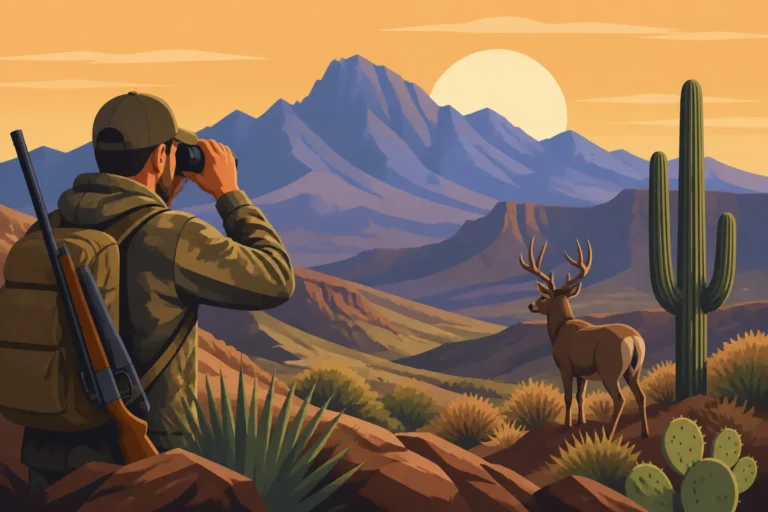
Hunting Kaibab mule deer is primarily a glassing game, especially for trophy-class animals. This means finding a vantage point, setting up your optics, and patiently scanning the landscape.
- Glassing: This is non-negotiable. Quality binoculars (10x-15x) and a powerful spotting scope (20x-60x or higher) on a sturdy tripod are essential. Look into every shadow, every cluster of trees, every small opening in the pines. Bucks often bed in unexpected places, using the broken terrain to their advantage. Spotting Scope Power for Coues Country offers advice on optics that applies equally to mule deer. Break the landscape down into grids, systematically covering every inch.
- Stalking: Once you've spotted a buck, the real work begins. Kaibab terrain, with its mixed timber and rocky ground, can make for challenging stalks. Wind direction is paramount; mule deer have an incredible sense of smell. Take your time, use terrain features for cover, and move slowly. This is where your knowledge of the unit gained from onX Hunt or other mapping apps can help, allowing you to plan your approach carefully, identifying draws, ridges, and cover to maintain concealment.
- Rut Hunting (Late Season): If you are lucky enough to draw a late-season tag, focusing on areas with high doe concentrations can be highly effective. Bucks will be actively seeking does, often abandoning their cautious behavior. Look for fresh rubs and scrapes, and be prepared to move quickly when you spot a buck chasing a doe.
| Hunting Strategy | Best Time of Year (General) | Key Considerations | Essential Gear |
|---|---|---|---|
| Early Season Glassing | Late October – Early November | Bucks in bachelor groups, in heavy timber; focus on food. | High-quality binoculars, spotting scope, tripod, good boots. |
| Mid-Season Spot & Stalk | Mid-November | Deer moving more, wary of pressure; use terrain. | Mapping app, rangefinder, quiet clothing, scent control. |
| Late Season Rut Hunt | Late November – Early December | Bucks chasing does, more active; find doe groups. | Everything from early season, plus patience and mobility. |
Elk Hunting Opportunities in Unit 9
While mule deer steal the spotlight, Unit 9 and the surrounding Kaibab Plateau also host a healthy population of Rocky Mountain elk. Drawing an elk tag here can be just as difficult as a mule deer tag, and the hunting experience is equally challenging and rewarding.
Elk Population and Distribution on the Kaibab
The Kaibab Plateau is home to a significant elk population, though perhaps not as dense as some of Arizona's more famed elk units on the Mogollon Rim or in the White Mountains. Kaibab elk benefit from the same diverse habitat as the mule deer: expansive ponderosa and aspen forests, interspersed with meadows. They thrive on the abundant forage and cover. Unlike mule deer, elk are more herd-oriented and often found in larger groups. Their distribution can be more widespread, utilizing different parts of the unit depending on the season, forage, and pressure.
Early season archery elk hunts might find bulls bugling across the plateau, responding to calls. Later in the season, during rifle or muzzleloader hunts, elk might be found lower in elevation if snow has pushed them down, or concentrated in specific areas with prime feed. Understanding their seasonal movements and preferred bedding/feeding areas is key to success. This might mean glassing large meadows at dawn and dusk, then still-hunting through dense timber during midday. White Mountains Elk Country provides a contrast to Kaibab elk habitat.
Hunting Elk in Diverse Kaibab Terrain
Hunting elk on the Kaibab demands physical fitness and strategic thinking. Elk are masters of using the terrain to their advantage, often seeking refuge in the steepest, thickest, most difficult-to-access areas when pressured.
- Calling: During the early archery seasons, calling can be highly effective. Locator bugles at dawn and dusk can help pinpoint herd locations, and aggressive cow calls or bugles can draw in curious bulls. Be prepared for close encounters and ensure you have an escape route if an aggressive bull charges in. Calling Bulls on Arizona's Mogollon Rim offers excellent advice on calling tactics.
- Still Hunting: For rifle and muzzleloader seasons, still-hunting through thick timber where elk are bedding can be productive. Move slowly, quietly, and constantly scan ahead for movement or the tell-tale shape of an elk body. Pay attention to wind direction and thermals, especially in the canyons and draws.
- Glassing for Herds: While not as common for individual bulls as it is for mule deer, glassing large meadows or open slopes at first and last light can reveal entire herds of elk. Once spotted, a strategic stalk can be planned. This is where tools like GoHunt can come in handy for researching historical harvest data or unit-specific information that might indicate preferred elk areas.
Accessing and Navigating Unit 9
Unit 9 is vast, encompassing a significant portion of the Kaibab National Forest. While much of it is public land, understanding access points, road conditions, and specific regulations regarding travel is essential for a successful and legal hunt.
Major Roads and Seasonal Closures
The Kaibab Plateau is crisscrossed with a network of Forest Service roads. The main arteries, like Highway 67 (which runs north-south through the unit, eventually leading to the North Rim of the Grand Canyon), are paved and well-maintained. However, most hunting access comes from the extensive system of unpaved forest roads. These roads vary greatly in quality, from graded gravel roads to rough, rocky two-tracks that require a high-clearance 4×4 vehicle.
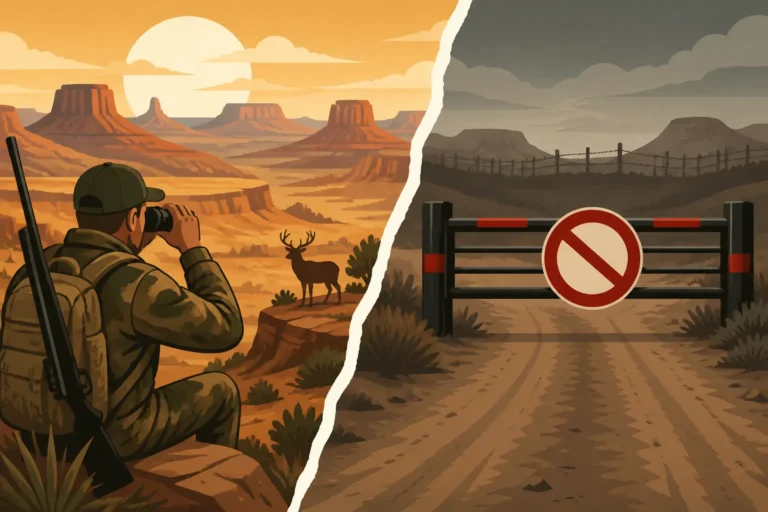
Crucially, many of these forest roads are subject to seasonal closures. Typically, roads at higher elevations close during the winter months due to snow and muddy conditions to prevent resource damage. These closures can impact late-season hunts or access for spring scouting. Always check with the Kaibab National Forest office or their website for current road conditions and closure orders before heading out. A mapping app like onX Hunt is invaluable here, as it often shows these seasonal closures and MVUM (Motor Vehicle Use Map) designations, helping you stay on legal roads and avoid getting stuck or ticketed. Motorized Travel Rules on Arizona Public Land offers more general guidance on this topic.
Wilderness Areas and Motorized Travel Rules
Within Unit 9, as with many other national forest lands, there are designated Wilderness Areas. These areas are managed to preserve their wild character, which means motorized vehicles and mechanized transport (like mountain bikes) are strictly prohibited. You cannot drive, use an ATV, or even bike into a Wilderness Area. All travel within these boundaries must be by foot or horseback. It's critical to know where these wilderness boundaries lie on your map. Getting caught with a motorized vehicle in a Wilderness Area can result in significant fines and legal trouble. Wilderness Rules Inside Arizona Forests explains these regulations in greater detail.
For the rest of the unit, beyond designated Wilderness, it's essential to consult MVUMs. These maps clearly show which roads are open, which are closed seasonally, and which are entirely closed to motorized vehicles. "Cross-country" travel off designated roads is generally prohibited on National Forest land to protect sensitive habitats and prevent erosion. Stick to marked routes, even if they seem to take you out of the way. Planning your approach to a hunting area, including where you'll park and begin your foot travel, is a key part of your hunt strategy.
Application Strategies for Unit 9 and Kaibab Hunts
Drawing a Unit 9 tag, whether for mule deer or elk, is a challenge. It's one of the toughest draws in the state, and successfully navigating the Arizona draw system requires patience and a strategic approach.
Draw Odds: The Harsh Reality of a Premier Unit
Let's be blunt: the draw odds for Unit 9 are not in your favor. This is the harsh reality for any premier unit in Arizona. For a coveted rifle mule deer tag, especially for the late season, it can take many, many years to accumulate enough bonus points to even have a chance at drawing. Some hunters spend a decade or more applying before their number finally comes up.
The Arizona Game and Fish Department (AZGFD) uses a bonus point system that heavily favors those with more points. How Arizona's Bonus Point Pass Awards the First Twenty Percent explains how a significant portion of tags goes to the highest point holders. This means if you're a new applicant with zero points, your chances are incredibly slim. This isn't meant to discourage you, but rather to set realistic expectations. Success in the draw is a marathon, not a sprint. You'll need to commit to consistently applying year after year to build up your points. This is where services like GoHunt become invaluable, providing detailed draw odds, application statistics, and strategy articles that can help you understand the nuances of the system. They crunch the numbers so you don't have to, showing you how many points it really takes to draw.
Maximizing Your Chances: Points and Application Tactics
Given the tough odds, maximizing your bonus points is paramount. Here's how to approach it:
- Apply Annually: The most straightforward way to earn a bonus point is to apply for a hunt every year. Even if you don't expect to draw, selecting a hunt choice (even if it's a "throwaway" choice for a unit you'd never hunt) will earn you a point. You can also simply purchase a bonus point without applying for any tag. Earning an Arizona Point by Applying is a good resource for this.
- Understand the Pass System: Arizona's draw has a "Bonus Point Pass" and a "Random Pass." The Bonus Point Pass allocates a certain percentage of tags to the highest point holders. After that, remaining tags are allocated in the "Random Pass," where everyone has an equal chance regardless of points. While your best shot is through the Bonus Point Pass for Unit 9, remember that you always have a very small chance in the Random Pass.
- Consider Your Choices Carefully: When applying, you'll list multiple hunt choices. For Unit 9, most people put it as their first choice. If you're dead set on Unit 9, don't waste lower choices on units you truly wouldn't hunt. It’s a fine balance between going for the dream tag and having a backup plan.
- Group Applications: If you apply as a group, your points are averaged. This can sometimes help if a lower-point hunter applies with a high-point hunter, but it's a strategy that needs careful consideration. How Arizona Averages Points Across a Group provides more detail on this.
- Hunter Education and Ethics Courses: Did you know you can earn additional, permanent bonus points? Completing the Arizona Hunter Education course earns you one permanent bonus point. Additionally, taking "The Ethically Hunting Arizona" course (an online course covering ethical hunting practices) earns you another permanent bonus point. These points never expire and give you a significant leg up in the draw. The Permanent Point From Hunter Education and Earning an Arizona Point From the Ethics Course are excellent resources.
By consistently building your points and understanding the draw mechanics, you increase your long-term prospects for that coveted Unit 9 tag.
Essential Gear and Preparation for a Kaibab Hunt
A hunt on the Kaibab Plateau is not a casual affair. The vastness of the unit, the variable weather, and the challenging terrain demand thorough preparation and the right gear. Skimping on either can quickly turn a dream hunt into a miserable experience.
Optics: Your Most Important Tool
If there's one area where you should not compromise for a Kaibab hunt, it's optics. Whether you're chasing mule deer or elk, your ability to locate animals at long distances and pick apart dense cover will be the deciding factor in your success.
- Binoculars: A high-quality pair of 10×42 or 10×50 binoculars is your primary scouting tool. They should be clear, bright, and comfortable to hold for extended periods. Consider adding a chest harness to keep them secure and readily accessible. Some hunters prefer 12x or 15x handheld binoculars for even more reach, but these often benefit from being mounted on a tripod for stability. Optics Power for Arizona's Long Desert Sightlines can give you an idea of typical powers.
- Spotting Scope: Absolutely essential for mule deer hunting on the Kaibab. A spotting scope, preferably with a variable magnification from 20-60x or even 27-80x, mounted on a sturdy, lightweight tripod, will allow you to scrutinize distant hillsides and pick apart details that binoculars miss. This is how you'll confirm if that distant speck is a deer, and if it's a buck worth pursuing. You'll spend hours behind this glass, so choose wisely.
- Tripod: Don't underestimate the importance of a good tripod. It needs to be stable enough to hold your spotting scope steady in varying conditions (wind, uneven ground) and tall enough for comfortable glassing while standing or sitting. A quick-release plate is a nice feature for fast setup and takedown.
- Rangefinder: Critical for confirming distances, especially in the broken, undulating terrain of the Kaibab. Knowing the exact yardage to your target is crucial for accurate shot placement.
Physical Conditioning for Plateau Hunting
The Kaibab Plateau, while not always as steep as some mountain ranges, still presents a significant physical challenge. Elevations generally range from 6,000 to over 9,000 feet, and you'll be covering many miles on foot, often in uneven terrain and possibly through dense timber.
- Endurance: Start your conditioning program well in advance of your hunt. Focus on cardiovascular endurance through activities like hiking, trail running, or stair climbing. Simulate hunt conditions by hiking with a loaded pack.
- Strength: Core strength and leg strength are vital for traversing rugged country, carrying your gear, and packing out an animal. Incorporate squats, lunges, and other full-body exercises into your routine.
- Acclimatization: If you're coming from a lower elevation, try to arrive in Unit 9 a few days before your hunt starts to allow your body to acclimatize to the higher altitude. This can help mitigate the effects of altitude sickness, which can severely impact your hunt. Even something as simple as walking around camp or taking short hikes can make a difference. Preparing Physically for a Desert Hunt emphasizes the importance of conditioning.
- Footwear: Invest in high-quality, broken-in hiking boots that provide good ankle support and are comfortable for long miles. Bring multiple pairs of socks to prevent blisters.
Being in top physical condition will not only make your hunt more enjoyable but also increase your chances of success, allowing you to cover more ground, recover game more efficiently, and stay focused when opportunities arise.
Ethical Considerations and Regulations Specific to Unit 9
Hunting on the Kaibab Plateau comes with a significant responsibility. Given the unit's prestigious reputation and the rarity of its tags, upholding the highest ethical standards and strictly adhering to all regulations is paramount.
Respecting the Land and Its Wildlife
Arizona's Unit 9 is a special place, not just for hunters, but for all who appreciate wild places. As hunters, we are stewards of this land and its wildlife.
- Leave No Trace: Practice Leave No Trace principles rigorously. Pack out everything you pack in, including all trash, spent casings, and any waste. Leave your campsite cleaner than you found it. Avoid creating new roads or trails.
- Respect Other Users: The Kaibab Plateau is also used by hikers, campers, and other outdoor enthusiasts. Be courteous and respectful of their experience. Avoid disturbing non-hunters, especially near developed campsites or popular scenic spots.
- Responsible Game Recovery: When you harvest an animal, dedicate yourself to a thorough and timely recovery. This means having the right gear (good knife, game bags, pack frame), knowing how to field dress efficiently, and having a plan for meat care, especially if temperatures are warm. Field Dressing in Desert Heat discusses challenges with warmer conditions. Wounded animals should be relentlessly pursued until recovered.
- Minimizing Impact: Drive only on designated open roads, and respect all seasonal and permanent closures. Avoid tearing up roads, especially during wet conditions.
Our actions reflect on the entire hunting community, and in a high-profile unit like the Kaibab, setting a positive example is more important than ever. The Ethically Hunting Arizona Course Explained is a great way to deepen your understanding of these responsibilities.
Unique Regulations and Reporting Requirements
Beyond general Arizona hunting regulations, there might be specific rules or reporting requirements unique to Unit 9 or certain seasons. Always review the most current Arizona Game and Fish Department (AZGFD) hunting regulations booklet for your specific hunt code and unit.
- Tagging Requirements: After harvesting an animal, you must immediately validate and attach your tag to the carcass as specified in the regulations. This typically involves cutting out the date and attaching it to the antler, ear, or leg. How Soon You Must Tag a Downed Animal details the requirements.
- Evidence of Sex: For some hunts, evidence of sex must remain naturally attached to the carcass until it reaches your residence or a meat processor. This is to ensure legal harvest of the correct animal. Know what is required for your specific tag. Evidence of Sex Requirements on a Carcass provides specific guidance.
- Mandatory Reporting: Some species or specific hunts may require mandatory reporting to AZGFD within a certain timeframe after harvest. For Unit 9 deer and elk, you will likely need to report your harvest online via the AZGFD portal or by phone. This data is critical for wildlife management. Always check the regulations for the current year. Mandatory Reporting After an Arizona Harvest is a useful guide.
- Carcass Transport Rules: Be aware of any rules regarding carcass transport, especially if Chronic Wasting Disease (CWD) is a concern in the area. These rules are designed to prevent the spread of diseases. Carcass Transport Rules After a CWD Detection outlines what you need to know.
Ignorance of the regulations is never an excuse. It's your responsibility as a hunter to know and follow all laws. Carry a copy of the regulations with you, or have them readily accessible on your phone, and don't hesitate to call AZGFD if you have any questions.
Disclaimer
This article is for general informational purposes only and does not constitute professional advice. Laws, prices and regulations vary by location and change over time. Consult a qualified professional for guidance on your specific situation.