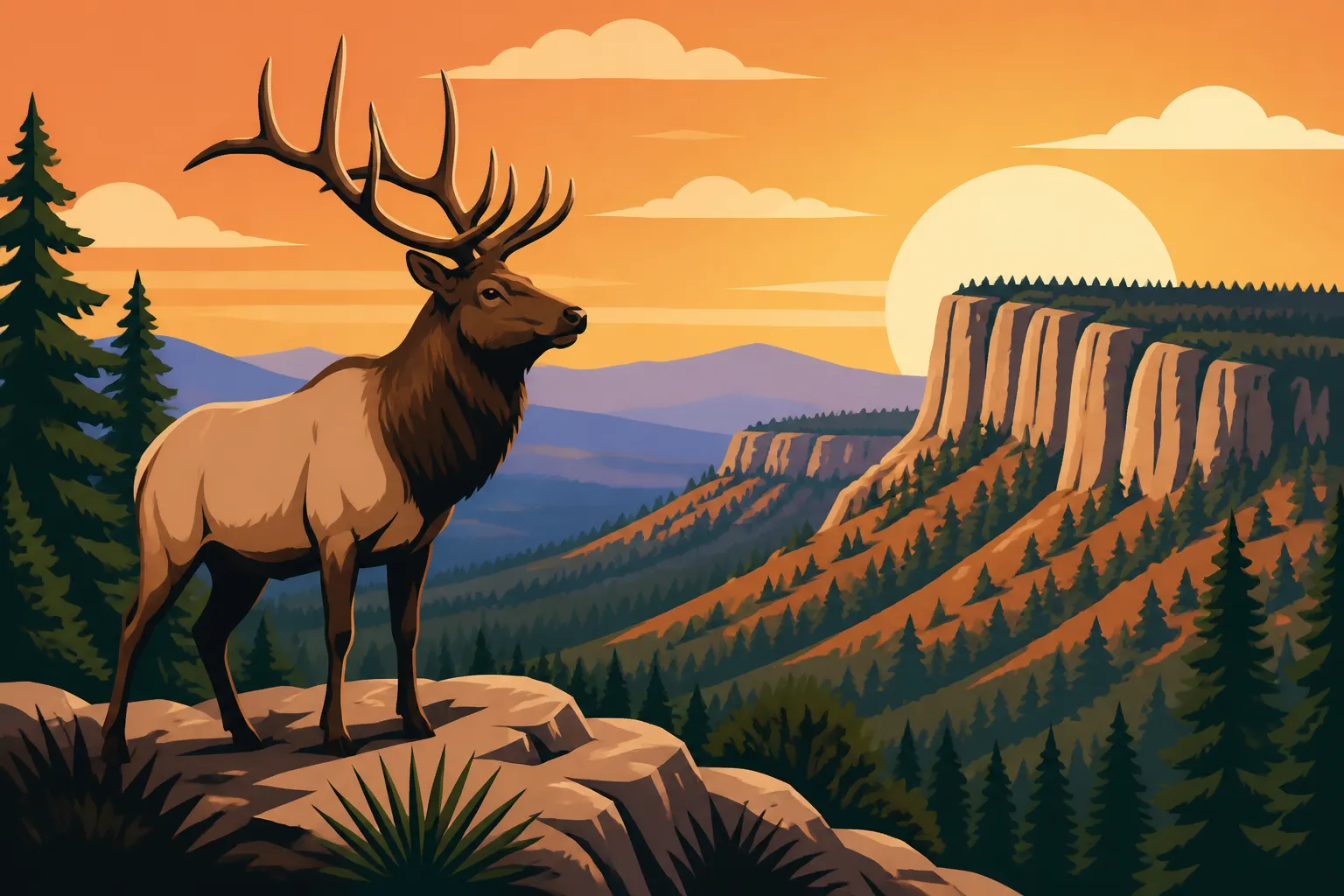
The Mogollon Rim as Arizona Elk Country
Finding truly legendary elk hunting grounds in Arizona can feel like trying to locate a ghost in the vast, rugged landscape. Many hunters spend years chasing rumors or settling for less-than-ideal spots, growing increasingly frustrated by the seemingly impenetrable wilderness. This guide is dedicated to unlocking the secrets of the Mogollon Rim, revealing why this geological marvel is not just a beautiful natural feature, but a genuine elk hunter's paradise, and how you can approach hunting its diverse and challenging terrain.
Understanding the Mogollon Rim: Arizona's Geographic Backbone
The Mogollon Rim isn't just a line on a map; it's a dramatic, ancient escarpment that slices across central Arizona, marking a stark transition between the high country and the desert. For generations of hunters, hikers, and naturalists, it has served as a defining feature of the state, a place where the air gets crisper, the trees stand taller, and the elk herds truly thrive. If you've ever driven north from Phoenix and felt that distinct change in elevation and scenery, you've likely experienced the Rim's influence.
What Exactly Is the Mogollon Rim?
Imagine a colossal stair step, hundreds of miles long, carved into the earth by millennia of geological forces. That's the Mogollon Rim. It's a steep, cliff-edged transition zone that climbs from approximately 5,000 feet in elevation on its southern side to over 8,000 feet on its northern plateau. This dramatic rise, formed by faulting and erosion, exposes millions of years of geological history, revealing layers of sandstone, limestone, and shale. From a hunter's perspective, this means an incredible amount of vertical relief, deep canyons, hidden pockets, and vast, high-elevation plateaus, all contributing to a mosaic of microclimates and habitats. It's the kind of place where you can be glassing a desert wash from a pine-studded bluff, a truly unique ecological crossroads. It's a place where the landscape itself dictates much of the game movement and hunting strategy. You'll find yourself constantly adjusting to the terrain, from negotiating steep ascents to traversing dense timber, all with the Rim as your constant, imposing backdrop.
The Diverse Ecosystems of the Rim
The Mogollon Rim is a biological hotspot precisely because of its elevation changes and varied topography. On the southern, lower slopes, you'll find transitional zones of juniper and pinyon pine, gradually giving way to vast stands of Ponderosa pine as you ascend. Higher still, especially on the northern plateaus, there are mixed conifer forests of Douglas fir, white fir, and even aspens that blaze gold in the fall. These diverse forest types offer different food sources, thermal cover, and hiding spots for elk throughout the year. Critically, the Rim also acts as a catchment for moisture. You'll discover numerous natural springs, seeps, and seasonal creeks, as well as man-made stock tanks, all vital water sources in an otherwise arid state. This abundance of water, combined with the varied vegetation, creates an incredibly rich and diverse habitat that supports not only elk, but also a host of other wildlife, from black bear to Merriam's turkey. It's this complexity that makes it so appealing to big game.
How the Rim Shapes Climate and Wildlife Patterns
The dramatic elevation of the Mogollon Rim directly influences its climate, which in turn dictates wildlife patterns, especially for elk. Unlike the scorching deserts below, the Rim experiences four distinct seasons. Winters bring significant snowfall, often burying the high country under several feet of white. This heavy snow pushes elk down to lower elevations, impacting where you might find them in late season hunts. Conversely, the summer monsoon season, typically from July to September, brings intense, localized thunderstorms that green up the landscape, replenish water sources, and kickstart the growth of nutritious forage. This timing often coincides with prime antler growth and the pre-rut period, making the post-monsoon conditions crucial for a successful fall hunt. Understanding these seasonal shifts is paramount for any hunter planning a trip to the Rim. Elk will follow the snow lines, seeking accessible forage in winter, and disperse across the plateaus in the greener, wetter summer and early fall. Ignoring these patterns is a recipe for frustration, as you'll be hunting empty country.
Why the Mogollon Rim is Prime Elk Habitat
The reputation of the Mogollon Rim as Arizona's premier elk country is well-earned. It's not just a beautiful place; it's a perfectly engineered ecosystem for these magnificent animals. Everything an elk needs to survive and thrive — food, water, and security — exists in abundance here, making it a natural magnet for robust, healthy herds. This fundamental understanding is key to successful scouting and hunting.
Food Sources and Forage Richness
Elk are grazers and browsers, and the Mogollon Rim provides a smorgasbord of their preferred foods. The vast Ponderosa pine forests, often thinned by forest management practices or natural fires, allow sunlight to reach the forest floor, promoting the growth of a rich understory of grasses, forbs, and shrubs. Specific plants like various mountain mahogany, cliffrose, and serviceberry provide essential browse, especially during colder months. Open meadows and old burn areas often explode with nutritious grasses and annuals after the monsoon rains, attracting elk for prime feeding opportunities. Even the pine cones and acorns from oak trees (where they exist) can be important mast crops in certain years, supplementing their diet. This consistent availability of diverse, high-quality forage throughout the year directly contributes to the impressive body size and antler growth for which Arizona elk are renowned. Knowing what elk are likely to be eating in a specific area and season can help you pinpoint their likely feeding grounds.
Water Availability: A Lifeline in the Desert
In Arizona, water is life, and this is especially true for large animals like elk. The Mogollon Rim, fortunately, is blessed with numerous water sources. Beyond the ephemeral washes that flow during monsoons, you'll find perennial springs bubbling out of canyon walls, small stock tanks dug for cattle and wildlife, and even a few perennial creeks and rivers like the Chevelon Canyon or the East Verde River. These scattered water sources create natural focal points for elk, particularly during dry periods or early archery seasons when temperatures can still be quite high. Learning to identify these water sources on a map, such as with an application like onX Hunt, and then scouting them for fresh sign, can dramatically increase your chances of success. Elk will travel considerable distances to drink, and these routes to and from water become predictable patterns you can exploit. Remember, water availability directly influences where elk will bed, feed, and travel, making it one of the most critical factors in your scouting plan. Water You Must Carry on a Day Hunt is a good read for hunters in this region.
Cover and Security: Where Elk Feel Safe
Elk are intelligent, wary animals that prioritize security. The Mogollon Rim's rugged topography and dense timber provide exactly what they need to feel safe from predators, including human hunters. Massive blocks of contiguous Ponderosa and mixed conifer forests offer excellent thermal cover in winter and shade in summer. Deep canyons, such as those cutting into the Rim's face, create natural sanctuaries where elk can escape pressure and bed down largely undisturbed. Thickets of oak brush, juniper, and pinyon pine provide dense hiding spots, especially for bulls looking to vanish into the landscape. The sheer scale and remoteness of much of the Rim country mean that even in units with significant hunting pressure, there are always pockets of undisturbed cover where elk can retreat. Understanding how elk use these varied cover types—moving from feeding areas in more open ground to dense bedding areas during the day—is fundamental to crafting effective hunting strategies.
Key Elk Units on and Around the Mogollon Rim
The Mogollon Rim encompasses a wide array of Game Management Units (GMUs), each with its own characteristics, challenges, and opportunities for elk hunters. While all units along the Rim hold elk, some have earned legendary status for their trophy potential or sheer numbers, while others offer a more challenging, backcountry experience. Knowing the general layout and reputation of these units is crucial when considering where to apply for a coveted Arizona elk tag. This is where researching with tools like GoHunt can really pay off, allowing you to filter units based on draw odds, success rates, and trophy potential.
Unit 3C: A Popular but Challenging Option
Unit 3C is often whispered about in the same breath as "trophy elk." Located on the northeastern edge of the Mogollon Rim, it's famous for its mature bulls and has produced some truly exceptional animals over the years. However, its popularity also means it can be incredibly difficult to draw a tag, requiring a significant number of bonus points. The unit itself is characterized by vast, relatively flat Ponderosa pine forests interspersed with large open meadows and old burn areas. Access is generally good via a network of forest roads. The challenge here often lies in finding elk that have seen significant pressure, especially during rifle seasons. They quickly become nocturnal or retreat into the densest timber. Hunters often spend countless hours glassing meadows at dawn and dusk, then transitioning to still-hunting timber blocks during the day. Success in 3C often hinges on extensive pre-season scouting, understanding elk movement between feeding and bedding areas, and being prepared to navigate busy camps and shared hunting grounds.
Units 4A/4B: Expansive Grasslands and Timber
To the east of 3C lie Units 4A and 4B, which offer a different flavor of Rim elk hunting. These units feature a mix of sprawling grasslands, open Ponderosa parks, and denser timber patches, particularly in the canyon country. While still on the high plateau of the Rim, they tend to be a bit more open than some of the heavily timbered units. This can make for some incredible long-range glassing opportunities, especially during early archery or rifle seasons before elk feel too much pressure. However, the expansive nature of these units also means elk can be widely dispersed, and you might cover a lot of ground without immediate success. Water sources, often in the form of stock tanks, become critical focal points, especially in the more arid sections. Access is generally good, but some areas can become muddy and challenging during the monsoon season. Hunting here often involves a combination of aggressive glassing from vantage points overlooking large areas, followed by strategic stalks into timber or canyon bottoms.
Units 22 & 23: Southern Rim Country and Sky Island Influence
Moving south along the Rim, Units 22 and 23 present a significantly different challenge. These units are characterized by much more rugged, broken country, with deep canyons, steep drainages, and a more pronounced "Sky Island" influence where diverse ecosystems stack on top of each other. While they still hold excellent elk populations, including some truly impressive bulls, hunting here is physically demanding. The terrain is a relentless up-and-down, often requiring hunters to get off the main roads and deep into wilderness or roadless areas. Access can be more limited, with fewer maintained roads penetrating the core elk habitat. However, this ruggedness also means less hunting pressure in many areas, allowing elk to feel more secure and exhibit more natural behavior. Success in Units 22 and 23 often requires superior physical conditioning, a willingness to hike miles from the truck, and exceptional navigation skills. These units are also prime Arizona Elk on the Mogollon Rim habitat.
Other Notable Rim Adjacent Units
Beyond these highlighted units, several other GMUs benefit from their proximity to the Mogollon Rim and offer excellent elk hunting. Units like 1 and 27, further to the east in the White Mountains, share many characteristics with the Rim, offering high-elevation Ponderosa and mixed conifer forests. Unit 5A, just north of the Rim's crest, is another popular choice with a mix of timber and open country. Unit 6A, to the west, also holds a healthy elk population in diverse habitats. Each of these units presents its own unique set of challenges and rewards, but all benefit from the rich habitat provided by the greater Mogollon Rim ecosystem. When researching your options, it’s worth diving deep into the specifics of each unit, looking at draw odds, habitat maps, and success rates, often found on resources like GoHunt, to decide where your best chance lies. Reading a Game Management Unit Map will be essential for these units.
| Unit Number | General Characteristics | Typical Terrain | Key Challenges |
|---|---|---|---|
| 3C | Trophy potential, high draw odds | Ponderosa, meadows | High pressure, wary elk |
| 4A/4B | Expansive, good glassing | Grasslands, Ponderosa | Dispersed elk, covering ground |
| 22/23 | Rugged, physically demanding | Canyons, steep timber | Physical access, difficult terrain |
| 1/27 | High elevation, thick timber | Mixed conifer, aspens | Snow, remoteness, dense cover |
| 5A/6A | Diverse, moderate pressure | Ponderosa, mixed habitats | Finding concentrations |
Navigating Access and Terrain Challenges
Hunting the Mogollon Rim, while incredibly rewarding, is not without its challenges, particularly when it comes to access and the sheer ruggedness of the terrain. Hunters often express frustration with seasonal road closures, confusing land ownership boundaries, or simply underestimating the physical demands of the high country. Understanding these potential hurdles and planning accordingly is just as important as knowing where the elk are.
Forest Service Roads and Designated Routes
Much of the Mogollon Rim lies within national forests, primarily the Coconino, Apache-Sitgreaves, and Tonto National Forests. These forests are crisscrossed by an extensive network of Forest Service roads, ranging from well-maintained gravel roads to primitive two-tracks. These roads are your primary means of accessing vast areas of elk habitat. However, many of these roads, especially at higher elevations, are subject to seasonal closures, typically from late fall through spring, due to snow or wet conditions that can cause damage. It's absolutely critical to consult Motor Vehicle Use Maps (MVUMs) for the specific forest and unit you plan to hunt. These maps clearly designate which roads are open, which are closed seasonally, and where off-road travel is permitted (which is generally highly restricted). Ignoring these regulations can lead to fines, environmental damage, and even getting stuck in remote areas. Plan your scouting and hunting trips around these closures, always having a backup plan if your primary access route is unexpectedly closed. For more on this, check out Mogollon Rim Access for Arizona Hunters.
Wilderness Areas and Foot Travel
Within the national forests of the Mogollon Rim, you'll also find designated Wilderness Areas, such as portions of the Mazatzal Wilderness or the Blue Range Primitive Area. These areas are specifically managed to preserve their wild character, meaning motorized vehicles, mechanized transport (like mountain bikes), and even some forms of camping may be prohibited or heavily restricted. For the ambitious elk hunter, these wilderness areas represent incredible opportunities for truly remote, low-pressure hunting. However, they demand a completely different approach. All access must be on foot or horseback, requiring significant physical endurance and careful packing. You'll need to be self-sufficient for extended periods, carrying all your gear, food, and water. Packing out an elk from a wilderness area can be an epic undertaking, often requiring multiple trips or a carefully planned pack string. While challenging, the reward of hunting in these pristine, untouched landscapes, away from the sounds of vehicles and other hunters, can be immense.
Private and State Trust Land Considerations
While the Mogollon Rim is dominated by public lands, it's not exclusively so. You'll encounter parcels of private land, particularly near established communities or ranches, and significant acreage of Arizona State Trust Land. Hunting on private land always requires explicit permission from the landowner – there are no exceptions. State Trust Land, on the other hand, is managed by the Arizona State Land Department, and while it's often leased for grazing or other purposes, it is generally open to public recreation, including hunting, with a valid Arizona hunting license. Your hunting license acts as your recreational permit for State Trust Land. However, it's still crucial to know where you are. Using a reliable mapping application like onX Hunt is indispensable for quickly identifying land ownership boundaries in the field. This prevents accidental trespass and ensures you're always hunting legally. Always respect posted signs, private property, and ranching operations, as maintaining good relationships with landowners is vital for future access across the state.
Hunting Strategies for Mogollon Rim Elk
Hunting elk on the Mogollon Rim is a dynamic pursuit that demands adaptability, patience, and a deep understanding of elk behavior across different seasons and terrain. There's no single "magic bullet" strategy; success often comes from combining tried-and-true methods with the specific conditions you encounter in the field. Frustration often stems from applying a single strategy universally, when the elk are constantly changing their patterns.
Early Season Archery Tactics
The early archery seasons, typically in August or early September, often coincide with some of the hottest weather in Arizona. During this period, water sources become absolute magnets for elk. Bulls are still in bachelor groups, often quite active, but usually not yet responsive to aggressive calling. Your best bet is often to set up ambushes near isolated stock tanks, springs, or creek beds, especially in units with limited water. Glassing from a high vantage point at dawn and dusk, identifying where elk are coming to water or feeding in cooler, shaded areas, is a highly effective tactic. Then, a silent, stealthy approach before light or late in the evening becomes paramount. Remember to consider wind direction meticulously, as an elk's nose is their most powerful defense. Patience is key; sometimes sitting a water source for hours will yield results. You might also find elk feeding in higher elevation meadows during the coolest parts of the day.
Rut Hunts: Calling and Locating Bulls
Ah, the rut! Typically peaking in mid to late September, this is arguably the most exciting time to hunt elk on the Mogollon Rim. Bulls become vocal, bugling to challenge rivals and attract cows. This is when calling tactics really shine. Locator bugles at first light can help you pinpoint where bulls are actively moving or bedding. Once you've located a bull, deciding whether to aggressively move in or set up an ambush depends on the bull's temperament and the terrain. Two-hunter calling setups often prove incredibly effective: one caller stays back to simulate a herd or a challenging bull, while the shooter creeps forward, allowing the bull to come to the "heard" rather than directly to the hunter. Understanding Bugle Timing Across the Mogollon Rim is vital for this. Learning to read a bull's vocalizations – distinguishing between a challenge bugle, a herd bull rounding up cows, or a satellite bull trying to sneak in – will greatly increase your success. Even if they're pressured, sometimes a soft cow call can entice a reluctant bull. Check out Cow Calling Pressured Arizona Bulls for more insights.
Late Season Rifle and Muzzleloader Hunts
Later seasons, typically in October and November for rifle hunts, or sometimes even into December for muzzleloader opportunities, present a different set of challenges and strategies. By this time, the rut is over, bulls have often split from cows, and elk have experienced significant hunting pressure. They become much warier and often move into thicker cover or push down to lower elevations as snow begins to fall on the Rim. This is when patience and persistence truly pay off. Still-hunting through dense timber, focusing on pinch points, saddles, and transition zones between different cover types, can be productive. Also, understanding elk migration patterns as they move from high summer ranges to more accessible wintering grounds becomes crucial. These lower-elevation winter ranges, often in the juniper-pinyon zones just off the Rim, can hold concentrations of elk. Keep an eye on weather forecasts; a fresh snowfall can often get elk moving and leave clear tracks to follow. For muzzleloader hunters, understanding the rules for Muzzleloader Sight Systems With No Restrictions is also key.
Essential Gear and Preparation for the Rim
Successfully hunting elk on the Mogollon Rim is as much about your preparation and gear as it is about your strategy. The Rim is a demanding environment, characterized by vast distances, rugged terrain, and unpredictable weather swings. Many hunters underestimate these factors, leading to discomfort, missed opportunities, or even dangerous situations. Being adequately equipped and physically ready can make or break your hunt.
Optics for Distant Glassing
The expansive landscapes of the Mogollon Rim, particularly in units with large meadows or open Ponderosa forests, make high-quality optics an absolute necessity. You simply cannot effectively scout or hunt this country without them. A good pair of 10x binoculars, comfortable for all-day glassing, is your primary tool. Don't skimp here; clear glass makes a huge difference in spotting that flick of an ear or the tine of an antler at extreme distances. For truly effective long-range scouting, especially from high vantage points, a spotting scope with a tripod is invaluable. A 60-80mm objective lens with 20-60x magnification is a versatile choice. Using a stable tripod for your binoculars is also highly recommended, as it reduces fatigue and allows for much more detailed, steady viewing. You'll spend hours behind your glass, picking apart distant hillsides and timber edges, so invest wisely.
Physical Conditioning and Backcountry Readiness
Hunting the Mogollon Rim is a physically demanding endeavor. Whether you're navigating steep canyons in Units 22/23 or covering miles of rolling timber in 3C, you'll be hiking at elevation, often with a heavy pack. Simply put, the better physical shape you're in, the more enjoyable and successful your hunt will be. Start a dedicated conditioning program months before your hunt, focusing on cardio, leg strength, and carrying a weighted pack. Practice hiking uneven terrain. Beyond physical fitness, being "backcountry ready" means having the skills and mindset to handle unexpected situations. This includes knowing basic first aid, understanding how to navigate without a phone signal, and being prepared for rapid weather changes – sunshine one minute, a monsoon thunderstorm or snow squall the next. Don't underestimate the mountains; they demand respect. For more information, check out Preparing Physically for a Desert Hunt.
Navigation and Communication
Getting lost in the vastness of the Mogollon Rim can quickly turn a hunting trip into a survival situation. Reliable navigation is non-negotiable. A dedicated GPS unit or a smartphone with a robust hunting app like onX Hunt, pre-loaded with offline maps of your unit, is essential. These tools not only show your location but also display land ownership boundaries, roads, trails, and water sources. Always carry a physical map and compass as a backup and know how to use them. Cell service is spotty at best in much of the Rim country, so don't rely on your phone for communication. A satellite messenger device (like a Garmin inReach or Zoleo) allows you to send and receive texts, track your movements, and, most importantly, send an SOS in an emergency, even when off-grid. This is not just a convenience; it's a critical safety tool, especially if you're hunting solo or venturing deep into remote areas.
Respecting the Resource and Ethical Hunting
Hunting on the Mogollon Rim is a privilege, not a right. As hunters, we have a profound responsibility to respect the game, the land, and our fellow outdoors enthusiasts. Ethical conduct and adherence to regulations ensure that these incredible opportunities for Arizona Elk on the Rim, White Mountains and Kaibab continue for generations to come. Overlooking these responsibilities tarnishes the reputation of all hunters.
Understanding Harvest Reporting and Carcass Rules
Arizona has specific regulations regarding harvest reporting and the handling of downed animals. After successfully harvesting an elk, it is mandatory to tag your animal immediately. Furthermore, many hunts require online reporting of your harvest within a specific timeframe. Familiarize yourself with these precise reporting requirements before you head into the field. Equally important are the rules regarding the salvage of edible meat and the retention of evidence of sex. Arizona has strong meat salvage laws, meaning you must make every reasonable effort to retrieve and care for all edible portions of your harvested animal. You also need to retain specific parts of the animal, such as the head (with antlers attached) or the unskinned portion of the hide showing the sex, until you have transported it from the field and to your permanent residence or a meat processor. This is crucial for game and fish enforcement to verify the legality of your harvest. Read up on Evidence of Sex Requirements on a Carcass to be absolutely sure. Ignorance of the law is not an excuse, and violating these rules can result in significant penalties.
Minimizing Impact and Practicing Leave No Trace
When you're out on the Mogollon Rim, you're a guest in a wild and fragile environment. Adhering to Leave No Trace principles is fundamental to ethical hunting. This means packing out everything you pack in, including all trash, spent casings, and any human waste. Camp in designated areas or follow dispersed camping guidelines, always choosing durable surfaces and minimizing your footprint. Be extremely careful with campfires, especially during dry seasons; always check current fire restrictions, and never leave a fire unattended. The Arizona forests are susceptible to devastating wildfires, and we, as hunters, must do our part to prevent them. When field dressing an animal, move the gut pile away from roads, trails, and water sources. Our goal should be to leave the land in the same, or even better, condition than we found it, preserving its wild beauty for others.
The Importance of Scouting and Education
Successful and ethical hunting begins long before you pull the trigger. Pre-season scouting, both physically in the field and through digital tools like onX Hunt or E-scouting platforms, is paramount. Spend time learning your unit, understanding elk travel corridors, bedding areas, and water sources. E-Scouting an Arizona Unit Before the Season can give you a significant advantage. This investment of time not only increases your chances of success but also deepens your connection to the landscape and the animals you pursue. Beyond scouting, ongoing education is vital. Stay up-to-date on current hunting regulations, which can change year to year. Consider taking additional courses on topics like wilderness first aid, advanced navigation, or even ethical hunting practices. The more knowledgeable and prepared you are, the more responsible and effective you'll be as a hunter on the magnificent Mogollon Rim.
Disclaimer
This article is for general informational purposes only and does not constitute professional advice. Laws, prices and regulations vary by location and change over time. Consult a qualified professional for guidance on your specific situation.