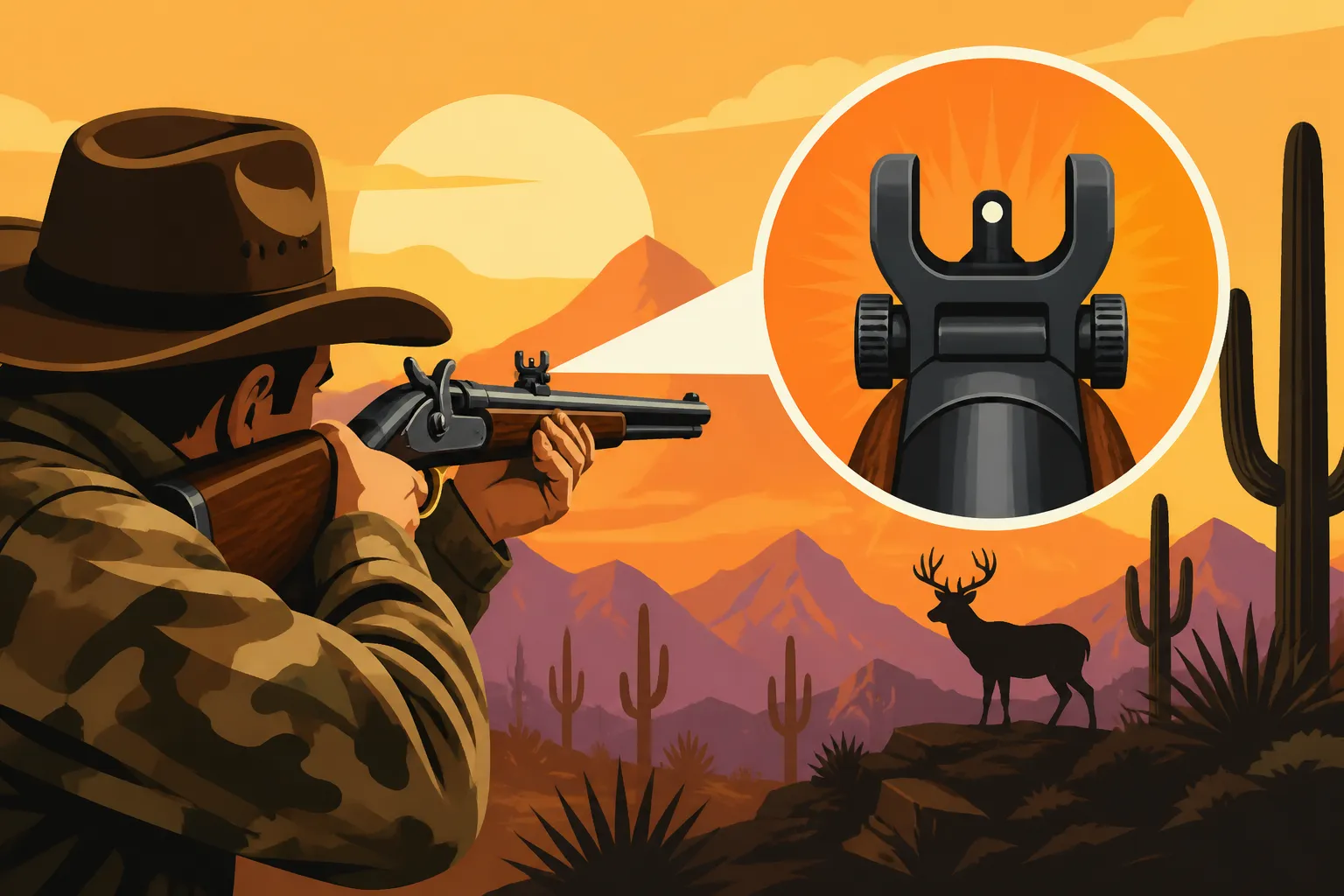
Muzzleloader Sight Systems With No Restrictions
Dealing with confusing and often restrictive muzzleloader regulations in other states can be a real headache, leaving hunters wondering if their expensive optics are even legal. In Arizona, however, you'll find a refreshing change of pace when it comes to equipping your smoke pole. This guide will walk you through the incredible freedom Arizona offers for muzzleloader sight systems, helping you understand the rules, explore your options, and choose the best setup for your next big game hunt in the Grand Canyon State.
Arizona's Refreshing Approach to Muzzleloader Optics
Unlike many states that impose strict limitations on muzzleloader optics, often restricting hunters to open sights or low-power scopes, Arizona takes a distinctly different path. The Arizona Game and Fish Department (AZGFD) has chosen a regulatory framework that prioritizes hunter opportunity and ethical shot placement over archaic equipment limitations. This means you have a wide-open field when it comes to choosing how you aim your muzzleloader, a freedom that can significantly enhance your hunting experience.
Understanding the Arizona Game and Fish Department's Philosophy
The AZGFD's approach to muzzleloader regulations, particularly regarding sights, stems from a desire to afford hunters maximum flexibility while still promoting ethical hunting practices. Their regulations are designed to facilitate harvest success and reduce wounding loss, believing that allowing hunters to use modern, precise optics contributes to these goals. Rather than viewing advanced sights as an unfair advantage, Arizona recognizes them as tools that can improve a hunter's ability to make clean, quick kills, especially given the challenging and often long-range shooting opportunities found across the state's diverse landscapes. This philosophy is evident in broader discussions about hunting methods, like the in-depth look at Why Arizona Muzzleloader Rules Are So Open. It’s about empowering the hunter with the best available equipment for the task.
Historical Context of Muzzleloader Regulations
Historically, muzzleloader seasons were often set aside to extend hunting opportunities into less pressured times, appealing to a "primitive weapons" aesthetic. This led many states to adopt rules reflecting that primitive spirit, limiting sights to traditional iron sights or very low magnification. While that tradition is cherished by some, it often puts hunters at a disadvantage in varying light conditions, thick cover, or when attempting longer shots. Arizona, by contrast, seems to have evolved past this, focusing more on the practicalities of modern hunting. They acknowledge that while muzzleloaders are indeed traditional in their loading method, there's no inherent reason to handicap hunters with outdated sighting systems, especially when pursuing challenging game across vast public lands. This forward-thinking stance sets Arizona apart and provides a much more versatile hunting experience for muzzleloader enthusiasts.
Exploring the Freedom of Sight Choices
With virtually no restrictions on muzzleloader sight systems, Arizona opens up a world of possibilities for hunters. You're not just limited to traditional irons; you can equip your muzzleloader with almost any aiming device you prefer, allowing you to tailor your setup precisely to your hunting style and the specific challenges of Arizona's diverse terrain. This freedom empowers you to choose the very best tool for accurate and ethical shots.
Telescopic Sights: Precision at a Distance
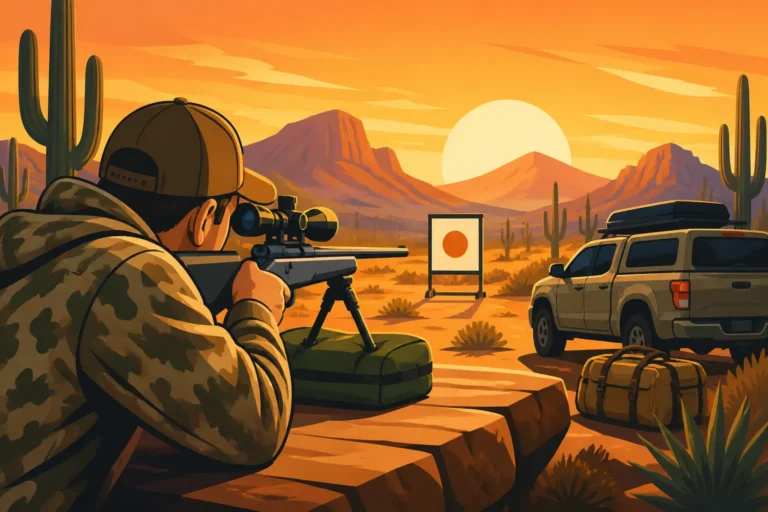
One of the most significant advantages of Arizona's open regulations is the legality of using telescopic sights, often referred to simply as scopes. This means you can mount a magnified optic on your muzzleloader just as you would on a centerfire rifle. The benefits are immense, especially in a state known for its expansive, open country and long-range opportunities. A good scope provides superior light gathering capabilities, crucial during those critical dawn and dusk hours, and allows for precise target identification and shot placement at distances that would be impossible with open sights.
For instance, when pursuing a wary mule deer buck on the northern plateaus or trying to pick apart a distant Coues deer on a Sky Island, a 3-9x or even a 4-12x power scope can make all the difference. You can clearly see where your bullet will impact, verify legal antlers, and ensure you're taking an ethical shot. This precision is not about extending the effective range of your muzzleloader beyond its ballistic capabilities, but about maximizing your accuracy within that effective range. Many hunters find that this freedom alone makes muzzleloading in Arizona a much more enjoyable and successful endeavor. It's a stark contrast to other states where the question " Can You Use a Scope on an Arizona Muzzleloader?" is definitively answered with a resounding "Yes!"
Red Dot and Holographic Sights: Fast Acquisition for Close Encounters
While telescopic sights excel at long range, sometimes you need quick target acquisition, especially in denser cover or for fast-moving game. This is where red dot and holographic sights truly shine, and thankfully, they are also perfectly legal on your muzzleloader in Arizona. These non-magnifying optics project an illuminated aiming point (a "red dot" or reticle) onto a lens, allowing you to focus on your target with both eyes open. This dramatically speeds up target acquisition and is incredibly effective in low-light conditions or when a shot opportunity presents itself suddenly at closer ranges.
Imagine still-hunting through thick oak brush for a bedded Coues deer or navigating ponderosa pine forests on the Mogollon Rim for elk. A red dot sight provides a wide field of view and an intuitive aiming point that you can quickly superimpose on your target. There's no fumbling with crosshairs or trying to align front and rear sights. This can be particularly beneficial for species like Arizona Elk on the Rim, White Mountains and Kaibab or Coues Deer Are Arizona's Signature Whitetail which can present themselves quickly and in unexpected places. While they don't offer magnification, the speed and ease of use of red dot sights make them a formidable choice for many Arizona muzzleloader hunts, providing a distinct advantage in specific scenarios.
Open Sights and Fiber Optics: Traditional but Enhanced Options
Of course, if you prefer a more traditional approach or simply enjoy the rugged simplicity of open sights, Arizona's regulations fully support that choice too. Many muzzleloaders come equipped with standard iron sights, and these are always a perfectly legal option. They are robust, reliable, and require no batteries, making them ideal for rough country or hunters who prioritize minimalism.
However, even within the realm of open sights, Arizona's freedom allows for modern enhancements. Many manufacturers offer fiber optic sights as an upgrade to traditional irons. These sights incorporate small, light-gathering fibers that glow brightly, making the front and rear sight pins much more visible, especially in dim light. They essentially act like "daytime glowing" sights, significantly improving contrast and making aiming easier and faster than with plain black iron sights. For hunters who want to maintain the "feel" of open sights but gain a practical advantage in visibility, fiber optics are an excellent, legal choice. This allows you to stick with a classic method while still giving yourself a helpful edge, especially on those hunts where you might be Glassing Arizona's Sky Islands for Coues Deer and need a clear sight picture quickly.
Practical Benefits of Unrestricted Optics
The freedom to choose virtually any sight system for your muzzleloader in Arizona isn't just a regulatory quirk; it translates into tangible, practical benefits for the hunter. These benefits contribute to more ethical hunting practices, improved confidence, and ultimately, a more successful and rewarding experience in the field.
Maximizing Ethical Shot Placement
The primary advantage of having unrestricted access to various sight systems is the ability to maximize ethical shot placement. No hunter wants to wound an animal, and the ability to clearly see your target and precisely place your shot is paramount. With a magnified scope, you can identify game at greater distances, confirm legal attributes like antler points on a Mule Deer Across Arizona's Northern Plateaus, and hold a much finer aiming point on the animal's vitals. This reduces the margin for error, particularly under less-than-ideal conditions like low light, dense brush, or at the maximum effective range of your muzzleloader.
For example, imagine you've spent days Scouting an Arizona Unit Before the February Deadline and finally have an elk in your sights on a cold morning. A clear, crisp scope allows you to see the branch you need to shoot over, or the small opening in the timber, with far greater certainty than open sights. This confidence in your aiming system directly contributes to making a clean, ethical kill, honoring the animal and ensuring the meat doesn't spoil. The AZGFD understands that the goal isn't necessarily to extend shooting distances with muzzleloaders, but to ensure that shots taken within their effective range are as precise and ethical as possible.
Adapting to Diverse Arizona Terrain and Light Conditions
Arizona's hunting landscapes are incredibly diverse, ranging from wide-open desert flats and grasslands to dense Ponderosa pine forests and rugged "sky island" mountain ranges. Each of these environments presents unique challenges in terms of visibility, light, and shot distance. Having the freedom to choose your muzzleloader optic allows you to adapt your setup to these varied conditions, significantly improving your effectiveness.
- Open Desert and Grasslands: In areas like the open desert country of southern Arizona, or the sprawling grasslands where pronghorn roam, longer shots are often the norm. A high-quality magnified scope is invaluable here, providing the clarity and precision needed to connect with distant targets under bright, expansive skies.
- Dense Timber and Brush: Conversely, in the thick timber of the Mogollon Rim or the dense oak brush of southeastern Arizona, shots are often up close and fast. Here, a red dot sight or brightly colored fiber optic open sights can be superior, allowing for rapid target acquisition and a wide field of view.
- Low Light Conditions: Arizona's legal shooting hours often involve hunting during the magical "golden hour" at dawn and dusk. This is when game is most active, but light is at its lowest. A scope with good light-gathering capabilities (large objective lens, quality glass) or a bright red dot will give you a significant advantage in these crucial moments, helping you make the most of your hunting opportunities. Being able to choose your optic means you can truly optimize your muzzleloader for the specific environment and time of day you'll be hunting. This adaptability is key to success on a Heat Management on an Arizona Early Season Hunt where conditions can change rapidly.
Increasing Hunter Confidence and Success Rates
At the end of the day, hunting is about confidence. When you're confident in your equipment, you can focus on the hunt itself—reading the terrain, understanding animal behavior, and executing your plan. When you know your muzzleloader, equipped with the perfect sight system, is capable of placing a shot exactly where you intend, it frees you to concentrate on the many other variables of the hunt. This increased confidence directly contributes to better decision-making in the field and, subsequently, higher success rates.
Think about the psychological advantage of knowing you've custom-tailored your muzzleloader for your specific hunt. If you're on a late-season deer hunt in patchy snow, and you've got a scope dialed in for clarity and low light, you'll approach every encounter with greater assurance. This is also where resources like GoHunt become invaluable. You can use their tools to research specific units, understand terrain, and then match your muzzleloader setup – from the type of bullet to the sight system – to the conditions you're most likely to encounter. Comparing different sight systems and understanding their performance is made easier with good data, and GoHunt often provides valuable insights into what other successful hunters are using in similar situations. Whether it's practicing for a long shot or preparing for a close encounter, your choice of sight system under Arizona's open rules means you're always putting your best foot forward. It takes one significant variable out of the stress equation, allowing you to enjoy the process and the challenge.
Choosing the Right Muzzleloader Sight System for Your Arizona Hunt
With the freedom to choose any sight system, the real challenge in Arizona isn't what's legal, but what's best for you and your specific hunt. Making an informed decision requires considering the type of game you're pursuing, the terrain you'll be hunting, and your personal shooting preferences. It’s about optimizing your setup for peak performance in the field.
Matching Optics to Your Target Species and Hunt Type
Different game species and hunt types in Arizona lend themselves to different sight system preferences. Thinking about your target and how you plan to hunt will guide your decision.
- Elk in Rim Country: If you're chasing elk in the dense forests of the Mogollon Rim or the White Mountains, you might encounter closer, faster shots. Elk can appear suddenly in heavy timber. For this, a red dot sight or a low-power variable scope (e.g., 1-4x or 2-7x) could be ideal. They offer a wide field of view, rapid target acquisition, and enough magnification for the typical shot distances in these environments. You want something quick to get on target, especially if you're trying to stop a bull in its tracks.
- Coues Deer in the Sky Islands: Hunting Coues deer, often called the "gray ghosts," typically involves extensive glassing and long-range observation in open, rugged mountainous terrain. While the shot itself might not be extremely long, the ability to identify the deer clearly and pick a precise aiming point is crucial. A magnified scope (3-9x or higher) with excellent clarity and light transmission will be your best friend here. This allows you to truly maximize your ability to spot and stalk, and then execute an accurate shot when the opportunity arises. Tools like GoHunt can help you analyze the unit's topography, informing you on how much long-range glassing you might need to do.
- Javelina in the Desert: For javelina, which often move in herds through thick desert brush, quick, close-range shots are common. They are not large animals, and a rapidly acquired aiming point is important. Red dot sights or bright fiber optic open sights are excellent for this, as they provide speed and a clear aiming point in tangled environments.
- General Purpose Mule Deer: For a versatile mule deer hunt across varied terrain, a mid-range variable scope (e.g., 3-9x or 2-10x) often strikes the best balance. It provides enough magnification for open country but can be turned down for closer shots in canyons or draws.
Consider this table for a quick comparison:
| Sight Type | Best Use Case | Pros | Cons |
|---|---|---|---|
| Telescopic Scope | Long-range, precise shots; identifying small targets | Magnification, clarity, superior low-light performance, fine aim point | Can be slower for close shots, heavier, potential fogging |
| Red Dot/Holographic | Close to medium range, fast-moving targets | Rapid target acquisition, wide field of view, good in low light | No magnification, battery dependent, can be harder for very precise shots |
| Fiber Optic Open | Close to medium range, traditional feel | Bright sight picture in daylight, rugged, no batteries, lightweight | Limited precision at longer ranges, less effective in deep shadows/dark |
| Traditional Open | Very close range, ultimate simplicity | Most rugged, lightweight, no batteries | Poor in low light, difficult for precise shots, limited effective range |
Considerations for Durability, Weather Resistance, and Ease of Use
Arizona's hunting conditions can be tough. From scorching early season heat to monsoon downpours and frigid winter mornings, your gear will be put to the test. Therefore, when choosing a muzzleloader sight system, durability, weather resistance, and ease of use are paramount.
- Durability: Your optic needs to withstand bumps, scrapes, and accidental drops that are inevitable when traversing rough terrain. Look for scopes and red dots with robust, aircraft-grade aluminum housings. Fully sealed units are crucial to prevent dust and moisture intrusion. If you're Packing an Elk Out of Rim Country Alone, you don't want to worry about your optic failing.
- Weather Resistance: Opt for sights that are waterproof, fogproof, and shockproof. This is especially true for scopes, where internal fogging can ruin a hunt. Nitrogen purging is a common feature that helps prevent fogging by removing moisture from inside the scope. For red dots, ensure they are rated for extreme temperatures and humidity.
- Ease of Use: Think about how easy it is to adjust the windage and elevation, especially in the field with gloved hands. Can you quickly change magnification if using a variable scope? Are the battery compartments easily accessible for red dots? Simplicity often translates to reliability and less frustration when it matters most. After a long drive to camp, you want to be able to Sighting In After a Long Drive to Camp quickly and reliably.
- Mounting System: Don't overlook the importance of a quality mounting system. A poor mount can negate the benefits of even the best optic. Ensure your rings and bases are sturdy, properly torqued, and designed to withstand the recoil of your muzzleloader. A loose scope mount is a hunting disaster waiting to happen.
- Battery Life: If you choose an electronic sight like a red dot, pay close attention to its advertised battery life. Always carry spare batteries, and make it a habit to check your battery before each hunt. GoHunt forums or community sections can be a great place to get real-world feedback on battery life from other Arizona hunters.
By carefully considering these factors, you can select a muzzleloader sight system that not only helps you shoot accurately but also stands up to the rigors of an Arizona hunt, giving you peace of mind and increasing your chances of success.
Disclaimer
Please remember that hunting regulations can change. Always consult the most current Arizona Game and Fish Department hunting regulations booklet before planning any hunt to ensure you are in full compliance with all laws and rules.