Why Arizona Muzzleloader Rules Are So Open
Many hunters across the country face a maze of highly restrictive rules when it comes to muzzleloaders, often leaving them frustrated with limitations on sights, ignition types, and even projectiles. But if you’ve been looking at Arizona's hunting regulations for muzzleloaders, you might be pleasantly surprised by their refreshingly open approach. This guide will dive deep into why Arizona's muzzleloader rules are so open, exploring the philosophy behind them, the practical implications for hunters, and how this flexibility can enhance your hunting experience.
Understanding Arizona's Unique Approach to Muzzleloaders
When you crack open the Arizona Game and Fish Department (AZGFD) regulations, one of the first things that jumps out at many seasoned muzzleloader hunters is just how few explicit restrictions there are. Unlike many other states that meticulously list what isn't allowed – traditional open sights only, no sabots, percussion caps or flintlocks exclusively – Arizona tends to take a more permissive stance. This isn't an oversight; it's a deliberate choice rooted in the state's hunting heritage and a desire to maximize opportunity.
A Philosophy of Opportunity and Minimal Restriction
Arizona's approach to hunting regulations, particularly for specialized weapons like muzzleloaders, seems to be guided by a philosophy that prioritizes hunter success and participation while still upholding fair chase principles. Rather than dictating the minutiae of equipment, the state often focuses on broader ethical guidelines and harvest limits. This means that if a piece of equipment doesn't explicitly violate a rule, it's generally considered fair game. The thinking here is to empower hunters to choose the tools that allow them to be most effective and ethical in the field, rather than creating arbitrary barriers based on historical precedent alone.
For a hunter accustomed to rigid "primitive weapons" seasons in other states, this can be quite a paradigm shift. Imagine being able to use a modern in-line muzzleloader with a high-magnification scope in a state where such setups are often relegated to general rifle seasons, if allowed at all. Arizona simply doesn't draw that line for muzzleloaders. They understand that technology has evolved, and rather than clinging to antiquated definitions, they've embraced a more contemporary view of what constitutes an effective muzzleloader. This broad acceptance ensures that hunters using these weapons are not at a significant disadvantage compared to those using modern firearms in general seasons, while still providing a distinct hunting experience during dedicated muzzleloader hunts. This approach is really about offering as much opportunity as possible, acknowledging the diversity of hunters and their chosen equipment.
The Hunter's Choice in a Diverse Landscape
Arizona is a state of incredible topographical and ecological diversity, ranging from low desert scrub to high alpine forests. This vastness means that hunting scenarios can vary wildly. A javelina hunt in the saguaro-studded Sonoran Desert is a completely different challenge than pursuing elk in the high country of the Mogollon Rim. This varied terrain and species mix undoubtedly plays a role in Arizona's open muzzleloader rules. Hunters need flexibility in their gear to adapt to these different environments.
For instance, a shot opportunity at a Coues deer in the "Sky Islands" of southern Arizona might be at a considerable distance, requiring precision optics, while a close-quarters elk encounter in thick timber might favor a different setup entirely. By not restricting sights or projectile types, Arizona allows hunters to optimize their muzzleloader for the specific hunt and conditions they face. This "hunter's choice" model is particularly beneficial for those who invest time in scouting and understanding their unit's unique challenges, like using a powerful optic to spot game in open country for a greater chance at a shot. It fosters a sense of preparedness and adaptability, rather than forcing a one-size-fits-all approach that might be ill-suited for the dynamic Arizona landscape.
Exploring the Broad Range of Legal Muzzleloader Components
One of the most striking aspects of Arizona's muzzleloader regulations is the freedom hunters have in choosing their components. It's truly a departure from the restrictive norms found in many other states, and it opens up a world of possibilities for customizing your setup for optimal performance.
Sights: Open to Optics and Magnification
This is where Arizona truly stands out from the crowd. In many states, muzzleloader seasons are often defined by "primitive weapon" restrictions that mandate open sights, peep sights, or at best, low-magnification fixed scopes. Not so in Arizona! Here, you can absolutely use a scope on an Arizona muzzleloader. In fact, Arizona puts no limits on muzzleloader sights or powder, allowing hunters to utilize modern optical aids to their full advantage. This means no more squinting at fuzzy targets through iron sights at dawn or dusk when a trophy animal finally steps out.
You're free to mount the same high-powered variable scope you might put on your centerfire rifle onto your muzzleloader. This significantly enhances accuracy, especially at longer distances that are common in Arizona's vast, open country. Imagine trying to precisely place a shot on a bull elk across a canyon with iron sights versus a crisp, magnified image. The difference is night and day, and it directly contributes to more ethical and clean harvests. This liberality in optics allows hunters to choose a muzzleloader sight without restrictions that truly fits their personal preferences and hunting style, whether that's a traditional peep sight for close-range timber hunting or a powerful scope for glassing expansive desert vistas. This kind of flexibility is a game-changer for many hunters who want to extend their effective range and increase their confidence in the field, whether they're hunting mule deer in the high country or javelina in the desert flats.
Ignition Systems: Beyond Flintlock and Percussion Caps
Again, Arizona deviates from the traditional "primitive" definition by not imposing strict limitations on ignition systems. While flintlocks and traditional percussion caps are certainly welcome, hunters are not confined to them. This means the widely popular and highly reliable 209 primer systems are perfectly legal and commonplace.
The 209 primer system offers several advantages over older ignition methods. It's more reliable in damp or adverse weather conditions, providing a hotter, more consistent ignition that reduces misfires. This consistency is crucial when you've spent days, weeks, or even years pursuing a specific tag. Nobody wants a misfire when that dream animal finally presents itself. The ability to use modern 209 primers allows for a much more dependable and predictable shot. This freedom from historical constraints on ignition systems makes muzzleloader hunting in Arizona a much less frustrating experience, empowering hunters with reliable equipment that performs when it counts. It's a pragmatic approach that acknowledges modern advancements without sacrificing the unique experience of a muzzleloader hunt.
Propellants: Modern Powders and Loads
Just like with sights and ignition, Arizona's regulations on propellants are refreshingly broad. You're not restricted to only black powder. Modern, cleaner-burning black powder substitutes like Pyrodex, Triple Seven, and even some smokeless powders specifically designed for muzzleloaders are perfectly acceptable. The rules around powder charges allowed in Arizona muzzleloaders are primarily focused on safety and manufacturer recommendations, not on restricting hunters to antiquated options.
This flexibility has significant practical benefits. Modern propellants are often less corrosive, easier to clean, and offer more consistent velocities and pressures than traditional black powder. This translates to better accuracy, reduced fouling, and less maintenance during a hunt. When you're in the field for multiple days, not having to meticulously clean your barrel after every shot, or worry about powder moisture from an unexpected monsoon, is a huge relief. The ability to choose your propellant freely means you can fine-tune your load for the best performance from your specific muzzleloader, enhancing both accuracy and overall enjoyment of the hunt. This pragmatic approach removes unnecessary hurdles and allows hunters to focus on the hunt itself, rather than struggling with equipment limitations.
Ammunition Flexibility and Bullet Types
The kind of projectiles you can load into your muzzleloader is another area where Arizona's regulations really shine, offering hunters a distinct advantage that's often unavailable in other states during dedicated muzzleloader seasons. This openness extends to both the construction and overall design of your ammunition.
Projectile Variety: Sabots, Conicals, and More
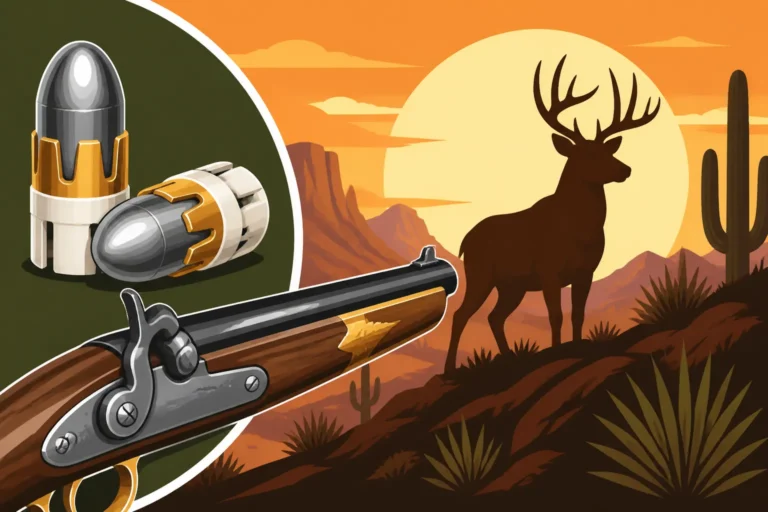
While many states limit muzzleloaders to traditional conical bullets or round balls, Arizona embraces the full spectrum of modern muzzleloader projectiles. This means you can absolutely use sabots in an Arizona muzzleloader. Sabots, which encase a smaller diameter bullet (often a pistol or rifle bullet) in a plastic sleeve, are renowned for their accuracy and flatter trajectory, especially at longer ranges. This is a game-changer for hunters pursuing animals in open Arizona landscapes where shots can easily stretch beyond 100 yards.
The ability to use sabots allows hunters to leverage ballistic performance closer to that of modern centerfire rifles. You can choose from a vast array of bullet designs, including hollow points, bonded cores, and ballistic tips, all tailored for optimal expansion and energy transfer on big game. This isn't just about longer shots; it's about making ethical shots at whatever distance an opportunity presents itself. For animals like elk or large mule deer, having a high-performance bullet that reliably expands and penetrates is critical for a clean kill. In Arizona, you're also free to use traditional full-bore conical bullets, PowerBelts, or even patched round balls if that's your preference. This incredible versatility ensures that every hunter can select a projectile best suited for their specific muzzleloader, their target animal, and the conditions of their hunt. It's a testament to Arizona's commitment to practical hunting opportunities.
Why Modern Projectiles Still Qualify
The underlying reason for Arizona's acceptance of modern projectiles, including sabots, ties back to their overall philosophy of minimizing restrictions and maximizing ethical harvest opportunities. Unlike states that define muzzleloader seasons by the primitiveness of the equipment, Arizona seems to define it by the loading method. If it's loaded from the muzzle, it's a muzzleloader. The specific components that enhance its performance, within reasonable safety limits, are generally permitted.
This practical approach understands that advancements in bullet technology lead to better accuracy and more humane kills. A modern sabot-encased bullet, delivering superior terminal performance, is ultimately a more ethical choice than a less accurate, less effective traditional projectile if the situation calls for it. The state trusts hunters to choose appropriate ammunition for the species and conditions. This trust-based system empowers hunters to utilize the best available technology to ensure clean kills, which should always be the priority. This philosophy also contributes to the popularity of muzzleloader seasons, as hunters aren't forced to compromise significantly on performance compared to a general rifle season.
Comparing Arizona to Stricter Muzzleloader States
For anyone who's ever hunted muzzleloader seasons elsewhere, Arizona's rules can feel like a breath of fresh air. The contrast with states that adhere to more "traditional" definitions of muzzleloading is stark and highlights Arizona's unique approach.
The "Traditional" Muzzleloader Debate
Across much of the country, muzzleloader seasons are designed to be a "primitive weapon" hunt, aiming to recreate a more historical hunting experience. This often comes with a host of restrictions:
- Sights: Limited to open sights, peep sights, or sometimes low-power, fixed-magnification scopes. High-power variables or illuminated reticles are typically banned.
- Ignition: Exclusively flintlock or traditional percussion cap systems; 209 primers are a definite no-go.
- Propellants: Strict adherence to black powder only; no substitutes.
- Projectiles: Only full-bore conical bullets or round balls; sabots are almost universally prohibited.
These rules are often put in place to ensure a greater challenge, a more "fair chase" experience against modern firearms, or simply to preserve tradition. While there's certainly a charm to these traditional seasons, they can also present significant limitations. Hunters might find their effective range drastically reduced, their accuracy compromised by poor visibility, or their hunt impacted by equipment malfunctions in less-than-ideal weather. The learning curve for truly mastering a traditional muzzleloader setup is steep, which can deter new hunters or those looking for a more accessible "primitive" option.
Arizona, by contrast, essentially says, "If it loads from the muzzle, and it's safe, you can use it." This eliminates the arbitrary distinctions that can frustrate hunters elsewhere. The state isn't trying to transport you back to the 1800s; it's providing a dedicated season for a specific weapon type, allowing you to use modern advancements to make that weapon as effective as possible. When you look up hunt information on platforms like GoHunt, you'll see the sheer number of available hunts in Arizona that allow for this flexible muzzleloader approach, drawing in hunters who might otherwise be discouraged by overly strict regulations.
Impact on Hunter Participation and Opportunity
The openness of Arizona's muzzleloader rules has a direct and positive impact on hunter participation and the overall hunting opportunity. When equipment restrictions are minimal, it makes the barrier to entry lower for new hunters interested in muzzleloading. Someone might be hesitant to invest in a muzzleloader if they can only use iron sights and black powder, knowing the inherent limitations that come with such a setup. However, knowing they can use a scope, reliable 209 primers, and accurate sabots makes the proposition much more appealing.
Furthermore, these liberal rules can make muzzleloader tags more competitive and desirable. In states with highly restrictive muzzleloader seasons, these tags might be easier to draw due but offer a significant challenge. In Arizona, while tags can still be tough to draw, particularly for coveted species like elk, the effectiveness of the weapon system you can employ makes those tags incredibly valuable. This contributes to vibrant muzzleloader hunting seasons, fostering a diverse community of hunters who appreciate the flexibility. It expands the window of opportunity for hunters who might prefer muzzleloaders over modern rifles for various reasons, or who want to extend their hunting season beyond the general firearm hunts.
Strategic Advantages of Arizona's Open Rules
Beyond simply making hunting easier, Arizona's open muzzleloader regulations offer several strategic advantages that can significantly enhance a hunter's effectiveness and ethical decision-making in the field.
Increased Range and Accuracy for Hunters
The most obvious strategic advantage is the dramatic increase in effective range and accuracy. When you can mount a high-quality, variable-power scope on your muzzleloader, your ability to identify and precisely hit targets at longer distances improves exponentially. This is critical in Arizona's wide-open spaces, particularly when hunting animals like pronghorn on the grasslands, mule deer on vast plateaus, or Coues deer across sprawling canyons.
Imagine a scenario where you've spent days glassing, and finally, a quality bull elk steps out at 200 yards. With traditional open sights, that shot might be incredibly challenging, if not impossible, for many hunters to make ethically. With a modern scope and a sabot bullet, that 200-yard shot becomes much more manageable and within the ethical limits of a proficient hunter. This increased range capability means more shot opportunities can be taken confidently, leading to fewer missed animals and fewer wounded animals. It's about empowering hunters to make the most of their hard-earned tag, ensuring that when the moment of truth arrives, they have the best possible chance for a clean, humane harvest. This capability also makes scouting efforts more impactful, as hunters can consider a broader range of shot distances within a unit.
Tailoring Your Setup for Specific Game and Terrain
The flexibility in components allows hunters to truly tailor their muzzleloader setup for specific species and terrain, a luxury not afforded in more restrictive states. This adaptability is invaluable in a state like Arizona, where hunting environments vary so dramatically.
- For long-range desert hunting: If you're chasing mule deer in the wide-open expanse of the Arizona Strip or Coues deer in the "gray ghost" country of the Sky Islands, you can opt for a high-magnification scope, a fast-twist barrel, and accurate sabot projectiles to maximize your reach and precision. The ability to customize a setup this way means hunters can approach specific challenges with purpose-built gear, rather than a compromise. For instance, when considering Muzzleloader Sight Systems With No Restrictions, you might lean towards a scope with advanced ballistic reticles.
- For timbered elk or bear hunts: If you're targeting elk in the dense ponderosa pine forests of the Mogollon Rim or a black bear in the thicker mountainous regions, you might choose a lower-power scope for quicker target acquisition in close quarters, or perhaps even a durable red dot sight if legal and preferred, combined with heavy, hard-hitting conical bullets for maximum impact at shorter ranges.
- For all-around versatility: Many hunters might opt for a mid-range variable scope (e.g., 3-9x or 4-12x) and a versatile sabot projectile that performs well across a variety of distances, giving them a balanced setup for diverse conditions. This allows them to effectively hunt various species using one primary muzzleloader.
This level of customization means your muzzleloader becomes a highly specialized tool, optimized for the exact hunting conditions you expect to encounter. It moves beyond a "primitive" designation and transforms it into a highly capable hunting instrument, giving you the best possible advantage while still engaging in the distinct challenge of muzzleloading.
Practical Considerations and Ethical Responsibilities
While Arizona's open muzzleloader rules offer incredible flexibility, they also place a greater emphasis on the hunter's responsibility to understand their equipment and hunt ethically. More freedom means more personal accountability.
Understanding Your Equipment's Limitations
Just because you can put a 20x scope on your muzzleloader and shoot sabots doesn't mean your muzzleloader becomes a 1000-yard precision rifle. Every firearm, including modern muzzleloaders, has its limitations in terms of effective range, accuracy, and terminal ballistics. It's paramount that hunters using these flexible setups understand these limits intimately.
- Practice, Practice, Practice: The only way to truly know your muzzleloader's capabilities is extensive range time. Don't just sight it in; practice shooting from various field positions, at different distances, and under varying conditions. Understand your bullet's trajectory at 50, 100, 150, 200, and even 250 yards. Many hunters use the GoHunt platform to research units and plan scouting trips, but equally important is knowing your weapon inside and out.
- Ballistics Knowledge: Research the ballistic performance of your chosen bullet and powder combination. Understand how much energy it retains at different distances and what kind of expansion you can expect. A shot that might be ethical at 150 yards might be pushing the limits at 250 yards due to reduced energy.
- Environmental Factors: Muzzleloaders can be more susceptible to wind drift than high-velocity centerfire rifles. Learn how to estimate wind and compensate for it, especially when making longer shots. Temperature and humidity can also affect powder performance and point of impact, so testing under real-world conditions is beneficial.
Ultimately, having open rules isn't an invitation to take irresponsible shots. It's an opportunity to optimize your equipment so that within its proven ethical limits, you can make the most of every hunting opportunity. The responsibility falls squarely on the hunter to know their gear and stay within its capabilities.
The Importance of Practice and Skill
With great freedom comes great responsibility. Arizona's open muzzleloader rules effectively remove many of the equipment-based excuses for poor performance. This means the onus is even more on the hunter to hone their skills.
- Marksmanship: This goes beyond just being able to hit a target. It includes understanding shot placement for various big game animals, knowing when not to take a shot, and developing the patience and discipline to wait for the absolute best opportunity.
- Field Craft: Even with a high-tech muzzleloader, field craft remains paramount. Scouting, reading sign, tracking, understanding thermals, and playing the wind are all critical skills, especially for challenging hunts like How to Hunt Arizona's Five-Month OTC Archery Deer Season or during Glassing Arizona's Sky Islands for Coues Deer. A muzzleloader still requires you to get relatively close to your quarry compared to long-range rifle hunting, so stalking and concealment skills are vital.
- Mental Toughness: Hunting with a muzzleloader, even a modern one, still involves a single-shot opportunity that requires focus and composure. The open rules allow for better tools, but they don't replace the mental fortitude needed for a successful hunt. Whether you're chasing elk during Arizona Muzzleloader Hunt Timing or another species, the moment of truth is still a single shot.
Arizona's approach trusts its hunters to be responsible and skilled. It provides the tools for success but expects the individual to put in the work to become proficient. This partnership between flexible regulations and hunter responsibility helps maintain the integrity of muzzleloader hunting while ensuring ethical and effective harvests across the state's diverse landscapes.
Disclaimer
Please remember that hunting regulations can change. While this guide aims to provide accurate and current information, it is always your responsibility to consult the official Arizona Game and Fish Department regulations booklet for the most up-to-date and complete rules before heading afield. The information provided here is for general guidance and informational purposes only.