Powder Charges Allowed in Arizona Muzzleloaders
Navigating the specifics of hunting regulations can feel like trying to decipher an ancient scroll, especially when it comes to something as nuanced as muzzleloader powder charges. Many hunters, particularly those new to the traditional arms or crossing state lines into Arizona, often find themselves wondering if their preferred powder type or charge weight is even legal. This guide is here to untangle those rules, specifically focusing on the types and amounts of powder you can legally use in your muzzleloader for big game hunting across Arizona, helping you prepare for a successful and compliant hunt.
The Flexible Approach to Muzzleloader Powder in Arizona
Arizona has a reputation for being a bit more liberal in its muzzleloader regulations compared to some other states, which is a huge relief for many of us who appreciate the blend of tradition and modern performance. While some states cling fiercely to very specific "primitive weapons" definitions that might restrict anything beyond loose black powder and open sights, Arizona takes a different, more hunter-friendly stance.
The Emphasis on Hunter Choice and Tradition
The Arizona Game and Fish Department (AZGFD) understands that muzzleloading isn't just one thing; it's a spectrum from the purist with a flintlock to the modern in-line hunter seeking maximum ethical range. This philosophy is reflected in their regulations, which generally avoid micromanaging the minutiae of muzzleloader components, including powder. Instead of dictating what's "primitive" enough, Arizona focuses on ensuring ethical hunting while allowing hunters the flexibility to choose equipment that suits their style and the demanding Arizona landscape. If you've ever felt constrained by overly strict rules in other states, you'll find Arizona's approach refreshing. It truly opens up possibilities, recognizing that hunters are responsible enough to make sound choices. You can learn more about this general philosophy in our detailed breakdown of why Arizona's approach to these weapons is so open in our article, Why Arizona Muzzleloader Rules Are So Open.
No "Primitive" Restrictions on Powder Types
Perhaps the most significant difference you'll find in Arizona regarding muzzleloader powder is the complete lack of a "primitive" designation for powder types. This means that unlike states that might mandate real black powder or prohibit pellets, Arizona makes no such distinction for big game hunting. Whether you prefer the smoky charm of traditional black powder or the modern convenience of substitutes and pellets, you're good to go. This flexibility is a huge boon, as it allows hunters to select the most reliable, accurate, and manageable powder for their specific muzzleloader and hunting conditions, without fear of violating a regulation. It also acknowledges the advancements in muzzleloading technology that have made these firearms incredibly capable tools in the field.
Specifics of Legal Powder Charges in Arizona
Now that we understand the general philosophy, let's get down to the nitty-gritty of what's allowed. The good news is, it's pretty straightforward, giving you ample room to experiment and find what works best for your setup.
Traditional Black Powder and Its Role
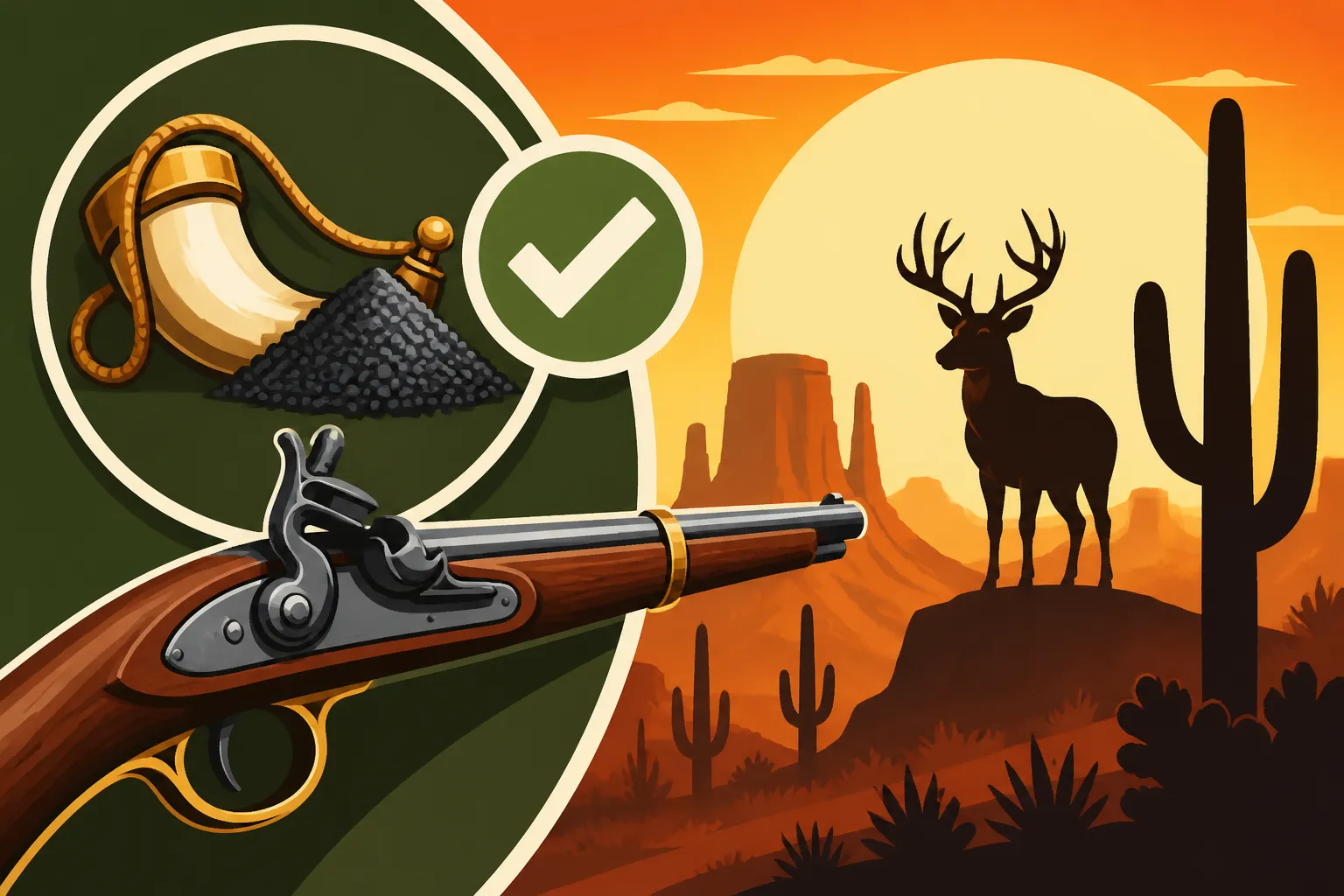
For many, the crack and puff of real black powder is an essential part of the muzzleloading experience. In Arizona, true black powder (like Goex, Swiss, or Schuetzen) in various granulations (typically FFg for rifles) is absolutely legal for big game. This is the stuff that burns dirty, smells distinctive, and requires a dedicated cleaning regimen, but it's also incredibly reliable and offers a deep connection to hunting history.
When using traditional black powder, you'll measure it by volume. A typical starting load for a .50 caliber rifle might be around 80-100 grains of FFg, though this can vary widely based on your specific firearm and projectile. It's paramount to understand that black powder is highly sensitive and requires careful handling and storage. Always use a proper powder measure, never pour directly from a can, and ensure you're using the correct granulation for your rifle to prevent dangerous pressure spikes. For a traditionalist, mastering the nuances of black powder is part of the allure, and Arizona gives you the green light to do just that.
Modern Black Powder Substitutes
If you're after less fouling, easier cleanup, and generally more consistent performance across varying temperatures and humidity, then black powder substitutes are your friend, and Arizona welcomes them. Products like Pyrodex (RS, P, or Select), Triple Seven (FFg or FFFg), and Blackhorn 209 are all perfectly legal for use in Arizona muzzleloader hunts.
These substitutes are designed to mimic the ballistic performance of black powder but with significant advantages. For instance, Blackhorn 209 is renowned for being exceptionally clean-burning and non-corrosive, extending the life of your rifle and making post-hunt cleanup a breeze. Pyrodex and Triple Seven also offer cleaner burns than traditional black powder, albeit to a lesser degree than Blackhorn 209. When using these substitutes, remember that they are often measured by volume equivalent to black powder, not by weight. For example, 100 grains by volume of Pyrodex RS might weigh less than 100 grains of true black powder, but it produces a similar pressure and velocity curve. Many hunters find these substitutes significantly boost accuracy and reduce the hassle associated with traditional black powder. When researching ballistic data for these various powders, resources like GoHunt can be invaluable for cross-referencing performance characteristics and making informed choices for your specific hunting scenario.
Pelletized Powder for Convenience
For hunters prioritizing speed and consistency in loading, pelletized powder is a game-changer, and again, Arizona has no restrictions against it. Pellets, such as Hodgdon Triple Seven Pellets or Pyrodex Pellets, come in pre-measured charges, often in 50-grain equivalents. You simply drop the desired number of pellets down the barrel, eliminating the need for a powder measure and speeding up the reloading process—a significant advantage if you need a quick follow-up shot on an Arizona elk or deer.
While pellets offer incredible convenience, some hunters find that loose powder, especially modern substitutes like Blackhorn 209, can offer a slight edge in terms of fine-tuning accuracy due to the ability to dial in more precise charge weights. However, for most hunting situations, the consistency and ease of use provided by pellets are more than sufficient. They ensure that every shot has the same powder charge, reducing variables and simplifying your preparation. This makes them a popular choice for many, especially those just starting in muzzleloading or those who prioritize simplicity in the field.
Here's a quick comparison of common powder types allowed in Arizona:
| Powder Type | Characteristics | Measurement | Primary Benefits | Considerations |
|---|---|---|---|---|
| Black Powder | Traditional, corrosive, smoky | Volume | Authentic experience, reliable | Requires thorough cleaning, sensitive to moisture |
| Pyrodex (RS/P) | Substitute, less corrosive than black powder | Volume equiv. | Easier cleanup, good performance | Still produces some fouling, slightly hygroscopic |
| Triple Seven | Substitute, cleaner burning, non-corrosive | Volume equiv. | Very clean, consistent, high energy | Can be pressure sensitive if compressed too much |
| Blackhorn 209 | Modern substitute, extremely clean, non-corrosive | Weight/Volume | Best for consistency & cleanliness | Specific primers required, generally more expensive |
| Pelletized Powders | Pre-measured, various substitutes | # of pellets | Ultimate convenience, fast reloading | Less ability to fine-tune charge for accuracy |
Maximum and Recommended Charges
One of the questions that frequently arises is about maximum powder charges. Will Arizona regulations restrict how much powder I can stuff in my barrel? The answer, refreshingly, is no, but with a critical caveat that applies universally to firearms.
Arizona's Lack of a Hard Max Charge Rule
Unlike some states that might cap black powder charges at, say, 150 grains by volume, Arizona's hunting regulations do not specify a maximum powder charge for muzzleloaders. This doesn't mean you can just load your rifle to the brim, though! The absence of a state-mandated maximum charge places the responsibility squarely on the hunter to adhere to the manufacturer's recommendations for their specific firearm. This is a critical safety consideration, as exceeding the safe limits of your muzzleloader can result in catastrophic failure of the firearm and severe injury.
Always, always, always consult your muzzleloader's owner's manual. Most manufacturers will provide a clear range of acceptable powder charges, often differentiating between loose powder and pellets, and sometimes even by projectile weight. For example, a modern in-line .50 caliber muzzleloader might have a maximum recommended charge of 120-150 grains by volume of a black powder substitute, while a traditional sidelock might be capped closer to 100 grains. It's also worth noting that Arizona is quite open on other muzzleloader aspects, such as optics. You might be interested in our guide on Muzzleloader Sight Systems With No Restrictions for more details.
Practical Considerations for Accuracy and Safety
While staying within the manufacturer's limits is non-negotiable for safety, finding the optimal charge for accuracy is where the art of muzzleloading comes in. Often, the most accurate loads for your rifle won't be at the absolute maximum recommended charge. Many muzzleloaders achieve their best groups with charges slightly below the max.
Here are some practical considerations:
- Accuracy vs. Velocity: Pushing the absolute maximum powder charge might give you the highest muzzle velocity, but it doesn't always translate to better accuracy. Excess powder can cause erratic bullet flight due to increased recoil and barrel harmonics. Experimenting with different charges, typically in 5-10 grain increments, is key to finding your rifle's "sweet spot."
- Recoil Management: Higher powder charges mean more recoil. If you're sensitive to recoil, or shooting a lighter muzzleloader, reducing the charge slightly can make for a more comfortable shooting experience, which in turn leads to better shot placement. This is especially important when considering follow-up shots in the field.
- Projectile Pairing: The type of projectile you use (e.g., patched round ball, lead conical, sabot with jacketed bullet) will also influence optimal powder charges. Heavier projectiles generally require less powder to achieve good velocity than lighter ones. You can delve deeper into projectile choices in our article on Sabot Bullets in an Arizona Muzzleloader. Understanding these relationships, perhaps by leveraging tools like the ballistics calculators or unit research offered by GoHunt, can give you an edge in preparing for your hunt.
Implications for Performance and Hunt Planning
Your choice of powder and charge weight isn't just about legality or even safety; it directly impacts your muzzleloader's performance in the field, which is crucial for ethical hunting.
Matching Powder to Your Muzzleloader and Hunt
Different muzzleloader types react differently to various powders. A modern in-line rifle, designed for higher pressures and equipped with a 209 primer, will often perform exceptionally well with clean-burning, high-energy substitutes like Blackhorn 209 and higher charges. A traditional sidelock rifle, with its shallower rifling and reliance on percussion caps, might be better suited to traditional black powder or Pyrodex, and generally at more moderate charges.
Consider the game you're hunting and the expected shot distances in Arizona's diverse terrain. For close-range javelina in thick brush, extreme velocity might not be as critical as consistent ignition and manageable recoil. For a longer shot at a Coues deer across an open desert canyon, maximum effective range and flatter trajectory become paramount. This decision process also ties into your overall setup, including your sighting system. For insights on that, check out Choosing a Muzzleloader Sight Without Restrictions. You'll want to optimize your load to ensure you can confidently make an ethical shot at common hunting distances. For many hunters, this means finding a load that offers a predictable trajectory out to 150-200 yards, a realistic ethical range for most muzzleloaders. This practice is crucial for any hunting, and especially when you consider your Rifle Zero Distance for Open Desert conditions.
Storage, Handling, and Field Safety
Beyond the initial loading, how you store and handle your powder, both at home and in the field, is vital. Black powder and most substitutes are flammable and should be stored in cool, dry conditions away from ignition sources. When hunting, especially during the often hot early seasons in Arizona, protecting your powder from moisture and extreme heat is crucial. Powder pellets in a waterproof container or pre-measured charges in sealed vials are excellent ways to ensure reliability.
Loading in the field also requires discipline. Always make sure the bore is clear before loading, use a short starter to seat your projectile consistently, and ensure you have a firm, even bullet-to-powder contact with no air gap. A loose powder charge or an improperly seated bullet can lead to inconsistent velocities or, worse, a dangerous bore obstruction. Remember that conditions can change rapidly in Arizona, from scorching heat to sudden monsoons. You'll want to be prepared for anything. This preparation extends to understanding how to manage your gear and yourself, particularly with regards to Heat Management on an Arizona Early Season Hunt. And always, always do a final check of your zero after a long drive and setting up camp, as things can shift, as detailed in Sighting In After a Long Drive to Camp.
Disclaimer
Please remember that while this guide provides comprehensive information based on current Arizona hunting regulations and general muzzleloader practices, regulations can change. Always consult the most current Arizona Game and Fish Department hunting regulations booklet before your hunt. This information is for educational purposes and should not replace professional safety instruction.