Can You Use a Scope on an Arizona Muzzleloader?
It's completely understandable to feel a little lost when trying to figure out the exact rules for muzzleloaders in Arizona, especially when other states have such tight restrictions on optics. Many hunters come to Arizona after years of hunting in places where only open sights or very limited magnification are allowed for muzzleloader season, leading to a lot of confusion and a genuine need for clarity. This guide is here to cut through that fog and confirm what you can and can't use on your muzzleloader for Arizona hunts.
Arizona's Liberated Approach to Muzzleloader Sights
Let's be real, navigating hunting regulations can sometimes feel like deciphering an ancient scroll, especially when you're dealing with specific weapon types. Muzzleloaders, in particular, often come with a laundry list of "do nots" in many states, making hunters cautious about what they can legally mount on their prized traditional firearms. But here in Arizona, when it comes to sights for your muzzleloader, things are refreshingly different.
A Breath of Fresh Air for Muzzleloader Hunters
Across the country, many states impose strict limitations on muzzleloader hunting, often tying them to primitive weapon seasons or requiring specific types of open, non-magnifying sights. This can be a real headache for hunters who want to extend their effective range or who simply prefer the clarity and precision a scope offers. You might be accustomed to iron sights, peep sights, or maybe a 1x red dot if you're lucky. The thought of needing to hunt with only these options can certainly add another layer of challenge to an already demanding hunt, particularly when you're trying to judge an animal at distance in wide-open country. Arizona, however, takes a much more hunter-friendly stance, recognizing that modern muzzleloaders are capable of incredible accuracy and that ethical hunting often benefits from clear sight pictures.
Yes, Scopes Are Legal on Arizona Muzzleloaders
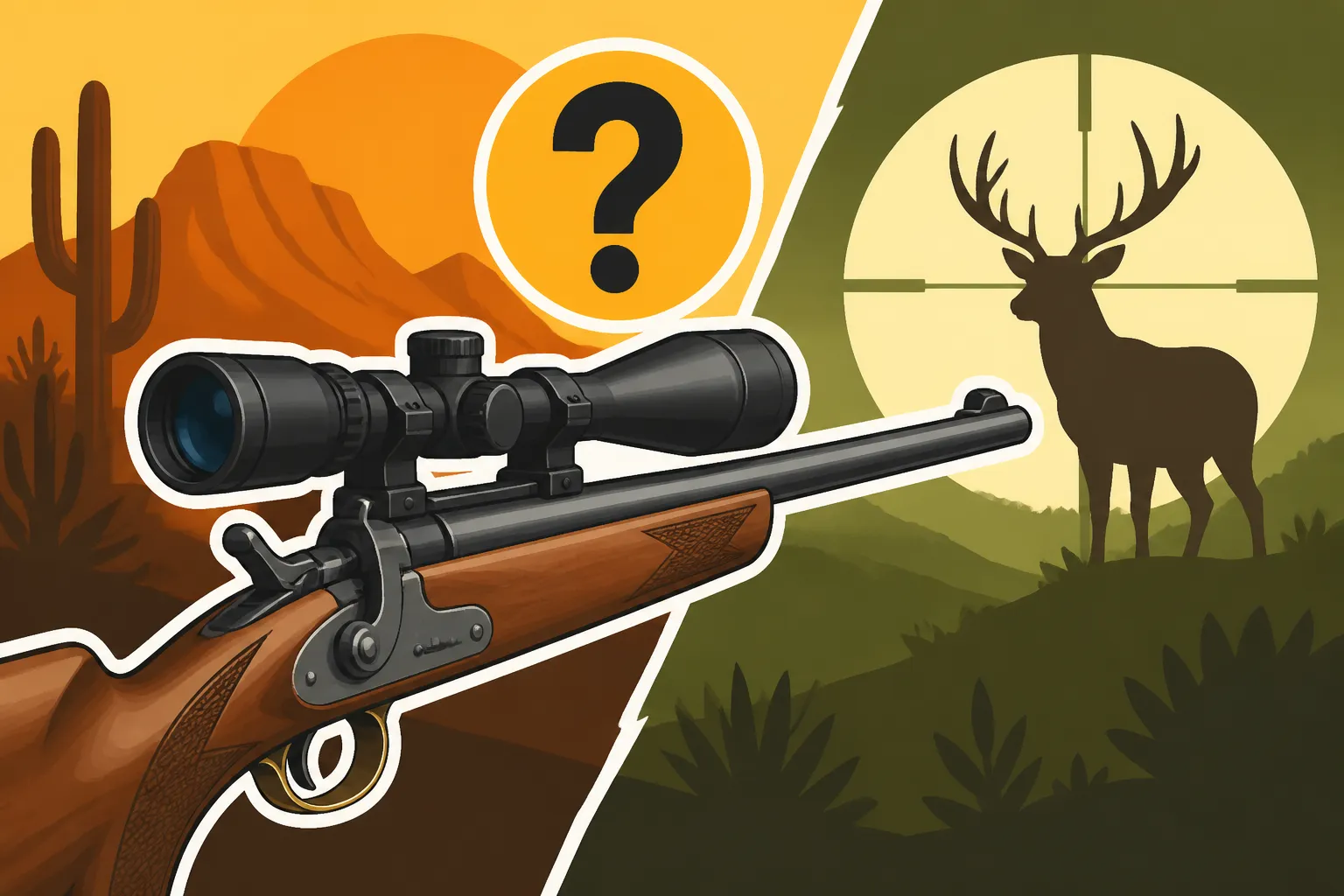
Let's get straight to the point because this is often the biggest question on people's minds: Can you use a scope on an Arizona muzzleloader? The answer is a resounding yes. Arizona's regulations are notably liberal in this regard, a welcome change for many who are used to more restrictive rules elsewhere. There's no need to limit yourself to open sights or to worry about sacrificing accuracy because of sight limitations. This freedom allows hunters to optimize their muzzleloader setup for precise shot placement, which is always a good thing when you're in the field. This also means you can approach a muzzleloader hunt with confidence, knowing you have the tools to make an ethical shot, whether you're stalking a Coues deer in the Sky Islands or waiting for an elk to emerge from the timber on the Mogollon Rim. This openness in the regulations is part of what makes Why Arizona Muzzleloader Rules Are So Open so appealing to many hunters.
No Restrictions on Magnification or Type
And it gets even better! Arizona doesn't stop at just allowing scopes; it doesn't impose any specific restrictions on the magnification level or the type of scope you can use. This means you're free to choose the optic that best suits your hunting style, the terrain, and the conditions you expect to encounter. Want a fixed-power scope for simplicity? Go for it. Prefer a variable-power optic that lets you dial down for close timber shots and crank up for distant glassing? Absolutely. There are no limitations on power, objective lens size, reticle type, or even if it's illuminated. This stands in stark contrast to many other states that often limit magnification to 1x or prohibit any electronic sights during muzzleloader seasons. This level of freedom allows you to truly customize your setup, ensuring you can make the most of your time afield. When it comes to Choosing a Muzzleloader Sight Without Restrictions, Arizona truly offers unparalleled flexibility.
Practical Considerations for Scoped Muzzleloaders
Having the freedom to mount a scope on your muzzleloader is fantastic, but it also brings a few practical considerations that are worth thinking through. It's not just about slapping any scope on and heading to the field; you want to make sure your setup is optimized for success and, most importantly, ethical hunting.
Zeroing Your Muzzleloader with a Scope
Zeroing a muzzleloader, especially one with a scope, can be a different beast compared to a centerfire rifle. Muzzleloaders, by their nature, often have a more rainbow-like trajectory, and consistency is key. You'll want to experiment with different powder loads and bullet combinations to find what shoots best out of your rifle. Once you've found a consistent load, it's time to hit the range and get that scope dialed in. A common practice is to zero at 100 yards, but given Arizona's varied terrain, from dense ponderosa pine forests to wide-open desert flats, you might consider extending that.
For example, on an elk hunt on the Mogollon Rim, you might anticipate shots from 50 to 200 yards. A 150-yard zero might be a good compromise, giving you minimal hold-over or hold-under for common distances. Remember, muzzleloaders kick, and recoil management is important for consistent groups. Take your time, let the barrel cool, and clean between shots as recommended by your rifle's manufacturer. Documenting your specific load data and zero at various distances is crucial, perhaps even using a ballistic calculator or a rangefinder with ballistic functions. This meticulous approach will pay dividends in the field.
The Impact of Scope Choice on Performance
The scope you choose can significantly impact your muzzleloader's performance and your overall hunting experience. A cheap, unreliable scope simply won't hold up to the recoil of a muzzleloader or the harsh Arizona environment. You'll want an optic that is durable, waterproof, fogproof, and has clear glass. While you don't need a 20x super-magnification scope for most muzzleloader hunting, a quality 3-9×40 or 4-12×44 is often a sweet spot.
A scope with a ballistic reticle or one that allows for custom turrets calibrated to your specific muzzleloader load can be a game-changer for extending your ethical range. Instead of guessing holdovers, you can use built-in reference points or dial the exact yardage. For instance, brands like Leupold or Vortex offer excellent options with various reticle choices that can be incredibly helpful for muzzleloader hunting. When you’re planning your hunt, platforms like GoHunt can be invaluable for e-scouting, helping you understand the terrain and potential shot distances, which in turn informs your scope choice.
Weather and Environmental Challenges
Arizona's hunting seasons can present a wide array of weather conditions, from scorching early-season desert heat to late-season mountain snow and everything in between. Your scope needs to be able to handle it all. Intense heat can cause mirage through cheaper glass, making precise aiming difficult. Dust, ever-present in the desert, can get into moving parts and obscure lenses. Rain, even in the desert, can happen during the monsoon season, and fog is a real possibility in higher elevations during cooler mornings.
Ensure your scope is genuinely fogproof (nitrogen purged) and waterproof. Lens caps are your best friend for protecting those crucial optical surfaces from dust, rain, and scratches. Consider a scope with generous eye relief, especially important with a hard-kicking muzzleloader, to prevent "scope bite." Lastly, ensure your scope mounts are robust and properly torqued. The last thing you want is a scope that shifts zero after a few shots or a bumpy ride on a UTV down a forest road.
Pairing Your Muzzleloader with the Right Optic
With the freedom to use any scope on your Arizona muzzleloader, the real challenge becomes choosing the right one. It’s not just about maximum magnification, but about balancing features, durability, and practical application in the field.
Traditional Scope Features for Muzzleloaders
For many muzzleloader hunters, a tried-and-true variable power scope in the 2-7x, 3-9x, or even 4-12x range offers the perfect balance. These scopes are typically lighter, less bulky, and perfectly suited for the effective ranges of most muzzleloaders. At lower magnifications (2-4x), you get a wide field of view, which is crucial for quick target acquisition in thick cover or when an animal suddenly appears at close range. As you dial up to 7x or 9x, you have enough magnification to clearly identify your target and place a precise shot at 100-200 yards.
A simple duplex reticle is often more than sufficient for these ranges, though a slightly more advanced reticle with a few holdover points can be beneficial. Look for scopes with good light transmission for those crucial dawn and dusk hours, and easy-to-adjust turrets for zeroing. Remember, a muzzleloader isn't typically a 500-yard weapon, so over-scoping it can add unnecessary weight and complexity. Focus on reliability and clarity within practical muzzleloader distances.
Advanced Reticles and Ballistic Turrets
For hunters looking to push the ethical limits of their muzzleloader's range, or simply desiring more precision, advanced reticles and ballistic turrets are excellent enhancements. Many modern scopes offer BDC (Bullet Drop Compensating) reticles, which provide etched hash marks or dots below the main crosshair, each representing a specific yardage. Once you've found your muzzleloader's ballistic curve with your chosen load, you can match these marks to your 200, 250, or even 300-yard holdovers.
Even better are scopes with exposed, resettable, or custom ballistic turrets. With a custom turret, you send in your load data, and the scope manufacturer engraves yardage markers directly onto the elevation turret. This allows you to simply dial the exact distance to your target, eliminating guesswork and dramatically increasing your first-shot hit probability at extended ranges. When hunting in open country for something like an Arizona antelope or a mule deer across a wide canyon, knowing you can confidently dial for distance can be a huge advantage. Just be sure to practice dialing repeatedly at the range to build muscle memory.
Durability and Reliability in Arizona Conditions
Arizona's diverse and often rugged landscape demands a scope that can take a beating and still perform flawlessly. From the searing summer heat to the jarring recoil of heavy muzzleloader loads, your optic needs to be robust. Look for scopes with one-piece tubes, often aircraft-grade aluminum, for maximum strength. The internal mechanisms, including the erector system that provides magnification, need to be precisely machined to withstand constant vibration and impact without losing zero.
Fogging is a common issue when moving from a cold, high-elevation morning into warmer, lower air, or during a sudden rain shower. A high-quality scope will be nitrogen or argon purged and O-ring sealed to prevent internal fogging and moisture ingress. Reputable brands like Vortex, Leupold, or even many mid-tier scopes from companies like Burris or Nikon are designed with these considerations in mind. Investing in a quality optic for your muzzleloader isn't just about clearer sight picture; it's about ensuring your equipment doesn't fail you when that once-in-a-lifetime animal steps out.
Beyond the Scope: Other Muzzleloader Regulations to Remember
While the good news about scopes is liberating, it’s crucial to remember that your muzzleloader is still subject to other important Arizona Game and Fish Department regulations. A scope won't help you if you're not compliant with projectile types or season dates.
Legal Powder Charges and Projectiles
Arizona is also quite open when it comes to the powder and projectiles you can use in your muzzleloader. Unlike some states that restrict you to only black powder or specific types of bullets, Arizona generally allows for the use of modern black powder substitutes, like Triple Seven or Blackhorn 209, alongside traditional black powder. This is a huge benefit, as these substitutes burn cleaner and offer more consistent velocities.
When it comes to projectiles, the state allows for a variety of options, including patched round balls, conical bullets, and even sabot bullets. This means you can use the more aerodynamically efficient, plastic-encased bullets that often deliver superior accuracy and downrange energy compared to traditional lead projectiles. The only real constraint is that for big game, you must use a projectile with a minimum diameter of .40 caliber. So, feel free to experiment with different powder and bullet combinations to find what performs best in your rifle, ensuring it meets the minimum legal caliber. Many hunters find great success with .50 caliber sabots firing .45 caliber bullets, for instance. For a deeper dive into bullet specifics, you might want to read about Sabot Bullets in an Arizona Muzzleloader.
Understanding Muzzleloader-Specific Hunts
It's important to differentiate between general big game seasons and muzzleloader-specific hunts. While muzzleloaders can be used in many general season hunts alongside rifles, there are specific "muzzleloader-only" seasons. These seasons often offer unique hunting opportunities and sometimes less pressure than general rifle seasons. However, the specific regulations, including dates, units, and species, will be outlined in the annual Arizona Game and Fish Department hunting regulations booklet. Always double-check the current year's regulations before applying for a tag or heading afield. Understanding What a HAM Hunt Actually Is is also crucial, as muzzleloaders are often permitted during these Handgun, Archery, and Muzzleloader seasons, offering expanded opportunities.
General Hunting Regulations Still Apply
Even though you have freedom with your muzzleloader's optics and components, all other general Arizona hunting regulations still apply. This includes possessing a valid Arizona hunting license and the correct tag for the species and unit you are hunting. You must also adhere to legal shooting hours, which typically range from 30 minutes before sunrise to 30 minutes after sunset. Tagging requirements, evidence of sex rules, and meat salvage regulations are also paramount.
Don't forget about ethical considerations too, like knowing your effective range, proper shot placement, and understanding unit-specific rules regarding baiting or using electronic calls. Remember, public lands in Arizona can have specific rules regarding vehicle access and camping, so always consult a map like those from GoHunt or onX to know where you are and what rules apply. The goal is always a safe, legal, and ethical hunt.
Here's a quick overview of Arizona's muzzleloader sight rules:
| Feature | Arizona Muzzleloader Rules | Common Restrictions in Other States (for comparison) |
|---|---|---|
| Scope Use | YES, fully permitted | Often prohibited or limited |
| Magnification | No restrictions (e.g., 3-9x, 4-12x, 6-24x) | Often limited to 1x or non-magnifying |
| Reticle Type | No restrictions (e.g., Duplex, BDC, Mil/MOA) | Often restricted to basic crosshairs |
| Electronic Sights | YES, fully permitted (e.g., Red Dots, Holographic) | Often prohibited |
| Powder Type | Black powder & approved substitutes | Often limited to black powder only |
| Projectile Type | Conical, Round Ball, Sabot (min .40 cal) | Often limited to conical/round ball |
Disclaimer
Please note: Hunting regulations can change. While I strive to provide accurate and up-to-date information, it is always your responsibility to consult the current year's official Arizona Game and Fish Department hunting regulations prior to any hunting activity. This content is for informational purposes only and does not constitute legal advice.