Access Into Mazatzal Wilderness
Venturing into the Mazatzal Wilderness for a hunt can feel like stepping back in time, where the sheer ruggedness of the land dictates your every move. It's a place where modern conveniences are shed at the boundary, leaving many hunters daunted by the prospect of truly wild country. This guide is here to strip away the mystery, offering a clear path to understanding the unique access rules and preparing you for a successful and respectful hunting adventure in one of Arizona's most challenging — and rewarding — landscapes.
Understanding the Mazatzal Wilderness and Its Unique Challenges
The Mazatzal Wilderness is more than just a place on a map; it's a designation that profoundly impacts how you can access and hunt it. For many, the word "wilderness" conjures images of untouched beauty, and while that's true, it also comes with a very specific set of regulations designed to preserve that wild character. Understanding these isn't just about following rules; it's about embracing a different kind of hunting.
What Defines Wilderness in Arizona?
When an area is designated as "Wilderness" by Congress, it comes with a strong set of protections aimed at preserving its natural character. For hunters, the most impactful of these regulations revolves around what you can't bring or use. You won't find any roads winding through the Mazatzals, nor will you be able to bring motorized vehicles of any kind – think ATVs, dirt bikes, or even e-bikes. This also extends to mechanized equipment like mountain bikes or game carts. The intent is to minimize human impact and ensure that visitors experience the land on its own terms, fostering self-reliance and primitive recreation.
This means that every step you take, every pound of gear you carry, and every animal you might harvest must be moved under your own power or with the aid of pack stock. It's a stark contrast to many other public lands where forest roads and trails might allow for easier access. This restriction fundamentally shapes your hunting strategy, from how deep you can go to how you'll get your game out. It elevates the challenge, but for many, it also elevates the reward, connecting them to a more primal hunting experience. Wilderness Rules Inside Arizona Forests apply here, ensuring that the natural integrity of this special place remains intact for generations.
Geographic Context of Mazatzal: Rugged Beauty
The Mazatzal Wilderness stretches across central Arizona, roughly northeast of Phoenix, covering over 250,000 acres. Its name, "Mazatzal," is often thought to come from an Aztec word meaning "place of the deer," a fitting nod to the wildlife that calls this area home. The terrain is relentlessly rugged, characterized by steep, jagged mountains, deep, winding canyons, and a mosaic of vegetation zones. You'll encounter dense chaparral in the lower elevations, transitioning to pinyon-juniper woodlands and then Ponderosa pine forests at higher altitudes, especially on the Mazatzal Peak itself, which climbs to over 7,900 feet.
This dramatic elevation change and varied topography create a diverse habitat, but also significant physical challenges for hunters. The canyons can be incredibly steep and brushy, making travel slow and tiring. Water sources can be scarce and unreliable, especially during the drier parts of the year. Understanding this landscape is paramount; blindly dropping into a canyon without a solid exit strategy or sufficient water can quickly turn a hunt into a survival situation. It's country that demands respect, meticulous planning, and a robust physical condition, but it also rewards those who venture deep with solitude and unparalleled hunting experiences.
Game Species and Seasons Within the Mazatzal
While the Mazatzal Wilderness is primarily known for its ruggedness, it also hosts a variety of big game species, making it a challenging but potentially rewarding hunting destination. The diverse habitats, from arid brush to pine forests, support animals adapted to these conditions. You're most likely to encounter both Coues deer and mule deer, depending on the specific unit and elevation you're hunting within the wilderness boundary. The lower, brushier country often holds Coues deer, while mule deer can be found in a broader range of habitats, especially at higher elevations or in more remote pockets. Coues Deer Are Arizona's Signature Whitetail provides more insight into this unique subspecies.
Beyond deer, the Mazatzals are also home to healthy populations of black bear and mountain lion. These predators thrive in the remote, dense cover that the wilderness offers, often following the deer herds. Bear seasons in Arizona are often managed with unit-specific harvest limits, sometimes even closing early if those limits are met. Lion hunting often involves hounds, though still-hunting is certainly possible for the dedicated. For those looking for smaller game, javelina can also be found in the lower, brushier sections of the wilderness, offering another challenging pursuit. Always check the current year's Arizona Game and Fish Department regulations for specific season dates, weapon restrictions, and harvest limits for the units overlapping the Mazatzal Wilderness, as these details can shift. Black Bear Across Arizona's Timbered Ranges and Arizona Manages Mountain Lion With Harvest Limits are great resources to understand these other species.
Navigating Access Points and Permitted Travel
Getting into the Mazatzal Wilderness is half the battle, and it requires a completely different mindset than hunting areas with established roads. The key here is patience, preparation, and knowing exactly what's allowed and what's not once you cross that wilderness boundary.
Key Trailheads and Entry Points
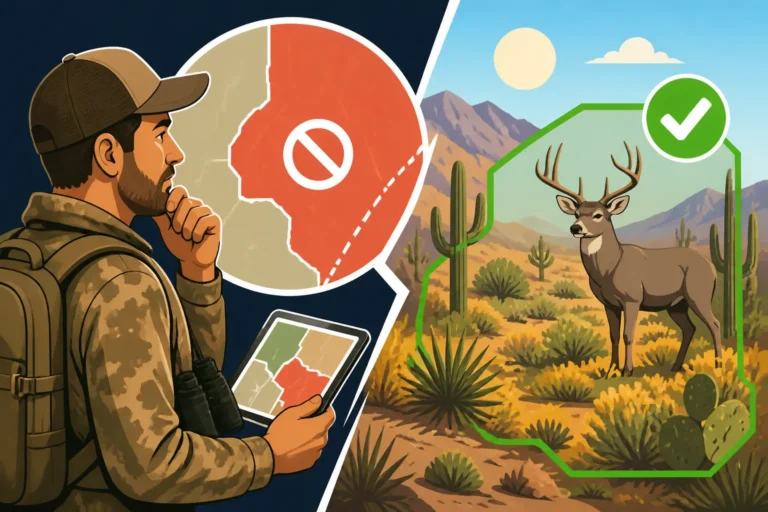
Access to the Mazatzal Wilderness is almost exclusively via designated trailheads, which are typically found along the periphery of the wilderness area. Because the wilderness is essentially roadless, these trailheads serve as critical staging areas. Common access points might include areas off the Beeline Highway (AZ-87) to the west, or roads leading in from the east, often through National Forest lands. Some of these trailheads are well-maintained, while others might be more primitive and require a high-clearance vehicle to reach. It’s crucial to scout these entry points thoroughly before your hunt. Often, this means driving forest roads that lead to the wilderness boundary, identifying where the official trails begin, and understanding the parking situation.
The challenge is that these trailheads are often miles from where you might actually want to hunt, meaning significant hiking, or packing, is required just to reach your desired hunting grounds. This is where digital mapping tools become indispensable. Services like onX Hunt are invaluable for identifying designated trails, tracking your progress, and seeing the exact wilderness boundary. You can layer public land ownership, topographic maps, and even satellite imagery to get a complete picture of potential access routes and identify the best starting points. Many hunters also leverage resources from GoHunt to research specific units and understand general access patterns before committing to a plan.
Motorized and Mechanized Restrictions in the Wilderness
Let's be absolutely clear: once you step, or ride, across the Mazatzal Wilderness boundary, all motorized and most mechanized forms of travel cease. This means no ATVs, no dirt bikes, no e-bikes, and no mountain bikes. Even rolling a game cart to haul out your deer or bear is prohibited. The reasoning behind this is to preserve the pristine, untrammeled nature of the wilderness, ensuring that human activities don't leave lasting impacts on the landscape. Motorized Travel Rules on Arizona Public Land offers a broader context, but remember that wilderness areas have their own, stricter set of rules.
For hunters, this fundamental restriction means embracing the "primitive" aspect of the hunt. Your primary means of travel will be your own two feet. This demands a high level of physical fitness and a willingness to carry everything you need, and eventually, everything you harvest. For larger game, or for getting deeper into the wilderness with heavy gear, pack stock – horses, mules, or burros – become the only legal alternative. Hiring a packer or owning your own stock requires additional planning, logistics, and expense, but it significantly expands your effective range and carrying capacity within the wilderness. Without these options, every hunt becomes a serious backpacking endeavor.
Planning Your Route with Topo Maps and Digital Tools
Successful navigation and route planning are absolutely critical in the Mazatzal Wilderness, perhaps more so than in almost any other hunting area in Arizona. The terrain is complex, trails can be faint or overgrown, and getting disoriented in the maze of canyons and ridges is a real possibility. Relying solely on a smartphone without downloaded maps or a charged battery is a recipe for trouble. A combination of traditional topographic maps, a reliable compass, and robust digital mapping applications is the best approach.
Before you ever set foot in the wilderness, spend hours poring over maps. Identify major drainages, prominent peaks, potential water sources (though always verify reliability), and the steepest sections of terrain. Digital tools like onX Hunt are game-changers for this. You can download entire unit maps for offline use, pinpoint your exact location via GPS, mark waypoints for camp, water, and potential hunting spots, and visualize elevation changes with 3D terrain views. GoHunt also offers invaluable resources for unit-specific information, including public land percentages and access considerations, which can help inform your overall strategy. Even with these tools, carry a physical map and compass, and know how to use them as a backup. Batteries die, and technology can fail, but a paper map and compass are always reliable. Scouting a Unit From Satellite Imagery can provide a fantastic head start, allowing you to identify potential travel corridors and areas of interest from the comfort of your home.
| Access Method | Legality in Mazatzal Wilderness | Pros | Cons |
|---|---|---|---|
| Foot Travel | Legal | Ultimate stealth, deepest penetration | Physically demanding, slow, limited carrying capacity |
| Pack Stock (Horses/Mules) | Legal | Increases carrying capacity, faster travel | Requires skill, animal care, additional logistics |
| Motorized Vehicles | Not Legal | (N/A) | Strictly prohibited within wilderness boundaries |
| Mechanized Equipment (e.g., Bicycles, Game Carts) | Not Legal | (N/A) | Strictly prohibited within wilderness boundaries |
Essential Gear and Mindset for Mazatzal Wilderness Hunting
Hunting the Mazatzal Wilderness isn't just a physical challenge; it's a mental one. You need to prepare not just your body, but your gear and your mind for true self-reliance and the demands of wild country. This isn't a place for shortcuts or unpreparedness.
Physical Demands and Preparation
Let's be blunt: the Mazatzal Wilderness will test your physical limits. This isn't a casual stroll; it's often a vertical ascent, a grueling descent into a brushy canyon, or miles of traversing rugged, uneven terrain, all while carrying a heavy pack. The elevation changes can be extreme, and the temperatures can swing wildly, especially during early and late seasons. Attempting to hunt here without adequate physical preparation isn't just unpleasant; it can be dangerous. Your fitness directly impacts your safety, your ability to hunt effectively, and your capacity to retrieve an animal.
Start training months in advance. Focus on cardiovascular endurance through hiking with a weighted pack, climbing stairs, and trail running. Incorporate strength training, particularly for your legs, core, and back. Practice navigating off-trail with your pack. Don't underestimate the impact of heat, especially during early archery seasons. Heat Management on an Arizona Early Season Hunt is crucial reading. Hydration is key, and you'll need to carry much more water than you think, or plan your routes meticulously around reliable water sources, which can be few and far between. This isn't just about bagging an animal; it's about enjoying the challenge and returning safely. Physical Conditioning for a Sky Island Hunt (which shares similar rugged terrain challenges) offers excellent advice on preparing your body for tough Arizona hunts.
Critical Gear for Remote Hunts
Your gear choices in the Mazatzal Wilderness are not just about comfort; they're about survival and efficiency. Because you're carrying everything on your back or relying on pack stock, every item needs to be essential, durable, and lightweight. Start with a high-quality, properly fitted backpacking pack – one that can comfortably handle 50-70 pounds. Navigation is non-negotiable: a dedicated GPS unit (with downloaded maps), a compass, and physical maps are all critical. A satellite communication device (like a satellite messenger) is also highly recommended, as cell service is virtually nonexistent.
Water filtration is another must-have. Even if you plan to pack in all your water, unexpected delays or higher-than-anticipated consumption can quickly deplete your supply. Reliable water filters or purification tablets can make an unreliable source usable. Bring ample game bags for meat, especially in warmer conditions, and know how to field dress and quarter an animal efficiently. A sharp knife, a first-aid kit, a headlamp with extra batteries, fire-starting supplies, and durable, broken-in hiking boots are also non-negotiable. Water You Must Carry on a Day Hunt details just how much you might need. Don't forget layers of clothing that can adapt to changing temperatures – mornings can be chilly, while afternoons blaze. Choosing Boots for Rocky Desert Ground will give you some excellent pointers on footwear that will stand up to the Mazatzals.
Respecting the Wilderness Ethic
Hunting in a designated wilderness area comes with a profound responsibility to uphold the "wilderness ethic." This isn't just about following the letter of the law, but embodying the spirit of conservation and leaving the land as untouched as you found it – or even better. The core principle is "Leave No Trace." This means packing out everything you pack in, including all trash, spent casings, and any food scraps. Do not bury your waste; pack it out. Camp in durable locations, minimize your impact on vegetation, and understand proper waste disposal techniques for human waste.
Fires are often restricted, especially during dry seasons, so plan for a stove for cooking. If fires are allowed, use existing fire rings where possible and keep them small. Be acutely aware of your impact on other users of the wilderness, whether they are hikers, backpackers, or other hunters. Silence your electronics, tread lightly, and strive to leave no evidence of your passage. This commitment ensures that the Mazatzal Wilderness remains a wild and pristine place for future generations of hunters and outdoor enthusiasts. It’s a privilege to hunt in such an environment, and respecting its unique character is paramount.
Disclaimer
This article is for general informational purposes only and does not constitute professional advice. Laws, prices and regulations vary by location and change over time. Consult a qualified professional for guidance on your specific situation.