Penalties for Breaking Arizona Travel Rules
Picture this: you're out in the Arizona backcountry, maybe chasing a Coues deer through a rugged wash or trying to cut off an elk on a faint two-track. The adrenaline is pumping, and suddenly, you see a path that looks like it'll shave miles off your approach or get you to that perfect glassing point. Without thinking, you take it, only to realize later you've crossed a line you shouldn't have. It's easy to make mistakes in the vastness of Arizona's public lands, especially when rules can feel as complex as the terrain itself. This guide is here to walk you through the consequences of breaking Arizona's travel rules while hunting, helping you understand the stakes and how to avoid costly missteps that could ruin your hunt and cost you more than just a tag.
Understanding Arizona's Travel Rules for Hunters
Navigating the rules for where you can and cannot drive your vehicle in Arizona's hunting units can feel like trying to solve a puzzle in the dark. It’s not always straightforward, and what might be acceptable in one type of public land might be strictly forbidden in another. Understanding these nuances is crucial for any hunter wanting to avoid an unwelcome encounter with law enforcement. The goal of these rules isn't to hinder your hunt, but to protect fragile ecosystems, prevent habitat degradation, and ensure fair chase opportunities for everyone.
The Why Behind Motorized Vehicle Restrictions
Motorized vehicle restrictions are put in place for a host of reasons, all centered around conservation and responsible land use. Imagine dozens of trucks and ATVs blazing new trails across sensitive desert soil or through delicate riparian areas. The damage to vegetation, the erosion, and the disturbance to wildlife would be immense and long-lasting. By keeping vehicles on designated routes, land managers can minimize this impact, preserve critical habitats, and maintain the wild character of these hunting areas. It's about balancing access for hunters with the long-term health of the land and the game we pursue. These restrictions also help reduce conflicts between different user groups, ensuring hikers, campers, and equestrians can also enjoy the outdoors.
Beyond environmental protection, these rules also play a role in maintaining fair chase principles. Driving directly to a glassing point off-road, or chasing game with a vehicle, certainly falls outside the spirit of ethical hunting and is explicitly illegal. You might also find that rules exist to manage heavy pressure in certain areas, particularly during popular seasons, by limiting vehicle access to prevent overcrowding and ensure a more solitary hunting experience. These regulations are designed to sustain the very resources that draw us to Arizona's wild places.
Navigating Motor Vehicle Use Maps (MVUMs)
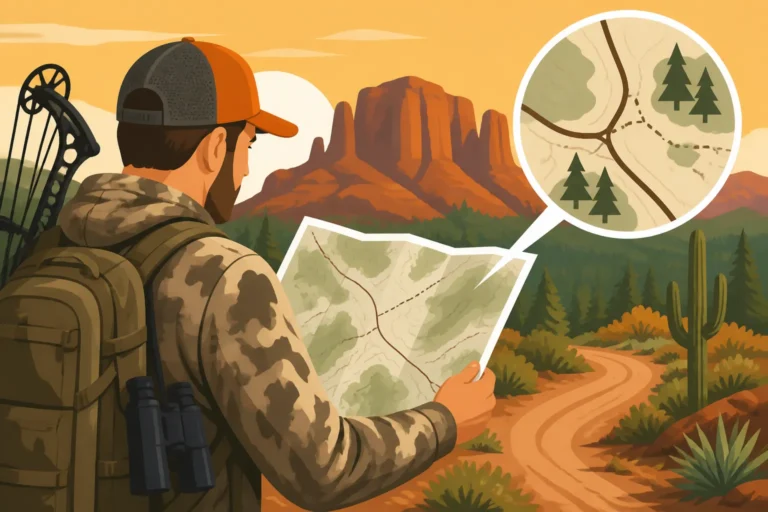
If you're hunting on National Forest or Bureau of Land Management (BLM) land, the Motor Vehicle Use Map (MVUM) is your Bible. These aren't your typical pretty, colored maps; they are black-and-white documents specifically designed to show you exactly which roads and trails are open to motorized vehicles, and for what type of vehicle. Anything not explicitly marked as open is closed. It's a "closed unless designated open" system, which can be a tough concept for some hunters used to more permissive land management. Relying on an old paper map or just assuming a faint two-track is legal can land you in serious trouble.
The MVUMs are often available digitally and can be downloaded onto your smartphone or GPS device. Applications like onX Hunt or GoHunt integrate these layers, making it incredibly simple to see your exact location relative to legal travel routes. Before you even set foot in your chosen unit, spend time studying the MVUM for that specific area. Look for seasonal closures, vehicle width restrictions, and any roads marked as "administrative use only." Ignorance of these maps is never a valid defense if you're caught driving where you shouldn't be. Understanding Motorized Travel Rules on Arizona Public Land is vital.
Specific Rules for State Trust Land and Wilderness Areas
Arizona's State Trust Land operates under slightly different rules than federal lands. While your hunting license often acts as your general recreation permit for Trust Land, specific vehicle rules still apply. You can't just drive anywhere; you must stick to existing roads and trails. Creating new routes or going cross-country is strictly forbidden. Furthermore, certain activities might require a separate recreational permit from the Arizona State Land Department, so always check if your intended use beyond hunting might trigger additional requirements. Familiarize yourself with Do You Need a Permit for Arizona State Trust Land? if you plan to hunt on these areas.
Wilderness Areas, on the other hand, are a whole different beast. These are designated areas where motorized and mechanized transport are explicitly prohibited. That means no ATVs, no dirt bikes, and often, even mountain bikes are off-limits in some areas. If you're hunting in a Wilderness Area, be prepared to go in on foot or horseback. The beauty and challenge of these areas often lie in their untouched nature, and vehicle restrictions are key to preserving that. Always double-check Wilderness Rules Inside Arizona Forests if you suspect your hunting ground might fall into one of these protected zones, because breaking these rules carries severe penalties and goes against the very spirit of wilderness preservation.
Common Travel Violations and Their Immediate Consequences
It's easy to make an honest mistake, but in the eyes of the law, a violation is a violation. The vast majority of travel rules are in place to protect the land and its wildlife, and the enforcement agents, whether it's Arizona Game and Fish Department officers, Forest Service rangers, or BLM law enforcement, take these regulations seriously. Understanding the most common ways hunters run afoul of these rules can help you avoid becoming another cautionary tale.
Driving Off Designated Roads and Trails
This is perhaps the most frequent and easily spotted violation. Those faint tracks leading off a main forest road, or the seemingly inviting shortcut through a dry wash, can be traps. If it's not clearly marked as a motorized route on an official map, it's generally off-limits. Driving off-road can cause significant damage to fragile desert soils, disrupt critical habitat for desert flora and fauna, and create new, unauthorized routes that can lead other unsuspecting users astray. Even if you don't feel like you're doing much harm, the cumulative effect of many hunters making these "small" detours is devastating.
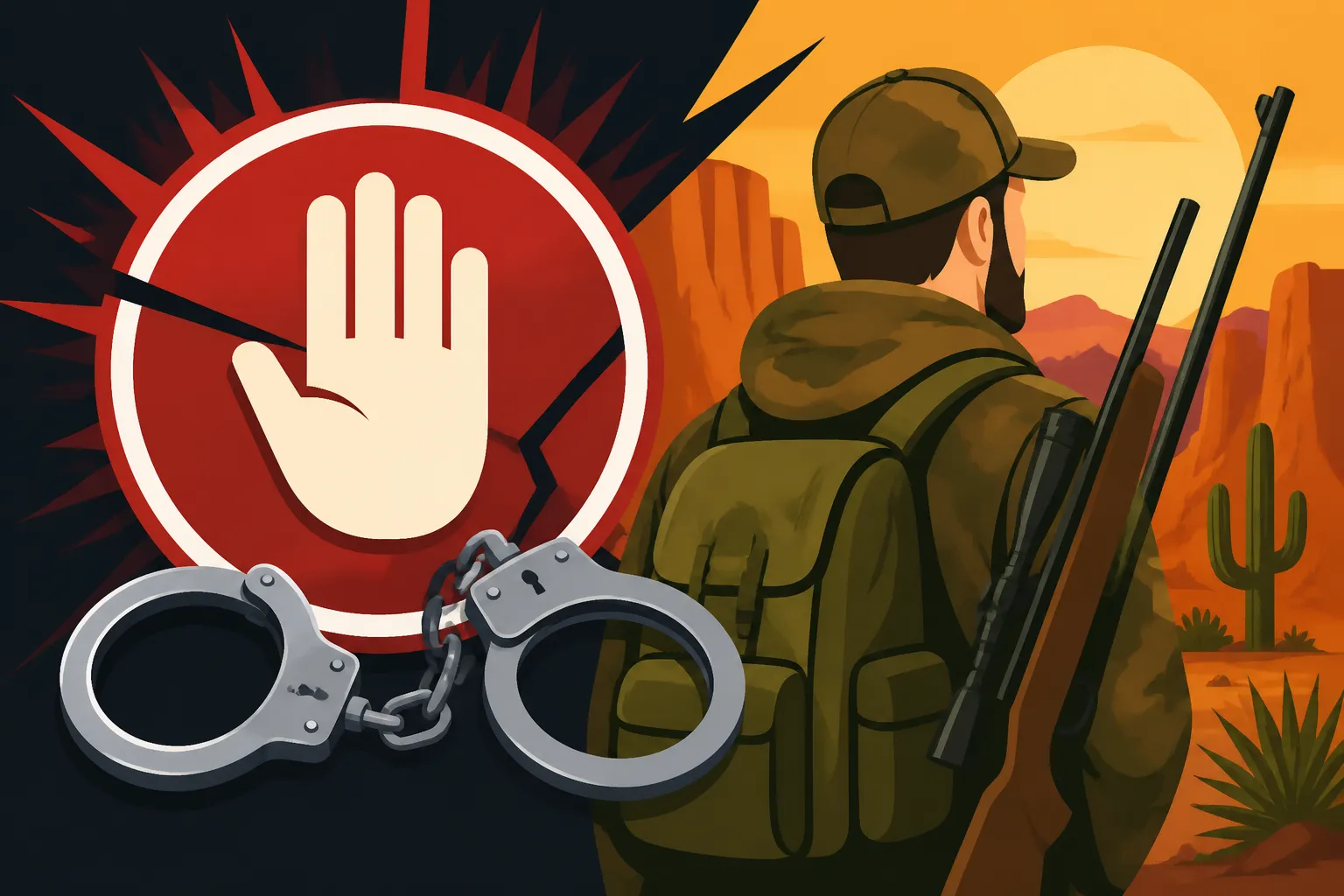
The immediate consequences of driving off designated roads can range from a warning, if you're lucky and the officer is feeling lenient, to a significant citation. You could be facing fines that easily run into the hundreds of dollars, and the vehicle you're driving could even be impounded on the spot. Imagine being miles deep in a unit, only to have your truck towed, leaving you stranded. It's a nightmare scenario that can abruptly end a long-planned hunt and leave a hefty bill in its wake. This rule applies equally to all vehicles, from your full-size pickup to your nimble side-by-side. For specific guidance, you should know that Can You Drive Off Road to Retrieve Game? is a common question with a clear answer: generally no, unless on an authorized route.
Operating an OHV Without Proper Decals or Registration
Off-Highway Vehicles (OHVs), which include everything from ATVs and dirt bikes to side-by-sides, are incredibly popular for accessing Arizona's backcountry. However, they come with their own set of rules and requirements. In Arizona, if you're operating an OHV, it needs to be properly registered with an Arizona OHV Decal displayed, unless it falls under a specific exemption (like being licensed for highway use and operating off-highway for less than 30 days in Arizona per year as a nonresident). This decal helps fund OHV-related programs, including trail maintenance and enforcement.
Failing to have the correct decal or registration can lead to a citation for operating an unregistered or improperly equipped vehicle. These fines can also be substantial. Moreover, some public lands have specific rules about where OHVs can operate, even with a proper decal. Just because you have the decal doesn't mean you can drive your OHV anywhere. You still need to adhere to MVUMs and local restrictions. Before hitting the trails, ensure your vehicle is compliant, and that means understanding requirements like those for OHV Decals on Arizona Trust Land.
Entering Closed or Restricted Areas
Sometimes, areas are completely closed to public entry, either seasonally, temporarily, or permanently. This could be due to wildfire danger, sensitive wildlife breeding grounds, active logging operations, or even military installations. Other areas might be restricted to certain types of use, such as a wildlife refuge where hunting is permitted, but vehicle access is highly controlled, or a private land parcel. These closures are typically well-marked with signs, gates, or clearly indicated on maps. Ignoring these signs and entering a closed or restricted area is a serious offense.
The consequences for entering closed areas are often more severe than simple off-road driving. You could face higher fines, potentially including court appearances, and if the area is particularly sensitive or dangerous, more serious charges. If you're on tribal land without authorization, for example, you're not just breaking travel rules, you're trespassing on sovereign territory, which carries its own set of significant repercussions. Always check local land management websites and maps before your hunt to ensure the area you intend to access is open. Resources like Where Arizona Publishes Unit Access Maps can be invaluable for this kind of critical pre-hunt research, often showing specific closures and restrictions that might not be on older maps.
The Broader Repercussions: Fines, Penalties, and Hunting Privileges
Breaking Arizona's travel rules while hunting isn't just about a slap on the wrist. Depending on the severity of the violation, repeat offenses, or damage caused, the repercussions can extend far beyond a simple fine. These penalties are designed to deter future violations and uphold the integrity of responsible hunting and land stewardship. Understanding the full scope of potential consequences might just make you double-check that map one more time.
Financial Penalties and Court Appearances
Let's not sugarcoat it: fines for travel violations can quickly add up. A citation for driving off a designated road might start in the low hundreds, but if you've caused damage, or if it's a repeat offense, those numbers can escalate significantly. Beyond the initial fine, there might be court fees, administrative costs, and potential restitution for environmental damage. Imagine a simple mistake leading to thousands of dollars in expenses – a hunt that cost you far more than your elk tag. These fines are often treated as civil infractions, but egregious violations can sometimes be elevated to misdemeanor charges, requiring a mandatory court appearance.
A court appearance means lost time, potential travel costs, and the stress of legal proceedings. You might even need to hire legal counsel, adding another layer of expense. The Arizona Game and Fish Department, along with other land management agencies, has zero tolerance for intentional disregard of these rules. They are protecting the public's resources, and they do not hesitate to enforce the laws fully. Even a relatively minor infraction can become a major headache, disrupting your life and emptying your wallet.
Potential Loss or Suspension of Hunting Privileges
This is often the most painful consequence for a dedicated hunter. Many states, including Arizona, operate under a "wildlife violator compact" or similar system. This means that a serious violation in one state can impact your hunting and fishing privileges in other compact states. If you're convicted of a severe travel violation, especially one that impacts wildlife or habitat, you could face a suspension of your Arizona hunting license and tags for a period of time. This isn't just about missing a season; it could mean losing out on years of building bonus points for coveted draws like elk or bighorn sheep. Penalties for Entering Trust Land Without a Permit for instance, can lead to more than just a fine.
The Arizona Game and Fish Commission takes these decisions seriously, and losing your hunting privileges can feel like losing a part of your identity as an outdoors person. It's a stark reminder that hunting is a privilege, not a right, and it comes with the responsibility to respect the land and its rules. The impact extends beyond just hunting; sometimes, all recreational permits can be suspended. This consequence alone should be enough to encourage every hunter to diligently adhere to all travel regulations.
Impoundment and Property Seizure
In more serious cases, especially for repeat offenders or when significant environmental damage has occurred, law enforcement has the authority to impound your vehicle. This means your truck, ATV, or side-by-side could be towed from the field, often at your expense, and held until fines are paid or legal matters are resolved. This is a massive inconvenience, a significant financial burden, and can leave you in a real bind if you're miles from civilization.
In the most extreme cases, such as using a vehicle to actively chase or harass wildlife, or if the vehicle is deemed an integral part of a larger illegal activity, there's even the potential for property seizure. While this is rare and usually reserved for felony-level offenses, it's a stark reminder of the serious nature of some violations. Imagine losing your prized hunting rig over a moment of poor judgment. It's a risk no hunter should be willing to take, emphasizing the importance of understanding and strictly following every regulation.
Staying Compliant: Best Practices for Arizona Hunters
The good news is that avoiding these penalties is entirely within your control. With a bit of foresight and adherence to some best practices, you can enjoy Arizona's incredible hunting opportunities without the stress of potential violations. It all comes down to preparation, respect for the land, and a healthy dose of caution.
Pre-Hunt Planning with Digital Tools
Before you even load your rifle or bow into the truck, your hunt should begin at home with diligent planning. Digital mapping tools have revolutionized this aspect of hunting. Applications like onX Hunt are incredibly valuable resources, offering detailed layers that show public vs. private land boundaries, as well as designated motorized vehicle routes for BLM and National Forest lands. GoHunt also provides excellent resources, often integrating similar mapping capabilities with unit-specific information. It’s imperative to Using onX Layers for Arizona Public Land to confidently identify legal travel corridors.
Spend time zooming in on your chosen unit, mapping out your intended travel routes, potential access points, and even bailout options if a road becomes impassable. Identify areas that appear landlocked or where access might be questionable. Don't rely solely on memory or generic maps; use the most current data available. Print out hard copies of MVUMs as a backup, especially for areas where cell service might be unreliable. Understanding How Arizona Numbers Its Hunting Units and then applying that to your mapping can provide a clear picture of what's legal and what's not.
| Key Planning Tool | Benefit for Travel Rules |
|---|---|
| onX Hunt / GoHunt | Overlays for public/private land, roads/trails (MVUMs), wilderness boundaries, and private land ownership. Essential for real-time positioning. |
| Forest Service / BLM Websites | Official source for current MVUMs, seasonal closures, and fire restrictions. Download MVUMs as PDFs. |
| Arizona Game & Fish Website | Provides regulation booklets, unit boundary maps, and alerts for specific closures or restrictions. |
| Topographic Maps | Essential for understanding terrain, even if not explicitly showing travel rules, helps plan foot travel. |
| GPS Device | A dedicated device can offer reliability where cell service fails, pre-loaded with maps. |
Respecting Private Land and Tribal Boundaries
Arizona is a checkerboard of land ownership – public, private, State Trust, and Tribal lands all intermingle. It's easy to inadvertently cross onto private land if you're not paying close attention to your map. Respecting these boundaries is not just a courtesy; it's a legal obligation. Trespassing onto private land, even unknowingly, can lead to serious legal consequences, including fines and potential loss of hunting privileges. Always ensure you know exactly where you are, especially in transition zones. Detailed maps are your best friend for Reading a Land Ownership Layer Correctly to avoid costly mistakes.
Similarly, Arizona is home to several Native American tribes, and their lands are sovereign nations with their own rules and regulations. Hunting and even traveling on tribal lands without proper permits or authorization is a serious offense. Never assume that your state hunting license grants you access to tribal lands; it almost certainly does not. If your hunt borders or involves tribal lands, research the specific tribal regulations and obtain any necessary permits well in advance. Ignorance of How to Spot a Reservation Boundary on a Map is no excuse when it comes to tribal sovereignty. When in doubt, it's always best to err on the side of caution and avoid the area entirely or seek explicit permission. You should be especially mindful if seeking Getting Landowner Permission in Arizona as these discussions are separate from tribal permits.
When in Doubt, Back Out
This is perhaps the simplest, yet most crucial, piece of advice for navigating Arizona's travel rules: if you're not absolutely certain that a road or trail is open and legal for motorized travel, don't take it. That little voice in your head telling you it might be a shortcut or that no one will notice is a dangerous one. The risks of fines, license suspension, property impoundment, and environmental damage far outweigh any potential convenience or perceived advantage.
It's better to spend an extra hour walking, or to drive a few extra miles on a known legal route, than to risk ending your hunt, incurring significant expenses, or jeopardizing your hunting future. Being a responsible hunter means being a responsible steward of the land. That includes doing your homework, constantly checking your location on your mapping device, and when faced with uncertainty, choosing the safest and most compliant option. Sometimes the best path forward is to simply back out and find a different, legal way. Remember, Seasonal Road Closures Across Arizona can pop up due to weather or other events, making prior knowledge perishable.
Disclaimer
This article is for general informational purposes only and does not constitute professional advice. Laws, prices and regulations vary by location and change over time. Consult a qualified professional for guidance on your specific situation.