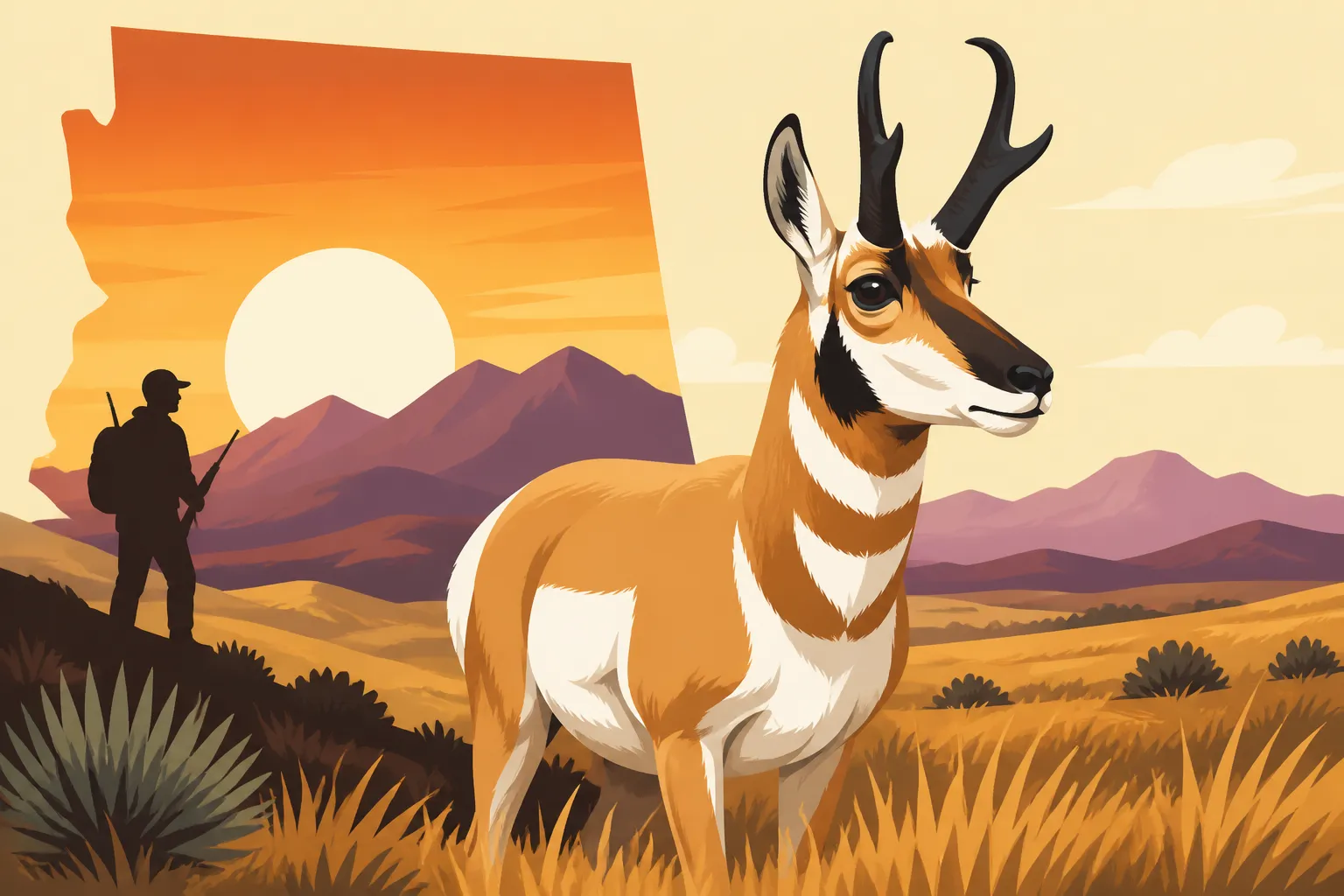
Pronghorn on the Northern Grassland Units
Hunting pronghorn in Arizona's sprawling northern grasslands is a completely different ballgame than chasing deer in the timber or elk in the high country. It’s an experience that can leave you feeling overwhelmed by the sheer vastness of the landscape, struggling to locate those wary antelope in an ocean of sagebrush. This guide is here to help you understand the unique challenges and strategies for successfully pursuing pronghorn in Arizona's specific northern grassland units, turning that overwhelming feeling into confident pursuit.
The Unique Landscape of Arizona's Northern Grassland Units
When we talk about Arizona's northern grassland units, we're really talking about a specific kind of ecosystem that pronghorn absolutely thrive in. Forget thick forests or steep, rocky canyons; these areas are defined by their wide-open spaces, often rolling plains, and expansive vistas that can stretch for miles. It’s this very openness that makes pronghorn hunting here so distinctive and, let’s be honest, sometimes incredibly frustrating if you don’t know what you’re looking for.
These grasslands typically sit at higher elevations than the low desert, meaning they often receive a bit more precipitation, supporting a richer growth of grasses, forbs, and sagebrush. This vegetation, while seemingly uniform to the untrained eye, offers critical forage and cover for pronghorn. You'll find pockets where the grasses are particularly lush, often indicating slightly better soil or water retention, and these are often magnets for antelope. The terrain might appear flat from a distance, but subtle rises, coulees, and dry washes offer surprisingly effective cover for pronghorn to bed down or escape danger. Understanding these subtle variations in terrain is key, because what looks flat on a map can often reveal crucial undulations when you're actually boots-on-the-ground. It's a game of small details in a big landscape.
A common frustration for hunters new to these areas is the sheer scale. You can drive for miles and see nothing but endless plains, then suddenly, a herd of pronghorn materializes seemingly out of nowhere. This is because their camouflage is remarkably effective in their natural environment, and they are masters of using the slightest depressions and rises to vanish. This is why the approach to hunting them in these specific northern units heavily relies on good optics and patience, rather than still-hunting through cover like you might for a whitetail. It’s less about sneaking through trees and more about strategic positioning and thorough glassing.
Identifying Key Pronghorn Habitat and Concentration Areas
To consistently find pronghorn on Arizona's northern grasslands, you need to think like an antelope. They are creatures of habit, driven by food, water, and security. While the entire landscape might look like good pronghorn habitat, certain areas will consistently hold higher numbers. These are the concentration areas you want to prioritize in your scouting and hunting efforts.
One of the most critical factors is water. Even in grassland environments, reliable water sources can be sparse. Look for stock tanks, windmills, natural springs, or even ephemeral puddles after a rain event. Pronghorn are adapted to dry conditions, but they still need to drink, and these water points become natural gathering spots, especially during drier periods of the season. Pay close attention to any areas that appear greener or lusher, as this often indicates subsurface moisture or a nearby water source that might not be obvious on a map. Access points to these water sources will often show heavy tracks, giving you a good indicator of pronghorn presence.
Next, consider the vegetation. Pronghorn are primarily browsers, and while they eat grass, they truly prefer forbs and shrubs like sagebrush. Areas with a diverse mix of these plants will provide better forage and are more likely to hold sustained herds. Look for areas where the sagebrush grows particularly thick, or where different types of forbs are abundant. These microhabitats within the larger grassland are their grocery stores. Overgrazed areas, while they might have some grass, often lack the diversity pronghorn prefer, pushing them to richer grounds. This is why knowing the land management practices in your chosen unit can give you a significant edge; understanding how cattle or other factors might influence forage availability can help you predict pronghorn movement.
Finally, think about topography. While we've established these are "grasslands," they aren't perfectly flat. Subtle rolling hills, wide draws, and even rocky outcrops can offer important thermal cover from the sun, protection from wind, and vital concealment from predators. Pronghorn are constantly scanning their surroundings, and these elevated positions give them an advantage. Conversely, the bottoms of draws and low spots offer places to disappear momentarily, or to bed down out of sight. When you're scouting, identify these high points for glassing and the low points where pronghorn might seek refuge. These concentration areas may not be immediately obvious, but with diligent observation, they reveal themselves. For those who leverage technology, tools like those offered by GoHunt can help overlay topo maps with satellite imagery, allowing you to identify these subtle terrain features from your computer before you ever step foot in the field, saving you valuable scouting time.
Effective Scouting and E-Scouting Strategies
Successfully hunting pronghorn in Arizona's northern grasslands hinges on superior scouting. You simply cannot expect to show up on opening morning and randomly find a buck in this vast country. It requires dedicated preseason effort, combining both digital tools and boots-on-the-ground reconnaissance. This is where your planning and execution really make the difference, transforming a hopeful guess into an educated pursuit.
Leveraging E-Scouting Tools
Before you ever leave home, your e-scouting game needs to be strong. Start with detailed satellite imagery and topographic maps. Platforms like GoHunt or others offer incredibly powerful mapping capabilities that allow you to zoom in on potential hotspots from the comfort of your living room. Look for the distinct patterns of open grassland, identify areas of heavier sagebrush, and pinpoint every single water source – stock tanks, windmills, guzzlers, and any natural springs. The goal is to mark dozens, if not hundreds, of potential waypoints before you even pack your truck.
When you're poring over these maps, pay special attention to the subtle changes in elevation that might provide a vantage point for glassing or a hidden draw for stalking. Pronghorn rely heavily on their eyesight, so understanding the contours that can conceal an approach is vital. Mark potential access roads and trails, but also identify areas that appear difficult to reach, as these might hold less pressured animals. Remember, the challenge with pronghorn is often not just finding them, but being able to get within range in wide-open country. E-scouting can help you identify routes that utilize topography for cover, even if it means a longer stalk. Consider reading about E-Scouting an Arizona Unit Before the Season to further refine your digital preparation.
Boots-on-the-Ground Reconnaissance
Once you've done your digital homework, it's time to hit the field. The best time for physical scouting is typically a few weeks to a month before the season opens. This gives you time to observe pronghorn patterns without spooking them too close to the hunt. Start by driving accessible roads and constantly glassing from high points. A good spotting scope on a tripod is absolutely essential here; your binoculars will get you started, but the scope will confirm if that distant dot is a buck, a doe, or just a rock.
When you spot pronghorn, observe their behavior. Where are they feeding? What path do they take to water? Where do they bed down during the heat of the day? Are there specific travel corridors they favor? These observations are gold. Don't be afraid to put some miles on your boots, even if you’re just hiking to a new glassing knob that wasn't accessible by vehicle. The more ground you cover, the more you'll understand the nuances of the unit. Remember, this is not just about finding a pronghorn; it's about finding the pronghorn you want to pursue and understanding its daily routine. This intimate knowledge of the area and its inhabitants will be invaluable when the season finally arrives. Also, be sure to scout for subtle terrain features that could hide a stalk, as discussed in Terrain That Hides an Approach in Desert Country.
Here's a quick comparison of e-scouting versus physical scouting:
| Feature | E-Scouting (Digital) | Physical Scouting (Field) |
|---|---|---|
| Tools Used | Satellite imagery, topo maps, mapping apps (e.g., GoHunt) | Binoculars, spotting scope, tripod, boots, vehicle |
| Primary Goal | Identify potential hotspots, access, hidden terrain | Confirm animal presence, patterns, evaluate stalk routes |
| Advantages | Efficient, covers large areas quickly, saves gas | Real-time observation, confirms digital findings, scent |
| Limitations | Doesn't show fresh sign, wind direction, animal behavior | Time-consuming, limited by access, weather dependent |
| Best Used For | Pre-hunt planning, identifying areas of interest | Validating e-scouting, refining plans, understanding habits |
Essential Gear and Tactics for Pronghorn Hunting
Hunting pronghorn on Arizona's northern grasslands requires specific gear and a refined set of tactics tailored to their incredible eyesight and speed. This isn't a game for the underprepared; every piece of equipment and every move you make needs to be deliberate and well-practiced.
Optics: Your Most Important Tool
Without a doubt, high-quality optics are your most crucial piece of gear. You'll spend hours, if not days, behind glass. Start with a good pair of 10x or 12x binoculars. These are your bread and butter for initial scanning and locating animals at moderate distances. However, a top-tier spotting scope (20-60x or even 27-80x power) on a sturdy tripod is non-negotiable. This is what allows you to pick apart distant sagebrush flats, discern a buck from a doe, and evaluate horn quality from a mile or more away. Investing in good optics means you see more, spot faster, and can make better decisions before committing to a stalk. Remember, you're trying to spot an animal that blends seamlessly with its environment from vast distances. Understanding Optics Power for Arizona's Long Desert Sightlines can give you an edge.
Firearms and Ammunition
Given the open country and the distances at which pronghorn are often spotted, a flat-shooting rifle chambered in a cartridge known for its accuracy and trajectory is highly recommended. Calibers like .25-06, .270 Win, 6.5 Creedmoor, 7mm Rem Mag, or even .300 Win Mag are popular choices. Bullet selection is also critical; choose a projectile designed for controlled expansion and good ballistic coefficients to minimize wind drift and maintain energy at longer ranges. Practice shooting from various field positions, including prone with a bipod or using shooting sticks, as you'll rarely have a bench rest in the field. Dialing in your Rifle Zero Distance for Open Desert is essential, and understanding how to adjust for wind in these wide-open spaces, like Holding for Wind Across a Wide Canyon, will dramatically increase your chances of success.
Stalking and Approaching Pronghorn
Once you've spotted a buck and decided to make a move, the real challenge begins: the stalk. Pronghorn have phenomenal eyesight, often compared to an 8x binocular, and they are constantly scanning. This means you need to use every bit of available cover. Rolling terrain, dry washes, and even dense sagebrush patches become your best friends. The key is to stay low, move slowly, and constantly check for other animals that might spot you.
- Utilize Topography: Study the terrain between you and the pronghorn. Can you use a draw to get within 300-400 yards without being seen? Is there a subtle rise you can crest to peek over?
- Go Low: Often, the last few hundred yards will require a low crawl or belly crawl. This is physically demanding but often necessary.
- Wind Direction: While pronghorn don't rely on scent as heavily as deer, pay attention to the wind, especially for your own comfort and to keep dust down.
- Patience is Key: Never rush a stalk. Take your time, assess the situation, and be prepared to wait if the animals are moving into an unfavorable position.
- Practice Range Estimation: With open country, distances can be deceiving. A good laser rangefinder is invaluable to confirm your shot distance.
Successfully closing the distance on a pronghorn in open country is one of the most rewarding aspects of the hunt. It's a test of patience, cunning, and physical endurance, but when it all comes together, it's an experience you won't soon forget.
Disclaimer
This article is for general informational purposes only and does not constitute professional advice. Laws, prices and regulations vary by location and change over time. Consult a qualified professional for guidance on your specific situation.