When Arizona Archery Javelina Is Open
Many hunters, especially those new to Arizona, often feel overwhelmed by the state's complex draw systems and diverse regulations, leading them to believe that hunting opportunities are limited to specific, short windows. This can be particularly true for species like javelina, where the perception of a confined season might cause bowhunters to miss out entirely. This guide will thoroughly explain the open season for archery javelina in Arizona, revealing how and why this unique opportunity is available year-round for bowhunting enthusiasts.
The Unique Year-Round Archery Javelina Opportunity in Arizona
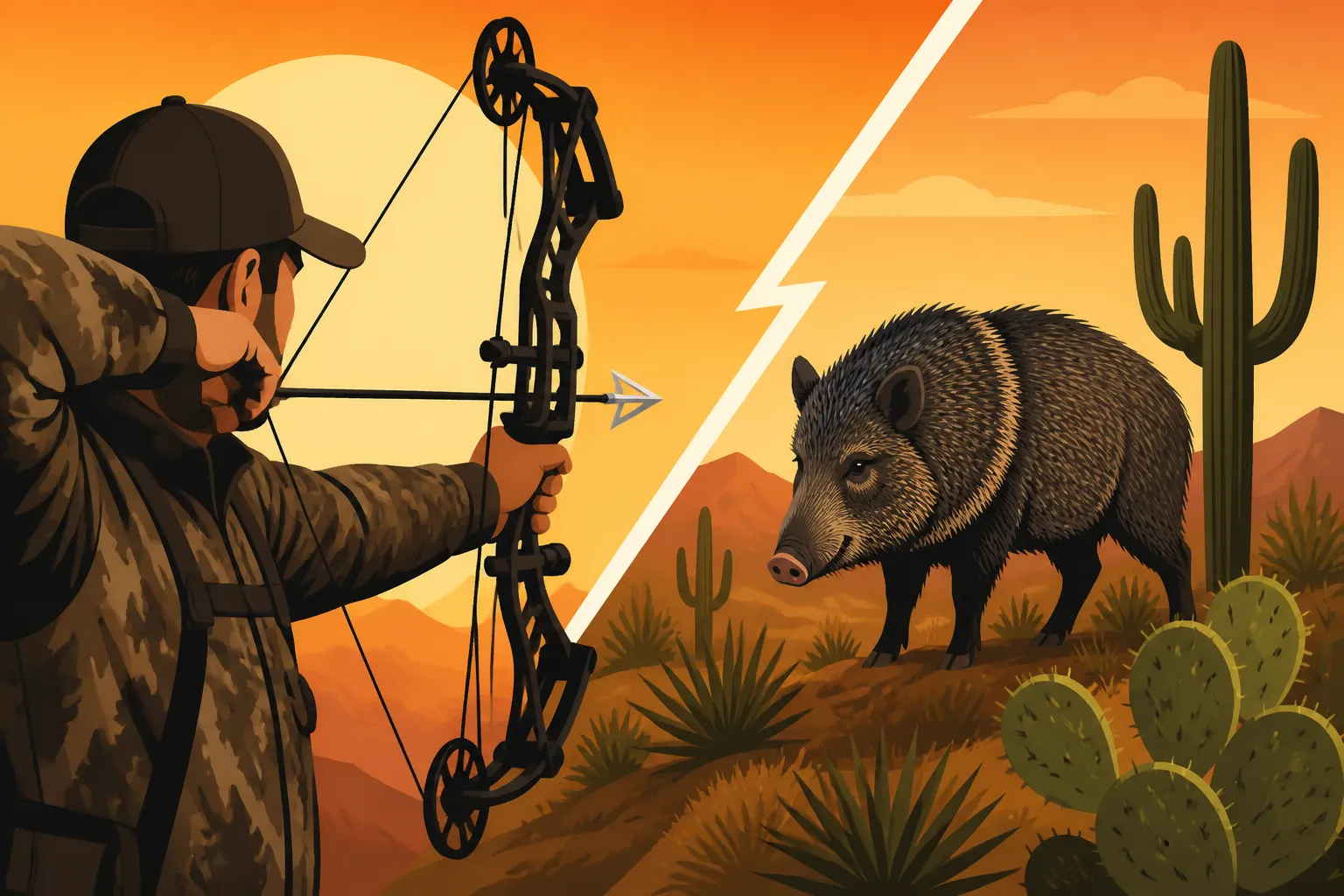
Arizona truly stands apart when it comes to bowhunting javelina. Unlike many other big game species, and even different weapon types for javelina, archery for these desert dwellers is a continuous, year-round pursuit. This continuous season offers incredible flexibility and a unique challenge for bowhunters looking to connect with Arizona's "desert pig."
Dispelling Season Misconceptions
It's completely understandable why someone might assume that javelina seasons are tightly controlled, just like elk or deer. Most big game hunting across the West operates on a system of limited entry, specific seasons, and often, a lottery draw for tags. When you look at Arizona's hunt regulations, you'll see a myriad of hunt numbers, weapon types, and short windows for rifle or muzzleloader javelina hunts, which can be quite confusing. However, for the dedicated bowhunter, javelina offers a refreshing exception. The Arizona Game and Fish Department (AZGFD) has established a policy allowing archery hunting for javelina throughout the entire year, from January 1st to December 31st. This means you don't need to apply in a draw, fret over deadlines, or wonder if you've missed a critical window. If you have a valid Arizona hunting license, you can pick up an over-the-counter (OTC) javelina tag at any time and head into the field with your bow.
This extended season significantly broadens the accessibility of javelina hunting for both residents and non-residents alike. Imagine having the flexibility to plan a hunt around your work schedule, family commitments, or even the weather. Whether you want to escape the winter chill in January or challenge yourself during the heat of summer, the opportunity is always there. This stands in stark contrast to the highly sought-after, limited-entry hunts for species like elk, where successful applicants might wait years to draw a tag. The simplicity of acquiring an OTC archery javelina tag makes it an ideal choice for new hunters looking to gain experience or seasoned archers seeking a fun, accessible challenge.
However, it's crucial to remember that while the season is continuous, responsible hunting practices remain paramount. The ethics of hunting, even with such open regulations, demand respect for the animal and the environment. This means understanding javelina behavior, knowing your effective archery range, and making clean, ethical shots. The year-round nature also means you'll encounter a wide range of weather conditions, from chilly desert mornings to scorching summer afternoons, which will dictate your strategy and gear choices. For a deeper dive into why javelina is considered highly accessible, you can learn more about how Javelina Is Arizona's Most Accessible Big Game.
Understanding OTC Tags and Regulations
The over-the-counter (OTC) system for archery javelina tags is wonderfully straightforward. To participate, all you need is a valid Arizona hunting license, which you can purchase online through the AZGFD portal, at a licensed dealer, or at any AZGFD office. Once you have your license, you simply buy an OTC javelina tag. There's no draw, no waiting period, and no uncertainty about whether you'll get one. You purchase it, and you're ready to hunt. This convenience is a huge draw for many, allowing for spontaneous hunting trips or last-minute plans.
While the season is open year-round for archery, specific regulations still apply to ensure fair chase and animal welfare. For bowhunters, these primarily revolve around equipment. Arizona requires a minimum bow draw weight of 30 pounds for vertical bows (compound, recurve, longbow) when hunting big game. So, if you're rocking a lower draw weight, you'll need to upgrade your setup before heading out. You can find more details on the specific requirements at The Minimum Bow Draw Weight Arizona Requires. When it comes to broadheads, Arizona has a specific rule: they must be wider than 7/8 inch. This regulation is in place to ensure quick and humane kills, promoting adequate wound channels for efficient harvest. You can read up on this important rule here: Why Arizona Requires Broadheads Wider Than 7/8 Inch.
Mechanical broadheads are indeed legal for javelina and other big game in Arizona, provided they meet the 7/8 inch minimum width when deployed. Many bowhunters prefer mechanicals for their flight characteristics, especially in windy desert conditions. However, always ensure your chosen broadhead complies with the state's regulations before heading afield. If you're curious about the legality of different broadhead types, check out Are Mechanical Broadheads Legal in Arizona?. It’s also vital to remember that a single javelina tag allows you to harvest one animal. If you wish to hunt more, you'll need to purchase additional tags, up to the annual bag limit, which is typically two javelina per calendar year through the general season rules (though always check current regulations as these can change). The beauty of the OTC system is that you can decide how many tags you want to fill, whether it's one for a fun outing or two to maximize your season.
Preparing for Your Archery Javelina Hunt
Javelina hunting, especially with a bow, requires thoughtful preparation. The desert environment is unforgiving, and these compact, tough animals present a unique challenge. Success hinges not just on your archery skills but also on your ability to effectively scout, equip yourself, and execute a stalk in their arid habitat.
Essential Gear Beyond Your Bow
While your bow setup is paramount, a successful archery javelina hunt demands more than just arrows and broadheads. Optics are your best friend in the expansive Arizona desert. High-quality binoculars (10×42 or 10×50 are excellent choices) are indispensable for picking apart distant hillsides and glassing dense patches of prickly pear and mesquite where javelina often bed. A spotting scope, especially one with higher magnification (like 60-80x), can be a game-changer for confirming javelina at extreme distances and determining their movement patterns before planning a stalk. Since javelina are relatively small, distinguishing them from rocks or shadows can be tough, and good glass makes all the difference.
Hydration is not just recommended; it's absolutely critical. Arizona's year-round archery javelina season means you'll be hunting in conditions ranging from mild winter days to brutally hot summer afternoons. Dehydration can quickly become a serious issue, impairing judgment and physical performance. Always carry more water than you think you'll need, especially if you plan to be miles from your vehicle. A hydration pack integrated into your hunting backpack is an excellent way to ensure you're constantly sipping water. Electrolyte supplements can also be beneficial in the intense heat. For critical advice on staying hydrated in the field, see Water You Must Carry on a Day Hunt.
Your footwear and clothing should be chosen for comfort, durability, and camouflage suitable for the desert. Sturdy, broken-in hiking boots with good ankle support are a must for navigating rocky, uneven terrain and dense brush. Avoid cotton in warmer months as it retains moisture; opt for synthetic or merino wool layers that wick sweat and dry quickly. Lightweight, breathable hunting clothing in desert patterns will help you blend into the environment. Don't forget a wide-brimmed hat for sun protection and durable gloves to protect your hands from thorny vegetation.
Scouting and Locating Javelina
Scouting is fundamental to finding javelina, and it's something you can do even before you set foot in the field thanks to modern tools. Online mapping platforms like those offered by GoHunt provide invaluable layers that show public land boundaries, terrain features, and even water sources, which are often magnets for javelina. You can pour over these maps, identifying potential bedding areas (thick brush, rocky outcrops), travel corridors (washes, game trails), and feeding grounds (areas with prickly pear, mesquite beans). GoHunt allows you to drop pins and create detailed plans, giving you a huge head start before you ever leave home.
Once you're in the field, look for their distinctive sign. Javelina leave small, cloven hoof tracks, often in washes or near water sources. Their scat is typically dark, cylindrical pellets. You might also find areas where they've rooted around for food or rubbed against prickly pear cacti, leaving behind their scent. Javelina are highly social animals and often travel in herds, or squads, ranging from a few individuals to more than 20. Their strong musk glands leave a distinct, pungent odor that, once smelled, is hard to forget. This scent is often your first clue that a herd is nearby, especially when they're bedded down in thick cover. Understanding their unique communication through scent is key to locating them: Javelina Herd Behavior and Scent.
Water sources are absolutely critical for javelina, especially in dry desert environments. Focusing your scouting efforts around natural springs, stock tanks, and even man-made drinkers can significantly increase your chances of success. These areas act as hubs of activity, attracting javelina and other game. Using satellite imagery from tools like GoHunt can help you pinpoint these vital water locations. Remember that even small, intermittent pools of water can draw them in. For detailed information on finding water, check out Finding Water in Arizona's Dry Country, and for tactics around these critical spots, explore Sitting Water for Javelina and Deer. Researching specific units known for strong javelina populations, using resources like GoHunt's unit data, can also make a significant difference. Identifying Best Units for an Archery Javelina Hunt will help you narrow down your search.
Tactics for Archery Success on Javelina
Archery hunting javelina is a game of patience, stealth, and a keen understanding of their behavior. These animals, while not particularly large, have excellent senses of smell and hearing, and they can be incredibly wary. Getting within bow range often requires a well-executed plan.
Spot and Stalk in the Desert
The spot-and-stalk method is arguably the most common and exhilarating way to hunt javelina with a bow. It begins with extensive glassing from a vantage point. Find a high spot that allows you to scan a wide area of potential javelina habitat – look for movement, tell-tale dark shapes, or even just the subtle shift in a patch of brush. Once you spot a herd, the real work begins. Plan your approach meticulously, using terrain features like washes, ridges, and dense vegetation to conceal your movement. Javelina have relatively poor eyesight compared to deer, but they are constantly alert to sudden movements.
The wind is your absolute greatest concern. Javelina possess an incredibly acute sense of smell, and if they catch your wind, your hunt is over. Always approach them from downwind, circling wide if necessary, even if it adds significant distance to your stalk. Watch their behavior: are they feeding, resting, or moving? This will dictate the urgency and caution of your approach. If they are feeding and moving slowly, you might have more leeway. If they're bedded, you'll need to be exceptionally quiet and slow. Stalking through noisy, thorny vegetation like prickly pear can be a challenge, requiring you to lift your feet high and move deliberately. Learning how to navigate such challenging terrain quietly is key for Tracking Arizona Javelina Through Prickly Pear.
When you get close, be ready for a shot. Javelina are smaller targets than deer, and their vitals are tucked low. Aim for the front shoulder to ensure a lethal strike. They often mill around in tight groups, so be mindful of other animals behind your target, ensuring a clear shot and preventing an accidental second hit. The adrenaline of closing the distance on a wary herd with a bow in hand is an experience every bowhunter should seek.
Ambushing at Water Sources and Feed Areas
While spot-and-stalk is popular, ambushing javelina at predictable locations can also be highly effective, especially for archers. Setting up a blind near a frequented water source or a known feeding area (like a dense prickly pear patch) allows you to wait patiently for the animals to come to you. This can be less physically demanding than stalking, but it requires thorough scouting to identify these high-traffic locations. Remember, OTC archery javelina season is year-round, so if you're hunting in warmer months, water sources become even more critical and predictable.
When choosing a setup, consider the prevailing wind direction for that time of day and year. A ground blind, whether a portable pop-up or one constructed naturally from brush and rocks, needs to offer good concealment while providing clear shooting lanes. Position yourself downwind and out of their line of sight. If using a natural blind, make sure it breaks up your human outline effectively. Consider the sun's position throughout the day to avoid being silhouetted.
Understanding javelina daily patterns is key to successful ambushing. They are most active during cooler parts of the day, typically early mornings and late afternoons, when they will move between bedding, feeding, and watering areas. In the summer, activity might be limited to twilight hours or even nighttime (though night hunting javelina is not permitted). By mid-day, especially in warmer seasons, they are often bedded in dense cover to escape the heat. Patience is vital in a blind setup; be prepared to sit for several hours. Their strong sense of smell means even a slight shift in wind can expose you, so constant vigilance of wind currents is essential. You'll want to review the internal link Javelina Herd Behavior and Scent for more insight.
Understanding Javelina as a Species
To be a truly effective and ethical javelina hunter, it helps to understand these animals beyond just their target status. They are fascinating creatures, perfectly adapted to their harsh desert environment.
Beyond "Pigs": Their True Nature
One of the most common misconceptions about javelina is that they are a type of wild pig. While they certainly resemble pigs in appearance and some behaviors, javelina are actually peccaries, members of the Tayassuidae family, which are distinct from true pigs (Suidae family). They have a number of anatomical differences, including a simpler stomach, non-retractable canine teeth that point downwards, and a different number of toes. For a detailed explanation of their differences, you can check out How Javelina Differ From Wild Pigs. This distinction is more than just biological trivia; it highlights their unique evolutionary path and adaptations.
Javelina are incredibly social animals, living in cohesive herds (squads) that typically number from 6 to 15 individuals, though larger groups are not uncommon. These herds are led by a dominant female, and all members share responsibilities for foraging, raising young, and defending their territory. They communicate through a variety of vocalizations, including barks, growls, and chirps, and are highly dependent on scent for social bonding and territorial marking. Each javelina has a dorsal scent gland, which they rub on each other, rocks, and trees to leave a collective herd scent. This strong musk is often what betrays their presence to a hunter.
Their diet consists primarily of succulents like prickly pear cactus, which provides both food and water in the arid landscape. They also consume mesquite beans, roots, tubers, and insects. Their robust digestive system allows them to process tough plant material, and their ability to extract moisture from cacti is crucial for survival in environments where free-standing water is scarce. Understanding these aspects of their biology and behavior is not just interesting; it directly informs hunting strategies, such as focusing on prickly pear patches or water sources.
The Allure of Archery Javelina Hunting
The year-round archery javelina season offers a compelling hunting opportunity in Arizona that stands out for its accessibility and challenge. Unlike the often years-long wait for a premium elk or deer tag, a javelina tag can be purchased instantly, allowing hunters to experience the thrill of a big game hunt whenever they choose. This open access makes it a perfect entry point for new bowhunters to gain valuable field experience in stalking, shot placement, and navigating the desert, without the pressure of a limited-time tag. It’s truly a testament to why Javelina Is Arizona's Most Accessible Big Game.
For experienced archers, javelina provide a unique and exciting challenge. Their small size, combined with their sharp senses and often-thick cover, means getting within bow range (typically 20-30 yards for a reliable shot) requires exceptional stealth and patience. The intense focus of picking apart the landscape, closing the distance undetected, and drawing your bow on a wild animal is an incredibly rewarding experience. The dynamic nature of hunting javelina, whether through spot-and-stalk or ambushing, offers constant engagement and requires quick decision-making.
Furthermore, hunting javelina year-round means encountering a full spectrum of Arizona's desert conditions. A hunt in January might involve cool mornings and pleasant afternoons, while a hunt in August demands meticulous planning for Heat Management on an Arizona Early Season Hunt. This variety adds another layer of skill development, pushing hunters to adapt their strategies and gear to different temperatures and terrain. The continuous Year-Round Archery Javelina in Arizona means your off-season for other species can be your "on-season" for these captivating peccaries, keeping your archery skills sharp and your passion for hunting alive throughout the year.
| Season Type | Weapon Type | Season Dates (Approx.) | Tag Type | Notes |
|---|---|---|---|---|
| Archery | Bow (Vertical) | January 1 – December 31 | Over-the-Counter | Year-round, most flexible, 2 bag limit. |
| Archery-Only (HAM) | Bow (Vertical) | Late January – Early February | Draw (Limited Tags) | Specific Archery-Only hunt codes. |
| General | Rifle, Bow, Muzzleloader | Late February – Early March | Draw (Limited Tags) | Most common, shorter seasons. |
| Youth-Only | Rifle, Bow, Muzzleloader | Late February | Draw (Limited Tags) | Dedicated hunts for junior hunters. |
| Muzzleloader | Muzzleloader | Mid-February | Draw (Limited Tags) | Specific muzzleloader only hunt codes. |
Note: Always consult the current Arizona Game and Fish Department hunting regulations booklet for precise dates and bag limits, as these are subject to change annually.
Disclaimer
The information provided in this article is for general guidance only and does not constitute legal advice. Hunting regulations in Arizona are subject to change. It is the responsibility of every hunter to review and comply with the most current Arizona Game and Fish Department regulations and state laws before engaging in any hunting activities.