Still Hunting Oak Brush for Coues
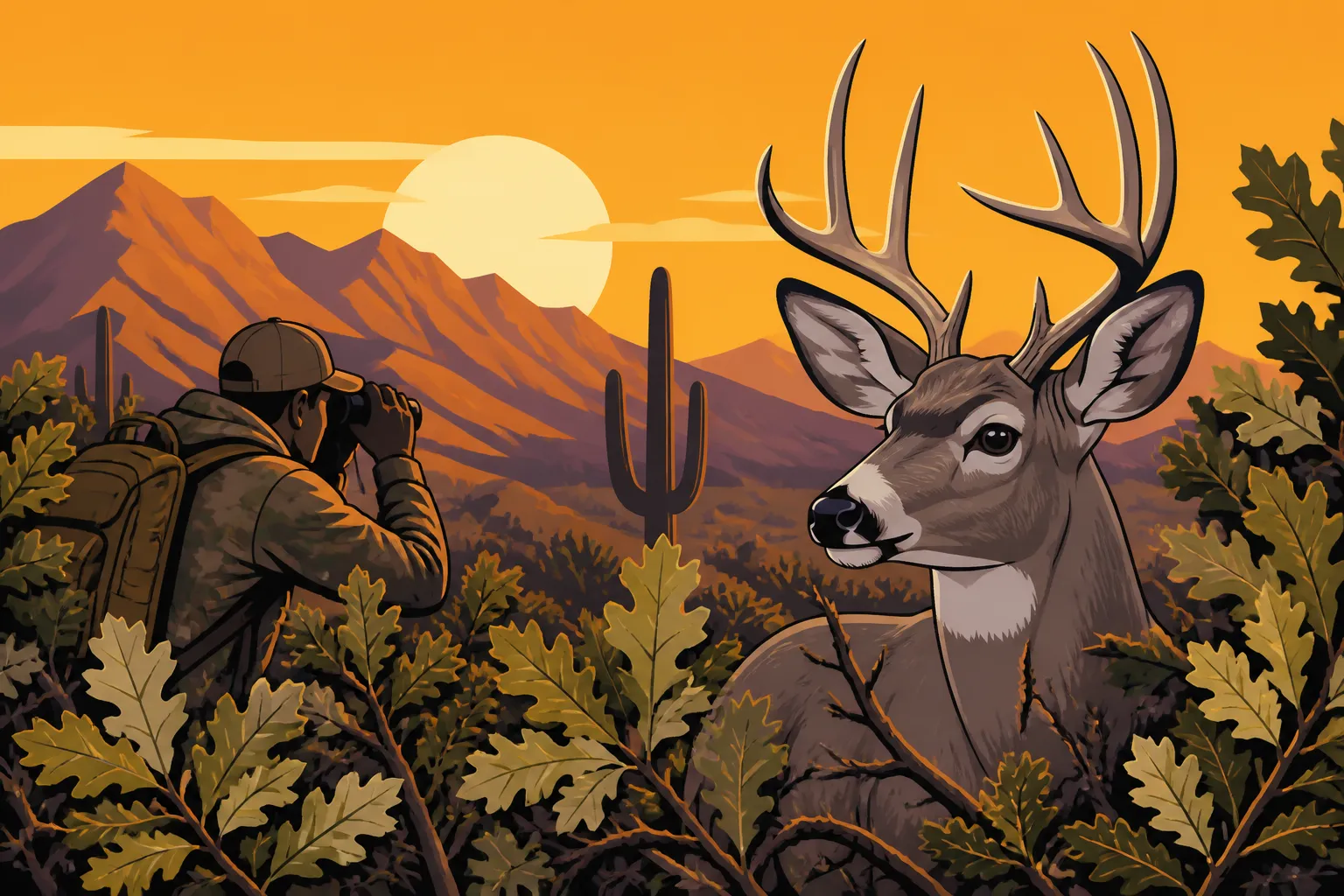
Hunting the elusive Coues deer in Arizona's dense oak brush can feel like searching for a ghost in a green maze. Many hunters spend frustrating hours glassing open hillsides, only to realize the biggest bucks are holed up in the thickest cover, making traditional long-range tactics nearly impossible. This guide is all about tackling that challenge head-on, showing you how to adapt the age-old art of still hunting to effectively pursue Coues deer in their preferred oak brush strongholds, where patience and stealth are your greatest assets.
Understanding the Oak Brush Labyrinth
Arizona's landscape is incredibly diverse, and while many picture wide-open desert vistas for Coues deer, some of the most consistent big bucks are found living within, and rarely leaving, the dense oak brush. This habitat is a double-edged sword: it offers phenomenal cover and forage for deer, but it’s a nightmare for hunters trying to spot them. To succeed, you first need to truly understand this unique environment and how Coues deer utilize it.
The Nature of Oak Brush Thickets
Oak brush in Arizona typically refers to various species of scrub oaks, often growing in incredibly dense, tangled thickets that can reach head-high or more. Think of it as a natural fortress: branches interlock, creating a canopy that shades the ground and makes visibility almost nil beyond a few yards. The ground beneath can be a mix of rocky soil, fallen leaves, and other prickly vegetation, making silent movement a true test of skill and patience. These thickets often grow on steep hillsides and in drainages, adding another layer of physical challenge to the hunt.
Walking through this stuff is noisy, hot, and often painful. It’s easy to get disoriented, and the constant battle with thorny branches can quickly wear down your resolve. Many hunters avoid it altogether, opting for easier, more open terrain, which is precisely why the mature Coues bucks seek it out. They know it offers sanctuary from predation, including human hunters, and they have developed an uncanny ability to melt away into it at the slightest disturbance.
Why Coues Deer Love This Cover
Coues deer, often called "gray ghosts," are masters of concealment. Their small stature and camouflaged coats allow them to disappear into sparse vegetation, but they absolutely thrive in the impenetrable security of oak brush. This dense cover provides thermal regulation, protecting them from the scorching Arizona sun and chilling winds. It also offers a constant supply of acorns and tender browse, meaning they often don't need to venture far from the thick stuff to feed.
During daylight hours, especially after a morning feeding binge or during the heat of midday, Coues bucks will bed down deep within these tangles. They rely on their incredible eyesight, hearing, and sense of smell to detect danger long before you ever get close. This makes a direct approach incredibly difficult. Their natural inclination is to slip away unseen, making Why Coues Deer Reward Patience Over Movement an absolute truth in this environment. If they perceive you as a threat, they're not going to stand there and pose; they'll simply vanish.
Reading Deer Sign in Dense Vegetation
Finding fresh deer sign is crucial, even in thick oak brush. While it's harder to spot rubs and scrapes in these dense areas compared to more open timber, deer trails are often more pronounced. Look for tunnels through the brush where deer regularly travel, their bodies having literally pushed and worn paths through the dense growth. These trails will be your highways into their world. Fresh tracks, especially those of a larger buck, indicate recent activity.
Keep an eye out for fresh droppings and browsed vegetation. Acorn hulls or freshly nipped oak leaves are strong indicators that deer are actively feeding in the area. Often, you'll find these signs concentrated around the edges of the thickest patches, or along small openings and washes that cut through the brush. Even a slight opening in the canopy might reveal a small, heavily used bedding area. Understanding The Sky Island Ranges That Hold Coues can also help you anticipate where these oak thickets are most prevalent and thus, where to focus your search for sign.
The Art of Still Hunting in Close Quarters
Still hunting is a methodical, slow, and deliberate approach to hunting that relies heavily on stealth and observation. Instead of waiting in a stand or glassing from afar, you are actively hunting on foot, moving through the habitat with the intention of encountering game up close. In the oak brush, this isn't just a tactic; it's practically the only way to consistently find deer that rarely step out into the open.
Mastering the Slow Pace and Pauses
The single most critical aspect of still hunting in oak brush is your pace. Forget everything you know about covering ground quickly. You're not covering ground; you're examining ground. Your movement should be excruciatingly slow, often taking minutes to move just a few yards. Think "five steps, then five minutes of watching and listening." The key is to move so slowly that any deer in the immediate vicinity doesn't register your movement as a threat until you've already spotted them.
These pauses are where the magic happens. During these moments of stillness, your eyes are scanning every shadow, every limb, every hint of movement. Your ears are straining for the rustle of leaves, the snap of a twig, or the subtle sound of hooves. It's often during these pauses that a deer, previously hidden, will make a small movement – flick an ear, shift a leg, or even take a breath – revealing its presence. This incredibly slow pace allows you to analyze the terrain, identify potential bedding spots, and prepare for a quick shot.
Using Wind and Sun to Your Advantage
Just like in any form of hunting, understanding and utilizing the wind is paramount. In thick oak brush, where visibility is so limited, your scent can travel further and faster than you might realize. Always try to hunt into the wind, or at least with a crosswind that carries your scent away from where you expect deer to be. This means constantly checking wind direction and being prepared to adjust your route. Thermals, which are rising air currents in the morning and falling air currents in the evening, play a huge role in the mountainous terrain where oak brush thrives. Knowing how to adjust your approach by Reading Wind on a Sky Island Stalk and Playing Thermals on a Canyon Stalk can make or break your hunt.
The sun can also be a powerful ally or a formidable foe. When possible, keep the sun at your back, especially in the early morning or late afternoon. This puts the sun in the deer's eyes, making it harder for them to see you, while illuminating them against the dark shadows of the brush. Conversely, hunting directly into the sun is a quick way to get skylined and spotted. Understanding how light and shadow interact with the dense vegetation is key to remaining undetected and making the most of fleeting glimpses.
Visual Cues and Listening for Movement
Still hunting is a highly sensory experience. Your eyes are not just looking for a whole deer, but for parts of a deer. The horizontal line of a deer's back contrasting with vertical brush. The curve of an antler. The glint of an eye. The dark patch of a shoulder. These are the subtle clues that will reveal a bedded or moving animal. Often, you'll see just a sliver of movement or a flash of color before the entire animal becomes apparent. This is where your brain needs to be trained to process incomplete information rapidly.
Your ears become an extension of your eyes. The sound of a twig snapping, the rustle of leaves as a deer walks, the soft bleat of a fawn, or the sound of chewing can all lead you to a deer you can't see. In dense cover, deer often don't run far; they simply sneak away. Listening intently for their departure can give you clues about their direction of travel and allow for a follow-up stalk. Sometimes, the softest sound is the biggest giveaway. GoHunt's mapping applications can be immensely helpful here, allowing you to pre-plan routes that exploit wind direction and terrain features like washes or ridges where sound might carry better or offer clearer lanes of movement.
Essential Gear and Preparations for Oak Brush
Still hunting in oak brush demands a specific set of gear and a strong commitment to physical and mental preparation. This isn't a casual stroll; it's an athletic endeavor that tests your limits. Having the right tools and mindset will significantly increase your chances of success and ensure a more comfortable hunt.
Optics for Tight Spaces and Quick Looks
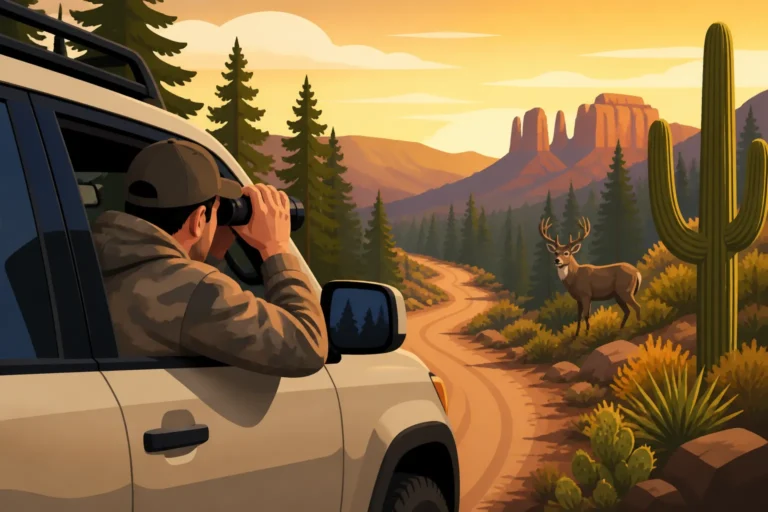
While Arizona is known for its long-range glassing, still hunting in oak brush is a different ballgame. You're not looking for a deer a mile away; you're trying to resolve details in a thicket 20-50 yards in front of you. This means ditching the heavy spotting scope and focusing on high-quality binoculars and perhaps a lighter pair of binos on a chest harness. A good pair of 8x or 10x binoculars with excellent low-light gathering capabilities will be your primary optical tool. They allow for quick, fluid scanning of shadows and dense cover.
Instead of setting up a tripod, you'll be quickly bringing your binoculars up to your eyes, scanning, and then lowering them, repeating this process constantly during your pauses. The goal is to quickly pick apart cover without making excessive movement. A rangefinder is also crucial for quickly confirming distances in the dense, depth-perception-challenging environment, especially when a shot opportunity might appear and vanish in an instant. Remember, Optics Power for Arizona's Long Desert Sightlines is a different concept than what's needed for tight-cover still hunting.
Clothing and Footwear for Silent Movement
Your clothing choice is critical for both silence and comfort. Opt for quiet fabrics that won't rustle or snag excessively as you brush against branches. Fleece, soft shell, or specific hunting clothing designed for silent movement is ideal. Layering is important to adapt to Arizona's temperature swings, as you'll be exerting yourself but also spending long periods of stillness. Avoid anything that makes noise – zippers, buckles, or stiff materials.
Footwear must offer excellent ankle support for rocky, uneven ground, and be absolutely quiet. Soft-soled boots are preferred, but they also need to be durable enough to withstand the abrasive nature of oak brush. Choosing Boots for Rocky Desert Ground is essential for comfort and stealth. Try walking around your yard in your hunting boots, listening to how much noise they make on different surfaces. Practice picking up your feet, instead of shuffling, to minimize noise from fallen leaves or loose rocks. Gaiters can also be a lifesaver, keeping debris out of your boots and protecting your lower legs from thorns.
Mental Toughness and Patience
Still hunting in thick cover is a mental game as much as it is a physical one. The constant struggle with brush, the slow pace, and the seemingly endless hours without seeing a thing can be incredibly demoralizing. This is where true grit and patience come into play. You have to maintain focus, reminding yourself that the buck you're seeking is likely just yards away, perfectly camouflaged.
Frustration is your enemy. When you feel it creeping in, take a deep breath, re-center yourself, and remember your objective. Each step, each pause, is a deliberate act of hunting. It's not about how far you go, but how thoroughly you hunt the ground you cover. The reward for this intense effort is often a close-quarters encounter that feels incredibly earned, proving that Why Coues Deer Reward Patience Over Movement isn't just a saying, it's a profound truth.
Ethical Considerations and Shot Opportunities
When you spend so much time moving slowly and deliberately through dense cover, you’re bound to eventually encounter deer at very close ranges. These close encounters, however, bring their own set of challenges, particularly concerning ethical shot placement and potential tracking difficulties.
Identifying Shooting Lanes and Windows
One of the biggest frustrations of hunting in oak brush is seeing a deer but having no clear shot. The dense vegetation often creates a mosaic of small openings and tight shooting lanes. You might see a deer's head, or its hindquarters, but not enough of its vitals for a confident shot. This requires constant vigilance and quick decision-making. As you move, always be thinking about potential shooting lanes, even if you don't see a deer. If a deer appears, your mind should already be trying to place it within the nearest open window.
Sometimes, all you'll get is a brief window as a deer walks between two thick clumps of brush. You need to be ready to mount your rifle or draw your bow instantly and take the shot. For bowhunters, understanding How Close a Bowhunter Needs to Get on Coues takes on an even more critical dimension in this type of cover, as even a 30-yard shot can feel like 100 yards with all the obstacles. It's not about making a difficult shot, but about being prepared to capitalize on a fleeting opportunity when one arises.
Making the Shot in a Flash
The reality of still hunting in oak brush is that most shot opportunities will be quick, close, and potentially obstructed. You'll rarely have time to range, dial, and get perfectly settled. This demands proficiency with your weapon and the ability to make a fast, accurate shot from an unsupported position. Practice shooting offhand, kneeling, and using available cover (like a tree trunk or a rock) for a quick rest.
Because the deer are so adept at disappearing, hesitating for even a second can mean the difference between a filled tag and an empty freezer. Once you confirm it's a legal animal and you have a clear shot at the vitals, don't overthink it. Execute the shot cleanly and quickly. You've worked hard to get into that position; trust your preparation.
Tracking in Thick Cover
Despite your best efforts, sometimes a deer will not drop immediately. Tracking a wounded animal in dense oak brush is incredibly challenging, but it's an ethical obligation. If you're confident in your shot, mark the exact spot where the deer was standing when you shot, and the last place you saw it. Take careful note of any blood, broken branches, or disturbed ground at the shot site.
Then, wait. Give the deer time to expire. After a sufficient period (30 minutes to an hour or more, depending on the shot), begin your search slowly and methodically. Look for specks of blood, disturbed leaves, or even strands of hair. Using Washes and Draws to Close Distance can sometimes help in tracking, as deer often follow these natural corridors, but in thick brush, it's often a painstaking, hands-and-knees endeavor. Having a hunting partner to help with tracking can be a huge advantage. Remember that your ethics demand you exhaust every possibility to recover a wounded animal. Understanding overall Coues Deer Harvest Success Rates might prepare you for the general difficulty of the hunt, but recovering a deer in the brush is a separate challenge entirely.
Disclaimer
Hunting is an inherently dangerous activity. The information provided in this guide is for informational purposes only and should not be taken as a substitute for professional instruction, adherence to local laws and regulations, or sound personal judgment. Always prioritize safety, responsible hunting practices, and respect for wildlife and the environment. Consult the latest Arizona Game and Fish Department regulations before any hunt.