Baiting and Trail Camera Rules in Arizona
One of the most common points of confusion for hunters, whether they're seasoned Arizona veterans or just looking to apply for their first tag, often revolves around the nuances of what's allowed and what's strictly forbidden when it comes to attracting game. Many hunters, especially those new to the state or coming from areas with different regulations, find themselves scratching their heads over baiting and the ever-evolving rules around trail camera use. This guide will meticulously break down Arizona's specific regulations, addressing the frustrations and ambiguities you might encounter, so you can hunt ethically and legally.
Understanding Arizona's General Baiting Regulations
Arizona takes a very clear stance on baiting for most big game species, and it’s critical for every hunter to understand these rules to avoid serious legal trouble. Unlike some other states where baiting might be permitted under certain conditions or for specific animals, Arizona's regulations are quite strict, especially when it comes to its trophy big game. The intent is to promote fair chase and prevent artificial concentrations of wildlife that could alter natural movement patterns and potentially spread disease.
The Statewide Stance on Baiting Big Game
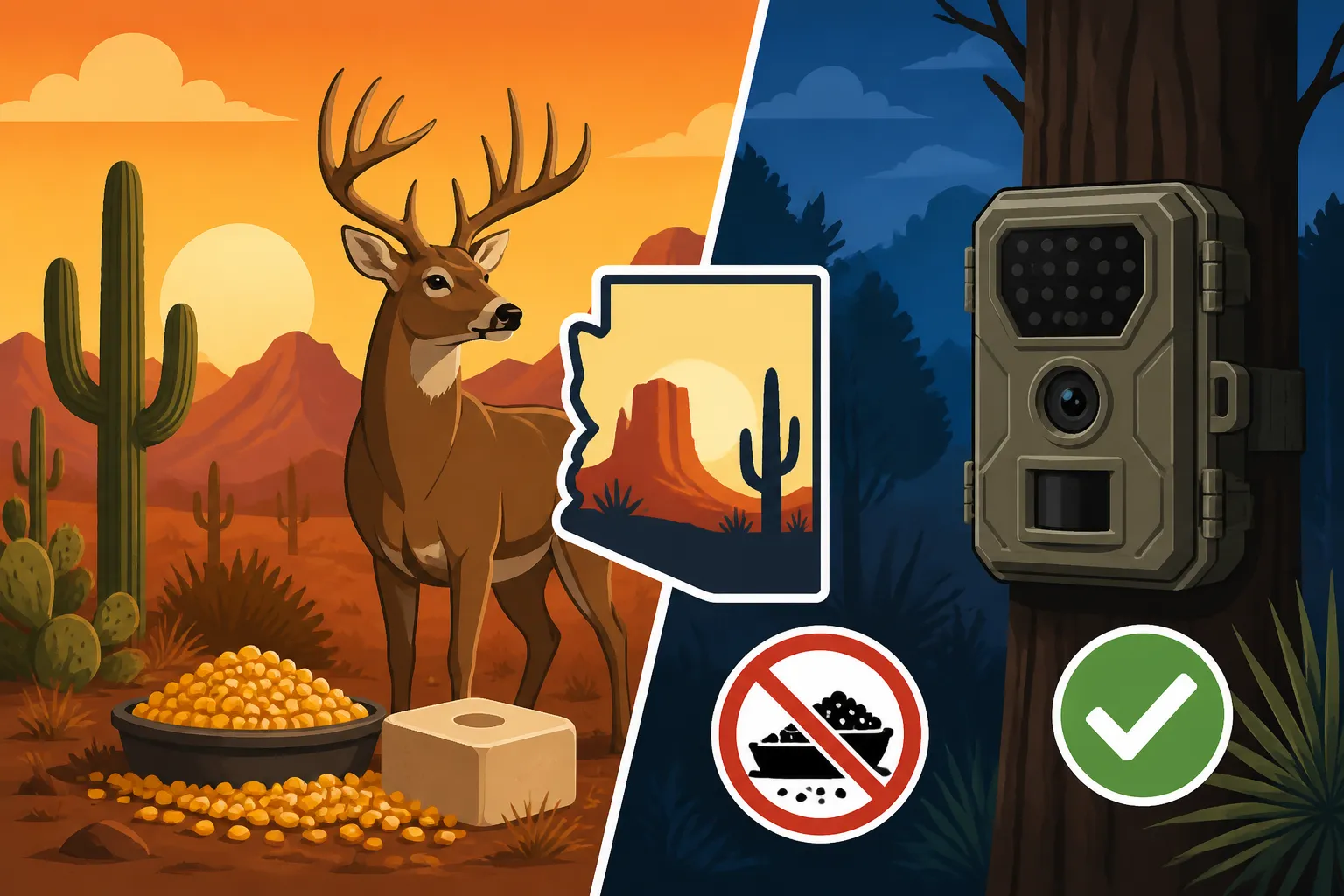
When we talk about big game in Arizona, which includes species like elk, deer, bighorn sheep, and pronghorn, the rule is pretty straightforward: baiting them is illegal. This isn't just about putting out a pile of corn in the woods; it extends to placing any substance that attracts game animals for the purpose of taking them. The Arizona Game and Fish Department (AZGFD) defines bait as any lure, food, or attractant, including salt, minerals, or other ingestible substances, placed to entice wildlife. This means you can't scatter apples, put out mineral blocks, or even set up a feeder with the intention of drawing in a deer or elk to shoot. The goal here is to keep hunting as natural as possible, ensuring that animals are sought in their natural habitats without artificial enhancements.
This strict regulation applies across all public and private lands in Arizona, so don't think a private ranch automatically grants different privileges. The ethical implications and potential for unfair advantage are paramount in these rules. For instance, if you're trying to figure out how to hunt Arizona's five-month OTC archery deer season, relying on bait would immediately put you in violation of state law, regardless of how challenging the hunting might be without it. It's about respecting the game and the principles of fair chase that define hunting in the state.
Distinguishing Baiting from Normal Agricultural Practices
This is where a lot of confusion can arise, particularly for hunters in areas with agricultural operations. Arizona law makes a clear distinction between illegal baiting for hunting purposes and legitimate agricultural activities. For example, if you're hunting near a working farm where crops are grown, harvested, or livestock are fed, and those activities naturally attract game animals, it's generally not considered baiting. The key is intent and purpose. If the food source is part of an ongoing agricultural operation – think a hayfield, an alfalfa patch, or a rancher providing feed for cattle – and not specifically placed to facilitate hunting, then hunting nearby is typically allowed.
However, this isn't a loophole. A hunter cannot introduce or enhance an agricultural practice specifically to lure game within shooting range. For instance, you can't plant a small food plot solely for hunting purposes and claim it's agriculture. The line can sometimes feel blurry, but the spirit of the law focuses on whether the primary intent is to produce food for human or animal consumption unrelated to hunting, versus creating a hunting advantage. Hunters really need to understand the local context and ensure their activities, or the areas they choose to hunt, align with these distinctions. Always err on the side of caution if you're unsure, or contact the AZGFD for clarification.
Exceptions for Specific Game and Methods
While the blanket rule against baiting big game is firm, there are a few very specific exceptions or scenarios that often come up in discussion. For instance, when it comes to certain furbearers or predatory animals, or even some small game species, the rules can differ significantly. For animals like coyotes, foxes, or even javelina under certain circumstances, the use of attractants or baits might be allowed. For example, some hunters legally use electronic calls or predator distress calls, which could be seen as an auditory attractant, to bring in coyotes. These are not considered "bait" in the same way a food pile is for big game.
It's crucial to consult the annual Arizona hunting regulations booklet, as these specific rules can change, and they vary greatly by species and weapon. For instance, while you can't bait deer or elk, the regulations for hunting over a stock tank legally are different; these are natural water sources, not introduced food sources. Furthermore, understanding what a HAM hunt actually is can also be important, as these often have specific weapon restrictions but generally still adhere to the no-baiting rule for big game. The takeaway here is that "baiting" isn't a monolithic term; its legality depends entirely on the species targeted and the specific method employed, but for most big game, it's a non-starter.
Specific Rules for Baiting Big Game Species
Digging a bit deeper, it's essential to delineate how these general baiting rules apply to some of Arizona's most popular big game species. The regulations are designed to protect the integrity of hunting these animals and to ensure sustainable populations through fair and ethical harvest methods.
Elk and Deer Baiting: A Strict No-Go
For species like Arizona elk on the Rim, White Mountains and Kaibab, and both mule deer across Arizona's northern plateaus and Coues deer are Arizona's signature whitetail, the prohibition on baiting is absolute. There are no grey areas, no special permits, and no exceptions for weapon type. This means that placing any kind of food, mineral supplement, or attractant (like a salt lick, apples, corn, or even manufactured deer feed) with the intention of drawing in and harvesting an elk or deer is illegal.
The reasoning behind this strict stance is multi-faceted. Firstly, it supports the principle of fair chase, ensuring that hunters rely on their scouting, tracking, and hunting skills rather than artificially concentrating animals. Secondly, and perhaps more importantly from a biological standpoint, it helps prevent the spread of disease. When animals congregate unnaturally at bait sites, it increases the likelihood of transmitting pathogens, which can have devastating effects on herd health. This is particularly relevant in areas with high animal density or where disease concerns, like Chronic Wasting Disease (CWD), are a potential threat, even if not currently widespread in Arizona. The AZGFD is vigilant about protecting its herds, and preventing artificial congregation points is a key strategy in this effort.
Baiting for Bear and Mountain Lion
Now, here's where things get interesting and distinct. Unlike deer and elk, Arizona does allow baiting for black bear and mountain lion, but with extremely stringent regulations. This isn't a free-for-all; it's a carefully managed exception, primarily due to the predatory nature of these animals and specific population management goals. For black bear, you generally need a special permit to bait, and the bait must be registered with AZGFD. There are strict rules on the type of bait, placement distance from roads and water, and the timeframe during which bait can be used. For instance, using meat that could attract other species or pose a public health risk is usually prohibited.
For mountain lions, the use of bait is also permitted, but again, with specific stipulations. Often, this involves using the carcass of a legally harvested animal as bait, or specific non-game animals. Both bear and lion baiting often require the hunter to possess the correct tag and follow explicit instructions laid out in the annual regulations. It's not a tactic for the casual hunter; it often involves significant preparation and understanding of complex rules. These exceptions highlight that AZGFD approaches each species with tailored management strategies, acknowledging the unique behaviors and population dynamics of predators versus prey animals. Always check the current regulations for specific rules on OTC Bear Tags in Arizona Units and OTC Mountain Lion Tags in Arizona.
Javelina and Small Game: Different Rules Apply
For smaller game animals, and specifically for javelina, the rules around baiting can be more lenient, or at least different in interpretation. Javelina is Arizona's most accessible big game, and they are typically hunted in the warmer, drier months, with many opting for archery methods. While technically a big game species, javelina are often managed differently than deer or elk due to their abundance and unique foraging habits. Some interpretations of the rules might allow for attractants that aren't considered "bait" in the traditional sense, such as specific scents or calls. However, placing piles of food explicitly to shoot javelina would likely still fall under the general prohibition against baiting big game.
When it comes to small game like rabbits, squirrels, or certain game birds, the regulations around attractants are much less restrictive, and in many cases, not prohibited at all. For example, setting up a dove hunt over a cut grain field, which naturally attracts doves, is a common and legal practice. Similarly, hunters might use birdseed to attract quail or other game birds to a specific area, especially on private land. This distinction underscores that the severity of the baiting rules scales with the perceived "trophy" value and population sensitivity of the species. Always refer to the current regulations for specifics, especially if you're exploring Arizona Quail Season Opening Dates or other small game opportunities.
Arizona's Approach to Trail Camera Use
Trail cameras have revolutionized scouting and hunting strategies, offering a "silent scout" that can gather intelligence 24/7. However, with this technological advancement comes the need for clear regulations to ensure fair chase and prevent misuse. Arizona has been proactive in addressing the ethical and practical implications of trail camera use, leading to some significant rule changes in recent years.
The Evolution of Trail Camera Regulations
The landscape of trail camera rules in Arizona has seen considerable evolution, particularly with the rise of cellular-enabled cameras that provide real-time updates. Initially, trail cameras were generally unregulated, viewed simply as scouting tools akin to binoculars or spotting scopes. However, as technology advanced and hunters began to leverage these devices for immediate tactical advantages—such as receiving an alert that a trophy animal was at a specific waterhole moments before arriving to hunt it—concerns grew. This led to a significant shift in Arizona's regulations. The AZGFD recognized that real-time information could undermine the traditional elements of fair chase, transforming hunting into more of a surveillance and ambush operation rather than a true pursuit.
This evolution culminated in new rules aimed at preventing the exploitation of technology for unfair advantage. The core principle driving these changes was to maintain the sporting integrity of hunting, ensuring that technology serves as an aid to scouting and understanding animal patterns, rather than a direct real-time targeting system. Understanding this historical context helps clarify why certain restrictions are now in place, particularly regarding live-feed capabilities, which many hunters found frustrating but ultimately understood were aimed at preserving the tradition of hunting.
General Legality for Scouting and Surveillance
Despite the changes, traditional trail cameras—those that record images or video to an SD card for later retrieval—remain legal for scouting and surveillance in Arizona. They are an invaluable tool for patterning animals, understanding their movements, and identifying promising hunting locations. Many hunters utilize them effectively during the offseason to learn about new units or to monitor activity in areas they plan to hunt. For example, if you're scouting an Arizona unit before the February deadline, a trail camera can provide critical insights into game density and travel corridors without requiring your constant physical presence.
However, the key distinction is how and when that information is accessed and utilized. The general rule allows for cameras that store information for later retrieval, but it restricts any form of real-time or near real-time transmission of images or data that could give a hunter an immediate advantage in taking game. This means you can still set up your cameras to capture photos of a buck working a specific rub line or an elk coming to water, but you can't be sitting in a blind receiving instant notifications on your phone that the animal is there. This maintains the camera as a scouting tool, not a hunting aid during the actual pursuit.
Placement and Ownership Considerations on Public Land
Placing trail cameras on public land, which makes up a significant portion of Arizona's hunting grounds, comes with its own set of considerations. While generally allowed, hunters must be mindful of public access, potential for theft or tampering, and the regulations regarding leaving property unattended on public land. It's always a good idea to clearly mark your cameras with your name and contact information. When considering where to place them, factors like the unit boundaries and whether you're on BLM or Forest Service ground are crucial. Reviewing Reading an Arizona Unit Boundary Before You Apply can help you determine legal placement.
Ownership and retrieval rules are also important. While your camera is your property, leaving it on public land means it's accessible to others. In some areas, cameras have been stolen or vandalized. Additionally, there are often rules about when cameras can be placed and retrieved, especially during active hunting seasons. The AZGFD may have specific guidelines on how long equipment can be left on public land. Always secure your cameras well, try to place them discreetly, and be aware of any specific regulations that might apply to the particular piece of public land you're using. Many hunters consult resources like GoHunt to understand specific land ownership and access rules for their chosen units.
Permitted and Prohibited Trail Camera Practices
The advent of advanced trail camera technology has led Arizona to implement specific rules regarding how these devices can be used during hunting seasons. The goal is to draw a clear line between legitimate scouting and methods that could provide an unfair advantage or violate the spirit of fair chase.
What Constitutes "Attracting Game" with Cameras
While the primary concern with trail cameras isn't typically "attracting" game in the same way bait does, the rules often intersect with the intent to concentrate or monitor animals for an immediate harvest. The regulations focus heavily on preventing the use of cameras in a way that directly assists in taking game at the moment of the hunt. This means even if you're not putting out food, using a camera that transmits real-time information to you while you're in the field hunting is seen as creating an unfair advantage, akin to having an extra set of eyes that alerts you to game presence. The regulations aim to prevent hunters from essentially "calling in" an animal by receiving an alert and then quickly moving to intercept it.
This distinction is crucial. You can use your camera to scout weeks or months before a hunt, gather data, and inform your strategy. But when you are actively hunting during an open season, using a camera system that gives you immediate, real-time information about game movement at a specific location is generally prohibited for big game. This restriction applies whether the camera is attached to a feeder (which would already be illegal baiting) or simply observing a natural water source or travel corridor. The focus is on the functionality of the camera during the hunt, not just its physical presence.
Real-time Transmission and Wireless Devices
This is the core of Arizona's updated trail camera regulations. Since January 1, 2022, it has been illegal to use any live-action or "real-time" trail camera, or any device that transmits images or video, to aid in the take of big game during the hunting season. This includes cellular trail cameras, satellite-linked cameras, or any other device that sends immediate notifications or images to a hunter's phone, tablet, or computer while they are actively hunting in the field. This rule came into effect partly due to widespread concern among hunters and wildlife managers about the erosion of fair chase principles.
The purpose of this rule is to eliminate the instant gratification and tactical advantage provided by such technology. It means that while you can use a cellular camera for scouting outside of the hunting season (e.g., to gather information leading up to the season opener), you must disable or remove its real-time transmission capabilities if you intend to use it during the season, or retrieve the memory card physically after the hunt. This specific prohibition is a significant change that has impacted many hunters' strategies, pushing them back towards more traditional scouting methods or at least ensuring their technology is compliant. For more on how this impacted hunting, you can look into What Changed for Arizona Crossbows on January 1 as that also saw significant regulatory updates around the same time.
Retrieving and Moving Cameras During Seasons
Even with traditional, non-transmitting trail cameras, there are often specific considerations about when and how you can access them during hunting seasons. While placing a camera before the season starts to gather intel on Arizona Mule Deer Across Northern Arizona is usually fine, the act of going in to retrieve or move that camera while you're also actively hunting can sometimes create issues or raise ethical questions. Generally, you can retrieve your cameras, but doing so during active hunting hours, especially in a high-traffic hunting area, could be seen as disturbing game or potentially interfering with other hunters.
It’s best practice to retrieve or service your cameras during non-hunting hours, or on days when you are not actively engaged in the pursuit of game. This minimizes your impact on the area and on other hunters. While there might not be explicit legal prohibitions on retrieving a non-transmitting camera during daylight hours of a hunting season, common courtesy and ethical considerations should guide your actions. Always think about how your actions might affect the wildlife and other hunters in the unit. Checking a resource like GoHunt can provide unit-specific insights that might influence your decisions on camera placement and retrieval timings.
Ethical Considerations Beyond the Letter of the Law
Beyond simply abiding by the written regulations, ethical hunting in Arizona calls for a deeper understanding and adherence to the spirit of fair chase, minimizing impact, and respecting both wildlife and fellow outdoors enthusiasts. The rules about baiting and trail cameras are not just arbitrary lines; they reflect a commitment to these broader ethical principles.
Minimizing Impact on Public Land
Arizona's public lands are a shared resource, and every hunter has a responsibility to minimize their impact. This extends to how we use technologies like trail cameras. While traditional cameras are legal, consider the cumulative effect of leaving multiple cameras, especially those with bright flashes or visible housing, across popular hunting areas. Too many cameras can clutter the landscape, and their presence, even if legal, can detract from the natural experience for others. Leaving trash, bait residue, or damaged equipment behind is not only illegal in many cases but also profoundly unethical.
Responsible use means being discrete with camera placement, ensuring they are secured to prevent becoming litter, and retrieving them promptly after their purpose is served. It also means being mindful of disturbing the habitat or impacting wildlife unnecessarily. For instance, repeatedly checking a camera in a sensitive bedding area or near a crucial water source could put undue pressure on animals. Every hunter shares the responsibility of being a steward of the land, and this applies just as much to technological tools as it does to traditional hunting practices.
The Role of Technology in Fair Chase
The debate surrounding technology in hunting often boils down to the concept of fair chase. Fair chase implies that the hunter and the hunted should have a reasonable and sporting chance. When technology provides an overwhelming advantage, it can tip the scales too far in favor of the hunter, diminishing the challenge and the fundamental principles of what makes hunting a sport and an immersive experience. Arizona's regulations against real-time trail camera transmission for big game are a direct response to this concern.
The goal isn't to demonize technology entirely, as many tools—from GPS devices to high-quality optics—have enhanced the hunting experience responsibly. The line is drawn when technology enables hunters to essentially "cheat" the game by providing instantaneous information that negates the need for skilled tracking, patience, and woodsmanship. It's about finding a balance where technology can aid preparation and safety, but not undermine the essence of the chase itself. Engaging with courses like The Ethically Hunting Arizona Course Explained can deepen a hunter's understanding of these nuanced principles and how modern tools fit within them.
The Spirit of Arizona Hunting
Hunting in Arizona is deeply rooted in tradition, respect for the land, and the wild character of its diverse landscapes. Whether you're calling bulls on Arizona's Mogollon Rim or glassing Arizona's Sky Islands for Coues deer, the experience is about connecting with nature and testing your skills against truly wild animals in their natural environment. The rules regarding baiting and trail cameras are designed to protect this spirit. They encourage hunters to learn the habits of animals, understand their environment, and develop the patience and persistence required for a successful hunt.
Ultimately, hunting should be a challenge, a journey of learning, and an opportunity to engage with nature on its own terms. Relying on bait or real-time surveillance might offer an easier path to success, but it often comes at the cost of genuine accomplishment and the deeper satisfaction that comes from a fair chase. By adhering to both the letter and the spirit of Arizona's regulations, hunters contribute to a positive public image of hunting and ensure that these traditions can continue for future generations. Resources like GoHunt that provide detailed information on units and regulations play a vital role in helping hunters plan ethically and legally.
Summary of Arizona Baiting and Trail Camera Regulations
To help hunters quickly grasp the key takeaways, here's a summary table of Arizona's regulations concerning baiting and trail cameras for big game. This isn't exhaustive, but it highlights the critical distinctions.
| Aspect | Big Game (Deer, Elk, Pronghorn, Bighorn, Bison) | Bear & Mountain Lion | Small Game & Predators (Coyote, Fox, Javelina*) |
|---|---|---|---|
| Baiting | Generally PROHIBITED. No food, minerals, salt licks, or attractants to aid in taking. | ALLOWED with specific permit/conditions. Strict rules on type, placement, registration. | Generally PERMITTED. (e.g., electronic calls for predators; natural crop fields for birds). |
| Trail Cameras | Traditional (SD card) cameras are LEGAL for scouting. | Traditional (SD card) cameras are LEGAL for scouting. | Traditional (SD card) cameras are LEGAL for scouting. |
| Real-time/Cellular Cameras (Transmission) | PROHIBITED if transmitting images/video to aid in taking during hunting season. | PROHIBITED if transmitting images/video to aid in taking during hunting season. | PROHIBITED if transmitting images/video to aid in taking during hunting season. |
| Retrieval During Season | Permitted for traditional cameras, but consider ethical impact and other hunters. | Permitted for traditional cameras, but consider ethical impact and other hunters. | Permitted for traditional cameras, but consider ethical impact and other hunters. |
Note: Javelina are big game, but specific attractant rules can differ slightly from deer/elk; always check current regulations.
Disclaimer
Please remember that hunting regulations can change, and interpretations may vary. This guide is intended for informational purposes only and should not be considered legal advice. Always consult the most current Arizona Game and Fish Department regulations booklet or website before your hunt to ensure full compliance with all state laws.