Shooting Sticks or Bipod on Rocky Ground
There's nothing quite like that moment when a prime Arizona buck or bull steps out, the wind is right, and your heart starts to pound. You've hiked for miles, glassed for hours, maybe even crawled through some truly nasty catclaw and prickly pear. But then, as you try to settle in for the shot, you find yourself on a slope of loose scree, surrounded by jagged volcanic rock or granite boulders, and suddenly, that perfect shot feels miles away because you just can't get steady. This guide is all about tackling that common frustration, exploring the best ways to get a rock-solid shooting platform when the ground beneath you is anything but flat and forgiving, whether you choose shooting sticks or a bipod in Arizona's notoriously rocky hunting units.
The Unique Challenges of Arizona's Rocky Terrain for Shooting Stability
Arizona’s diverse landscapes offer incredible hunting opportunities, from the high ponderosa forests of the Mogollon Rim to the unforgiving, rugged desert mountains of the south. What many hunters quickly discover, especially those new to the state or coming from flatter, softer country, is just how much the terrain dictates your shot setup. It’s not often you find a perfectly flat, soft patch of ground when a big game animal suddenly appears. More often than not, you're trying to set up on a steep incline, amidst a jumble of rocks, or balancing precariously on uneven ground, which can turn a seemingly routine shot into a nerve-wracking gamble.
Uneven Surfaces and Limited Footing
Imagine you've been glassing a distant ridge for Coues deer, and finally, a good buck appears. You drop your binos, grab your rifle, and try to get into a prone position. That's when you realize the "flat" spot you picked out is actually a collection of baseball-sized rocks that dig into your elbows, force your rifle off-kilter, or simply refuse to offer a stable base for your bipod. This isn't just an inconvenience; it can be the difference between a clean kill and a frustrating miss, or worse, a wounded animal.
Arizona's terrain is a masterclass in unevenness. From the tumbled basalt flows in some northern units to the steep, gravelly washes of the desert, finding true level ground is a luxury. Your footing might be unstable, making even a kneeling or sitting shot wobbly. When you're trying to achieve precision, every degree of tilt and every millimeter of wobble is magnified downrange. This is especially true for those longer shots that are often necessary in Arizona's wide-open spaces. You might think you can just "make it work," but the reality of a follow-up shot or simply not having that critical moment of stability when it counts is a tough pill to swallow. This unstable footing also makes a big difference when you're simply trying to move quietly; check out tips on Choosing Boots for Rocky Desert Ground to keep you stable on the hike in.
The Importance of a Stable Platform in Long-Range Desert Shots
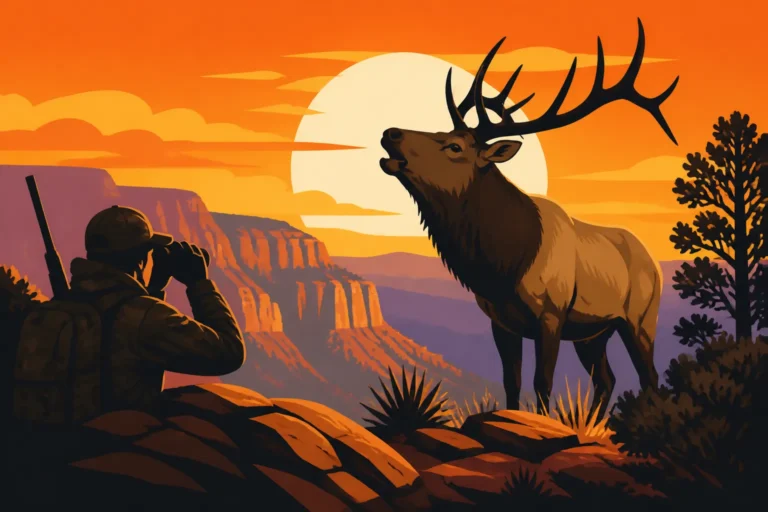
Let's face it, hunting in Arizona, particularly for species like Coues deer or pronghorn, often involves longer shots than many hunters are accustomed to. Open deserts and vast canyons mean animals aren't always going to present themselves at 100 yards. When you're talking about distances of 300, 400, or even 500+ yards, tiny imperfections in your shooting form or equipment become massive deviations at the target. A stable shooting platform isn't just a nicety; it's an absolute necessity for ethical, responsible hunting at these ranges.
Wind, especially across a wide canyon in Arizona, also plays a huge factor, and a wobbly platform only exacerbates the challenge of Holding for Wind Across a Wide Canyon. If your rifle isn't rock-solid, even a slight breeze can push your barrel around, making precise windage adjustments incredibly difficult. Combine that with the inherent difficulty of ranging and accounting for bullet drop over vast distances, and you quickly see why stability is paramount. Many hunters spend countless hours dialing in their Rifle Zero Distance for Open Desert, but all that precision is wasted if your rifle isn't steady when the moment of truth arrives. A solid rest helps you focus on breath control and trigger press, eliminating one of the biggest variables in long-range accuracy.
Understanding Shooting Sticks: Adaptability and Portability on the Move
When you're traversing steep, broken terrain, sometimes you need a shooting solution that's as dynamic as the landscape itself. That's where shooting sticks often shine. They offer a unique blend of adaptability and portability that can make them indispensable for Arizona hunters who are constantly on the move, chasing game through diverse environments. Unlike a fixed bipod, sticks can often adjust to uneven ground with greater flexibility, allowing you to quickly set up for kneeling, sitting, or even standing shots.
The Versatility of Tripod and Monopod Sticks in Rugged Country
Shooting sticks come in various forms, from single monopods to versatile tripods, and each has its place. A monopod is the lightest and fastest to deploy, perfect for quick, standing shots where you just need a little extra support. However, its stability is limited, as it still relies heavily on your body for much of the support. This makes it less ideal for precision shots at longer ranges, especially on uneven ground where you're already fighting to stay balanced.
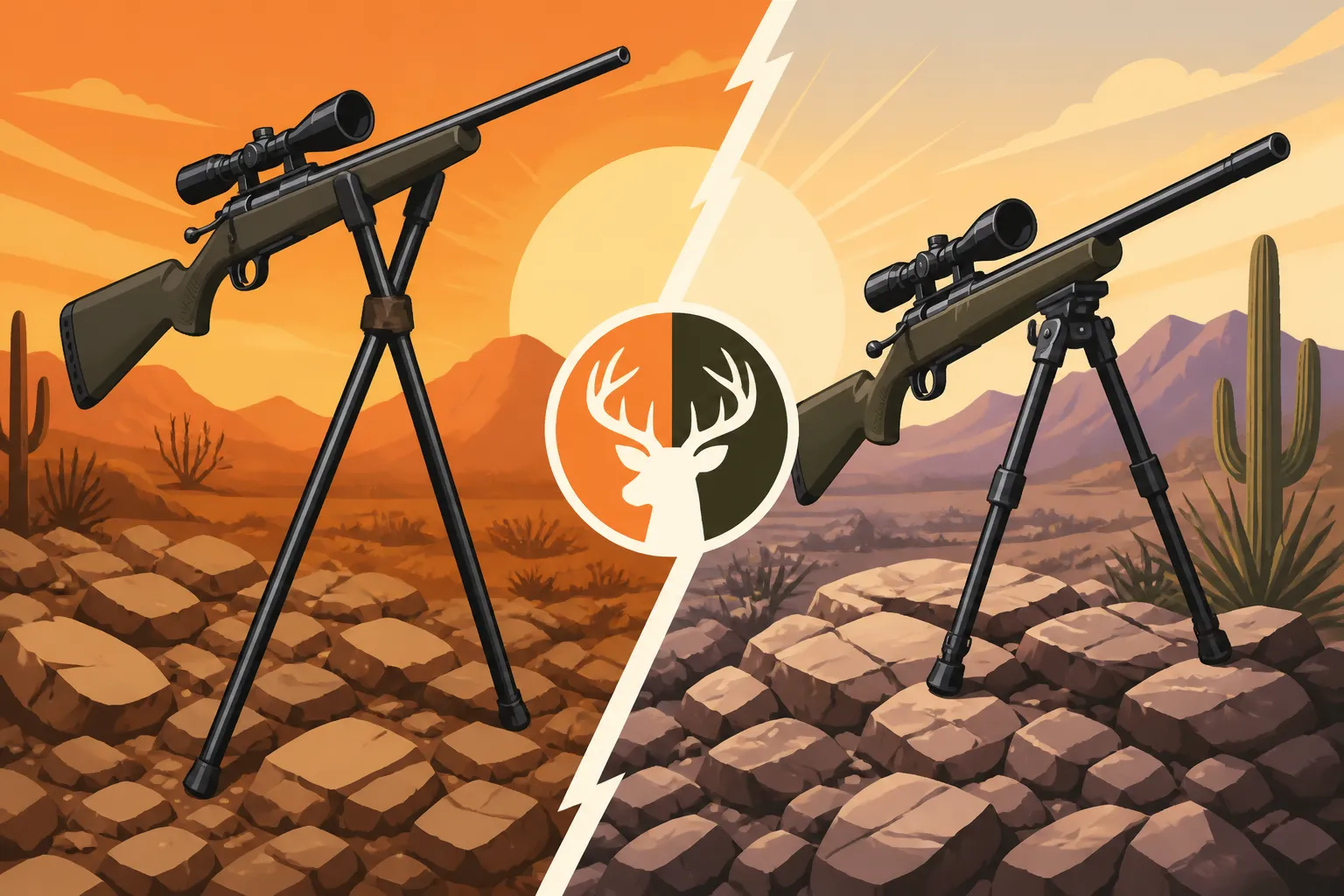
Bipod shooting sticks (not to be confused with a rifle-mounted bipod) offer significantly more stability than a monopod, providing two points of contact with the ground, plus your body. They are a good middle-ground solution, balancing speed of deployment with improved steadiness. However, for maximum stability on truly uneven or rocky ground, a tripod is often the king. Modern shooting tripods, like those from Primos or Vortex, are designed with independently adjustable legs that can splay out at different angles and lengths, allowing you to conform them to almost any uneven surface. You can use them for kneeling, sitting, or even standing shots, and many even convert into a stable base for your Spotting Scope Power for Coues Country or binoculars, making them a multi-functional tool for a backcountry hunter. This ability to adapt to severe slopes or rock piles is a huge advantage when a critter pops up in an unexpected spot.
Scenarios Where Shooting Sticks Excel
Think about hunting the Sky Islands of southern Arizona, where you're constantly climbing steep, rocky slopes, glassing, and then moving to close the distance on a Coues buck. You might find yourself on a sidehill, needing to shoot downhill or across a canyon. Trying to get a prone bipod setup on that kind of terrain is often impossible or takes too much time, spooking the animal. This is where shooting sticks come into their own.
- Steep Sidehills: With adjustable legs, you can shorten the uphill leg and extend the downhill leg, leveling your rifle effectively for a solid shot, whether kneeling or standing.
- Tall Brush or Cacti: Arizona is full of vegetation that will block a prone shot. Sticks allow you to elevate your rifle above the scrub oak, mesquite, or thick prickly pear, giving you a clear line of sight without having to move into a less advantageous position.
- Quick Transitions: When an animal is on the move, or you need to react quickly to a new opportunity, sticks are often faster to deploy than getting fully prone and adjusting a bipod. You can pick them up and move a short distance, then reset relatively quickly. For instance, if you're trying to get How Far to Stalk a Bedded Coues Buck and need a quick shot when it stands, sticks can be faster to get into action.
- Glassing Platform: Many tripods double as excellent glassing platforms, allowing you to set up your binoculars or spotting scope for extended periods. This dual functionality means one less piece of gear to carry, which is always a bonus when you're Preparing Physically for a Desert Hunt.
- Hunting Water Sources: If you're set up near a Hunting a Stock Tank During Early Archery or a remote water guzzler, sticks allow you to sit comfortably and patiently, ready for a shot from a higher vantage if needed.
The Bipod Advantage: Rock-Solid Stability for Stationary Positions
While shooting sticks offer incredible versatility for hunters on the move, there's no denying the fundamental stability that a good rifle-mounted bipod provides, especially when you can get into a solid, stationary shooting position. When the terrain allows, or when you plan to set up for an extended period, a bipod can be the cornerstone of precision shooting in Arizona. The direct attachment to your rifle means less movement between your support system and the firearm itself, translating to a more rigid platform.
Integrating Bipods with Backpacks and Natural Rests
The beauty of a bipod truly comes alive when you can combine it with other natural or man-made rests to create an ultra-stable shooting system. On rocky Arizona ground, this often means using your backpack. If you can find a somewhat level spot, or even a slight depression, and get prone, resting the rear of your rifle on your backpack creates a "three-point" contact system (bipod, buttstock on pack, and your body supporting the front of the bipod). This setup minimizes wobble and allows for fine adjustments by simply squeezing or relaxing the pack under the buttstock. It's an incredibly stable position that many long-range shooters swear by, especially when you have time to settle in.
Furthermore, Arizona's rocky landscape, while challenging, is also full of natural rests if you know how to look for them. Large boulders, fallen logs, or even a sturdy mesquite tree can provide excellent support. Deploying your bipod onto a large, flat rock can give you incredible stability, elevating your rifle just enough to clear low brush. You can often use your pack or even your boot to level the rifle if the rock itself is slightly angled. The key is to leverage the existing terrain, rather than fight it. Some hunters even carry a small, durable beanbag or rear bag specifically for resting the buttstock, which can be invaluable for micro-adjustments and preventing recoil jump, especially when you're making those critical shots after Using Washes and Draws to Close Distance to get into position.
When a Bipod Might Fall Short in Arizona's Environment
Despite their inherent stability, bipods aren't always the perfect solution for every scenario you'll encounter in Arizona. They have their limitations, particularly when the terrain becomes truly unforgiving or when you need to shoot from an elevated position. Understanding these drawbacks is crucial to making an informed decision about your primary shooting support.
One of the biggest issues with a traditional rifle-mounted bipod on rocky ground is its fixed height. Most bipods extend to a maximum of about 9-13 inches, which is perfect for a prone shot on relatively flat ground. However, if you find yourself in tall grass, thick brush, or behind a series of small boulders that obscure your line of sight while prone, a bipod simply won't get your rifle high enough. This forces you to either move, potentially spooking the animal, or take a less stable kneeling or sitting shot without a solid rest.
Another challenge arises on extremely steep terrain. Trying to deploy a bipod on a 30-degree slope, for example, often results in one leg being much shorter than the other, or the rifle being severely canted, requiring significant effort to level the rifle for the shot. In such situations, the independent leg adjustment of shooting sticks or a tripod system offers far more adaptability.
Finally, while quick to deploy in a prone position, transitioning to a kneeling or standing shot with a bipod can be awkward and slow. You're effectively relying on your body for all the support, as the bipod is no longer touching the ground, losing its inherent stability. This can be a major disadvantage if an animal suddenly changes position or if you need to quickly adjust your shooting height to clear an obstruction.
Making the Choice: Sticks, Bipod, or Both for Your Arizona Hunt
So, after considering the pros and cons, which do you choose for your next Arizona hunting adventure? The truth is, there's no single "best" answer that fits every hunter or every hunting scenario. The optimal choice often depends on your personal hunting style, the specific species you're pursuing, the unit you're hunting, and even the time of year. For many experienced Arizona hunters, the answer isn't "either/or" but rather a strategic combination or a highly adaptable system.
Let's imagine you're E-Scouting an Arizona Unit Before the Season and see a lot of open country with scattered boulders. This might lean you towards a bipod for those prone opportunities. But then you notice deep washes and tall mesquite, suggesting shooting sticks could be vital. This is why flexibility is key.
Hybrid Approaches and Adaptable Setups
Many hunters find success with a hybrid approach, carrying both a lightweight bipod on their rifle for quick prone setups and a set of versatile shooting sticks (often a tripod style) for when the terrain demands more height or adaptability. The bipod might be your primary go-to for predictable, longer-range setups where you have time and suitable ground, while the sticks are there for those moments when you need to shoot over brush, off a steep sidehill, or from a kneeling or standing position.
Consider a system where you have a compact, lightweight bipod attached to your rifle, and a sturdy carbon fiber shooting tripod from a brand like Leupold or Outdoorsman mounted on your pack. This allows you to have instant prone stability, but also the ability to set up for any shot height in rough terrain. Some hunters even favor bipods that can detach quickly and be swapped for taller bipod models or quickly deployable tripod legs. The beauty of modern hunting gear is the sheer variety available, allowing you to tailor your setup precisely to your needs. This adaptable thinking is also crucial when Reading Terrain Before You Pick a Camp and preparing for the unexpected.
Another excellent option that combines the best of both worlds are taller, convertible bipods that extend significantly. Brands like Javelin or Bog Pod offer bipods that can extend to standing height, providing much of the versatility of shooting sticks while still maintaining the rigid attachment to your rifle. These systems often feature independent leg adjustments, allowing them to adapt to uneven terrain almost as effectively as a dedicated shooting tripod. For instance, if you're trying to sneak up on a bedded mule deer in some broken country, you might crawl into position, drop your bipod to prone, but then realize you need to elevate slightly to clear some low-lying scrub. A taller, adjustable bipod can quickly extend, saving you from having to pull out separate sticks.
Practice Makes Perfect: Drills for Rocky Terrain
No matter what system you choose, the most critical element is practice. You can have the most expensive, most stable shooting platform in the world, but if you're not proficient with it in realistic hunting conditions, it's not going to do you much good. Arizona's rocky terrain demands specific practice drills that mimic real-world hunting scenarios.
- Uneven Ground Drills: Head to a local shooting range or even an open area with varied terrain (ensure it’s a safe, legal place to shoot) and practice setting up your chosen support system on uneven ground, slopes, and over obstacles. Try shooting from kneeling positions on a rocky incline, or standing positions where your feet aren't perfectly level.
- Timed Deployments: Practice deploying your bipod or shooting sticks quickly and quietly. In hunting, speed can be just as important as stability. Set a timer and work on getting into a stable shooting position in 10-15 seconds. If you're using shooting sticks that double as a glassing tripod, practice transitioning from glassing to shooting quickly and smoothly.
- Positional Shooting: Don't just practice prone. Force yourself to shoot from kneeling, sitting, and standing positions using your chosen support. Pay attention to how your body mechanics change with each position and how you can best stabilize the rifle. GoHunt often features articles and videos on positional shooting techniques that can be invaluable for these drills.
- Simulated Pressure: Practice these drills under a simulated time crunch or with a rapidly appearing target. This will help you manage the adrenaline and pressure you'll feel when a live animal is in your sights.
- Long-Range Drills: If you're planning on longer shots, practice at those extended distances with your chosen support. This will highlight any stability issues and allow you to refine your technique, ensuring you can consistently place shots precisely when it matters most. Remember, a slight wobble at 100 yards becomes a huge miss at 400.
By incorporating these types of practice into your routine, you'll build muscle memory and confidence, ensuring that when that trophy animal steps out on the rockiest, most unforgiving piece of Arizona ground, you'll be ready to make a clean, ethical shot.
| Feature / Scenario | Rifle-Mounted Bipod | Shooting Sticks (Tripod) |
|---|---|---|
| Stability (Prone) | Excellent, rock-solid | Very Good, especially with rear support |
| Stability (Kneeling/Sitting) | Limited (relies on body) | Excellent, highly adjustable |
| Stability (Standing) | Not applicable | Excellent, highly adjustable |
| Adaptability to Uneven Ground | Moderate (some leg adjustment) | Excellent (independent leg adjustments) |
| Speed of Deployment (Prone) | Fast | Moderate to Fast |
| Speed of Deployment (Elevated) | N/A | Fast |
| Clearing Obstructions | Limited (fixed height) | Excellent (variable height) |
| Weight | Often lighter (attached to rifle) | Can be heavier (standalone unit) |
| Dual Purpose (Glassing) | No | Yes, often serves as optics tripod |
| Best for Active Stalking | Less versatile | More versatile, dynamic |
| Best for Ambush/Static | Excellent | Very Good |
Disclaimer
Please remember that hunting regulations and best practices can change. Always consult the most current Arizona Game and Fish Department regulations before heading afield. Safety should be your number one priority, and ethical hunting practices are paramount.