Suppressor Legality for Hunting Big Game
Many hunters across Arizona grapple with a frustrating mix of state and federal regulations, often leaving them unsure about what's truly legal when it comes to using sound suppressors in the field. This guide aims to cut through the confusion, offering a clear, comprehensive look at the legality of suppressors for big game hunting in Arizona, so you can confidently plan your next outdoor adventure.
The Evolving Landscape of Suppressor Laws
It's no secret that firearm laws, especially those surrounding accessories like suppressors, can feel like a constantly shifting target. What's legal in one state might be a felony in another, and even within the same state, interpretation can vary. This inconsistency creates a real headache for responsible hunters who just want to follow the rules and enjoy their time outdoors. For years, suppressors were often wrongly demonized in popular media, leading to widespread misconceptions about their purpose and legality. Thankfully, the tide is turning, and more states are recognizing the legitimate benefits suppressors offer, particularly to hunters.
Federal Regulations: The NFA and ATF Approval Process
At the federal level, suppressors are regulated under the National Firearms Act (NFA) of 1934, a law originally enacted to control machine guns, short-barreled rifles, short-barreled shotguns, and other "gangster weapons" of the era. The NFA classifies suppressors (often referred to as silencers, though suppressor is the more accurate term) as Title II firearms, which means they are subject to strict federal oversight. This isn't like buying a standard rifle or handgun off the shelf. Owning a suppressor requires a more involved process overseen by the Bureau of Alcohol, Tobacco, Firearms and Explosives (ATF).
To legally acquire a suppressor, you must go through a series of steps that include submitting an application (Form 4), paying a one-time $200 tax stamp to the ATF, undergoing a background check (which involves fingerprints and passport-style photos), and receiving approval from the ATF. This process can be lengthy, often taking several months, and requires patience. You can purchase a suppressor as an individual, through a trust, or a corporation, each with its own nuances in the application process. Understanding this federal framework is the first crucial step, as Arizona's laws operate within these federal guidelines, not outside them.
How Arizona's Stance Differs from Other States
While the federal NFA rules apply nationwide, individual states have the authority to further regulate suppressors or even outright ban them. This is where the confusion often comes in, as states like California, Delaware, Hawaii, Illinois, Massachusetts, New Jersey, New York, Rhode Island, and the District of Columbia still prohibit civilian ownership of suppressors. However, Arizona stands out as a state that has embraced suppressor ownership. Arizona's state laws are quite friendly to suppressor owners, aligning with a growing trend among western states that recognize the benefits of hearing protection and noise reduction for hunters and sport shooters.
Arizona does not impose any additional state-level restrictions beyond what the NFA requires. This means that if you've successfully navigated the federal ATF process and received your approved tax stamp, you are legally permitted to possess and use a suppressor in Arizona. This clear, permissive stance from the state legislature has made Arizona a popular destination for hunters who appreciate the advantages suppressors offer, without having to worry about conflicting state statutes complicating their gear choices.
Suppressors for Big Game Hunting in Arizona
Now, let's get down to the brass tacks: using suppressors specifically for big game hunting here in the Grand Canyon State. For many years, the idea of hunting with a "silencer" felt foreign, almost like something out of a spy movie. But as more hunters become aware of the very real benefits, especially concerning hearing health and reducing disturbance, the popularity of suppressors has soared.
The Arizona Game and Fish Department's Official Stance
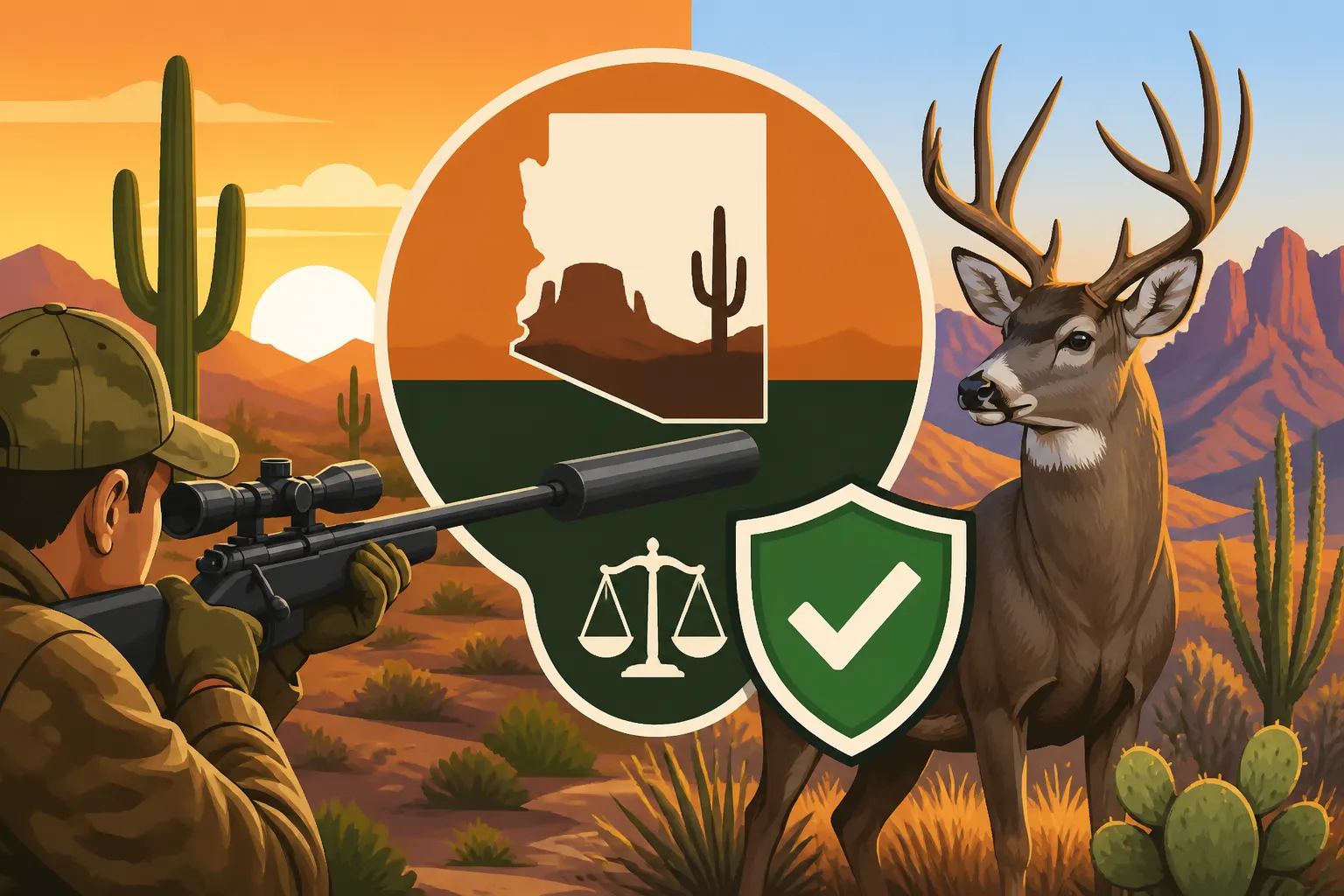
The good news for Arizona hunters is that the Arizona Game and Fish Department (AZGFD) explicitly allows the use of legally obtained suppressors for hunting big game. There are no state regulations or prohibitions within the hunting statutes that restrict their use. This means if you've gone through the proper federal channels, paid your tax stamp, and received your approved Form 4, you can confidently affix that suppressor to your rifle when pursuing elk, deer, javelina, or any other big game species in Arizona. This clear stance is a welcome relief for those tired of ambiguous rules.
The AZGFD's primary concern, as outlined in its regulations, is ethical and legal hunting practices. As long as the suppressor is legally owned and used responsibly, it falls completely within the department's guidelines. This progressive approach demonstrates an understanding of modern hunting equipment and a commitment to hunter safety and the overall experience. When you're preparing physically for a desert hunt, knowing you can protect your hearing without breaking any rules is a significant advantage.
Practical Benefits and Considerations for Hunters
The benefits of using a suppressor in the field extend far beyond just reducing noise. For big game hunters, especially in Arizona's wide-open spaces or rugged terrain, they offer several distinct advantages:
- Hearing Protection: This is perhaps the most significant benefit. A suppressor dramatically reduces the sound signature of a gunshot, bringing it down to a level that is much safer for your ears. Repeated exposure to loud gunshots can lead to permanent hearing damage, a common issue among avid hunters. Protecting your hearing means you'll be able to enjoy the sounds of nature, and your hunting partners' voices, for years to come. This is critical when you might be sighting in after a long drive to camp or taking multiple shots on a range trip.
- Reduced Recoil: While not their primary function, many suppressors also help mitigate recoil by redirecting gasses, leading to a more comfortable shooting experience. This can be particularly beneficial for follow-up shots, especially on larger calibers, and can help new shooters or those sensitive to recoil maintain better accuracy.
- Improved Accuracy: With less flinching from recoil and muzzle blast, shooters often find it easier to maintain proper form and focus, which can translate to improved accuracy. A quieter shot also means less disturbance to your own sight picture immediately after firing.
- Reduced Game Disturbance: While a suppressor doesn't make a rifle "silent," it does lower the report significantly. This can be advantageous when hunting in areas where multiple animals might be present, as the reduced noise can sometimes prevent other animals from spooking as dramatically or traveling as far, potentially offering follow-up opportunities or disturbing other hunters less. It also minimizes disturbance to other non-game wildlife or nearby landowners.
- Enhanced Communication: When hunting with partners, especially in thick cover or when reading wind on a Sky Island stalk, being able to communicate without shouting over ear protection or risking hearing damage from an unsuppressed shot is invaluable. It allows for better coordination and safety in the field.
However, it's also important to consider the added length and weight a suppressor brings to your firearm. This can affect balance, maneuverability in dense brush, and how the rifle carries over long distances. Hunters need to practice with their suppressed setup to become accustomed to these changes, including checking their rifle zero distance for open desert conditions.
Navigating the Purchase and Use of Suppressors
So, you're convinced that a suppressor is the right tool for your Arizona big game hunts. What's next? The process can seem daunting at first glance, but breaking it down into manageable steps makes it much clearer.
The Steps to Legally Own a Suppressor in Arizona
The journey to legally owning a suppressor in Arizona always begins with the federal requirements set forth by the ATF. Here's a simplified breakdown:
- Find a Licensed Dealer: You'll need to purchase your suppressor through a Federal Firearm License (FFL) holder who is also a Special Occupational Taxpayer (SOT). Many gun shops in Arizona are SOTs and can facilitate the transfer.
- Select Your Suppressor: Research and choose the suppressor that best fits your hunting needs. Consider caliber, weight, length, mounting system, and overall durability.
- Complete the ATF Form 4: This is the application to transfer and register your suppressor. Your dealer will guide you through this. You'll need to decide whether to purchase as an individual or through a NFA gun trust. A trust can offer benefits like allowing multiple people (trustees) to legally possess and use the suppressor.
- Submit Fingerprints and Photos: As part of the Form 4 process, you'll need to provide your fingerprints and a passport-style photo to the ATF for your background check. Many FFL/SOT dealers have digital fingerprinting services available.
- Pay the $200 Tax Stamp: This is a one-time federal tax required for NFA items. You'll purchase a tax stamp, usually through your dealer, and submit it with your Form 4.
- Notify Your Chief Law Enforcement Officer (CLEO): If you're applying as an individual, you must send a copy of your Form 4 to your local Chief Law Enforcement Officer (e.g., county sheriff or police chief). If using a trust, a notification letter is sent instead.
- Wait for ATF Approval: This is often the longest part of the process, typically taking several months, sometimes even longer depending on ATF processing times. Patience is key.
- Receive Your Suppressor: Once your Form 4 is approved, the ATF will send the approved form back to your dealer. You can then pick up your suppressor from the dealer, and it's legally yours to take home and use for hunting, recreation, or any other lawful purpose in Arizona.
Remember, until your Form 4 is officially approved and the tax stamp returned, the suppressor legally belongs to the dealer, not to you. Attempting to take possession before approval is a serious federal offense. Utilizing resources like GoHunt can help you manage your research and planning for your Arizona hunting adventures, potentially even informing you about reputable dealers in the state who handle NFA items.
Responsible Use and Ethical Considerations in the Field
Just because something is legal doesn't mean it should be used without thought. Responsible and ethical use of suppressors in the hunting field is paramount. Here are a few points to consider:
- Public Perception: While suppressors are gaining acceptance, some members of the public still hold negative stereotypes. Using a suppressor responsibly and discussing its benefits, particularly hearing protection, can help educate others and improve public perception of hunters.
- Still, Not Silent: It's crucial to understand that a suppressor does not make a firearm "silent." It significantly reduces the sound, often to below hearing-damaging levels (typically around 130-140 dB, similar to a jackhammer or jet taking off), but it's still audible. Don't assume you can shoot in areas where noise is a critical concern without being heard at all.
- Safety First: All standard firearm safety rules apply, whether you're using a suppressor or not. Treat every firearm as if it's loaded, know your target and what's beyond it, keep your finger off the trigger until ready to shoot, and keep the muzzle pointed in a safe direction. Always wear appropriate eye protection.
- Awareness of Surroundings: In Arizona, where public lands often see a mix of users, being mindful of other hikers, campers, or hunters is part of being a responsible outdoors person. While your suppressed shot might be less jarring, it's still a sound that carries. When you're hunting over a stock tank legally or exploring remote washes, maintaining awareness is always key.
Common Misconceptions and Future Outlook
The journey to widespread acceptance for suppressors has been slow, largely due to decades of misinformation. Let's tackle some of those lingering myths and briefly touch on what the future might hold for suppressor laws in Arizona.
Separating Fact from Fiction About Suppressors
It's amazing how many myths persist about suppressors, even among fellow hunters. Here's a quick table to set the record straight:
| Myth | Fact |
|---|---|
| They make guns "silent." | No. They reduce the sound dramatically, often by 20-40 decibels, making it safer for hearing, but the shot is still clearly audible. The crack of the bullet breaking the sound barrier also creates noise, which a suppressor cannot eliminate. |
| They are only used by criminals. | The vast majority of suppressors are owned by law-abiding citizens, primarily for hearing protection during hunting and sport shooting. Federal data consistently shows suppressors are rarely used in crimes. |
| They are illegal in many states. | While some states do ban them, over 40 states, including Arizona, allow civilian ownership. The trend is moving towards more states legalizing them, recognizing their utility for hearing health. |
| They are difficult to obtain. | The process involves more steps than a standard firearm purchase (background check, fingerprints, tax stamp, ATF approval), but it's entirely manageable and straightforward for any law-abiding citizen. It just requires patience. |
| They negatively impact bullet performance. | Modern suppressors are designed to have minimal to no adverse effect on bullet velocity, accuracy, or terminal performance. Some even report slight improvements in consistency due to reduced muzzle blast interference. Your field dressing in desert heat will be no different whether your game was taken with a suppressed rifle or not. |
Educating ourselves and others about these facts is crucial for dispelling myths and fostering a better understanding of responsible firearm ownership and use.
Potential Future Changes in Arizona Suppressor Law
Arizona has a strong tradition of supporting Second Amendment rights, and its current suppressor laws reflect that. Given the state's clear stance and the growing national recognition of suppressors as valuable hearing protection devices, it's unlikely that Arizona will move to restrict suppressor ownership or use for hunting in the foreseeable future. In fact, legislative efforts, both at the state and federal levels, often lean towards reducing the regulatory burden on suppressors.
One concept that occasionally resurfaces at the federal level is the "Hearing Protection Act," which aims to remove suppressors from the purview of the NFA, making them regulated like any other firearm. Should such federal legislation pass, it would significantly streamline the purchase process for Arizonans. For now, however, the NFA process remains the standard. Hunters should always stay informed by regularly checking the Arizona Game and Fish Department's official website and resources like GoHunt for any updates to regulations, as laws can, however rarely, change. Staying current with information, just like understanding the nuances of legal shooting hours and blaze orange in Arizona, ensures you remain a responsible and informed hunter.
Disclaimer
Please remember that this guide provides general information and is not a substitute for legal advice. Laws can change, and interpretations may vary. Always consult the most current Arizona Game and Fish Department regulations and, if necessary, seek legal counsel to ensure full compliance with all federal, state, and local laws regarding suppressor ownership and hunting.