Finding Low Pressure Ground on Opening Weekend
Opening weekend in Arizona for many big game seasons can feel less like a peaceful escape into the wilderness and more like a crowded hiking trail at a popular national park. You’ve put in the time, drawn that coveted tag, and the last thing you want is to find another hunter setting up shop just a few hundred yards from your carefully scouted spot. It's a real frustration, a dampener on the anticipation, and it happens far too often. But it doesn't have to be your experience. This guide is here to walk you through proven strategies for identifying and accessing those quieter, less pressured corners of Arizona's vast public lands, ensuring your opening weekend is about connecting with nature and game, not dodging other hunters.
Understanding Why Opening Weekend Gets Crowded in Arizona
The allure of opening weekend is undeniable. It's the culmination of months of anticipation, scouting, and dreaming. For many, it's the only time they can dedicate to a hunt, or perhaps the only time a group can coordinate. This concentrated effort means that certain areas, often the most accessible or historically productive, bear the brunt of hunting pressure.
The Allure of the First Day
There’s a powerful pull to be out there on day one. Everyone wants to be the first one to cut fresh tracks, to be in the woods when the animals are still settling into the season's rhythm, before they've been bumped and made wary by human presence. This collective desire leads to a significant influx of hunters into what are often already finite and appealing pockets of public land. It’s not just about the chance of success; it’s about the excitement of the start, the tradition, and the camaraderie of the hunting community. Unfortunately, that same enthusiasm often means that popular trailheads are overflowing and prime glassing points look like a convention. You’ll see trucks lined up for miles, camp trailers filling every pull-out, and it can feel like you’re entering a traffic jam rather than pristine wilderness.
This initial rush can dramatically alter animal behavior almost immediately. Deer and elk, especially, are creatures of habit, but they are also incredibly adept at avoiding danger. The moment the first shots ring out or the first boot hits the ground in their sanctuary, they begin to adjust. They’ll move to thicker cover, shift their feeding patterns, or retreat to areas where they feel safer—which are often the very places other hunters aren't willing or able to go. Understanding this initial scramble and its immediate impact on game is the first step toward finding peace and success.
Limited Public Access Points
Another significant factor contributing to opening weekend crowds is the reality of public land access. While Arizona boasts millions of acres of public land, including vast stretches of BLM and National Forest ground, not all of it is equally accessible. Many units have limited roads, a scarcity of designated parking areas, or large tracts of private land that block entry to public holdings. Hunters naturally gravitate towards established routes, well-known trails, and easily reached Forest Service roads because they're convenient. Reading an Arizona Forest Service Road Map can give you an idea of where these bottlenecks might occur.
Imagine a unit with excellent elk habitat, but only two main roads leading into it from a paved highway. On opening morning, those two roads become arteries pumping hunters into the same general vicinity. Even if the unit is massive, everyone starts from a handful of points, and then radiates outward. The easiest places to get into are naturally the hardest places to find solitude. This concentration around readily available access points means that even if you plan to hike a few miles in, you might find yourself sharing the starting line with dozens of others, all with similar intentions.
Furthermore, some of Arizona's prime hunting areas are crisscrossed by State Trust Land, which requires a permit for recreational use, though a valid hunting license often serves this purpose. While this isn't a barrier to entry for hunters, it can sometimes be perceived as such, or access through these lands might be limited by ranching leases or other activities. Understanding these nuances of land ownership is crucial for identifying areas that might be less traveled due to perceived or actual access challenges. Do You Need a Permit for Arizona State Trust Land? clarifies some of these considerations.
The Pressure on Popular Units
It's no secret that some Arizona hunting units consistently produce bigger animals or higher success rates. These "trophy units" or historically productive areas become magnets for hunters, especially those who have dedicated years to accruing bonus points to draw a tag. When these highly sought-after tags are finally drawn, hunters naturally want to maximize their opportunity, often leading them to the best-known spots within those units. This creates a disproportionate amount of pressure on certain geographic areas, regardless of the overall size of the unit.
For example, a unit known for its trophy elk on the Mogollon Rim might see intense competition in its most productive drainages or around key water sources. Similarly, prime Coues deer country in the Sky Islands might have every glassing knob occupied on opening day. Hunters, often fueled by online scouting reports, social media, and word-of-mouth, converge on these "hot spots," making true solitude a distant dream. Units That Get the Heaviest Hunting Pressure are well-documented, and sometimes avoiding these well-known zones, at least initially, is a smart play. The challenge, then, becomes how to find the game in less pressured areas within these units, or how to identify units that fly a bit under the radar while still offering good hunting.
Strategies for Identifying Low-Pressure Areas Before Your Hunt
The key to a successful opening weekend, free from shoulder-to-shoulder hunting, lies almost entirely in your pre-season preparation. This isn't just about finding game; it's about finding game where others aren't looking, or aren't willing to go.
Deep Dive into Digital Scouting with Mapping Tools
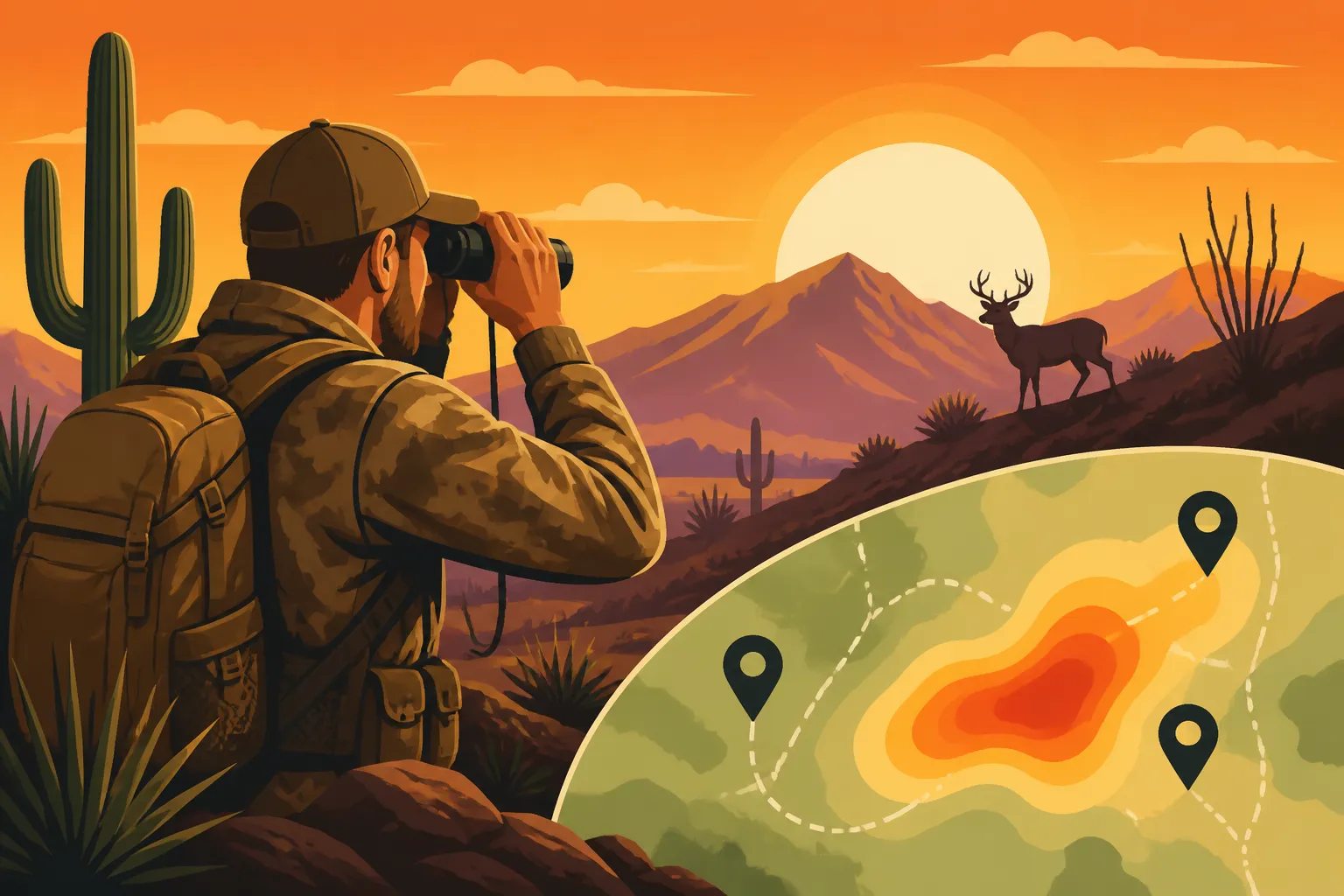
In today's hunting world, digital scouting tools like onX Hunt are absolutely indispensable for finding low-pressure ground. Gone are the days of relying solely on paper maps and vague descriptions. With these powerful apps, you can dissect an entire unit from the comfort of your home. Start by zooming in on your unit and toggle the public/private land layers. Look for areas of public land that are "landlocked" or have very limited road access. These spots, often requiring a longer hike, are prime candidates for reduced pressure. Using onX Layers for Arizona Public Land can help you visualize this.
Next, pay close attention to topography. Look for steep, broken country, deep canyons, or dense timber blocks that deter casual hunters. These natural barriers act as "hunter filters." Most people won't venture far into such terrain, especially with a heavy pack on opening morning. Identify potential travel corridors, pinch points, and bedding areas within these difficult-to-access zones. Use the terrain analysis tools to understand elevation changes and potential routes you could take to get into these areas. Consider satellite imagery to spot subtle changes in vegetation, water sources, or old logging roads that might not appear on traditional maps. The goal is to find the hardest-to-reach pockets that still offer suitable habitat for your target species.
Furthermore, these tools allow you to identify potential entry and exit points that aren't obvious. Maybe there's a small pull-off on a less-traveled forest road that requires a two-mile hike along a ridge to get to a phenomenal glassing point. Or perhaps an old, overgrown two-track that ends in a wilderness boundary, leading to vast, roadless country. Mark these waypoints, measure distances, and visualize your approach. The more remote and challenging the access appears on the map, the higher the likelihood of finding solitude. Reading a Unit Before You Ever Walk It is about leveraging these digital advantages to their fullest.
Leveraging Draw Odds and Hunt Success Data
While digital maps show you the "where," draw odds and hunt success data, often available through platforms like GoHunt, help you understand the "who" and the "how many." This information is vital for selecting units or hunt codes that might see less overall pressure. Instead of just looking at harvest rates, delve deeper into the number of applicants per tag for specific hunt codes. Units with very low draw odds, while appealing for trophy potential, often attract the most dedicated (and numerous) hunters who have accumulated many bonus points. Conversely, units with slightly higher draw odds, or those with less "glamorous" reputations, might have fewer overall hunters, even if the success rates are respectable.
Analyze the hunt success data for specific units and hunt types. High success rates are great, but if they come in units with very high hunter density, that success might be concentrated in specific, highly pressured areas. Look for units that consistently have moderate success rates but perhaps fewer hunters applying. This suggests a more dispersed hunting population and potentially more opportunities for solitude. For example, a unit with a 20% success rate and 100 hunters might feel less crowded than a unit with a 30% success rate and 500 hunters. Where Arizona Publishes Hunt Success Data can be a treasure trove of information, and learning how to interpret it beyond the surface level is a powerful scouting advantage.
Another angle is to look at different hunt types. Archery seasons, especially over-the-counter options for species like deer, often cover large areas and span multiple months, which can spread out pressure. However, opening weekend for archery can still be packed in accessible areas. Rifle hunts, being shorter and generally higher success, tend to concentrate hunters even more. Consider muzzleloader seasons, which often fall between archery and general rifle, sometimes offering a sweet spot for reduced pressure, especially in areas where muzzleloader hunting is perceived as more challenging. Understanding these trends, often published by Arizona Game and Fish, can guide you towards units or hunt codes that naturally have fewer participants.
Physical Reconnaissance and Local Intel
While digital tools are powerful, nothing beats boots on the ground. A scouting trip a few weeks or months before the season can confirm your digital findings and reveal nuances that maps simply can't capture. Walk those remote trails, check out those "landlocked" public parcels, and assess the true difficulty of the terrain. Is that steep canyon passable? Is that old two-track actually accessible by vehicle, or has it been washed out? This first-hand knowledge is invaluable. You might discover an unexpected water source, fresh sign, or a perfect bedding area that no map could show. Scouting an Arizona Unit Before the February Deadline isn't just for drawing tags, it's for finding those secret spots.
Talk to locals if you can. Ranchers, forestry workers, or residents in small towns near your hunting unit often have an intimate knowledge of game movement and hunter behavior. They might casually mention a particular canyon that "always holds elk" but is "a bear to get into," or a corner of the forest that "nobody ever hunts." These tidbits of information can be gold. Be respectful, don't demand information, and offer to share some of your own general observations (without giving away your exact spots, of course). Building a good rapport can open doors to insights you won't find anywhere else.
Finally, observing existing pressure during your scouting trips can be illuminating. If you see numerous camps, trail cameras, or fresh boot prints in areas you considered "remote" during the off-season, it’s a strong indicator that those spots will be even more crowded on opening day. Adjust your plans accordingly, pushing even further into the truly difficult terrain. Sometimes, the most valuable scouting trip isn’t finding a spot, but ruling one out because of obvious pre-season pressure.
Tactics for Escaping the Crowds on Opening Weekend
Once you've done your homework and identified potential low-pressure areas, the next step is executing your plan on opening weekend. This often involves a willingness to work harder and think differently than the average hunter.
The Art of the Deep Walk-In
This is perhaps the most reliable method for finding solitude: simply walk further than everyone else. Most hunters operate within a mile or two of a road or major trail. By committing to a deep walk-in—three, four, five miles or more into true wilderness—you drastically reduce the number of people you'll encounter. This often means leaving the main roads and popular trails behind and forging your own path, often through rugged, untracked country. You'll need to be physically fit and prepared for an all-day affair, potentially with a heavy pack if you get lucky.
Packing for a deep walk-in requires careful consideration. You'll need reliable navigation tools, plenty of water (especially in Arizona's dry climate), emergency supplies, and gear that supports sustained effort in rough terrain. Water You Must Carry on a Day Hunt cannot be overstressed in the Arizona desert. Lightweight, durable boots are essential for handling the rocky, thorny landscape. Choosing Boots for Rocky Desert Ground is a good read. The reward for this extra effort is often unpressured game that is behaving more naturally, offering better opportunities. This strategy inherently links to the idea of Packing an Elk Out of Rim Country Alone if you're targeting big game in remote areas, as the further you go in, the harder the pack out will be. Plan for the hardest part of the hunt, not just the easiest.
When planning your deep walk-in, consider establishing a base camp in an accessible but quiet spot, then making daily excursions into the deeper country. Alternatively, for even more solitude, consider a spike camp. Hiking in with a minimalist camp on your back allows you to be in prime hunting territory at first light, bypassing the morning rush from distant road access. This means less wasted travel time and more productive hunting hours in unpressured areas.
Targeting Overlooked Terrain and Habitat
Sometimes, it's not just about distance from a road, but about hunting areas that other hunters simply overlook or dismiss. This often involves unconventional terrain or habitat types. For instance, in an area known for its open glassing opportunities, most hunters will be on the prominent ridges and hillsides. What about the dense, brushy canyons that offer little visibility but provide perfect bedding and security cover? While harder to hunt, these spots are often overlooked and can hold significant numbers of game, especially after initial pressure.
Look for small, isolated pockets of ideal habitat surrounded by less appealing terrain. A small stand of ponderosa pines in a sea of juniper, a hidden spring in a dry wash, or a bench on a steep slope that's just too awkward to access from above or below – these are the places where animals retreat. Use your digital maps to identify these anomalies. onX Hunt can show you vegetation changes and topo lines that highlight these features. Don't be afraid to hunt slowly through thick stuff where shots are close and visibility is limited. This is often where the unpressured animals will be hiding, especially if they've been bumped from more open areas.
Consider hunting during the middle of the day. Many hunters focus heavily on first light and last light, returning to camp or their vehicles during the midday slump. This can be a perfect time to be actively hunting or stalking in those overlooked areas. Animals still need to move, feed, and water, and with fewer human disturbances, they might become more active in places they would avoid at dawn or dusk when pressure is highest.
Adapting to Pressure During the Hunt
Even with the best pre-season planning, you might encounter unexpected pressure on opening weekend. The ability to adapt on the fly is crucial. If you arrive at your chosen trailhead to find it packed, don't panic or give up. Instead, have a backup plan. This might mean adjusting your entry point to a different, less desirable, but quieter spot, or pushing even further into the wilderness from your original access point.
Listen to the landscape. If you hear constant shooting in a particular drainage, that's a clear signal to shift your focus elsewhere. Animals will be on the move, likely heading away from the noise. Use this information to predict where they might go for safety. They'll generally move to thicker cover, higher elevations, or into canyons where human presence is less frequent. Sometimes, just changing your approach by a few degrees can put you into a different, less-pressured micro-habitat.
Don't be afraid to change units entirely if the pressure is overwhelming and your backup plans aren't working. While not ideal, having a secondary unit or hunt code in mind, especially for species with over-the-counter tags, can save your opening weekend. Remember, the goal is a productive, enjoyable hunt, and sometimes that means abandoning a "hot" spot for a quieter one. Planning a DIY Public Land Hunt in Arizona often involves being flexible and ready to pivot.
Practical Considerations for Hunting Low-Pressure Areas
Hunting in remote, low-pressure areas comes with its own set of practical challenges and demands. Being prepared for these realities is just as important as finding the spots themselves.
Gear for Off-the-Beaten-Path Hunts
When you venture far from roads and other hunters, your gear becomes your lifeline. Reliability and functionality are paramount. You’ll need a durable, well-fitting backpack capable of carrying all your essentials, plus game meat if you’re successful. Invest in quality boots that can handle Arizona's notoriously rugged, rocky, and often thorny terrain. A good pair of gaiters can also save your shins from countless scratches. Choosing Boots for Rocky Desert Ground emphasizes this.
Navigation tools are non-negotiable. While your phone with onX Hunt is a primary tool, always carry a backup. A dedicated GPS unit or a traditional map and compass (and knowing how to use them) could save your life if your electronics fail. Batteries, chargers, and power banks are also critical. Given Arizona's climate, hydration is key. Carry more water than you think you’ll need, or understand how to safely filter water from natural sources. Water You Must Carry on a Day Hunt is a fundamental principle.
Other essential items include a first-aid kit specifically designed for wilderness use, a headlamp with extra batteries, fire-starting materials, a signaling device (whistle or satellite messenger), and emergency shelter. Remember, in truly remote areas, help can be hours or even a full day away. Being self-sufficient is not just a good idea; it's a necessity. This also extends to game recovery gear, like a sharp knife, game bags, and perhaps a small saw, knowing that if you harvest an animal in a remote spot, you’re responsible for getting it out.
Safety and Contingency Planning
Hunting in secluded spots inherently carries increased risks. Always let someone know exactly where you are going, your planned route, and when you expect to return. Provide them with maps or GPS coordinates of your intended hunting area and any emergency contact information. A satellite messenger or personal locator beacon (PLB) is a wise investment for hunters venturing deep into the backcountry, allowing you to send messages or an SOS even without cell service.
Physical conditioning is also a major safety consideration. Long hikes over rugged terrain with a heavy pack are physically demanding. Be honest with yourself about your fitness level and prepare accordingly. Dehydration, heat exhaustion (especially during early seasons), and injuries from falls are real dangers. Knowing basic first aid and how to treat common wilderness ailments can make a huge difference.
Have a contingency plan for unexpected weather. Arizona's weather can be unpredictable, with sudden monsoon storms, flash floods in washes, or unexpected cold snaps at higher elevations. Carry appropriate layers of clothing and rain gear, even if the forecast looks clear. Also, plan for mechanical failures if you’re driving into remote areas; a spare tire, repair kit, and emergency supplies for your vehicle are essential.
Ethical Hunting in Secluded Spots
Finally, pursuing game in low-pressure areas also means upholding the highest ethical standards. Just because you're alone doesn't mean you're free from your responsibilities as a hunter. This includes strict adherence to fair chase principles, proper shot placement, and diligent game recovery. In remote areas, tracking a wounded animal can be even more challenging, and losing an animal is a far greater tragedy when you’ve gone to such lengths to find it.
Ensure you understand and follow all tagging and reporting requirements, even when far from civilization. How Soon You Must Tag a Downed Animal is a regulation that applies everywhere. Field dressing and meat care are crucial, especially in Arizona's heat. Knowing how to efficiently quarter an animal and cool the meat will preserve your harvest, often miles from a cooler or vehicle. Remember, the effort you put into finding these low-pressure spots should be matched by your commitment to a clean, ethical hunt from start to finish. Leave no trace of your presence, ensuring these remote areas remain wild and pristine for future generations, and for the game that calls them home.
| Strategy | Description | Pros | Cons |
|---|---|---|---|
| Deep Walk-In | Hike several miles beyond common access points, into rugged terrain. | High chance of solitude, unpressured game, rewarding experience. | Physically demanding, requires extensive planning, difficult game recovery. |
| Overlooked Terrain | Focus on dense cover, steep canyons, or small, isolated habitat pockets typically avoided by others. | Finds hidden game, less competition in specific micro-habitats. | Difficult to navigate, limited visibility, slower hunting pace. |
| Digital Scouting | Use mapping apps (e.g., onX Hunt) to identify remote public land, analyze topography, and find hidden access. | Efficient pre-hunt planning, reveals hidden access and habitat. | Requires learning software, can miss ground-level nuances. |
| Data Analysis | Consult draw odds and success rates (e.g., GoHunt) to identify less popular units or hunt codes. | Helps select units with inherently lower hunter density. | May mean sacrificing some "trophy potential" units. |
| Midday Hunting | Hunt actively during the middle of the day when many hunters are in camp or returning to vehicles. | Capitalizes on reduced pressure, animals may move more freely. | Can be warm in Arizona, animals may still be bedded in thick cover. |
Disclaimer
This article is for general informational purposes only and does not constitute professional advice. Laws, prices and regulations vary by location and change over time. Consult a qualified professional for guidance on your specific situation.