Scouting an Arizona Unit Before the February Deadline
As hunters, we've all been there: staring at the Arizona Game and Fish Department's hunt regulations booklet, feeling a mix of excitement and absolute dread as the February application deadline looms. You’ve got dreams of a monster bull or a trophy antelope, but the sheer number of units and the fear of picking the "wrong" one can be paralyzing, especially when your hard-earned bonus points are on the line. This comprehensive guide is designed to cut through that confusion, giving you a detailed roadmap for scouting an Arizona unit before you ever submit that application, ensuring your choices are rooted in solid strategy, not just wishful thinking.
Why Early Scouting Makes or Breaks Your Arizona Application
The February deadline isn't just another date on the calendar; it's a pivotal moment that determines your entire fall hunting season. For species like elk and antelope, which fall under this particular draw cycle, the decisions you make now will directly impact your opportunities for the year. Rushing an application or applying to units you know nothing about is a common pitfall, and it’s one that many seasoned hunters have regretted. True success starts long before you ever set foot in the field with a tag in hand.
The Critical Nature of Arizona's Draw System
Arizona’s draw system, with its highly sought-after tags and bonus point accumulation, is notoriously competitive. Unlike some states where over-the-counter options abound for prime species, a quality Arizona elk or antelope tag almost always requires going through the draw. This means every application is an investment, not just in terms of the license and application fees, but in the years of loyalty and effort you’ve put into accumulating bonus points. Choosing a unit blindly is akin to throwing those points away, hoping for a miracle. It's a high-stakes game, and understanding the nuances of the system is the first step toward playing it smart. Remember, Arizona runs two draw cycles, February and June, so understanding which species fall into which cycle is crucial for your planning.
Avoiding "Blind" Applications
I’ve heard countless stories, and probably even lived a few myself, of hunters applying for units based purely on a big photo in a magazine or a vague rumor from a buddy. This approach, what I call the "blind application," is a gamble you almost never win. Arizona units are incredibly diverse, from the high-elevation ponderosa forests of the Mogollon Rim to the expansive, open grasslands of pronghorn country. What works for one hunter or one species might be entirely unsuitable for another. Without any prior scouting, you risk drawing a tag for a unit that doesn't fit your hunting style, physical capabilities, or even your expectations of the hunt. Imagine drawing a coveted elk tag only to realize the unit is 90% private land, or the public access is so rugged it requires a professional outfitter you hadn't budgeted for. That's a brutal reality check, and it's entirely preventable with good scouting.
Maximizing Your Bonus Points and Chances
Every time you apply and don't draw, you earn a bonus point, increasing your odds in future draws. It's a long game, and those points are precious. Wasting an application on a unit where you have no realistic chance of drawing, or worse, a unit you wouldn't enjoy hunting even if you did draw, is a disservice to your own patience. Strategic scouting allows you to identify units where your bonus points might actually make a difference, balancing draw odds with hunt quality. It’s about being realistic: are you in it for a trophy, or just a chance to hunt a particular species? Your scouting efforts will help you answer these questions, guiding you toward units that align with your specific goals and maximizing the utility of your hard-earned points. Knowing how to maximize these points, such as through options like Earning an Arizona Point by Applying, is fundamental to long-term success.
Digital Reconnaissance: Your First Step to Unit Selection
Before you even think about putting boots on the ground, the internet is your most powerful scouting tool. In today's hunting world, digital reconnaissance isn't just an option; it's a necessity. It allows you to cover vast amounts of ground from the comfort of your home, narrowing down your options and making your eventual field scouting much more efficient and targeted.
Mapping Software and Satellite Imagery Deep Dive
Modern mapping software has revolutionized the way we scout. Services like Google Earth, BaseMap, and especially GoHunt’s filtering tools and maps, provide an unparalleled view of potential hunting grounds. Start by overlaying public land boundaries, wilderness areas, and private land to immediately assess accessibility. Look for distinct terrain features: ridgelines, canyons, draws, and saddles that could serve as travel corridors or bedding areas. Identify potential water sources like stock tanks, springs, and creeks, which are magnets for game in Arizona’s often-arid landscape. Pay close attention to changes in vegetation—dense timber patches, open grasslands, or areas of thick chaparral—as these indicate different types of habitat preferred by various species. For instance, if you're targeting elk, you’ll be looking for different features than if you're pursuing antelope. Understanding these subtle differences is key to effective e-scouting. A crucial step here is downloading Arizona Unit Boundary Layers to ensure you're looking at the right areas.
Analyzing Historical Hunt Data and Reports
Knowledge is power, and when it comes to Arizona draws, historical data is gold. The Arizona Game and Fish Department publishes draw odds and hunt success reports that are invaluable. Don't just look at the overall success rate; dig deeper. How many applicants did it take to draw a specific unit with X number of points? What were the harvest success rates for different weapon types (archery, rifle, muzzleloader)? While past performance doesn’t guarantee future results, it provides a strong statistical foundation for your application strategy. Tools like those offered by GoHunt often compile and analyze this data in user-friendly formats, making it easier to compare units side-by-side. This allows you to realistically assess your chances of drawing a tag in your preferred units and helps you understand which units are realistic options based on your current bonus point total. I always tell new applicants to focus on Reading an Arizona Hunt Success Report thoroughly before making a decision.
Leveraging Online Forums and Social Groups
While you should always take anecdotal evidence with a grain of salt, online hunting forums and social media groups can be treasure troves of information, especially for localized knowledge. Search for discussions about specific units you're considering. You might find seasoned hunters sharing insights about common elk migration routes, areas with reliable water, or even warnings about difficult access points. Pay attention to recurring themes or consistent recommendations. Be polite and respectful, and don't be afraid to ask specific, well-researched questions. Avoid asking generic questions like "Where's the best unit?" as these often go unanswered or attract unhelpful responses. Instead, ask about specific access roads, water availability in dry years, or how particular units cope with hunting pressure. Sometimes, the most valuable intelligence comes from a brief, casual exchange with someone who has actually hunted the ground you’re looking at.
Key Species for the February Draw and Their Habitats
The February draw is primarily for Arizona elk and antelope, two of the state's most coveted big game animals. Each species has unique habitat preferences and behaviors that dictate where you should focus your scouting efforts. Understanding these differences is paramount to selecting the right unit.
Focusing on Arizona Elk and Antelope Units
When the February deadline rolls around, most hunters are dreaming of either bugling bulls or blazing-fast pronghorn. These two species, while both magnificent, require vastly different scouting approaches. For elk, you're often looking at higher elevation timbered country, like the vast expanses of the Mogollon Rim or the White Mountains. These areas provide the necessary forage, cover, and water for large herds. Your e-scouting should focus on identifying areas with a mosaic of thick timber for bedding, open parks or meadows for feeding, and plenty of north-facing slopes which hold moisture and cooler temperatures. Water sources, especially during early seasons, are critical.
Antelope, on the other hand, are creatures of the open grassland. Their habitat tends to be flatter, more expansive, with scattered shrubs and bushes. When scouting for pronghorn, you're looking for vast, unbroken plains, often with good visibility for their incredible eyesight. Water sources are still vital, but antelope can often travel further to them than elk. Focus on areas with gentle rolling hills that might offer some cover for an approach, or isolated patches of taller brush where they might bed down. Knowing the specific characteristics of Arizona Elk on the Rim, White Mountains and Kaibab, or where Pronghorn on Arizona's Grasslands roam, will heavily influence your unit choices.
Understanding Deer and Bighorn Habits for Future Draws
While deer, sheep, and bison fall under the June application deadline, it's never too early to start learning their habits. If you're out scouting for elk or antelope, keep an eye out for signs of other species. Understanding the unique habitat preferences of mule deer in the northern plateaus or coues deer in the southern sky islands will pay dividends down the road. Similarly, knowing where the elusive desert bighorn sheep inhabit the rugged, arid mountain ranges can inform future application strategies. This early, broad-spectrum reconnaissance helps you build a comprehensive understanding of Arizona's diverse ecosystems and the game they hold, making you a more well-rounded hunter in the long run. It's about building a mental database of where different animals live and how they use the landscape, knowledge that becomes invaluable over years of hunting.
Matching Habitat to Your Hunting Style
This is a critical, often overlooked, aspect of unit selection. Are you a wilderness backpack hunter who thrives on multi-day treks into remote country? Or do you prefer day hunts from a truck camp with easier access? The habitat you're scouting must align with your hunting style and physical capabilities. A unit known for massive trophy bulls might be entirely inaccessible if it requires a 10-mile hike with a steep elevation gain and you're not prepared for that. Conversely, a unit with excellent road access might be overrun with other hunters if you prefer solitude. Use your scouting, both digital and on-the-ground, to assess not just the game potential, but the "huntability" of a unit for you. Think about factors like terrain difficulty, elevation, water availability, and potential hunting pressure. Don't fall into the trap of picking a "dream unit" that turns into a nightmare because it doesn't match your personal hunting preferences.
Navigating Unit Boundaries and Public Land Access
Arizona's land ownership can be a complex patchwork of public, private, state trust, and tribal lands. Successfully scouting a unit means not only finding game but understanding precisely where you can legally access and hunt. Missteps here can lead to frustrating encounters or, worse, legal trouble.
Deciphering Game Management Unit Boundaries
First things first: you need to know how Arizona numbers its Game Management Units. These units are the foundation of all draw applications and regulations. While digital maps like those found on GoHunt or the official Arizona Game and Fish website are invaluable, it's also helpful to consult the official hunt regulations booklet for a detailed map and description of each unit's boundaries. These boundaries often follow natural features like rivers, mountain ranges, or established roads, but they can also cut across arbitrary lines. Pay close attention to these descriptions to avoid inadvertently crossing into an adjacent unit, especially if you have a tag for a specific area. Understanding these invisible lines is just as important as knowing the lay of the land, as drawing a tag for Unit 23 doesn't do you much good if you accidentally spend your hunt in Unit 22.
Understanding Arizona State Trust Land Requirements
Arizona has a significant amount of State Trust Land, often interspersed with BLM and National Forest ground. This land is not the same as federal public land. To hunt State Trust Land, your valid hunting license generally acts as your permit. However, there are nuances. For example, some areas might have active grazing leases, and while you have the right to hunt, lessees often have priority, and you must respect their operations. It’s critical to understand that your hunting license serves as your Arizona State Trust Land Needs a Permit, and Your License Counts for hunting purposes, but separate recreational permits may be required for other activities like camping. Always be mindful of active private operations on this land and avoid interfering with them. Respecting fences, gates, and private property is key to maintaining access for all hunters.
Identifying Public Access Points and Landlocked Areas
One of the biggest frustrations in scouting can be identifying prime habitat only to discover it’s completely landlocked by private property or inaccessible terrain. This is where your digital maps truly shine. Use layers that clearly distinguish between federal public lands (BLM and National Forests), State Trust Land, and private holdings. Look for established roads, easements, or foot trails that provide legal access to otherwise inaccessible public parcels. Don’t assume a faint two-track on a satellite image is a public road; verify its status. Sometimes, a seemingly perfect pocket of public land is surrounded by private ranches, making it effectively unhuntable without landowner permission. Identifying these potential access issues early in your scouting process will save you countless hours of frustration and wasted effort. Remember, BLM and Forest Ground Across Arizona Needs No Permit for general hunting, but access points can be tricky.
On-the-Ground Scouting: Making the Most of Limited Time
While digital scouting is powerful, nothing replaces boots on the ground. However, you often have limited time before the February deadline, so maximizing the efficiency of your field trips is essential. This isn't about finding a specific animal; it's about confirming your digital findings and getting a feel for the unit's "personality."
Timing Your Pre-Deadline Field Trips
The February deadline means you’re likely scouting in late fall or early winter. This can be a fantastic time for scouting, especially for elk, as they may still be in their post-rut patterns, and some winter range migrations might be starting. Snow cover, if present, can reveal game trails, tracks, and bedding areas more clearly. For antelope, the open country can be easier to glass without the lush summer vegetation. However, be mindful of weather. Arizona winters can be mild in the desert but harsh in the high country, with significant snowfalls that can make roads impassable. If you're scouting a high-country elk unit, confirm road accessibility before you head out. A quick trip to a lower elevation unit might be more feasible than battling winter conditions in the pines. The goal is to get a realistic feel for the terrain, vegetation, and potential travel patterns during a season that somewhat mimics potential hunting conditions.
What to Look For: Sign, Water, and Cover
When you're out there, you're not just sight-seeing; you're gathering intel. Your primary objectives are to confirm your e-scouting findings and discover things you couldn’t see on a map. Look for fresh tracks, droppings, rubs, and active game trails. These tell you where animals are moving and feeding. Identify critical water sources—seeps, springs, stock tanks, and intermittent creeks—and note their condition. Are they actively being used? Are there signs of game around them? Observe the types of cover available: dense stands of juniper, thick oak brush, or scattered ponderosa pines. How would an animal use this cover for bedding or escape? Pay attention to prevailing wind patterns in canyons and over ridges, as this will be vital during the actual hunt. Get a sense of the scale of the landscape; what looks like a small hill on a map can be a brutal climb in person. This firsthand experience of Reading a Unit Before You Ever Walk It is invaluable.
The Importance of Physical Fitness for Arizona Terrain
Arizona hunting, especially for elk and even some antelope units, can be incredibly demanding physically. The terrain is often steep, rocky, and unforgiving, and elevations can range from 3,000 feet in the desert to over 10,000 feet in the mountains. Your scouting trips are not just about finding game sign; they're also about assessing your own physical readiness for the unit you're considering. Can you comfortably hike those steep canyon walls? Can you cover the vast distances required to find antelope? If your scouting trip leaves you winded and sore, it’s a good indication that you either need to intensify your physical training or reconsider applying for that particular unit. Don't underestimate the physical toll of hunting in Arizona's diverse and often challenging landscapes. The better shape you are in, the more ground you can cover, and the more enjoyable and successful your hunt will ultimately be.
Essential Scouting Tools and Modern Technology
Modern technology has transformed the way we scout. While the basics like good boots and optics remain timeless, integrating new tools can significantly enhance your pre-deadline reconnaissance efforts.
GPS Devices and Offline Maps
A reliable GPS device or a smartphone app with offline mapping capabilities is non-negotiable for scouting in Arizona. Cell service can be spotty to non-existent in many prime hunting units, so relying solely on streaming maps is a recipe for getting lost. Before you head out, download detailed topographic maps and satellite imagery of your target units. Mark waypoints for potential bedding areas, water sources, key ridges, and access roads you identified during your digital scouting. These devices allow you to track your movements, measure distances, and precisely locate points of interest, ensuring you can navigate confidently and accurately in the field. GoHunt's mobile app, for instance, offers robust offline mapping features, allowing you to carry all your compiled research right in your pocket, even in the deepest backcountry.
Optics for Long-Range Observation
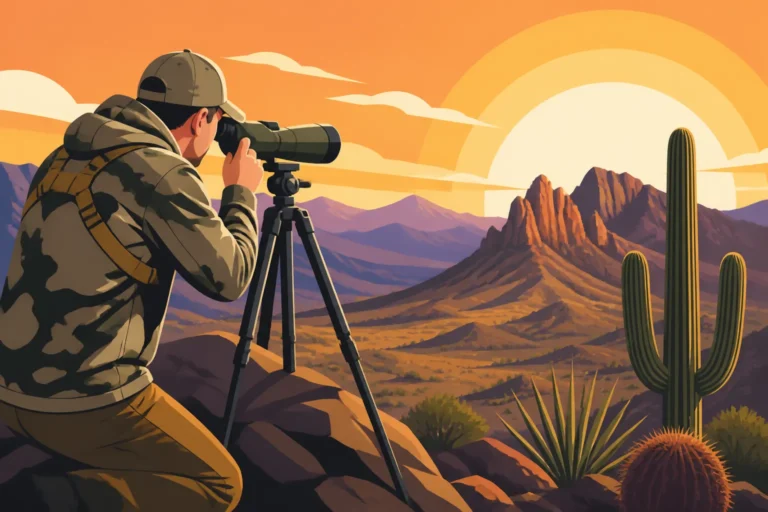
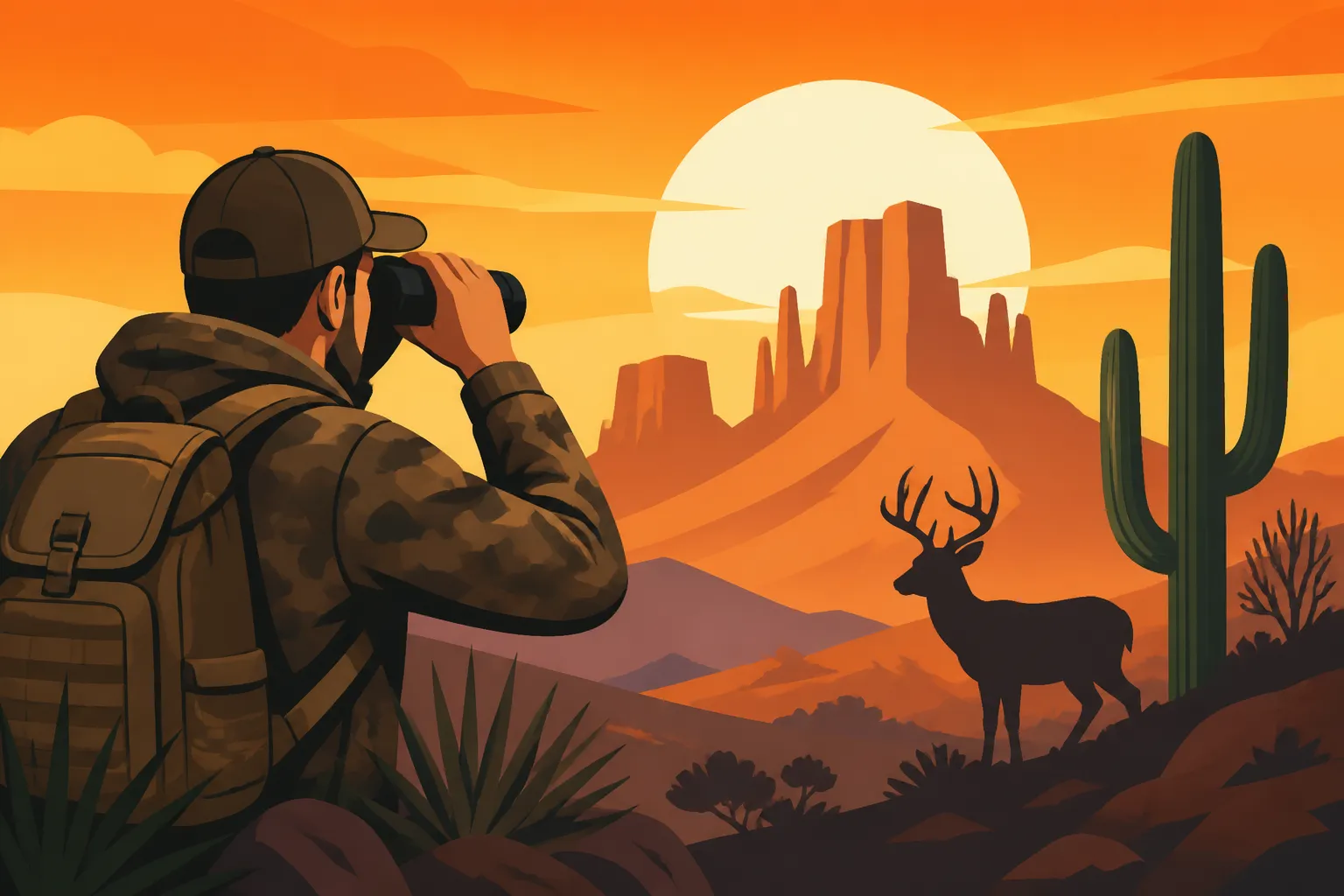
Arizona is a "glassing" state. The vast, open landscapes and steep canyon country demand quality optics for effective scouting. A good pair of 10x binoculars is essential for general observation, but consider stepping up to a spotting scope (20-60x or even 27-80x) for serious long-range work, especially for coues deer or antelope. When scouting, position yourself on high points that offer expansive views of drainages, benches, and open parks. Systematically glass these areas, looking for any movement, or even just shapes that don't quite blend with the natural surroundings. Early mornings and late evenings are prime times, as animals are often more active. Investing in a sturdy tripod for your spotting scope is also a game-changer, as it reduces fatigue and allows for much more stable and prolonged observation, revealing details you might miss freehand.
Trail Cameras for Pre-Season Intelligence
While regulations regarding trail camera use for hunting vary and are subject to change, for scouting purposes, they can be a fantastic way to gather intelligence without constant human presence. If permitted in your chosen unit for scouting, placing trail cameras on game trails leading to water, mineral licks, or feeding areas can give you insights into game presence, movement patterns, and even buck or bull quality. This data, collected passively over weeks or months, can be invaluable for confirming your assumptions about a unit. However, always check the current Arizona Game and Fish Department regulations regarding trail camera use before deploying them, as rules can be quite specific, especially concerning big game. For example, some states restrict live-feed cameras. Make sure you are always in compliance to avoid issues.
Interpreting Wildlife Sign and Habitat Features
Finding physical evidence of game is the whole point of on-the-ground scouting. But merely seeing tracks isn't enough; you need to know how to interpret what you're seeing to build a clearer picture of the unit's potential.
Reading Tracks, Rubs, and Scrapes
When you stumble upon animal sign, don't just note its presence; try to read the story it tells. Fresh tracks indicate recent activity, but their size and depth can also hint at the size and weight of the animal. Muddy tracks in a water source can tell you if animals are watering regularly. For elk, look for rubs on trees—scars left by bulls polishing their antlers and leaving scent. The height and diameter of the rub can give you an idea of the bull's size. Scrapes, particularly for deer, are patches of ground cleared by bucks and scented for communication. These signs tell you not just that animals are in the area, but when they were there and why. Are the rubs fresh from the current year, or old and weathered? Are the tracks leading to a specific type of forage or cover? Every piece of sign is a puzzle piece.
Locating Key Water Sources in Arid Units
In Arizona, water is life, especially for big game. During your scouting, make it a priority to locate every potential water source in your target area. This includes natural springs, seeps, rain-filled potholes, and human-made stock tanks or wildlife waters. Animals will often concentrate around these vital resources, particularly during dry periods or early seasons. Note the freshness of tracks around water, and observe if the area around the water source offers good cover or security for animals. Sometimes, the most important water isn't obvious; it might be a small, hidden seep on a north-facing slope. Understanding where these crucial hydration points are and how animals access them will be a game-changer when it comes time to hunt.
Understanding Escape Routes and Bedding Areas
Animals, particularly trophy animals, are masters of self-preservation. They know their escape routes and prefer bedding areas that offer security and an advantage. When scouting, try to think like an elk or an antelope. Where would you go if pressured? Look for thick timbered ridges with good thermal cover for elk, often on north-facing slopes where the cooler air settles. For antelope, this might be a subtle rise in the terrain that allows them to see for miles in all directions, or a small patch of thicker brush that breaks up their outline. Identify natural funnels, saddles, or benches that animals might use to travel between feeding and bedding areas, or to escape perceived threats. These strategic locations are often prime ambush points during the actual hunt.
Making Your Final Unit Decision for the February Deadline
After all that digital research and field scouting, it's time to put it all together and make that crucial decision for the February draw. This isn't just about statistics; it's about aligning your aspirations with realistic expectations and available resources.
Weighing Draw Odds Against Unit Quality
This is the eternal dilemma for Arizona hunters. Do you apply for a "trophy unit" with abysmal draw odds, hoping to hit the lottery with your accumulated bonus points? Or do you opt for a more accessible unit with higher draw odds but potentially lower trophy quality or higher hunting pressure? There's no single right answer, and it largely depends on your personal goals. If you've been building points for a decade for a once-in-a-lifetime bull, then a low-odds trophy unit might be your play. However, if you're looking for a solid hunting experience with a reasonable chance of success, a unit with moderate odds and consistent harvest data might be a better choice. Utilize resources like GoHunt to compare units, using their "filtering tools" to analyze draw odds, success rates, and trophy potential side-by-side. Remember what happens to Arizona points when you draw; they reset, so make your chosen unit count.
Personal Preferences and Hunting Experience
Your hunting experience and personal preferences play a massive role in selecting the right unit. Are you a seasoned backcountry hunter comfortable with extended trips into rugged terrain, or are you newer to hunting and prefer units with easier access and more amenities? Do you enjoy solitude, or are you okay with sharing the woods with other hunters? The "best" unit isn't just about the biggest animals or the highest success rate; it's the unit that provides you with the most fulfilling and realistic hunting experience. Don't let the hype of a particular unit blind you to its practical realities for your specific situation. This introspection, combined with your thorough scouting, will lead you to a unit that truly fits your capabilities and desires.
The Long-Term Scouting Strategy
Even after you've applied and either drawn a tag or accumulated another bonus point, your scouting efforts shouldn't end. Think of scouting as an ongoing, year-round process. The knowledge you gain from one year's efforts, whether through digital research or field trips, builds upon itself. Even if you don't draw a tag this year, the information you've gathered on specific units for elk, antelope, deer, or bighorn sheep will be invaluable for future applications. Keep notes, mark maps, and continue to learn about new units and species. Many successful Arizona hunters have a mental rolodex of several units they’ve scouted over the years, allowing them to pivot quickly based on draw odds or changing regulations. This continuous learning approach is the mark of a truly dedicated and effective Arizona hunter.
Disclaimer
Please note that hunting regulations, seasons, and land access rules in Arizona are subject to change. Always consult the most current Arizona Game and Fish Department regulations and official land management maps before planning or undertaking any hunting activity. This guide is for informational purposes only and does not constitute legal advice.