How Far to Stalk a Bedded Coues Buck
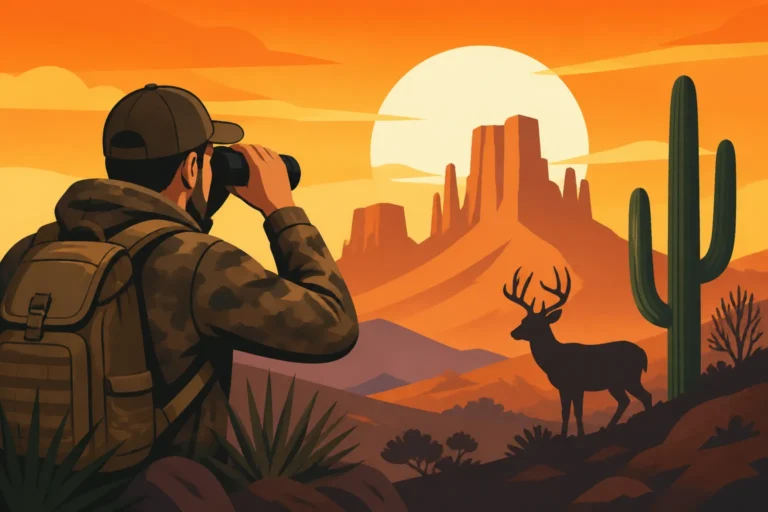
There’s almost nothing more thrilling, and sometimes more frustrating, than spotting a magnificent Coues buck bedded down in the vast Arizona landscape. You've done the hard part – found him! But now comes the true test of a hunter’s skill: closing the distance without being detected. This guide is all about mastering that critical next step, helping you understand how to approach, how close you really need to get, and the subtle art of stalking one of Arizona's most elusive creatures.
Decoding Coues Deer Behavior and Habitat
Before you even think about putting one foot in front of the other, you've got to get inside the head of that bedded Coues buck. These aren't your typical whitetails; they're masters of their rugged, often unforgiving environment, and their bedding habits are finely tuned for survival.
Why Coues Deer Choose Specific Bedding Spots
Coues deer, often called the "gray ghosts" of the desert, don't just flop down anywhere. They are incredibly strategic about where they rest, always with an eye (or ear, or nose) toward safety. Typically, they'll pick a spot that offers a combination of crucial elements: thermal regulation, a commanding vantage point, and a clear escape route. In the scorching Arizona sun, thermal regulation is key, so they often bed in the shade of a mesquite, an oak, or even a large boulder that offers protection from the sun's intense rays.
You'll frequently find them on rocky slopes, nestled into patches of thick oak brush, or perched along the edges of canyons. These spots give them the upper hand; they can see trouble coming from below, while the broken terrain and vegetation make them incredibly difficult to spot from above. Their camouflaged coats, a perfect blend of grays and browns, allow them to melt into their surroundings so effectively that even with a high-powered spotting scope, they can seem to vanish. This makes spotting them in the first place a huge challenge, but it also means they're nearly invisible when you're trying to sneak closer.
The Unpredictable Dance of Wind and Thermals
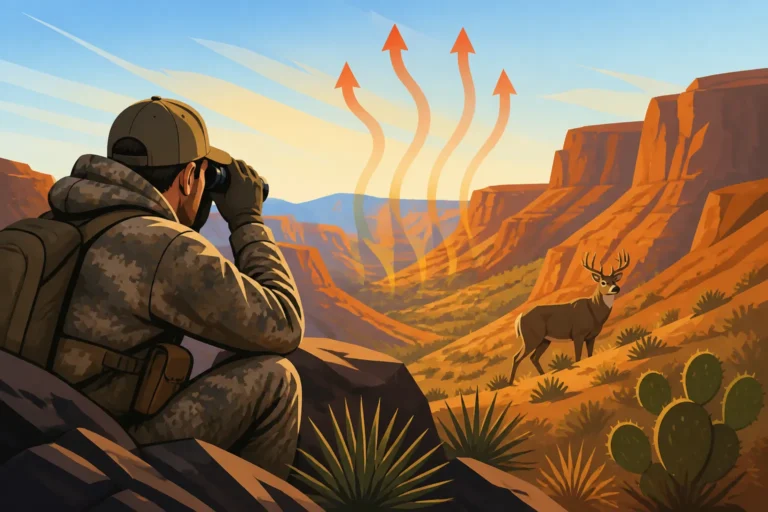
In Arizona, understanding wind and thermals isn't just important; it's absolutely non-negotiable for a successful stalk. The wind is rarely constant here, especially in the canyons and mountains where Coues deer thrive. What might be a steady breeze in the morning can completely reverse direction by afternoon as the sun heats the earth. Thermals, the rising and falling air currents, are particularly tricky. In the mornings, as the ground warms, air rises, carrying your scent uphill. In the evenings, as the air cools, it sinks, carrying your scent downhill.
This means that if you're attempting a stalk on a bedded buck that's positioned above you on a canyon wall, an afternoon approach could easily carry your scent right to him as the thermals start to drop. Conversely, a morning stalk might be ruined if you're below him and the rising thermals betray your presence. Successful hunters become obsessive about checking the wind, often carrying a small squeeze bottle of fine powder or a puff of milkweed fluff, constantly monitoring the slightest shift. This intimate knowledge of how to read wind on a canyon stalk is what truly separates the successful hunters from those who consistently bump deer.
Utilizing Terrain for a Stealthy Approach
The rugged topography of Arizona's Coues country is your best friend when it comes to stalking, but it can also be your worst enemy. Learning to read the terrain for a stalking route is a skill developed over years. Natural features like dry washes, deep draws, and undulating ridges become your highways of concealment. These features allow you to move below the deer's line of sight, using the earth itself as a shield. However, it's crucial to avoid "skylining" yourself, which means inadvertently walking along a ridge crest where your silhouette is clearly visible against the open sky.
Every rise, every dip, every rock outcropping is an opportunity to hide your movement. The type of terrain will dictate how far you can realistically approach. In open, sparse desert, closing the distance becomes an extreme exercise in patience and often requires waiting for the buck to bed behind a larger object. In denser oak or juniper country, you might be able to get much closer, but the noise of moving through that thick vegetation presents its own challenges. Understanding how to use washes and draws to close distance is a fundamental skill that will serve you well in this challenging environment.
The Art of the Stalk: Closing the Distance
You've spotted him, you understand the environment, and now it's time for the truly exciting part: putting yourself in a position for a shot. This phase requires meticulous planning, an understanding of realistic distances, and flawless execution.
Initial Assessment and Crafting Your Approach
After you’ve glassed up that bedded Coues buck, the absolute worst thing you can do is rush. Your first move should be to stop and observe. Pull out your best optics – whether it's a high-powered spotting scope or your trusty binoculars – and spend a good 15-30 minutes, or even longer, meticulously analyzing the buck and its immediate surroundings. What's its exact position? Is it facing towards you, away from you, or quartering? What's the nearest cover to the buck? Are there any clear escape routes for the deer that might impede your stalk or force a hasty move? Equally important, what are your potential shooting lanes from various points along your planned approach?
You also need to evaluate the starting distance. If you're a bowhunter and you're staring at a buck a mile away, the reality is that a successful stalk might be impossible without a major change in the buck's position or a significant amount of time. Sometimes, the best time of day to glass a Sky Island might put you too far to begin a stalk immediately. Tools like GoHunt can be incredibly helpful here. You can mark the buck's exact location on a detailed topo map, then use the satellite imagery and public land layers to plan out potential routes, looking for draws, ridges, or patches of thick vegetation that can offer concealment. This E-scouting an Arizona unit before the season is invaluable, and continues to pay dividends even when you’re boots on the ground. This initial assessment and planning phase is where you decide if a stalk is even feasible and, if so, what your safest, quietest route will be.
The Ideal Stalking Distance for a Shot
This is the million-dollar question: how close do you really need to get to a bedded Coues buck? The answer, as frustrating as it might be, is "it depends." It depends on your weapon, your personal shooting proficiency, and the available cover.
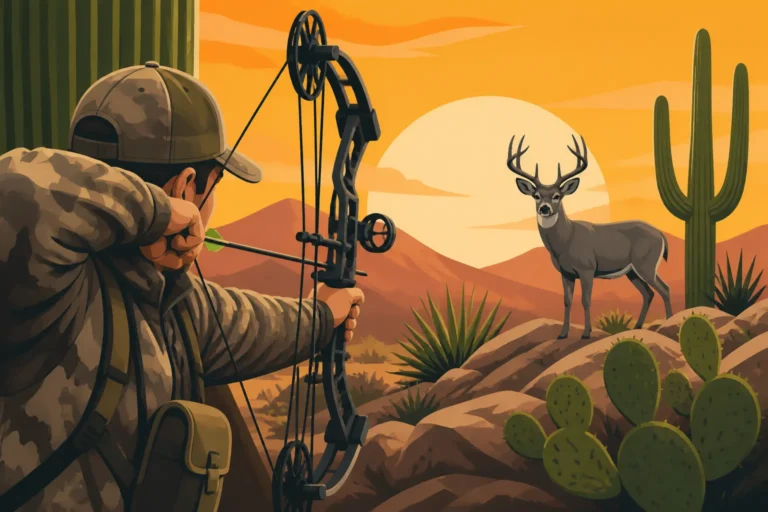
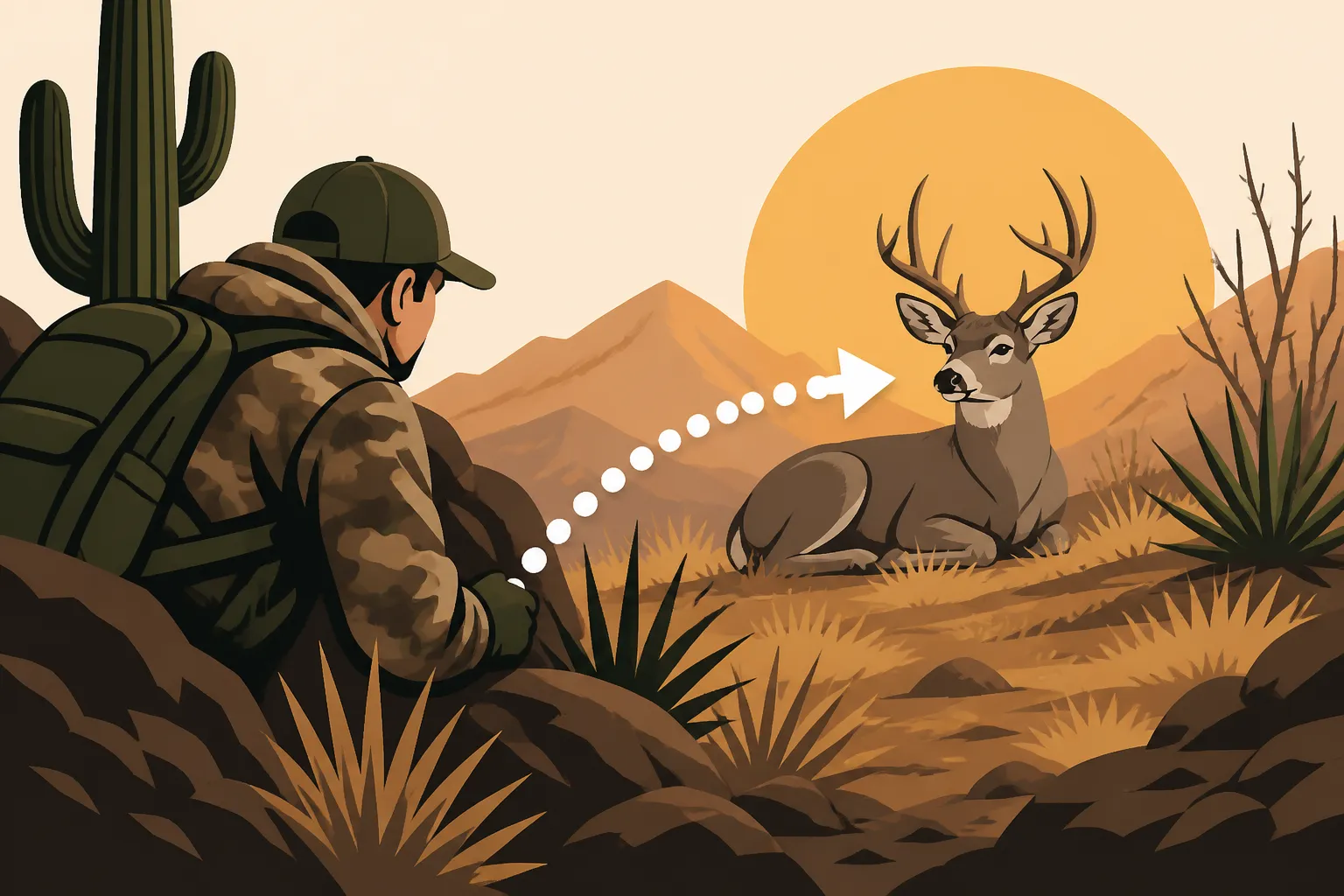
For bowhunters, the goal is typically within 40 yards, and ideally much closer—20 to 30 yards is often the sweet spot. Getting this close to a Coues buck is an incredible feat of stealth and patience. Every rustle of leaves, every misplaced footfall, every shift in wind can blow your entire effort. The challenge lies in that tiny margin for error; a Coues buck's acute senses make those last few yards feel like miles. You might get to 60 yards easily, but those final 20 can take hours, or simply never materialize.
For rifle hunters, the "ideal" distance is much more flexible, but aiming for within 200-300 yards is generally a solid target. While modern rifles and optics are capable of ethical shots much further out, reducing the distance minimizes variables like wind drift, bullet drop, and human error. If the terrain offers good, consistent cover, pushing to 100-150 yards can give you an even more confident shot. But if the cover runs out, or the wind is swirling, 300 yards with a solid rest might be your best, safest option. The key is to get as close as possible without being detected, and then secure a steady shooting position. This often means finding a compromise between concealment and a clear shot lane.
| Weapon Type | Target Stalking Distance | Primary Challenge | Key Considerations |
|---|---|---|---|
| Bow | 20-40 yards | Extreme stealth, scent, noise | Maximize available cover, meticulous movement, wait for opportune moment |
| Rifle | 100-300 yards | Wind, bullet drop, clear shot lane | Secure solid rest (shooting sticks or bipod on rocky ground), minimize variables |
Executing the Stalk: The Art of Slow Motion
Once your route is planned, it's time to become one with the environment. This is where "slow and steady wins the race" is not just a cliché, but a mantra for survival. You need to move with extreme slowness and deliberate precision. Think of it less like walking and more like a ballet of quiet movements. Each step should be evaluated before your weight is committed. Use the "heel-to-toe" method, feeling the ground with the front of your foot before gently lowering your heel, checking for any crunching leaves, loose rocks, or snapping twigs. Even the smallest sound can alert a wary Coues.
Don't be afraid to pause for minutes at a time, sometimes even longer, especially when you're nearing what you perceive to be your shooting range. Use these natural pauses to re-evaluate the buck – has it shifted? Is it looking in your direction? Are its ears or tail twitching in alarm? Reconfirm your wind, and rescan the terrain for any last-minute adjustments. Some seasoned Coues hunters practice the "one step and stop" method, where they literally move one foot, then freeze, observe, and listen before taking the next step. Moving through dense vegetation like prickly pear, catclaw, or wait-a-minute bush presents a unique challenge, demanding even greater care to avoid noise and painful punctures. If the buck suddenly looks your way, freeze absolutely motionless. Even a slight twitch can give you away. This discipline and patience are critical to getting how close a bowhunter needs to get on Coues.
Avoiding Common Stalking Pitfalls
Every hunter, no matter how experienced, has blown a stalk. It's part of the game. But recognizing the most common mistakes can help you minimize your chances of making them yourself.
The Peril of Rushing the Stalk
Adrenaline is a powerful force, and when you finally have that Coues buck in your sights, the urge to close the distance quickly can be almost overwhelming. However, this is arguably the biggest mistake a hunter can make. Rushing a stalk is a surefire way to be detected. Your steps become heavier, your movements less deliberate, and you're more likely to miss subtle signs of danger or wind shifts. These deer are incredibly attuned to their surroundings, and any sudden movement or unexplained noise will send them bounding away.
Patience isn't just a virtue here; it's a strategic weapon. Sometimes, the best course of action is to wait. Wait for the buck to stand up and reposition itself, perhaps moving behind better cover. Wait for a cloud to obscure the sun, casting a shadow that allows you to move. Wait for the wind to stabilize. It might mean spending hours essentially frozen, barely moving, but that commitment to patience is often what leads to success. Remember, Why Coues Deer Reward Patience Over Movement isn't just a philosophy; it's a proven method.
The Unforgiving Nature of Wind Shifts and Scent
We talked about the wind already, but it bears repeating because it's that critical. Ignoring wind shifts and scent is a guaranteed way to fail. The desert thermals, those invisible currents of rising and falling air, can shift direction rapidly and unpredictably, especially in the canyons and broken country where Coues deer live. You might start your stalk with a perfect crosswind, only to have it swirl moments later and carry your scent directly to the buck.
Always, and I mean always, have a wind checker accessible. Use it constantly, especially as you approach your target range. Even if you don't feel a breeze, thermals are still at play. The "sprinkle test" – lightly tossing fine dust or milkweed seeds into the air – can reveal micro-thermals that your skin can't detect. Beyond wind, personal scent control is vital. Wear scent-eliminating clothing, shower with unscented soap, and store your hunting clothes in a scent-free environment. While no method is foolproof, minimizing your human odor gives you a fighting chance against a deer's hyper-sensitive nose.
The Stealth Challenge: Inadequate Concealment and Noise
Arizona's terrain is often loud. Dry leaves, loose shale, thorny bushes – all conspire to announce your presence. Inadequate concealment and noise are two sides of the same coin when it comes to blowing a stalk. Many hunters focus on their clothing, but true concealment goes beyond camo. It's about using the terrain itself to your advantage, staying below ridge lines, behind large rocks, and within the shadows. Terrain That Hides an Approach in Desert Country is crucial knowledge for any stalker.
Noise, however, is often the ultimate downfall. Think about every piece of gear you carry. Are your zippers silent? Does your backpack have anything rattling around inside? Are your trekking poles clanking? Even the swish of certain fabrics can be detected. Choosing boots for rocky desert ground that are both quiet and offer good traction is key. Practice moving slowly and deliberately, placing each foot carefully to avoid crunching fallen leaves or dislodging rocks. If you’re a bowhunter, drawing your bow must be absolutely silent. If you’re a rifle hunter, loading a round or operating your bolt must be practiced to be done as quietly as possible when the moment arrives.
Post-Stalk Considerations and Ethical Hunting
Making the shot and recovering your animal are the culminating moments of your hunting experience, but the ethical responsibilities continue long after the trigger is pulled.
Making the Shot Count
You've spent hours glassing, planning, and executing a painstaking stalk. Now, you're finally in range, and the buck is broadside, presenting a clean shot. This is the moment to take a deep breath, calm your nerves, and focus completely. Before you even shoulder your weapon, confirm that it's indeed the buck you've been stalking and that it meets any legal requirements for your tag. There's no rush once you're in position.
Secure a steady rest. Whether you’re using shooting sticks or a bipod on rocky ground, or simply bracing against a sturdy tree or rock, stability is paramount for an accurate shot. Wait for the animal to present an ethical shot – broadside or quartering away, avoiding any brush or obstructions. Focus on your aiming point, control your breathing, and execute the shot with precision. A clean, humane kill is the ultimate goal, and every effort should be made to ensure it.
What to Do If the Stalk Fails
Let's be realistic: not every stalk will end in a harvest. In fact, many won't. If the buck spooks and runs, or if you simply can't close the distance effectively, it’s not a failure of character, but a learning opportunity. First, don't immediately give chase. This often results in pushing the deer further and making recovery impossible. Instead, observe its escape route. Did it run over the ridge, into a wash, or up a specific canyon? Make a mental note, or even better, mark it on your GPS or GoHunt app.
Then, objectively re-evaluate what went wrong. Was it the wind? Did you make too much noise? Were you skylined? Learning from these experiences will make you a better hunter next time. Often, the best course of action is to back out quietly, circle wide, and try to relocate the buck later in the day, or even come back to the same general area tomorrow. Sometimes, pulling out means you have a chance to try again.
Respecting the Animal and the Land
After a successful harvest, your ethical responsibilities shift to the care of the animal and the land. In Arizona's often warm climate, especially during early seasons, prompt field dressing in desert heat is crucial to prevent meat spoilage. You must also ensure you meet the mandatory reporting after an Arizona harvest. Understand the meat salvage requirements for big game, which stipulate that all edible portions of the animal must be removed from the field.
Beyond legal requirements, adhere to the principles of Leave No Trace. Pack out everything you pack in, including spent shell casings, trash, and any flagging tape. Treat the landscape with respect, leaving it as pristine as you found it for future generations and wildlife. Our wild places are a privilege to hunt, and we must do our part to preserve them.
Disclaimer
The information provided in this guide is for general informational purposes only and does not constitute legal advice. Hunting regulations, seasons, and requirements can change frequently. It is the responsibility of every hunter to consult the most current Arizona Game and Fish Department regulations and to understand and adhere to all applicable laws before engaging in any hunting activities. Always prioritize safety, ethical hunting practices, and respect for wildlife and the environment.