Reading Fresh Elk Sign in Ponderosa Timber
Few things are more frustrating than spending hours still-hunting through thick Arizona ponderosa, only to realize the "fresh" elk sign you've been meticulously tracking is days old. Elk are masters of their timbered domain, and learning to discern truly fresh activity from mere ghosts of elk past is crucial for anyone hoping to fill a tag. This guide is all about equipping you with the knowledge to read the nuanced language of elk sign, ensuring your time in the woods is spent on hot trails, not cold ones.
Why Ponderosa Presents Unique Tracking Challenges
Hunting in Arizona's vast ponderosa pine forests offers a different set of challenges compared to open plains or even dense, mixed timber. The environment itself often conspires to make elk sign harder to interpret, and understanding these unique factors is your first step to becoming a more effective tracker.
The Deceptive Forest Floor
The ground in a ponderosa forest can be incredibly deceptive. You've got that thick, soft carpet of pine needles and duff that often obscures crisp tracks, especially after a slight breeze or a few hours have passed. Unlike mud or soft soil, which can hold a perfect impression for a long time, the dry, flaky nature of ponderosa duff means tracks quickly lose their sharp edges and definition. It’s not uncommon to see what looks like a good print, only to find the edges are splayed or filled in with loose debris, making it impossible to tell if it was made an hour ago or yesterday morning.
Adding to this difficulty is the sheer volume of fallen branches, logs, and rocky outcrops that elk navigate. They'll step over or around these obstacles, often leaving no discernible track at all for significant stretches. This can lead to a frustrating stop-and-go tracking process, where you pick up a print, lose it, circle, and pick it up again, all while questioning how recent it actually is. It's a stark contrast to the perfect mud tracks you might find around a water source in more arid terrain, and it truly tests your patience and observational skills.
Understanding Elk Behavior in Timber
Elk behavior itself changes when they're living in dense ponderosa timber, and this influences where and how they leave sign. Unlike elk that might spend more time in open meadows, timber elk often have smaller home ranges within the forest, relying on the cover for security. This means they might not travel as far between feeding and bedding areas, but their movements can be more circuitous and less predictable. They use the labyrinth of trees to their advantage, often moving silently and deliberately.
Their choice of travel routes, bedding sites, and feeding areas is heavily influenced by factors like shade, wind, and security cover. They might favor north-facing slopes with thicker timber during warmer parts of the day, leaving less obvious sign in areas where hunters rarely venture. When they do cross more open areas or leave the timber's edge to feed, those brief moments might offer the best opportunities for clear sign. Being aware of these behavioral patterns, and not just looking for sign everywhere, helps you focus your efforts on the most likely spots.
Decoding Fresh Tracks, Trails, and Droppings
When you're sifting through the forest floor, it's those subtle details that separate a truly fresh, hot trail from one that's gone cold. Learning to identify these nuances in tracks, trails, and droppings is like learning the elk's secret language.
Reading the Story in Elk Hoofprints
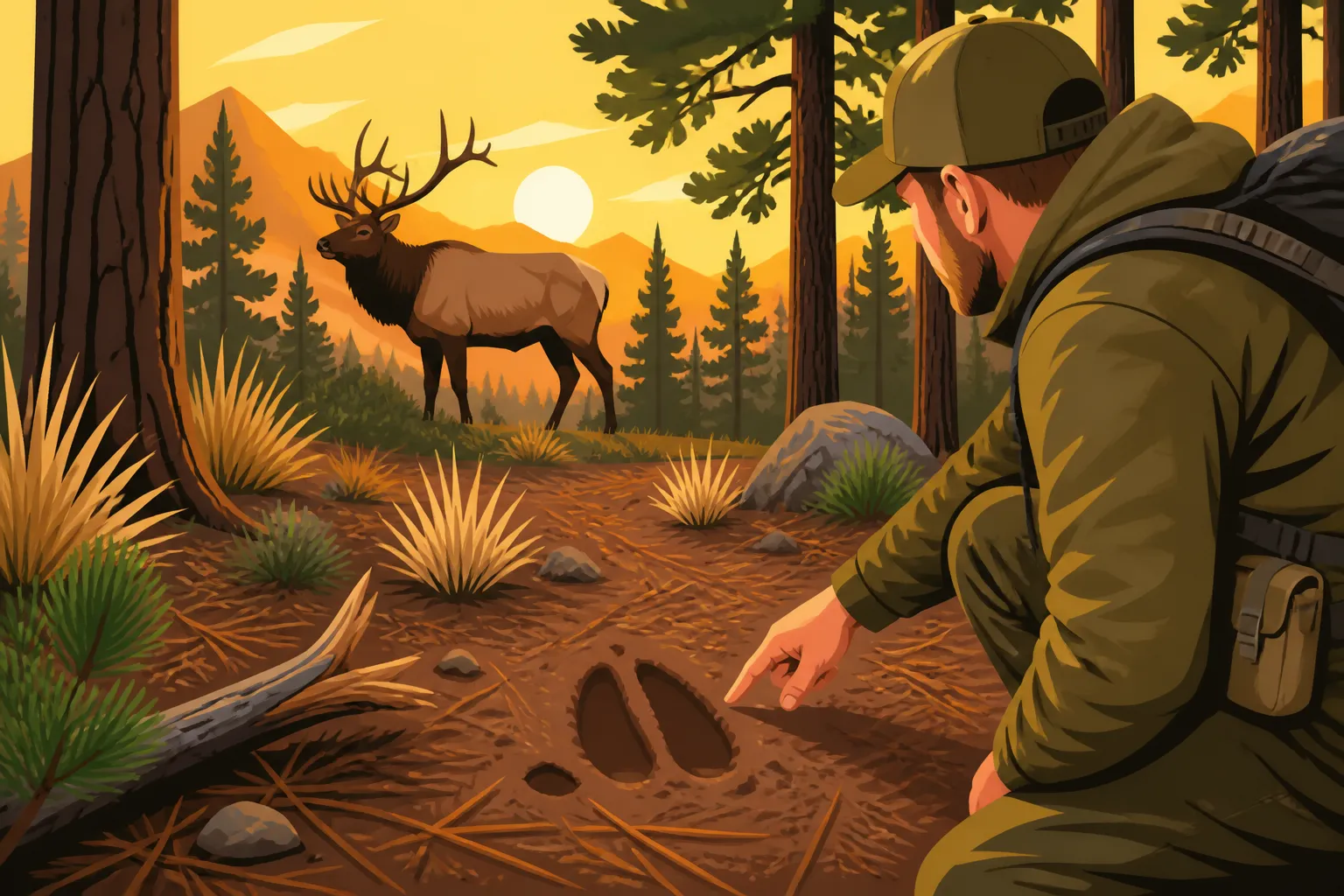
The hoofprint is often the first piece of elk sign we encounter, and knowing how to interpret it is paramount. A truly fresh elk track in ponderosa timber will have sharp, distinct edges, often compressing the pine needles and duff rather than just displacing them. If there’s any moisture in the ground, a fresh track might show a slight sheen or a darker hue where the moisture has been brought to the surface. Look for any loose dirt or needles that have been kicked up on top of the track itself; if the track edges are still perfectly clean and defined, it's a good indicator it was made very recently. As time passes, the edges soften, and any kicked-up debris tends to settle back in, obscuring the detail.
Pay attention to the presence of dew or frost. If you're tracking in the morning and find tracks with dew inside them, but the surrounding ground is already dry, that sign is at least a few hours old. Conversely, if you find tracks with no dew in them, but everything else is damp, those tracks are likely very fresh, made after the dew had dried. Beyond freshness, study the gait. Long, evenly spaced tracks often indicate an elk that's walking calmly. Tracks that are spread further apart, with signs of slipping or deeper impressions, suggest a trotting or running animal – perhaps spooked. You'll also want to distinguish them from deer tracks (smaller, more pointed) or even domestic livestock if you're near private land or grazing allotments. Elk tracks are notably blunt and large, and an adult bull’s print can be significantly wider and deeper than a cow’s.
Identifying Well-Used Game Trails
Elk, like most animals, are creatures of habit. They prefer the path of least resistance when traveling between bedding areas, feeding grounds, and water sources. Well-used game trails in ponderosa timber are like highways, but they're not always obvious. These aren't just faint depressions; look for distinct pathways that have been worn down by repeated use, often exposing mineral soil underneath the layer of pine needles. You'll notice where branches have been snapped at consistent heights, or where the ground is noticeably softer or more packed down than the surrounding forest floor.
The freshest trails will have freshly broken twigs, kicked-up leaves, or dislodged rocks right on the trail itself. If you're seeing a lot of cobwebs spanning the trail or an accumulation of pine needles that haven't been disturbed, it’s an older route or one not currently in heavy use. Also, pay attention to the width of the trail; elk trails tend to be wider and more defined than deer trails, reflecting their larger bodies. These trails often follow natural contours, leading into saddles, across benches, or along the edges of steep draws. They frequently converge near key features like water sources or pinch points in the terrain, which can be identified using mapping tools like GoHunt even before you step foot in the unit. Checking these convergence points for fresh sign can be incredibly productive, as elk funnel through them regularly.
What Droppings Tell You About Elk Activity
Elk droppings are a goldmine of information, offering insights into how recently an animal was in the area, what it's been eating, and even its stress levels. Fresh elk droppings are typically dark, moist, and often have a distinct, somewhat shiny appearance. They'll also feel soft or pliable if you gently poke them with a stick (don't use your bare hands, of course!). As droppings age, they dry out, become dull, turn a lighter color, and will crumble easily. If you find droppings covered in dew or frost, but the rest of the ground is drying, they've been there overnight at least. If they're completely dry and hard, they could be days or even weeks old.
The consistency of the droppings also tells a story. Firm, distinct pellets usually indicate an elk that's been feeding on drier forage, common in late fall or winter. More clumped or 'cow pie' like droppings suggest a diet of lush, green forage, typically found in spring or after monsoon rains. This can help you understand the seasonal patterns of elk in your area and correlate them with their food sources. Finding a large pile of fresh droppings, especially if they're still steaming on a cold morning, is a surefire sign that an elk was very recently in that exact spot, making it an excellent place to slow down and really start hunting.
Rubs, Wallows, and Beds: More Than Just Scratches
Beyond the obvious tracks and droppings, elk leave behind a wealth of other indicators that tell you where they've been and what they're doing. These more subtle signs are often overlooked by hurried hunters, but they can pinpoint exactly where a bull is claiming territory or where a herd is trying to escape the heat.
Interpreting Rubs and Bark Damage
Rubs are a visual testament to a bull's presence and, more importantly, its attitude. During the rut, bulls rub their antlers on trees to mark territory, shed velvet, and release scent. A fresh rub in ponderosa timber is unmistakable: the bark will be freshly shredded, often still damp with sap, and the underlying wood will be a light, raw color. You might even see loose strands of bark still hanging from the tree, not yet dried or weathered. As rubs age, the sap dries, the wood darkens, and the shredded bark becomes brittle and falls away.
The height and diameter of the rub can give you a clue about the size of the bull. Taller rubs on larger trees typically indicate a more mature animal. While deer also rub, their rubs are generally lower, smaller, and less destructive than an elk's. Finding multiple fresh rubs in a concentrated area, especially along a well-used game trail or near a potential bedding area, is a strong indicator that you're in a bull's core territory. This is often an excellent place to consider a calling setup, perhaps attempting to locate a bull with a well-timed locator bugle or some soft cow calling.
Finding and Assessing Wallows
Elk wallows are natural depressions, often near water sources, seeps, or damp areas, where elk roll around in mud and water. They do this for several reasons: to cool off, to coat themselves in mud as an insect repellent, and to deposit scent, especially during the rut. A fresh wallow will be evident by disturbed, wet mud, strong elk odor, and often a scattering of fresh hair caught in the surrounding vegetation or mud. The water might still be murky, and the edges of the wallow will appear recently churned.
Wallows quickly dry out in Arizona's climate, so if the mud is cracked, dry, and no longer smells pungent, the wallow hasn't been used recently. During the rut, wallows become especially important for bulls, as they will urinate and roll in them to spread their scent, making themselves more attractive to cows and challenging to other bulls. Therefore, finding a fresh, active wallow in September or October can be a phenomenal sign that a bull is in the immediate vicinity. These spots are often hotbeds of activity and can be excellent ambush points or starting locations for a stalk.
Locating Fresh Bedding Areas
Elk spend a significant portion of their day bedding, often in thick cover where they feel secure. Finding a fresh bedding area is like hitting the jackpot because it tells you exactly where elk like to rest and hide. Fresh beds will still show a distinct impression in the pine needles and duff, often with scattered hair, particularly during shedding seasons. On a cool morning, a recently vacated bed might even still feel warm to the touch. The area immediately surrounding the bed might also show fresh droppings or signs of light browsing.
Elk often bed on north-facing slopes during warmer weather, seeking cooler temperatures and shade. They'll also choose locations that offer good escape routes and vantage points to detect predators. Look for clusters of beds, indicating a herd, or a single, larger bed, suggesting a lone bull. As beds age, the impression flattens, the hair disperses, and any warmth disappears. Finding fresh beds means you're incredibly close to the elk, making it a time for extreme stealth and careful planning of your next move. Often, elk will bed just a short distance from their feeding areas, allowing for a quick, silent transition when it's time to eat again.
Leveraging Technology and Experience for Success
While reading ground sign is an ancient skill, modern tools can significantly enhance your ability to find elk and interpret their movements in Arizona's ponderosa country. Combining traditional tracking with cutting-edge technology creates a powerful scouting and hunting strategy.
Integrating E-Scouting Platforms Like GoHunt
In today's hunting world, e-scouting is an invaluable first step, and platforms like GoHunt provide a wealth of information from your couch before you ever lace up your boots. You can use these tools to identify potential elk habitat within your chosen unit, marking areas of dark timber, north-facing slopes, prominent saddles, or areas with high concentrations of water sources. Remember, water sources are critical in Arizona, and elk will often leave heavy sign around them. Finding these key features on a map gives you a starting point for your boots-on-the-ground scouting.
Once you're in the field, you can use your GoHunt app to confirm the terrain features you've identified and then focus your sign-reading efforts in those high-percentage areas. For example, if your map shows a steep, dark timbered canyon intersecting a series of benches with known water sources, you'd know to pay extra attention to game trails and fresh rubs along those benches. The app can also help you understand public land boundaries, which is crucial in Arizona where state trust land and private parcels intermingle with national forests. This integration ensures you're not just blindly wandering, but rather targeting areas with a higher probability of holding elk and fresh sign.
The Power of Scent and Sound in Close Quarters
While visual sign is primary, don't underestimate your other senses, especially when you're getting close in thick ponderosa timber. The smell of elk is distinct, often described as a musky, barnyard-like aroma. This smell is most pungent around active wallows, bedding areas, or when a herd has recently passed through. During the rut, a bull’s scent can be incredibly strong, especially if you're downwind. Trust your nose; if you smell elk, they are likely very close, and it’s time to move with extreme caution.
Sound is equally vital. In the quiet of the ponderosa, you can hear elk chirps, cow calls, and even the snapping of twigs long before you see them. Listen for the characteristic sounds of hooves on pine needles, the rustle of bodies moving through brush, or the tell-tale splash of an elk in a wallow. During the rut, the sound of a distant bugle is exhilarating, but even subtle grunts or low mews can indicate nearby animals. Learning to interpret these sounds, and distinguishing them from other forest noises, gives you a significant advantage, especially when the visual sign is sparse or difficult to read in the thick timber. Combining keen observation of ground sign with an active awareness of scent and sound creates a multi-sensory approach that significantly increases your chances of locating those elusive Arizona elk.
Fresh vs. Old Elk Sign Quick Reference
| Sign Type | Characteristics of Fresh Sign | Characteristics of Old Sign | Implication |
|---|---|---|---|
| Tracks | Sharp, defined edges; compressed duff/needles; possible moisture/sheen. | Soft, splayed edges; filled with loose debris; weathered, dull appearance. | Fresh: Elk recently passed, hot trail. Old: Cold trail, move on. |
| Droppings | Dark, moist, shiny; soft/pliable; distinct odor. | Dry, dull, cracked; light in color; crumbles easily; no odor. | Fresh: Elk recently fed/rested here. Old: Days or weeks old. |
| Rubs | Freshly shredded bark; raw, light-colored wood; sap visible; strong scent. | Dry, darkened wood; weathered bark; no sap; faint or no scent. | Fresh: Bull actively marking territory. Old: Past activity. |
| Wallows | Wet, churned mud; strong elk odor; fresh hair; murky water. | Dry, cracked mud; no odor; hair scattered/weathered; clear or no water. | Fresh: Elk recently cooled/scent-marked. Old: Not currently used. |
| Beds | Clear, distinct impression; warm to touch (if recent/cold weather); fresh hair. | Flattened impression; no warmth; hair weathered/sparse. | Fresh: Elk recently rested here. Old: Not currently used. |
| Browse | Ragged, fresh tears on plants; sap visible; vibrant color. | Dry, discolored plant damage; edges weathered/rounded. | Fresh: Elk recently fed. Old: Days old or more. |
| Smell | Strong, musky, 'barnyard' odor in the air or around sign. | No discernible odor. | Fresh: Elk are very close. Old: Elk long gone. |
Disclaimer
Hunting is an inherently dangerous activity. Always prioritize safety, adhere to all local, state, and federal hunting regulations, and respect wildlife and the environment. The information provided in this guide is for informational purposes only and should not be considered a substitute for formal hunter education or professional guidance. Always verify current regulations with the Arizona Game and Fish Department before heading afield.