How the Arizona Bonus Point Pass Allocates Tags
Trying to navigate the Arizona Game and Fish Department's big game draw can feel like deciphering an ancient riddle, especially when you're trying to understand how those coveted tags are actually distributed. It's not just a simple lottery; there's a specific, multi-layered process, and a big part of that is the Bonus Point Pass. This guide will pull back the curtain on this often-misunderstood system, explaining exactly what the Bonus Point Pass is, how it works to allocate tags, and what it means for your chances of drawing a successful hunt.
Demystifying Arizona's Hunting Draw System
Before we can dive deep into the Bonus Point Pass, it’s essential to grasp the fundamental layers of Arizona’s big game draw system. Unlike some states where it's purely a random draw or a preference point system that guarantees a tag after a certain number of points, Arizona uses a hybrid model. This can be confusing for both seasoned hunters and newcomers alike.
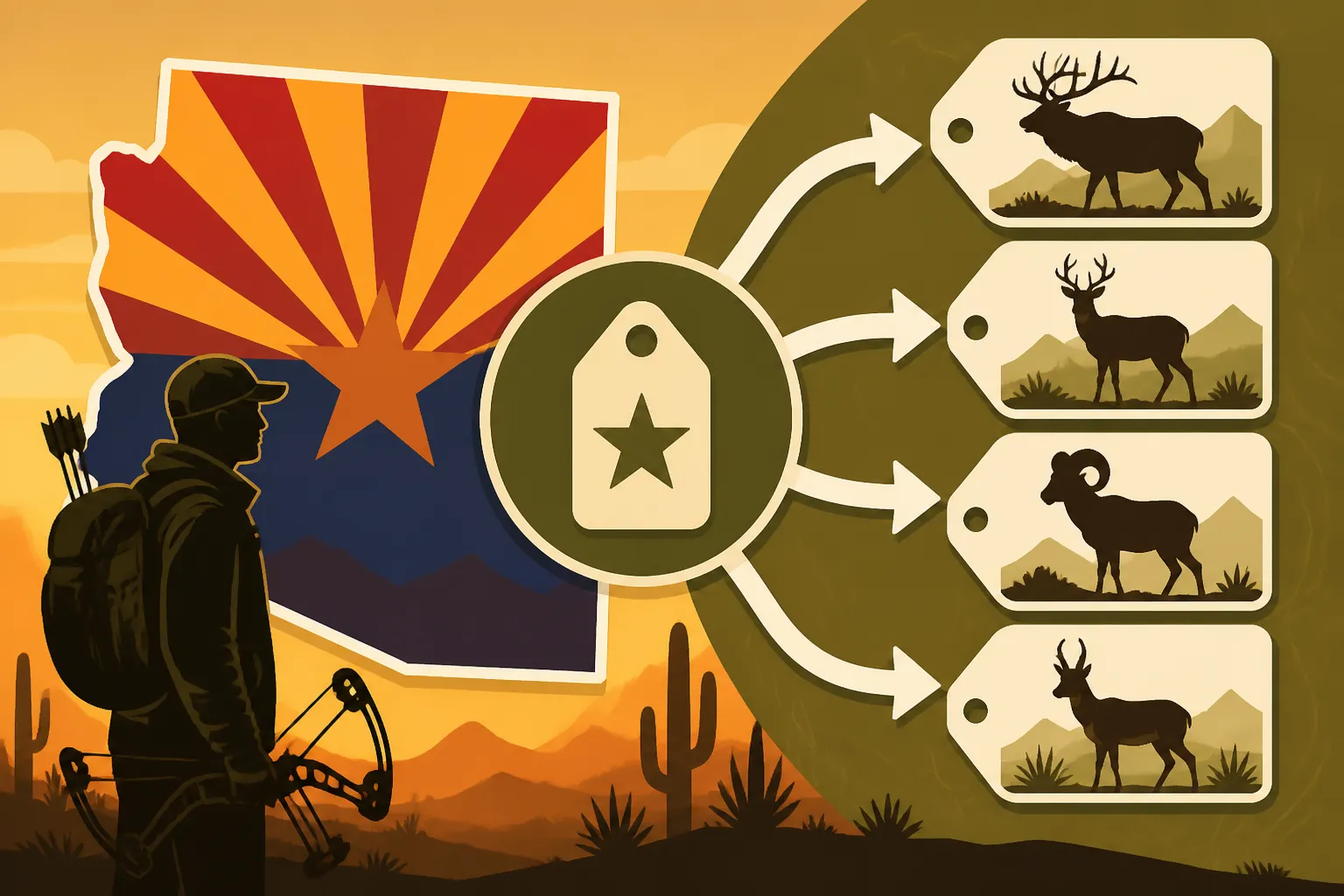
The Arizona draw operates on two main cycles each year: one in February for elk and antelope, and another in June for deer, bighorn sheep, and bison. Each time you apply for a particular species and fail to draw a tag, you typically earn a bonus point for that species. These points accumulate over time, and they are specific to each species. For instance, your hard-earned elk points won't help you draw a deer tag. The whole idea behind this point system is to reward persistence and give long-time applicants a better chance at drawing a tag, but it's important to remember that "better chance" doesn't mean a guarantee. Many hunters harbor frustration after years of applying, watching others with fewer points draw a tag, and that’s precisely where understanding the Bonus Point Pass and the subsequent Random Pass becomes crucial. This nuanced approach aims to balance rewarding loyalty with providing opportunity for new hunters.
The Inner Workings of the Bonus Point Pass
The Arizona Bonus Point Pass is the initial stage of tag allocation in the draw process, and it's designed to give applicants with accumulated bonus points a significantly higher probability of drawing a tag. It's not a separate draw, but rather the first filter through which applications pass.
Here’s the breakdown of how it functions:
- The 20% Allocation: The Arizona Game and Fish Department (AZGFD) reserves 20% of the total available tags for each hunt number specifically for the Bonus Point Pass. This means that if there are 100 tags available for a particular elk hunt, 20 of those tags will first be distributed through this pass.
- Squaring Your Points: This is where your bonus points really come into play. For the Bonus Point Pass, your accumulated points are "squared." What does that mean? If you have, say, 5 bonus points for elk, your application will essentially be entered into this first pass 25 times (5 points x 5 points = 25 entries). If you have 10 points, you get 100 entries (10 x 10 = 100). Even if you only have 1 point, it still gets squared, giving you 1 entry (1 x 1 = 1). This mathematical weighting dramatically increases your individual odds within this 20% pool as your points grow. It's a direct reward for consistent applications, making those years of "point-only" applications feel a little more valuable.
- Drawing Within the Pass: All applicants who have bonus points and are applying for a tag are entered into this 20% pool with their squared points. The AZGFD then conducts a random drawing within this pool. The more entries you have (due to squared points), the greater your statistical chance of being selected for one of those 20% of tags.
It's vital to internalize that the Bonus Point Pass, despite its name and the squaring of points, is still a lottery. It doesn't guarantee a tag, no matter how many points you've accumulated. You might have 20 points for an elk tag, equating to 400 entries in this pass, but still not draw, while someone with fewer points might get lucky. This is one of the most common sources of frustration for dedicated Arizona hunters. The system is designed to favor higher point holders, but randomness is still a fundamental element of the initial allocation. Many applicants study draw odds meticulously, often using tools and data from sources like GoHunt to understand their chances in this particular phase. Understanding this pass is critical to realistic expectations when applying, especially for highly sought-after units and species. You can find specific application deadlines for species like The Arizona Elk and Antelope Application Deadline and The Arizona Deer, Sheep and Bison Deadline to ensure you're in the running.
Here's a quick look at how squaring points impacts your entries in the Bonus Point Pass:
| Bonus Points | Squared Entries in Bonus Point Pass |
|---|---|
| 1 | 1 (1 x 1) |
| 2 | 4 (2 x 2) |
| 5 | 25 (5 x 5) |
| 10 | 100 (10 x 10) |
| 15 | 225 (15 x 15) |
| 20 | 400 (20 x 20) |
As you can see, the exponential growth of entries means that even a few additional points can significantly boost your odds in this initial phase. This is why many hunters prioritize earning an Arizona point each year, even if they don't draw a tag.
What Happens After the Bonus Point Pass: The Random Pass and Nonresident Caps
So, what happens to the remaining 80% of tags? This is where the Random Pass comes into play, and it's equally important to understand, especially regarding the nonresident cap.
The Random Pass: A Fair Shake for Everyone
After the 20% of tags are allocated through the Bonus Point Pass, the remaining 80% of tags go into what's known as the Random Pass. In this phase, every single applicant who did not draw a tag in the Bonus Point Pass, regardless of how many bonus points they have, receives exactly one entry. This means a first-time applicant has the exact same chance of drawing a tag in the Random Pass as someone with 20 points who didn't draw in the initial pass. This element is why Arizona's system is considered a hybrid and why new hunters still have a legitimate shot at drawing a coveted tag. It's a balancing act that aims to maintain opportunity for all while still acknowledging hunter loyalty. This means that if you're curious about Do You Need a Point for Arizona's Random Pass?, the answer is no – everyone gets an equal chance here.
The Nonresident Cap: A Different Layer of Odds
Another critical factor that interacts with both the Bonus Point Pass and the Random Pass is the nonresident tag cap. Arizona caps nonresident tag allocation at 10% of the total tags for any given species or hunt. This is not 10% per pass, but 10% of the overall tags. This cap applies across both the Bonus Point Pass and the Random Pass.
Here's how this typically plays out:
- Initial Allocation: Nonresidents are eligible to draw tags in the Bonus Point Pass, just like residents, but they are drawing from a much smaller pool. If a unit has 100 tags, only 10 of those tags can go to nonresidents, even if nonresidents technically account for more than 10% of the total applications.
- The Squeeze: If, for example, 5 nonresident tags were drawn in the Bonus Point Pass, only 5 more nonresident tags would be available in the Random Pass. If the 10% nonresident cap is met entirely within the Bonus Point Pass, then no nonresident tags would be available in the subsequent Random Pass.
- Impact on Odds: This cap significantly reduces the draw odds for nonresidents, especially for high-demand units and species. Even with a high number of squared points in the Bonus Point Pass, a nonresident might be competing for a very limited number of available tags within their specific pool. It's an important consideration for anyone looking at The Nonresident Tag Cap in Arizona or understanding Why Ninety Percent of Arizona Tags Go to Residents. The Arizona Game and Fish Department's goal is primarily to serve its resident hunters, as is the case in many states.
Understanding these two passes and the nonresident cap is absolutely paramount to building a realistic strategy for drawing an Arizona tag. It explains why a hunter with 20 points might still struggle to draw an elk tag, while their buddy with 2 points might draw a deer tag in the random pass.
Strategies for Navigating the Arizona Draw
Given the complexities of the Bonus Point Pass, the Random Pass, and the nonresident cap, what can you do to improve your odds of drawing an Arizona tag? While there are no magic bullets, a thoughtful strategy can make a difference over time.
Consistency is King: Apply Every Year
The most fundamental strategy for any draw system with bonus points is to apply every single year. Even if you're not planning a hunt or can't afford a tag, consider applying for a "point only" option. This ensures your bonus points continue to accumulate. Remember, those points are squared in the Bonus Point Pass, making each additional point exponentially more valuable. Missing a year means missing out on that incremental increase in your squared entries. Consistent application ensures you're always in the running for both passes. For residents, this can even include considering options like Buying an Arizona Point Without Applying to Hunt to maintain momentum.
Consider Group Applications Wisely
Arizona allows group applications, which can be a double-edged sword. When applying as a group, the AZGFD averages the bonus points of all applicants in the group. For example, if one hunter has 10 points and another has 2 points, their average for the application would be 6 points. This average is then used in the Bonus Point Pass.
- Pros: If you have a low number of points, applying with a high-point hunter can significantly boost your group's average, giving you a better shot in the Bonus Point Pass than you'd have on your own. It also ensures that if one person in the group draws, everyone in the group draws.
- Cons: If you are a high-point hunter, applying with lower-point individuals will reduce your personal average, thereby decreasing your individual odds in the Bonus Point Pass. You might effectively be "donating" some of your accumulated advantage.
You need to weigh the benefits of hunting with a partner against the potential reduction in your draw odds. For more specific details, looking into Group Application Rules in the Arizona Draw can provide clarity on how points are averaged across a group.
Be Flexible with Units and Seasons
While everyone dreams of drawing a tag for Unit 9 elk or a specific early season deer hunt, the reality is that these tags are incredibly difficult to draw. Consider being flexible with your unit and season choices.
- Less Popular Units/Weapons: Research units with higher draw odds. Sometimes, choosing a slightly less-renowned unit or a different weapon choice (like muzzleloader or archery, though archery seasons are changing for crossbows) can significantly increase your chances of drawing, especially in the Random Pass. The less competition there is, the better your odds in that 80% pool. Many hunters use resources like GoHunt to analyze draw odds across different units and hunt codes.
- Over-the-Counter Opportunities: For some species, like deer (during specific archery seasons) and javelina, Arizona offers over-the-counter (OTC) tags. These don't require going through the draw, making them highly accessible. While they often present different hunting challenges, they are a fantastic way to get into the field every year while you build points for more coveted draw tags. An Arizona OTC archery deer tag is a great example of this, providing consistent opportunity. For example, you can explore Arizona's Over-the-Counter Archery Deer Tag Explained.
Understand the Draw Odds and Your Goals
Finally, constantly educate yourself on the current draw odds for the species and units you're interested in. The Arizona Game and Fish Department publishes draw results and statistics, and platforms like GoHunt provide extensive analysis. Knowing the odds helps set realistic expectations. Are you aiming for a once-in-a-lifetime trophy unit that might take decades of point accumulation, or are you hoping to draw a tag every few years in a more accessible unit? Tailor your application strategy to your personal hunting goals, recognizing the role both the Bonus Point Pass and the Random Pass play in tag allocation. It's a long game, but a rewarding one for those who understand the system and play it strategically. Consider regularly Checking Arizona Draw Odds Before You Apply to fine-tune your strategy.
Disclaimer
Please note that hunting regulations, seasons, and draw processes can change. Always consult the official Arizona Game and Fish Department (AZGFD) regulations and website for the most current and accurate information before planning any hunting activity. This guide is for informational purposes only and does not supersede official AZGFD documentation.