What Happens to Arizona Points When You Draw
Drawing a coveted big game tag in Arizona is often a moment of pure elation, years in the making for many of us who apply diligently. But right after that initial burst of excitement, a common question bubbles up in the back of your mind, usually followed by a mild panic: "What happens to all those hard-earned bonus points now?" It’s a completely valid concern, especially when you’ve been building up points for deer or elk for a decade or more. This guide will walk you through exactly what happens to your Arizona bonus points once you successfully draw a tag, and how to navigate the system afterward.
Understanding Arizona's Bonus Point System Before the Draw
Before we dive into what happens after the draw, it's really helpful to quickly recap how Arizona's bonus point system works in the first place. This foundation helps make sense of the reset. The Arizona Game and Fish Department (AZGFD) uses a weighted lottery system, which essentially means your points don't guarantee you a tag, but they significantly increase your odds compared to someone with fewer points.
The Foundation of Arizona's Draw System
At its core, Arizona's draw system is designed to reward consistent applicants. Every time you apply for a species and are unsuccessful, you earn a bonus point for that specific species. This point is essentially an extra "entry" into the drawing. The more points you have, the more entries you get, mathematically improving your chances over time. It’s not a preference point system where the highest point holder automatically draws; rather, it’s a true bonus point system where each point gives you an additional chance.
Beyond just applying, there are a couple of other ways to accumulate these valuable points. You can earn a permanent bonus point by completing the state's Hunter Education course if you don't already have one, and another permanent point by finishing the supplemental Ethically Hunting Arizona course. These aren't tied to a specific species application and are a one-time boost to your overall draw potential. They’re like getting a couple of "golden tickets" that can be used on top of your species-specific points. For more details on this, you can look into How a Course Earns You a Permanent Bonus Point.
How Bonus Points Influence Your Odds
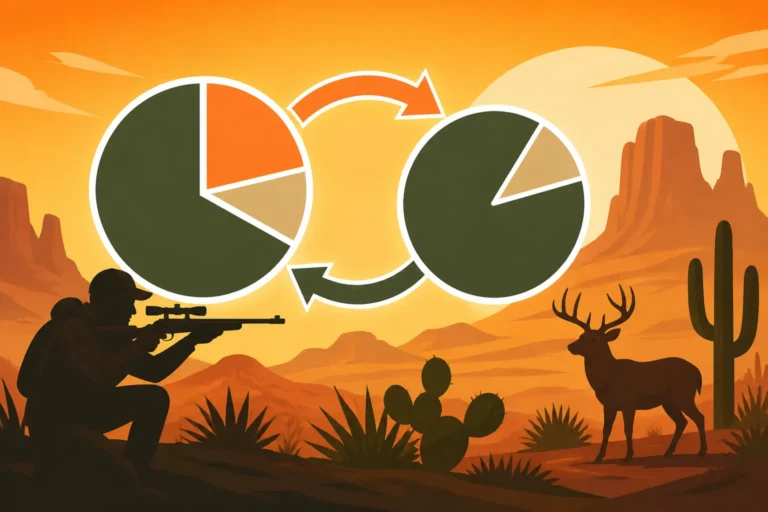
The points you accumulate come into play during what’s known as the "Bonus Point Pass," which is the first phase of the Arizona draw. During this pass, 20% of the available tags for any given hunt are allocated. The hunters with the most bonus points have their applications entered into this initial lottery more times, giving them a better shot at securing one of these tags. Think of it like a mini-draw exclusively for those who've shown dedication through their points. The article How Arizona's Bonus Point Pass Awards the First Twenty Percent explains this process in great detail.
After this initial pass, any remaining tags (the other 80% plus any not drawn in the point pass) are then put into the "Random Pass." In this phase, everyone who applied has an equal chance, regardless of their points, though your bonus points still give you entries for this part of the draw as well. This two-tier system is a balance, aiming to reward loyalty while still offering a chance to new or less-pointed applicants. This is also why services like GoHunt are so popular, as they help analyze these odds across different units and species, letting you apply with the best information available.
The Moment of Truth: What Happens When You Draw
So, you applied, waited through the nerve-wracking weeks, and then that glorious email or notification comes in: "Congratulations! You have been successfully drawn for a hunt permit-tag." Amazing! Now, let’s address the elephant in the room regarding those points.
Point Depletion for the Drawn Species
Here’s the straight answer: when you successfully draw a hunt permit-tag for a specific species, all of your accumulated bonus points for that particular species are reset to zero. Yes, all of them. Whether you had 5 points, 10 points, or 25 points for Arizona elk, if you draw an elk tag, your elk points go back to a clean slate.
Let's say, for example, you've been putting in for deer every year for 15 years, finally building up a substantial number of points. You decide to apply for a coveted Unit 9 late rifle mule deer tag, and against all odds, you draw it. That’s fantastic! You get to go on a hunt many dream of. But as soon as that tag is issued, your 15 deer points officially go to zero. You will start accruing new deer points again the next time you apply for a deer tag and are unsuccessful. It's a bittersweet moment for sure – the excitement of the hunt tempered slightly by the knowledge of starting over on points.
Why Points Reset: Ensuring Opportunity
This point reset system isn't designed to punish you; it's fundamental to how AZGFD manages wildlife and hunting opportunity. The primary reason for the reset is to ensure a more equitable distribution of coveted tags over the long term. If points simply continued to accumulate indefinitely, the same highly-pointed individuals would eventually draw tags year after year, effectively monopolizing the best hunts and making it nearly impossible for others to ever draw.
By resetting points, the system allows for a turnover in successful applicants. It gives other hunters who have been consistently applying and building points their chance at drawing a quality tag without having to compete against individuals with impossibly high point totals. While it can feel frustrating to "lose" a large point bank, remember that you didn't lose them; you used them to achieve the ultimate goal: a tag in hand. It’s a system focused on spreading opportunity, allowing more hunters to experience the thrill of an Arizona big game hunt over their lifetime.
Rebuilding Your Point Portfolio After a Successful Hunt
So, you've used your points, had an incredible hunt, and now you're back at square one for that specific species. Don't despair! The journey of building points is a marathon, not a sprint, and you can start rebuilding immediately.
Immediately Starting Over
The good news is that you can begin accumulating new bonus points for that species as soon as the next draw cycle. If you drew an elk tag in the recent draw, you can apply again for an elk tag in the next year's draw cycle. If you are unsuccessful, you will earn one new bonus point for elk. It truly is a continuous cycle.
Consistency is key here. Even if you know your odds are low with zero points, continuing to apply annually ensures you’re always earning that single point. Over the years, these single points add up, restarting your journey toward those dream tags. For a deeper dive into the mechanics of point acquisition, check out Earning an Arizona Point by Applying. This long-game approach is what defines a dedicated Western big game hunter.
Retaining Points for Other Species
Here's another piece of excellent news: the point reset only applies to the specific species for which you drew a tag. Your bonus points for all other species remain completely intact.
For example, if you drew that amazing Unit 9 mule deer tag, your deer points reset to zero. However, if you also had 8 bonus points for elk, 5 for pronghorn, and 3 for javelina, those points are unaffected. They carry over to the next draw cycle, ready to be used when you apply for those species. This is why many hunters apply for multiple species across the Arizona Runs Two Draw Cycles, February and June each year, building up points simultaneously for different opportunities. It's a strategic way to keep multiple irons in the fire. Arizona’s system specifically states that Do Points Carry Across Arizona Species?, confirming that they are indeed species-specific.
Leveraging Non-Species Specific Points
Remember those permanent bonus points we talked about earlier, the ones from Hunter Education and the Ethically Hunting Arizona course? These are fantastic because they are not tied to a specific species and are not reset when you draw a tag. These are permanent additions to your application, essentially giving you an extra entry every single time you apply for any species, regardless of your species-specific point total.
So, even if your deer points reset to zero, your Hunter Education point, for example, is still there, adding an extra chance to your application. This makes these courses incredibly valuable, not just for the knowledge they impart, but for the tangible benefit they provide in the draw system. If you haven't earned yours yet, consider it a top priority. You can learn more about this by reading The Permanent Point From Hunter Education.
| Point Type | Accumulation Method | What Happens After a Successful Draw (for that species) | Impact on Other Species' Points |
|---|---|---|---|
| Species-Specific Bonus | Unsuccessful application | Resets to zero | No impact, points retained |
| Hunter Education | Complete course (one-time) | Retained, never resets | No impact, always applies |
| Ethically Hunting AZ | Complete course (one-time) | Retained, never resets | No impact, always applies |
| Loyalty Point | 5 consecutive years | Retained, does not reset with species draw | No impact, always applies |
Strategic Planning for Future Hunts Post-Draw
Having drawn a tag and reset your points for that species puts you in a unique position. It's a time to reflect on your hunting goals and adjust your strategy for the coming years.
The Waiting Game for Top-Tier Units
Let's be realistic: drawing a premium, high-demand tag in a top-tier unit like Unit 9 for mule deer or one of the prime elk units on the Mogollon Rim often requires a significant number of bonus points. When you reset to zero for that species, it usually means a multi-year waiting period before you'll have a realistic chance at those same units again.
This is where many hunters pivot their strategy. Instead of immediately trying to rebuild points for another decade for that same coveted hunt, they might focus on drawing tags for less competitive units, different species, or even explore Arizona's Over-the-Counter (OTC) archery opportunities. This allows you to stay active in the field while your points for your "dream hunt" species slowly accumulate again. Using resources like GoHunt's Insider tool can be invaluable here, helping you scout new units and identify hunts with better draw odds for lower point holders. It’s all about staying engaged and maximizing your time in Arizona's incredible landscapes. Consider Scouting an Arizona Unit Before the February Deadline to make informed decisions for your next application.
Balancing Points and Hunt Urgency
One of the biggest dilemmas hunters face after drawing a tag and losing their points is whether to immediately start hoarding points again or to try and draw easier, less-desired tags. Do you want to hunt every year, even if it means smaller animals or tougher hunts, or are you willing to wait years for a true trophy opportunity? There's no right or wrong answer; it's a personal choice based on your priorities, time, and financial resources.
Some hunters adopt a strategy of alternating. They might apply for a high-point, trophy elk tag every few years, letting points build up. In the "off" years, they'll apply for more accessible deer or javelina tags, or even consider Arizona's Over-the-Counter Archery Deer Tag Explained to ensure they get afield. This keeps them active, sharpens their skills, and allows them to enjoy Arizona's diverse hunting opportunities without constantly waiting for that one big draw. Websites like GoHunt provide detailed draw odds analysis which helps tremendously in making these strategic decisions. You can get a head start on this by reading Checking Arizona Draw Odds Before You Apply.
The Role of the Loyalty Point
Finally, let's talk about the Arizona Loyalty Point. This is an additional bonus point awarded to residents who have applied for any big game species for five consecutive years. This point is separate from species-specific points and, importantly, it does not reset when you draw a tag. As long as you continue to apply every year, you retain your Loyalty Point.
This means that even after drawing a tag and having your species-specific points reset, your Loyalty Point remains active, adding an extra entry to all your future applications. It’s a nice little nod from AZGFD to consistent applicants. It rewards commitment to the system as a whole, rather than just success in a single draw. For a more detailed look at this, read The Arizona Loyalty Point Explained.
So, while the point reset can feel like a setback, it’s a built-in mechanism that actually works to benefit the broader hunting community in Arizona. You got your tag, you had your hunt, and now you begin anew, armed with experience and a clearer understanding of the game.
Disclaimer
Please remember that hunting regulations and point systems can change. Always consult the official Arizona Game and Fish Department regulations for the most current and accurate information before applying for tags or planning your hunt. This guide is for informational purposes only and should not be considered legal advice.