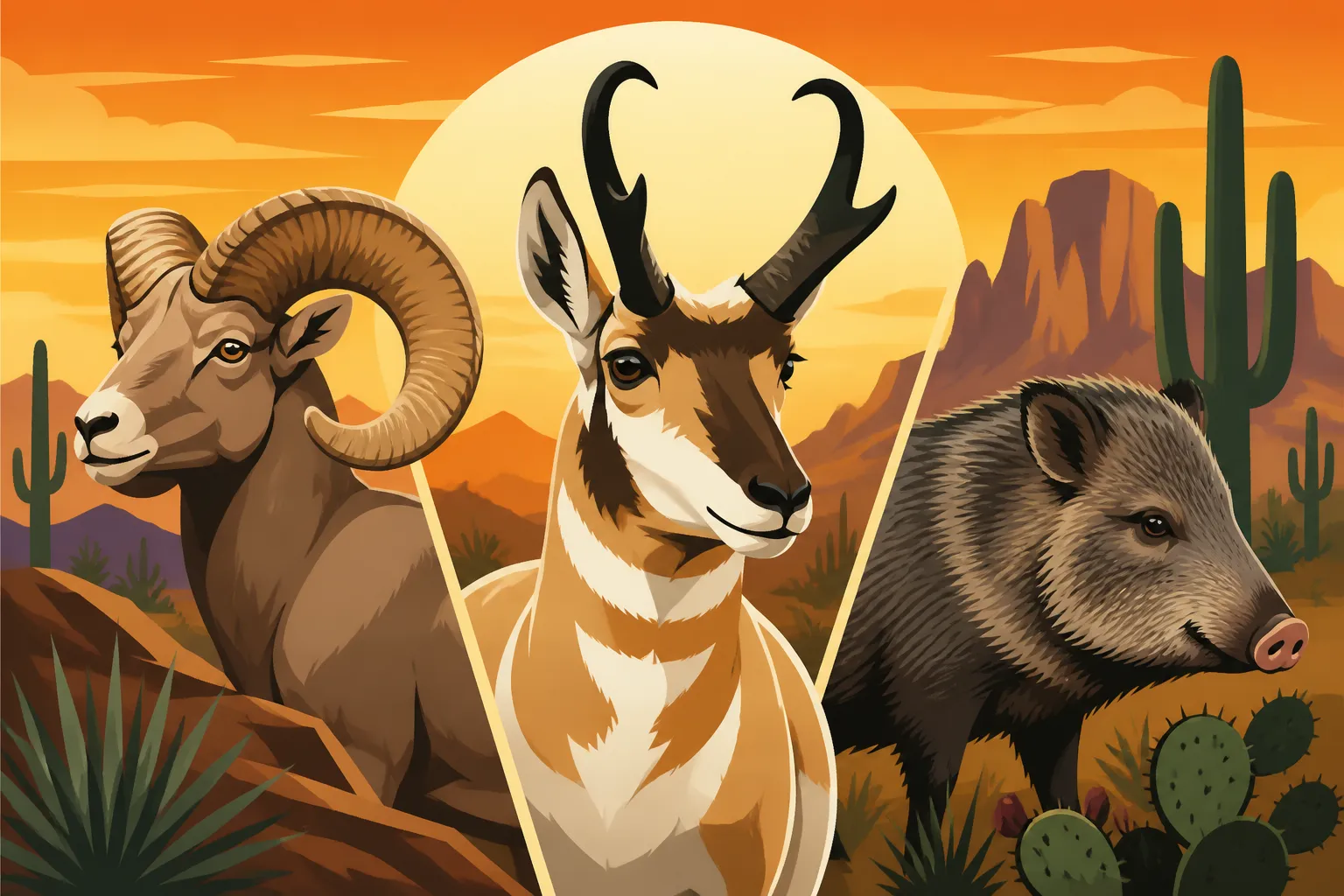
Three Arizona Species You May Only Take Once
Navigating the complex world of Arizona hunting regulations can feel like trying to track a gray ghost through thick brush – frustrating, confusing, and often leaving you feeling like you've missed a critical sign. One of the biggest head-scratchers for many hunters, especially those new to the Grand Canyon State's unique system, revolves around those coveted "once-in-a-lifetime" tags. This guide is here to untangle that mystery, walking you through the three incredible Arizona species that, once harvested, you won't be drawing a tag for again.
Understanding Arizona's Once-in-a-Lifetime Species
Arizona is a state of incredible biological diversity, from the Sonoran Desert to alpine peaks, and its wildlife management reflects this richness. While many popular species like deer, elk, and javelina offer annual hunting opportunities through various draw or over-the-counter tags, a select few are managed with a much more restrictive philosophy. This isn't just about rarity; it's about preserving unique genetic strongholds and ensuring the long-term health and trophy potential of these magnificent animals.
Why the "Once-in-a-Lifetime" Rule Exists
The concept of a "once-in-a-lifetime" tag might seem daunting, even a bit unfair, but it stems from deeply rooted conservation principles. These tags are allocated for species that are either extremely rare, difficult to manage, or hold such exceptional trophy value that the state deems it necessary to give as many hunters as possible a single chance at the experience. It's a testament to Arizona Game and Fish Department's commitment to sustainable wildlife populations and fair chase.
Consider it from a biological perspective: these animals often have lower population numbers, specific habitat requirements, or a slow reproductive rate, meaning they can't sustain high harvest pressure year after year like deer or javelina. Limiting hunters to one successful harvest per species ensures that trophy-quality animals remain in the population for future generations, contributing to the genetic health and overall robustness of the herd. It also creates an unparalleled level of prestige and challenge for those lucky enough to draw a tag, elevating the experience beyond a typical hunt to something truly monumental. This careful stewardship protects these iconic animals, ensuring they continue to thrive in Arizona's diverse landscapes.
The Three Elusive Species
When we talk about Arizona's once-in-a-lifetime species, we're focusing on three iconic big game animals that represent the pinnacle of Western hunting challenges: the Desert Bighorn Sheep, the Rocky Mountain Bighorn Sheep, and Bison. Each presents a unique set of demands, from the rugged desert mountains where bighorns cling to cliffs, to the vast northern plateaus where bison roam.
These aren't hunts you walk into lightly. They demand meticulous planning, extreme physical conditioning, and often, an unwavering commitment to applying for years, even decades, to accumulate enough bonus points to stand a chance. The reward, however, is an experience that few hunters ever achieve, a deep dive into some of Arizona's most remote and breathtaking landscapes, and the chance to take an animal that truly represents a lifetime achievement. It’s important to note that while both bighorn species are "sheep," Arizona's regulations treat them as distinct for draw purposes, meaning you could, theoretically, draw a Desert Bighorn tag and a Rocky Mountain Bighorn tag in your lifetime (though the odds of both are astronomical).
Desert Bighorn Sheep: The Ghost of the Arizona Peaks
Few animals embody the spirit of the Arizona desert like the Desert Bighorn Sheep. These magnificent creatures are perfectly adapted to survive in some of the most unforgiving landscapes on Earth, making their pursuit one of the most challenging and sought-after hunts in the state. Drawing a Desert Bighorn tag is the dream of countless hunters, representing the culmination of years of dedication and an immense stroke of luck.
Where They Roam and Why They're Special
Desert Bighorn Sheep primarily inhabit the rugged, arid mountain ranges scattered across southern and western Arizona. Think about places like the Kofa National Wildlife Refuge, the Cabeza Prieta National Wildlife Refuge, the Eagletail Mountains, or the countless other rocky bastions that punctuate the Sonoran Desert. Their habitat is defined by precipitous slopes, rocky outcrops, and deeply cut canyons – terrain that would deter almost any other large mammal. These sheep are masters of vertical movement, using their specialized hooves to navigate impossible angles with astonishing grace and speed.
Their ability to thrive with minimal water, often relying on dew, succulent plants, or infrequent rain catchments, makes them truly special. Spotting a ram high on a sun-baked ridge, its massive horns gleaming, is an unforgettable sight. They are creatures of incredible resilience, perfectly camouflaged against the ochre and grey of the desert landscape, earning them their nickname, the "ghosts of the peaks." For more insights into their unique habitat, check out Where Desert Bighorn Live in Rugged Ranges. This intimate connection to their harsh environment is what makes a successful Desert Bighorn hunt so profoundly rewarding, offering a glimpse into a world few ever truly experience.
The Application and Draw Process
The draw odds for an Arizona Desert Bighorn tag are notoriously low, making it one of the most difficult tags in the nation to acquire. We're talking about single-digit percentages, often less than one percent, even with a substantial number of bonus points. This extreme demand reflects the species' prestige and the limited number of tags issued each year to maintain healthy populations. The application period for Desert Bighorn Sheep, along with elk and antelope, falls within Arizona's first draw cycle, typically in February.
Hunters wishing to pursue this dream hunt must meticulously accumulate bonus points by applying consistently year after year. Each unsuccessful application for a species in the draw awards you a bonus point for that species, increasing your mathematical chances (albeit slightly) in subsequent draws. This strategy of accumulating points is absolutely critical, as hunters with the most points are given preference in the initial "bonus point pass" portion of the draw. Many hunters apply for decades without ever drawing this coveted tag, highlighting the truly once-in-a-lifetime nature of the opportunity. For a deeper dive into these challenging odds, you can explore Arizona Desert Bighorn Draw Odds. It’s a game of patience and perseverance, hoping that one day your number will finally come up.
Strategies for a Once-in-a-Lifetime Hunt
Once you've beaten the astronomical odds and drawn an Arizona Desert Bighorn tag, the real work begins. This is not a hunt for the faint of heart or those out of shape. The terrain demands extreme physical conditioning, as you'll be scrambling up steep, rocky slopes, navigating treacherous canyons, and enduring the intense desert heat, sometimes for days on end. It’s advisable to start a rigorous training regimen months, if not a year, in advance to prepare your body for the unforgiving landscape.
Optics are your best friend in bighorn country. High-quality binoculars (10x-15x) and a powerful spotting scope (20x-60x or higher) are non-negotiable. You'll spend countless hours meticulously glassing vast stretches of mountainside, picking apart rock formations, and searching for the tell-tale gleam of a ram's horns. Hiring a reputable guide for a Desert Bighorn hunt is a common and often recommended strategy due to the specialized knowledge required to locate and successfully pursue these animals. Guides bring invaluable experience in terrain navigation, bighorn behavior, and judging rams in the field. Understanding the financial commitment is also key; guided bighorn hunts are among the most expensive in North America. You can get a sense of the investment by looking into Cost Expectations for an Arizona Desert Bighorn Hunt.
Another critical aspect of the hunt is field judging. Arizona enforces specific Ram Curl Requirements Arizona Enforces, often requiring a ram to be three-quarters curl or better, or at least 7 years old. Being able to accurately judge a ram at extreme distances, often across canyons, is a skill honed over years and is paramount to a legal and ethical harvest. This hunt is a masterclass in patience, persistence, and mental fortitude, offering an unparalleled adventure in some of the wildest corners of Arizona.
Rocky Mountain Bighorn Sheep: Arizona's Riverine Royalty
While Desert Bighorns capture much of the lore, Arizona is also home to a distinct population of Rocky Mountain Bighorn Sheep. These magnificent animals, though still bighorns, inhabit vastly different environments than their desert cousins, presenting a unique set of challenges and an equally rewarding, albeit extremely difficult, hunting experience.
Contrasting Habitats: From Desert to River Canyons
Unlike the classic Desert Bighorns clinging to sun-baked, arid peaks, Arizona's Rocky Mountain Bighorns are found primarily along major river systems. Their stronghold is the rugged, riparian corridors of the Salt River, Verde River, and the Gila River breaks, particularly within the Superstition and Mazatzal mountain ranges. These areas, while still exceptionally steep and rocky, offer more abundant water sources and a richer vegetation mosaic compared to the stark desert ranges. The presence of these life-giving rivers transforms the surrounding habitat into a more mesic, or moist, environment.
Here, the sheep utilize the dense brush and canyon walls for cover and forage, descending to the rivers to drink. This unique habitat requires a different scouting and hunting approach. Instead of focusing solely on exposed ridges, hunters must also contend with thick vegetation, shadowed canyon bottoms, and the challenges of accessing areas along the water. These riverine bighorns are a testament to the adaptability of the species and the incredible ecological diversity found within Arizona's borders. For a deeper dive into these specific areas, you can explore Where Rocky Mountain Bighorn Live Along the Salt.
The Separate Draw and Tag System
It's crucial for any aspiring bighorn hunter to understand that Arizona Game and Fish Department treats Rocky Mountain Bighorn Sheep as a completely separate species from Desert Bighorn Sheep for draw and tag allocation purposes. This means that if you are fortunate enough to draw and harvest a Desert Bighorn, you are still eligible to apply for and potentially draw a Rocky Mountain Bighorn tag in your lifetime, and vice versa. However, each draw is distinct, and bonus points accumulated for one type of bighorn do not transfer or apply to the other.
This distinction underscores the biological differences and separate management strategies for each population. While both are "once-in-a-lifetime" opportunities for that specific sub-species, the separation allows for more precise management based on the health and demographics of each distinct herd. The draw odds for Rocky Mountain Bighorns are still incredibly challenging, often mirroring the low percentages seen for Desert Bighorns. However, knowing that Arizona counts the bighorns separately means a dedicated hunter could theoretically pursue both incredible experiences over their lifetime, doubling the potential for an epic hunting saga. Find out more about this unique distinction in Why Arizona Treats the Two Bighorns Separately.
Unique Challenges of Riverine Bighorn Hunting
Hunting Rocky Mountain Bighorn Sheep in Arizona presents its own distinct set of challenges, often contrasting with the open, expansive glassing common in desert bighorn country. Access is frequently a major hurdle; many of the prime river canyon habitats are remote and difficult to reach, requiring long, arduous hikes, or sometimes even the use of boats or inflatable rafts to navigate the water. The dense riparian vegetation can make spotting sheep incredibly tough, forcing hunters to meticulously pick apart every shadowy nook and cranny of the canyon walls.
Glassing is still paramount, but the approach differs. You'll spend less time staring across vast plains and more time scrutinizing steep river breaks, rock ledges, and thick mesquite bottoms. The acoustics of the canyons can also play tricks on your ears, making it difficult to pinpoint sounds. Early season hunts in these river corridors can be brutally hot, and managing hydration and preventing heat exhaustion are critical. Read more about preparing for such conditions in Heat Management on an Arizona Early Season Hunt. Furthermore, the steep, uneven terrain near the rivers can be treacherous, demanding excellent footing and constant vigilance. A successful riverine bighorn hunt is not just about finding the animal, but about mastering the unique environment it calls home.
Bison: The Majestic Giants of the Arizona Landscape
While bighorn sheep rule the craggy peaks, Arizona's other incredible once-in-a-lifetime opportunity lies with the majestic American Bison. Seeing these powerful creatures roam freely in the wild is like stepping back in time, and harvesting one is an unforgettable experience that truly connects you to the spirit of the Old West. Arizona manages two distinct free-ranging herds, each offering a unique hunting adventure.
The Kaibab and House Rock Herds
Arizona is home to two significant free-ranging bison herds: the Kaibab Plateau herd and the House Rock Wildlife Area herd. The Kaibab herd, often associated with the Grand Canyon National Park, roams the high elevation forests north of the Canyon. This herd, while within state management, has a complicated history and relationship with the National Park Service due to its proximity to park boundaries. These bison are true giants, often weighing over 2,000 pounds for a mature bull, and their presence on the heavily forested plateau creates a unique hunting environment.
The House Rock Wildlife Area, nestled between the Kaibab Plateau and the Vermilion Cliffs, hosts the other primary herd. This area, managed specifically for wildlife, offers a more open, sagebrush-dominated landscape interspersed with Pinyon-Juniper woodlands. Both herds are carefully managed by the Arizona Game and Fish Department to maintain ecological balance and provide hunting opportunities. The presence of these herds is a testament to successful conservation efforts to restore these iconic animals to parts of their historic range. For those interested in their history and range, exploring Where the Free-Ranging Bison Herds Live and Hunting Bison on House Rock Wildlife Area provides excellent context.
Spring vs. Fall Bison Draws
One unique aspect of Arizona's bison tags is the split draw system. Unlike other species that typically have one annual draw, bison tags are offered through two separate draw cycles: Spring Bison and Fall Bison. This distinction allows for more flexible management and gives hunters two distinct windows to apply for these highly coveted tags.
The Spring Bison draw, often concluding around October, offers hunts that typically occur in late winter or early spring. These hunts can involve challenging weather conditions, including snow and cold temperatures, particularly on the Kaibab. The Fall Bison draw, part of the main February draw cycle, offers hunts that usually take place from late summer through late fall. Each season presents different hunting scenarios; spring hunts might see bison concentrated in lower elevations or specific feeding areas, while fall hunts might coincide with more nomadic behavior as they forage across wider areas. Understanding the nuances of each draw, and How the Spring Bison Draw Differs in Arizona from the fall draw, is crucial for planning your application strategy. This dual-draw system, while adding a layer of complexity, essentially doubles a persistent hunter's chances of drawing a bison tag in a given year.
Preparing for a Bison Hunt
A bison hunt is an experience unlike any other big game pursuit. These animals are immense, powerful, and require significant preparation, both physically and logistically. Unlike sheep hunts that demand steep climbing, bison hunts often involve covering vast distances, sometimes in difficult terrain or heavy timber, to locate the animals. Your physical conditioning should focus on endurance and strength, as field dressing and retrieving a multi-thousand-pound animal is a monumental task.
When it comes to firearms, adequate stopping power is essential. While many deer and elk calibers can be used, a heavier hitting cartridge such as a .300 Win Mag, .338 Win Mag, or larger is often recommended to ensure a clean, ethical harvest. Shot placement is critical due to the bison's heavy bone structure and dense muscle. Many hunters choose to hire an outfitter for a bison hunt, especially if it's their first time. A guide can be invaluable for locating animals, assessing trophy quality, and, most importantly, assisting with the extremely challenging task of field dressing and extracting such a massive animal from remote areas. The logistical challenges of getting meat cooled and transported from the field are significant. For more on what to expect, check out What a Guided Arizona Bison Hunt Involves. This isn't a hunt where you can afford to cut corners; thorough preparation is key to a successful and ethical experience.
Navigating the Once-in-a-Lifetime Journey
Drawing one of Arizona's once-in-a-lifetime tags is an achievement in itself, but the journey to get there, and what happens afterward, involves a careful understanding of the state's draw system and long-term planning. It's not just about luck; it's about strategy, persistence, and knowing how to play the game over many years.
The Role of Bonus Points
For any of Arizona's limited-opportunity big game species, and especially the once-in-a-lifetime tags, bonus points are the currency of the draw. Every year you apply for a species and are unsuccessful, you earn a bonus point for that specific species. These points accumulate over time, giving you a statistically better chance in future draws, particularly in the initial "bonus point pass" where a significant percentage of tags are allocated to applicants with the most points. This system rewards persistent applicants, making the dream of a bighorn or bison tag a long-term goal for many.
The strategy is simple but requires dedication: apply every single year for the species you dream of hunting, even if you don't necessarily plan to hunt that year. Many hunters will buy a point-only option if they know they can't commit to a hunt in a specific season, ensuring their points continue to accrue. Tools like GoHunt's Insider service are invaluable for researching draw odds, understanding unit-specific data, and developing a long-term application strategy based on your accumulated points and desired species. They help you make informed decisions, ensuring you maximize your chances in a system where every point counts. For a more detailed look at how to earn these vital points, refer to Earning an Arizona Point by Applying.
What Happens After You Draw
Congratulations, you've drawn a once-in-a-lifetime tag! This is a moment of immense excitement, but it's important to understand the implications for future hunting. As the name suggests, once you successfully harvest a Desert Bighorn, a Rocky Mountain Bighorn, or a Bison in Arizona, you are no longer eligible to draw a tag for that specific species again. This rule is absolute and ensures that the opportunity to pursue these rare animals is spread among as many hunters as possible over time.
Upon a successful harvest, the Arizona Game and Fish Department will mark your record, indicating that you have fulfilled your "once-in-a-lifetime" opportunity for that particular species. Your bonus points for that species will then be reset to zero, as you've effectively "used" them to draw the tag. This doesn't affect your bonus points for other species; for example, drawing a bighorn tag won't erase your elk points. Understanding this system is crucial for long-term planning and managing your expectations for future applications. For specific details on what happens post-harvest for sheep, you can read What Happens After You Take an Arizona Bighorn.
Considering a Conservation or Auction Tag
For those who may not have the decades required to accumulate sufficient bonus points, or who simply wish to contribute significantly to conservation efforts, Arizona offers an alternative path to obtaining these coveted once-in-a-lifetime tags: the Special Big Game License Tags, often referred to as Conservation or Auction tags. These tags are issued annually to various conservation organizations, which then auction them off to the highest bidder.
The prices for these tags can be astronomical, often reaching six figures, reflecting the incredible demand and the guaranteed nature of the tag (meaning no draw is required). While the cost is prohibitive for most, the proceeds from these auctions go directly back into wildlife management, habitat improvement, and conservation programs throughout Arizona, benefiting all species. It's a significant way to make a tangible difference for wildlife while securing an immediate opportunity to hunt a trophy animal. These tags also typically come with extended season dates and broader unit access, offering an exceptional hunting experience. To learn more about how this unique system works, explore How Arizona Auctions Conservation Tags and understand What a Conservation Tag Hunt Costs. It’s a route that combines unparalleled hunting opportunity with a profound commitment to wildlife conservation.
Ethical Considerations and Lasting Memories
Hunting any animal is a privilege that comes with deep ethical responsibilities, but this is amplified tenfold when pursuing a once-in-a-lifetime species. These hunts are about more than just filling a tag; they are a profound journey into the wild, a test of skill and endurance, and an opportunity to connect with nature on the deepest level.
The Weight of a Once-in-a-Lifetime Harvest
Drawing a once-in-a-lifetime tag places a significant ethical weight on the hunter. This is not just any hunt; it's potentially the only time you will ever have the opportunity to pursue this particular species. This realization should instill an even greater sense of respect for the animal and the privilege bestowed upon you. It demands an unwavering commitment to fair chase, ethical shot placement, and meticulous game recovery.
Before you even step into the field, ensure you are proficient with your chosen weapon and have practiced extensively. Know your limits, both physically and in terms of shooting distance, and stick to them. If a shot isn't clean, don't take it. The goal is a swift, humane harvest. In Arizona, The Ethically Hunting Arizona Course Explained is an excellent resource, not just for newcomers but for all hunters, to reinforce these vital principles. After the shot, the responsibility continues with efficient field dressing and ensuring all edible meat is salvaged, especially for large animals like bison where spoilage can be a concern in warmer weather. This profound respect for the animal and the resource defines the ethical hunter.
Beyond the Trophy: The Experience
While the prospect of a magnificent trophy is undoubtedly a powerful motivator for these hunts, the true value of a once-in-a-lifetime tag extends far beyond antlers, horns, or hide. These experiences are about the journey itself: the rigorous physical and mental preparation, the hours spent glassing breathtaking landscapes, the camaraderie shared with hunting partners or a guide, and the profound immersion in some of Arizona's most remote and wild country.
It's about the sunrises painting the desert peaks in hues of orange and purple as you climb, the quiet determination as you stalk a wary ram through a rocky canyon, or the sheer awe of watching a herd of wild bison thunder across an open plain. Even if the shot doesn't present itself, the memories forged during these hunts – the challenges overcome, the lessons learned, and the raw beauty of the wilderness witnessed – will last a lifetime. These hunts are a testament to patience, perseverance, and the enduring call of the wild, offering an adventure that resonates deeply, long after the season ends.
Arizona's Once-in-a-Lifetime Big Game Species
| Species | Primary Habitat | Typical Draw Odds (with points) | Key Hunting Challenge | Tag Type |
|---|---|---|---|---|
| Desert Bighorn Sheep | Arid, rugged mountain ranges (e.g., Kofa) | Extremely Low (often <1%) | Extreme physical demand, glassing | Once-in-a-Lifetime |
| Rocky Mountain Bighorn | River canyons, riparian zones (e.g., Salt River) | Extremely Low (often <1%) | Tough access, dense cover, heat | Once-in-a-Lifetime |
| Bison | Northern Plateaus, grasslands (e.g., Kaibab) | Very Low (1-5%) | Huge animal retrieval, logistics | Once-in-a-Lifetime |
Disclaimer
The information provided in this guide is for general informational purposes only and is not intended as legal advice. Hunting regulations and laws can change frequently. Hunters are solely responsible for checking the most current Arizona Game and Fish Department regulations and statutes before participating in any hunting activities. Always prioritize safety, ethical hunting practices, and compliance with all applicable laws.