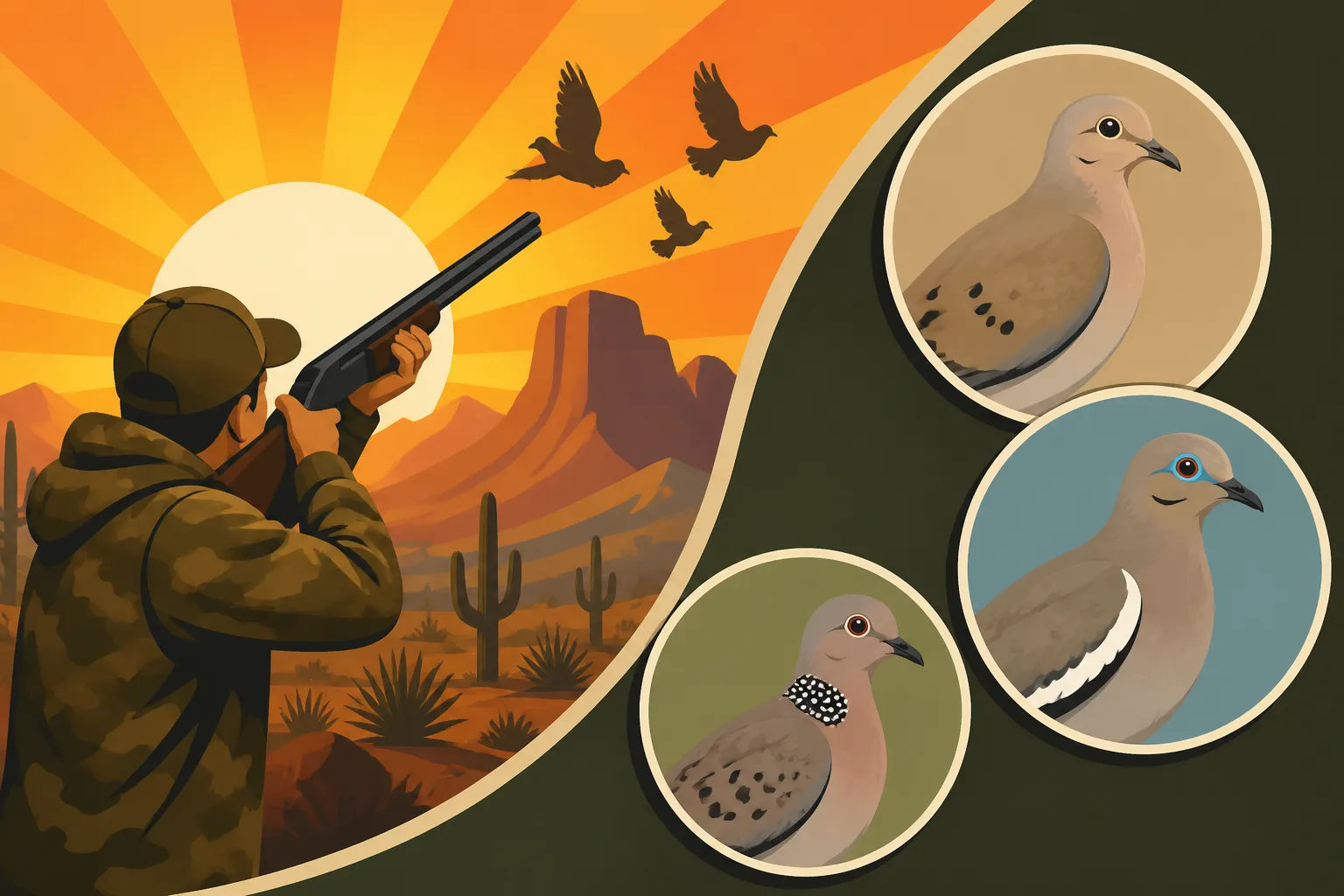
Arizona Dove Bag Limits by Species
There's nothing quite like the rush of an Arizona dove opener. You've been looking forward to it all summer, dreaming of those fast-flying birds darting across the desert sky. But let's be honest, trying to keep track of the different species, their specific bag limits, and when you can even hunt them can feel like solving a complex puzzle under the blazing Arizona sun. It’s enough to make you just want to throw your hands up and go back to bed! This guide is here to untangle all that confusion, helping you understand the specific bag limits for each dove species you'll encounter in Arizona, so you can focus on the hunt without worrying about breaking any rules.
Arizona's Feathered Friends: Distinguishing Your Dove Species
When you're out in the field, especially during the hectic early season, doves can seem like a blur of gray and white. But Arizona is home to a few distinct species, and knowing the difference isn't just for ornithologists – it's crucial for staying within legal bag limits. Misidentification is one of the quickest ways to accidentally run afoul of the regulations, and nobody wants that. Taking a moment to understand their unique characteristics will save you a lot of headache and potentially a ticket.
The Ever-Present Mourning Dove
Ah, the Mourning Dove. These are probably the most common doves you'll see across Arizona, from urban backyards to vast desert landscapes and agricultural fields. They’re characterized by their slender bodies, long pointed tails, and that distinctive soft, mournful cooing sound that gives them their name. When they fly, their wings make a whistling sound, which is a dead giveaway. You’ll find them everywhere, often in large flocks, especially around water sources and grain fields. They’re agile flyers, presenting a real challenge for shotgunners. Recognizing their subtle black spots on the wing and often a small, dark spot near the eye will help you confirm their identity as they zip past your blind.
During the early dove season, Mourning Doves make up a significant portion of the harvest for many hunters. They're resilient, adapting to many different habitats, which contributes to their widespread presence. Learning to identify them quickly, even as they flash by, is a key skill for any Arizona dove hunter. For a closer look at the differences, checking out Mourning Against White-Winged Dove can really help solidify your identification skills before you head out.
The Distinctive White-Winged Dove
The White-winged Dove is a true icon of the American Southwest and a favorite among many Arizona hunters. You'll often find them concentrated more heavily in the southern and western parts of the state, particularly in areas with saguaro cacti, mesquite bosques, and agricultural fields. Their most distinguishing feature, as their name suggests, is a broad white bar visible on the leading edge of their wings, which is very prominent in flight. They also tend to be a bit larger and stockier than Mourning Doves, with a shorter, more rounded tail. Their call is a much louder, almost hooting sound, often described as "who cooks for you."
White-winged Doves are migratory, and their arrival in numbers for the early season is eagerly anticipated. They tend to be a bit more predictable in their flight patterns once established in a feeding area, but can still be incredibly fast. Hunting a field full of White-wings is a classic Arizona experience, full of fast-paced action. Knowing the difference between them and Mourning Doves is absolutely critical because the bag limits are often aggregated or have specific stipulations, meaning you need to know exactly what you’re putting in your vest.
The Unregulated Eurasian Collared Dove
Now, here's where things get interesting and a little less restrictive. The Eurasian Collared Dove is an invasive species that has spread rapidly across North America, including Arizona. These doves are generally larger than both Mourning and White-winged Doves, with a more robust build, a noticeably longer, squared-off tail, and a distinct black half-collar on the back of their neck. Their overall coloration is a pale grayish-buff, lacking the spots of a Mourning Dove or the wing patches of a White-winged Dove.
Because they are an invasive species, Eurasian Collared Doves typically do not have a closed season or a daily bag limit in Arizona. This means that if you can positively identify them, you can harvest as many as you ethically wish, year-round. However, and this is a big "however," you must be absolutely certain of your identification. Accidentally harvesting a protected native dove beyond the legal limit and claiming it was a Eurasian Collared Dove will not fly with game wardens. So, while they offer an exciting bonus for hunters, always prioritize correct identification.
Decoding Arizona's Dove Bag and Possession Limits
Understanding the nuances of daily bag and possession limits is paramount for any responsible dove hunter in Arizona. It's not just about the numbers; it's about how those numbers apply to different species and over different timeframes. The last thing you want is to have a fantastic hunt only to realize you've inadvertently over-harvested. This section will break down the typical structure you'll encounter.
Daily Bag Limits: What You Can Take in a Day
Arizona's daily bag limits for doves are typically set to manage harvest and ensure sustainable populations. For Mourning Doves and White-winged Doves, the daily limit is generally an aggregate number. What does "aggregate" mean? It means the total number of both species combined that you can take in one day. For example, if the aggregate limit is 15 doves, you could shoot 15 Mourning Doves, or 10 Mourning Doves and 5 White-winged Doves, or 3 Mourning Doves and 12 White-winged Doves – any combination that adds up to 15. This is where quick, accurate identification on the wing becomes so crucial. You can't just shoot indiscriminately and sort them out later; you need to be counting and identifying as you go.
This aggregate limit is designed to simplify enforcement while still providing ample opportunity for hunters. However, it also places the responsibility squarely on the hunter to know what they're shooting and to keep a running tally. Imagine the frustration of having a perfect pass of White-wings come in, only to realize you're already at your daily limit because you weren't keeping careful track. Using a game vest with distinct pockets for different species, or simply pausing to count after every few birds, can really help you stay organized in the field.
Possession Limits: What You Can Have After Your Hunt
Beyond the daily bag limit, Arizona also imposes a possession limit. This refers to the total number of doves you can have in your possession at any given time, whether they are in your cooler, your vehicle, or back at your camp or home. For doves, the possession limit is typically twice the daily bag limit. So, if the daily aggregate bag limit is 15, your possession limit would generally be 30 doves. This allows hunters who are staying out for multiple days to accumulate birds over their trip, or for those who hunt hard on opening day to have a good supply.
It's important to note that the possession limit applies regardless of when or where the birds were taken, as long as they were legally harvested. For instance, if you hunt doves in Arizona for three days and shoot 10 birds each day, you'd be fine with 30 birds in possession. However, if you shot 15 on day one, 15 on day two, and then continued hunting on day three, you'd be exceeding the possession limit by the time you shot your first bird on day three. Many hunters use this to their advantage, planning multi-day trips and carefully managing their harvest to reach the possession limit over time. Platforms like GoHunt can be invaluable here, helping you plan your multi-day logistics, find potential camp spots near good dove fields, and even track daily weather that might impact bird movement.
The Eurasian Collared Dove and Its Limitless Status
As we discussed, the Eurasian Collared Dove stands apart from its native cousins when it comes to harvest regulations. Because they are an exotic, invasive species, they typically have no daily bag limit and no possession limit in Arizona. This means you could theoretically harvest 50, 100, or even more Eurasian Collared Doves in a single day, as long as you are absolutely certain of your identification. This open regulation is part of an effort to encourage their harvest and potentially limit their impact on native species and ecosystems.
However, a word of caution cannot be stressed enough: if you mistakenly identify a Mourning Dove or White-winged Dove as a Eurasian Collared Dove and exceed the legal aggregate limit for the native species, you are in violation of game laws. This is why thorough knowledge of identification is so critical. Always err on the side of caution if you're not 100% sure. Many hunters choose to only target Eurasian Collared Doves when they are clearly identified on the ground or in flight, reducing the risk of error. This makes for a great opportunity to extend your hunting season or add to your overall bag without impacting native dove populations.
To help visualize these limits, here's a general table of what you might expect, but always check the current year's regulations for precise numbers, as they can change.
| Dove Species | Typical Daily Bag Limit (Aggregate) | Typical Possession Limit (Aggregate) | Special Notes |
|---|---|---|---|
| Mourning Dove | 15 (combined with White-winged) | 30 (combined with White-winged) | Whistling wings, pointed tail, widespread. |
| White-winged Dove | 15 (combined with Mourning) | 30 (combined with Mourning) | White wing patches, hooting call, Southwest. |
| Eurasian Collared Dove | No Limit | No Limit | Invasive, black half-collar, square tail. |
Note: These are typical figures. Always consult the most recent Arizona Game and Fish Department regulations for exact, current limits.
Navigating Arizona's Dove Season Framework
Knowing the bag limits is only one piece of the puzzle. You also need to understand when you can actually hunt these birds. Arizona's dove seasons are carefully structured, often with distinct "early" and "late" periods, each with its own set of rules and opportunities. Understanding Arizona Dove Season Framework is essential for planning your hunts and making the most of your time afield.
The Anticipated Early Dove Season
For many Arizona hunters, the early dove season—which often kicks off around September 1st—is the unofficial start to fall hunting. While the calendar might say fall, the Arizona weather is usually still screaming summer, with scorching temperatures. This season typically runs for a limited number of days, offering intense, fast-paced action, especially around water sources and grain fields. The excitement is palpable as hunters fan out across the desert, hoping for those first volleys of shots.
During the early season, both Mourning and White-winged Doves are fair game, subject to the aggregate bag and possession limits we discussed. This is often the prime time for White-winged Doves, as many are still present before their migration south. Because of the heat, proper field care of your birds is critical. If you don't get your doves into a cooler quickly, the meat can spoil. Staying hydrated yourself is just as important, if not more so. Hunters often plan their hunts for the first few hours after dawn and the last few before dusk, avoiding the brutal midday sun. This also coincides with peak dove activity. You'll want to review Heat Management on an Arizona Early Season Hunt to make sure you're fully prepared for the conditions.
The Less Pressured Late Dove Season
After the hustle and bustle of the early season, Arizona typically offers a late dove season, often running from late November through December or into early January. This is a much different experience from the early season. The weather is usually cooler, the crowds are significantly smaller, and the hunting style often shifts. During this late season, you'll primarily be targeting Mourning Doves, as most of the White-winged Doves will have migrated further south. Eurasian Collared Doves, however, remain available year-round.
The late season often finds hunters focusing on different food sources than in September. Doves might be keying in on different weed seeds or leftover agricultural crops. Water sources are still important, but perhaps less of a bottleneck than in the intense heat of early fall. This can be a more relaxed hunt, often enjoyed in conjunction with other small game opportunities like quail. If you're looking for a quieter, more contemplative dove hunt, or a chance to fill your freezer with more Mourning Doves, the late season is a fantastic option. It's a great opportunity to explore new areas and find those pockets of birds that might have been overlooked earlier in the year. When the Arizona Dove Opener Falls can give you an idea of the typical scheduling.
Essential Considerations for Ethical and Successful Dove Hunting
Beyond simply knowing the numbers, there are several practical and ethical considerations that every Arizona dove hunter should keep in mind. These tips will not only help you stay legal but also ensure you have a safe, enjoyable, and respectful experience in the field. After all, hunting is about more than just filling a bag; it's about connecting with nature and upholding a strong conservation ethic.
Accurate Identification on the Wing
We’ve talked about it already, but it bears repeating: positive identification of doves in flight is arguably the most critical skill for an Arizona dove hunter. Those seconds when a bird is zipping past are your only chance to make the call. White-wings have that distinct flash of white. Mourning Doves whistle, fly with a rapid wingbeat, and have pointed tails. Eurasian Collared Doves are bigger, paler, and have that dark half-collar (though that's harder to see in flight). Taking the time before the season to study photos and even watch videos of doves in flight can make a huge difference.
Practicing your identification skills will not only help you stay legal but also make you a more confident hunter. There's nothing worse than second-guessing yourself after you've pulled the trigger. Many experienced hunters will simply pass on a bird if they aren't 100% sure of its species, especially if they are close to their aggregate limit. This discipline ensures you’re making ethical choices and protecting native populations. Some hunters even use hunting apps or platforms like GoHunt to mark areas where they've specifically seen certain types of doves, helping them narrow down their focus during a hunt.
Keeping Track of Your Harvest
It’s easy to lose count when the doves are flying thick and fast. But going over your bag limit, even accidentally, is a violation. Have a system for keeping track of your birds. Some hunters use a simple clicker counter, others count after every stand, or every few birds. If you're hunting with a partner, communicate frequently about how many birds each of you has taken. Don't rely on memory, especially during a hot, exciting shoot.
Once you’ve collected your birds, especially during that early season, swift field care is paramount. Getting them gutted and into a cooler with ice as quickly as possible helps preserve the meat, which is absolutely delicious when properly handled. Leaving them out in the desert heat for too long is a recipe for spoilage, and that’s a waste of a precious resource.
Respecting Regulations and Private Property
Arizona has specific rules about shooting hours, areas open to hunting, and retrieval of game. Always know your unit boundaries and understand where you can and cannot hunt. Public lands like Bureau of Land Management (BLM) and National Forest ground are generally open, but private land always requires permission. Accidentally trespassing or hunting outside legal hours can lead to fines and loss of hunting privileges. Reading the Arizona Hunt Regulations Booklet is not just a suggestion; it's a critical annual ritual for every hunter.
Also, remember that regulations can change from year to year. Always download and review the most current Arizona Game and Fish Department hunting regulations booklet before you head out. These guides are your ultimate resource for everything from bag limits to legal shooting hours, ensuring you're always informed and compliant. Platforms like GoHunt often provide accessible breakdowns of these regulations, making it easier to prepare. You'll also want to know Where the Current Arizona Regulations Are Posted for the most up-to-date information.
Shot Selection and Ethical Shooting
Doves are small, fast-moving targets, and shot selection is important. Use an appropriate gauge and shot size (e.g., 7.5 or 8 shot) to ensure clean kills and minimize wounding loss. Practice your swing and lead before the season to ensure you're ready for those quick shots. Ethical hunting means doing your best to make a quick, clean kill and recovering every bird you shoot. Sometimes, doves can fall into thick brush, and taking the time to thoroughly search for a downed bird is part of your responsibility as a hunter.
Finally, always be mindful of your surroundings. Are there other hunters nearby? Are there houses or roads within range? Safety should always be your number one priority. Keeping your firearm pointed in a safe direction, being aware of your zone of fire, and only taking shots that you know are safe and ethical contributes to a positive experience for everyone afield. Remember, we share the outdoors, and respecting other users, local residents, and the game itself is the cornerstone of responsible hunting.
Disclaimer
This article is for general informational purposes only and does not constitute professional advice. Laws, prices and regulations vary by location and change over time. Consult a qualified professional for guidance on your specific situation.