How the Arizona Random Pass Works After
The Arizona big game draw can feel like navigating a maze, especially once you've made it past the initial bonus point allocations. Many hunters, both new and seasoned, find themselves scratching their heads wondering how tags are distributed after the high-point holders get their share. This guide will walk you through the nitty-gritty of the Arizona Random Pass, demystifying the process so you understand exactly how your application stands a chance in the later stages of the draw.
Understanding the Arizona Draw Process Overview
Before diving into the Random Pass, it's crucial to grasp the overarching structure of Arizona's big game draw. It's not just one big lottery; it's a multi-stage process designed to balance rewarding loyal applicants with providing opportunities for everyone. This system can certainly feel complex, especially for those new to the state's unique approach, but understanding each step is key to improving your odds of punching a tag.
The Bonus Point Pass: Rewarding Loyalty First
The first stage of the Arizona draw is known as the Bonus Point Pass. This is where your accumulated points truly shine and are intended to provide an advantage. If you've been consistently applying and building up points, this is your primary opportunity to draw one of those coveted tags for elk, deer, or other premier species. During this phase, 20% of the total available tags for a given hunt are set aside specifically for applicants with the most bonus points. It's a system designed to reward persistence, making those long years of applying without drawing feel worthwhile when your number finally comes up. You can learn more about how this system works by reading our detailed guide on How the Arizona Bonus Point Pass Allocates Tags.
- How Points Are Used: In the Bonus Point Pass, applications are sorted by the total number of bonus points. Each applicant essentially gets their total points plus one "loyalty" or "current year" point as their entry number. The applicant with the highest total (points + 1) gets the first shot at a tag. This continues down the list until 20% of the tags are gone. It's a weighted lottery, meaning the more points you have, the more "chances" you theoretically have in this specific pass. For many top-tier hunts in highly sought-after units, this is where the majority of tags go, and it's why building points is such a critical strategy for long-term success in Arizona for certain species.
- The Waiting Game: For hunters with fewer points, or for those just starting out in the Arizona draw, the Bonus Point Pass can be a frustrating exercise. You often see the incredible tags disappear to those who've put in decades of applications and built up significant point totals. It can feel like your application is an afterthought when you have only a few points in the running. This is a common sentiment, and it highlights the challenge of drawing premier tags in Arizona's highly competitive system. But don't despair; the draw isn't over yet, and this is where the Random Pass comes into play, offering a different kind of opportunity.
Transitioning to the Random Pass
Once the Bonus Point Pass has run its course, and 20% of the tags have been allocated, the remaining 80% of the tags—which is a significant chunk, especially for less competitive hunts—move into the Random Pass. This transition is critical because it fundamentally changes how tags are distributed. All applications that didn't draw a tag in the Bonus Point Pass, regardless of their point totals (even those with many points who just missed out), are now entered into a truly random lottery for the remaining tags. This is where the playing field levels out, at least to some extent. It means that even if you only have one or two points, you still have a legitimate shot at drawing a tag.
- The Reset Button: Think of the Random Pass as a "reset button" for the draw. Your points have served their purpose in the first phase, and now everyone who's still in the running gets an equal chance at the remaining tags. This is often a source of confusion because hunters assume points continue to matter directly in every phase of the draw. But for the Random Pass, it's purely about luck. This is great news for those who are just starting out or who prefer to apply for a point each year without necessarily waiting a lifetime for a premier tag.
- Remaining Tags: The number of tags left for the Random Pass can vary wildly depending on the hunt code and the total number of tags offered. For a hunt with 100 available tags, for example, 20 tags go in the Bonus Point Pass, leaving 80 tags for the Random Pass. If it's a super-coveted hunt with only 10 tags statewide, perhaps 2 will go in the Bonus Point Pass, and then 8 will be up for grabs randomly. While the percentages (20% and 80%) are fixed, the actual number of tags available in the Random Pass makes a big difference in how competitive that random draw becomes.
How the Arizona Random Pass Actually Works
The Random Pass is exactly what it sounds like: a lottery where every remaining application has an equal chance, regardless of accumulated bonus points. This phase is designed to give every hunter a fair shake at drawing a tag, preventing the draw from becoming solely about who has the most seniority. It's where beginners can feel the thrill of a surprise draw, and where even long-time applicants who missed out in the point pass can find success if their luck holds out.
The True Random Draw Mechanic
In the Random Pass, all applications that were unsuccessful in the Bonus Point Pass are pooled together. The Arizona Game and Fish Department (AZGFD) then assigns each unique application a new, truly random number. These numbers are then sorted from lowest to highest, and tags are awarded in that order until all remaining tags for that particular hunt code are gone. This means that if you applied for multiple hunt codes, and were unsuccessful in your first choice in the Bonus Point Pass, your application is re-entered into this random draw for your second and subsequent choices.
- No Point Advantage: This is the critical distinction and often the most surprising to hunters: your bonus points do not add extra entries or "weight" to your application in the Random Pass. An applicant with zero bonus points has the exact same statistical chance of drawing a tag in the Random Pass as an applicant with 20 bonus points (assuming neither drew in the Bonus Point Pass). This fact often surprises new applicants and frustrates some veterans who feel their loyalty should carry more weight throughout the entire process. However, it's a deliberate design choice by Arizona to ensure broad opportunity and keep the draw accessible to all. For those wondering, Do You Need a Point for Arizona's Random Pass? is a common question, and the answer is no, not directly in this specific phase.
- The "Luck of the Draw" Factor: This phase truly lives up to the "luck of the draw" cliché. While strategic application and point building are crucial for the Bonus Point Pass, the Random Pass is pure chance. This is why you'll often hear stories of hunters with zero points drawing highly sought-after tags in units like Unit 9 for elk or a coveted mule deer unit. It can be a bittersweet experience for those with many points who watch a beginner draw the same tag they've been applying for years, but it's an inherent and foundational part of Arizona's system that keeps everyone engaged and hopeful.
Nonresident Quotas and the Random Pass
Arizona has a specific cap on the number of nonresident tags for most big game species. Generally, nonresidents are limited to 10% of the total tags available for any given hunt code. This quota applies across both the Bonus Point Pass and the Random Pass. This means that even if a nonresident has a high number of points, they are competing within a much smaller, distinct pool of tags reserved exclusively for nonresidents. More information on this can be found in our article on The Nonresident Tag Cap in Arizona.
- Impact on Nonresidents: For nonresident hunters, the Random Pass still functions in the same truly random way, but their total available tag pool is significantly smaller. If, for example, a hunt has 100 tags, only 10 of those tags are available to nonresidents. If 2 of those 10 tags went in the Bonus Point Pass, then the remaining 8 nonresident tags would be drawn randomly from the pool of nonresident applications that didn't draw in the first round. This makes drawing as a nonresident even more challenging, as you're not only competing for a random number but also within a highly restricted quota. This is why nonresident draw odds are typically much lower than resident odds, even in the random pass.
- Understanding Draw Odds: This quota, combined with the general popularity of Arizona's big game hunting, is why researching draw odds is so incredibly important, especially for nonresidents. Resources like GoHunt provide invaluable data on previous draw results, showing how many applicants (resident and nonresident) applied, how many tags were available, and how many points it historically took to draw in both the Bonus Point and Random Passes. This kind of data can help you make highly informed decisions about where to spend your application money and how to prioritize your hunt choices.
Strategies and Outcomes of the Random Pass
Given its truly random nature, you might think there's no strategy to the Random Pass. However, while you can't influence your pure luck, you can certainly influence your opportunity to be included in it and make smart choices that increase your overall chances of drawing a tag in Arizona. It's about playing the odds effectively within the system, even when those odds rely on a random number generator.
Leveraging Your Application Choices
Since the Random Pass doesn't directly consider your bonus points, it opens up the possibility of drawing a tag for hunts that might otherwise seem entirely out of reach through the Bonus Point Pass. This is especially true for those "dream hunts" that might require decades of points if you were to rely solely on the first pass. By strategically applying for these highly desirable, high-demand hunts as a second or third choice, you still have a shot, albeit a long one, if you don't draw your first choice and the tags make it to the Random Pass.
- Understanding the Waterfall Effect: Arizona's draw operates on a "waterfall" system, where if you don't draw your first choice, your application automatically moves to your second choice, and then to your third if needed. If you don't draw in the Bonus Point Pass for any of your choices, all your remaining choices then enter the Random Pass. This is crucial for strategy. For instance, you might put a high-point, premier hunt as your first choice, hoping for a lucky draw in the Bonus Point Pass (if you have decent points), but then put a more realistic, yet still desirable, random draw hunt as your second or third choice. This maximizes your chances without "wasting" your application on a single, long-shot hunt code.
- Using Data from Previous Draws: Analyzing past draw data, often meticulously aggregated and presented through platforms like GoHunt, can reveal which hunts consistently tend to have tags leftover for the Random Pass. Some units or hunt types, even for desirable species, might not be as point-heavy as others, leading to a higher percentage of tags being distributed randomly. This kind of detailed analysis can help you identify diamonds in the rough that give you better Random Pass odds. Checking Arizona Draw Odds Before You Apply is an absolute must for any serious applicant.
What Happens to Your Bonus Points After Drawing
A common question, and one that often causes anxiety, is about the fate of your hard-earned bonus points once you draw a tag. The rule is simple and applies universally: if you successfully draw any big game tag through the Arizona draw, whether it's in the Bonus Point Pass or the Random Pass, your bonus points for that specific species are zeroed out. This can be a tough pill to swallow if you drew a less-than-ideal tag randomly after years of accumulating points for a trophy hunt. However, it's a core tenet of the system to cycle hunters through and prevent point totals from becoming astronomically high for too long. Our guide on What Happens to Arizona Points When You Draw delves into this further.
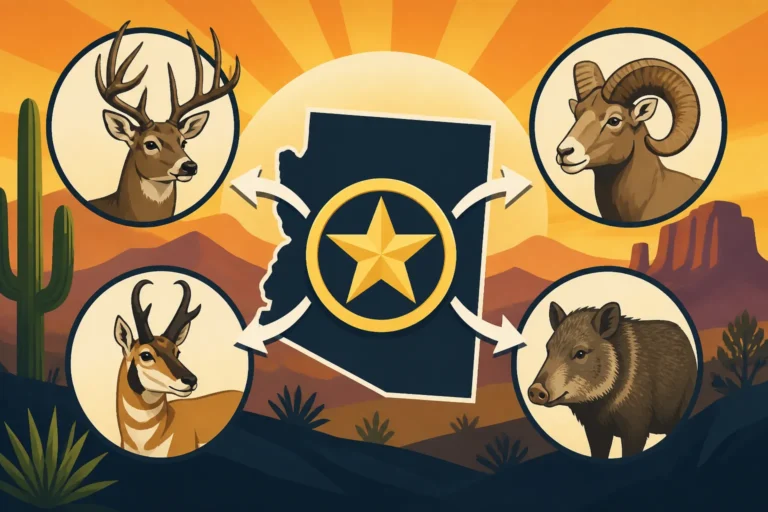
- Species-Specific Points: It's incredibly important to remember that Arizona's bonus points are species-specific. If you draw an elk tag, your elk points are reset to zero, but your deer points, antelope points, or javelina points remain entirely unaffected. This allows you to continue building points for other species while enjoying a hunt for the one you drew. This distinction is vital for long-term application strategy across multiple species, enabling hunters to pursue different animals without losing all their progress.
- The Point-Guard Strategy: Some very experienced hunters, especially those with very high point totals for a specific species (e.g., 20+ elk points), employ a "point-guard" strategy. They might choose to apply for "point-only" for several years to ensure their points aren't reset by inadvertently drawing a random tag for a hunt they don't truly want or aren't prepared to take. This is a personal decision based on your individual hunting goals, financial situation, and how much you value those accumulated points. It's a risk-reward calculation: either you keep applying for tags and hope for the best, or you protect your points for a future dream hunt that might require maximum points.
Practical Considerations for the Random Pass Applicant
Navigating the Arizona draw, especially understanding the nuances of the Random Pass, requires attention to detail and a proactive approach. From application deadlines to understanding draw results, there are several practical elements every hunter should be aware of to ensure they maximize their chances and avoid common pitfalls.
Understanding Application Deadlines and Draw Results
The Arizona Game and Fish Department runs two main draw cycles each year: one in February for elk and antelope, and another in June for deer, bighorn sheep, and bison. Each cycle has strict application deadlines that you absolutely cannot miss. Missing a deadline means missing out on the entire draw for that species for the year, and potentially losing a chance to earn a bonus point if you were only applying for that. You can find detailed information on Arizona Runs Two Draw Cycles, February and June to ensure you're always on schedule.
- Application Submission: The application process is almost entirely online now through the AZGFD portal. Make sure your account is active, your personal information is up-to-date, and your credit card is current and valid. Many an application has been rejected because of an expired card or incorrect billing information, which can be devastating after months of planning. Pay close attention to What Time Arizona Applications Close as it's typically a specific hour (usually 11:59 PM Arizona time) on the deadline day, not just the day itself.
- Checking Draw Results: After the draw runs its complex sequence, AZGFD typically posts the results on their online portal. This is a nerve-wracking but exciting time for all applicants. You'll log in to your portal account to see if you were successful in drawing a tag. Don't worry if your card isn't immediately charged; When Arizona Charges Your Card for a Tag can vary slightly, but a charge is usually the first unofficial sign of success. Regardless, always verify your draw status through the official AZGFD portal.
Group Applications and Random Draw Fairness
Many hunters apply with friends or family members using group applications, hoping to share the experience if successful. Arizona's system is designed to treat group applications fairly in both the Bonus Point and Random Passes. In a group application, the points of all applicants are averaged, and that average is used for the Bonus Point Pass. If the group doesn't draw in the Bonus Point Pass, the entire group then enters the Random Pass together, with one random number assigned to the group.
- All or Nothing for Groups: This "all or nothing" approach for group applications is important to understand clearly. If a group application draws a tag, all members of that group draw a tag for that specific hunt code (assuming tags are available for the entire group). Conversely, if the group's random number isn't low enough to draw a tag, no one in the group draws. This ensures that groups either hunt together or don't, preventing situations where only one or two members of a party draw. Our guide on Group Application Rules in the Arizona Draw offers more details.
- Strategic Grouping: For the Random Pass, group applications essentially have one entry, just like a single applicant. The only difference is that if that single entry wins, multiple people get tags. This means that while group applications don't inherently improve your individual Random Pass odds (you still only have one random number per group for a given hunt code), they ensure your hunting party stays together if successful, which is often a significant priority for many hunters who value the camaraderie of a shared hunt.
Researching and Understanding Hunt Data
To make the most of your Random Pass opportunities, thorough research is absolutely indispensable. Simply picking a unit blindly or based on anecdotal evidence is often a recipe for disappointment. You need to understand the historical performance of various units and hunts to strategically apply, even when relying on randomness.
- Hunt Success Reports: Arizona Game and Fish provides detailed hunt success reports after each season. These reports break down success rates by unit, weapon type, and even hunter type (resident/nonresident, youth, etc.). While this doesn't directly tell you Random Pass odds, it shows which units offer consistent opportunities and higher harvest rates, which can be extremely useful when selecting choices that might go into the random pool. High success rates in a unit often indicate robust game populations and good access.
- Third-Party Tools: Tools from reputable services like GoHunt are incredibly helpful here. They aggregate and analyze past draw data, providing sophisticated projections and insights into draw odds for both the Bonus Point and Random Passes. This allows you to see, for example, which units consistently have tags left over for the random draw, or which units required very few points to draw in the Random Pass. This analytical edge can make a big difference in how you structure your application, especially for your second and third choices, giving you a distinct advantage over those who don't delve into the data. Effectively Reading Arizona Hunt Permit Application Data is a skill that can significantly improve your draw success.
Here's a quick comparison of Arizona's two main draw pass systems:
| Feature | Bonus Point Pass (20% of tags) | Random Pass (80% of tags) |
|---|---|---|
| Purpose | Rewards applicants with high accumulated bonus points. | Provides a truly equal, random chance for all remaining applicants. |
| Eligibility | All applicants with existing bonus points for the species. | All applicants who did not draw in the Bonus Point Pass for their selected hunt codes. |
| Drawing Method | Applications sorted by (points + 1), lowest resulting number drawn first. | Each remaining application gets a truly random number, lowest number drawn first. |
| Point Impact | Direct impact; more points increase your weighted chance. | No direct impact; all remaining applications have an equal statistical chance. |
| Nonresident | Subject to the 10% cap within the point pass. | Subject to the 10% cap within the random pass for nonresident applicants. |
| Outcome | Higher chance for point-rich applicants. | Equal chance for all; highly reliant on "luck of the draw." |
Disclaimer
Disclaimer: The information provided in this guide is for general informational purposes only and does not constitute legal advice. Hunting regulations, seasons, and application processes can change frequently. Always consult the official Arizona Game and Fish Department regulations and website for the most current and accurate information before applying for tags or heading afield.