Hunting Opportunity Across the Arizona Strip
The Arizona Strip. Just hearing the name conjures images of massive mule deer, vast, untamed landscapes, and the kind of hunting challenge that draws dedicated adventurers from across the globe. But let's be realistic: this isn't a casual weekend hunt. It's a serious commitment, fraught with formidable logistical hurdles and incredibly tough draw odds. This guide is here to cut through the mystique and give you a grounded, comprehensive look at the realities, and the genuine opportunities, of hunting this legendary piece of Arizona.
The Allure of the Arizona Strip: A Hunter's Paradise (with a Catch)
For many, the Arizona Strip represents the pinnacle of mule deer hunting, a place whispered about in hushed tones around campfires. It holds a powerful draw, promising the chance at a buck of a lifetime, but it's crucial to understand why this reputation exists and what it truly entails. This isn't just hype; it's a testament to a unique landscape that demands respect and extreme preparation.
The Legendary Mule Deer of the Arizona Strip
The Strip's fame is primarily built upon its incredible mule deer genetics and the unique habitat that allows these animals to grow to impressive sizes. We're talking about bucks with immense antler mass and spread, the kind that grace magazine covers and adorn the walls of serious trophy hunters. The combination of nutrient-rich forage, relatively low deer density, and an age structure that allows bucks to mature unpressured for many years contributes to this phenomenon. These aren't just big deer; they're truly exceptional. There's a reason why The Arizona Strip Mule Deer Reputation precedes itself in hunting circles worldwide.
However, the reality is that finding one of these giants, even with a tag in hand, is incredibly challenging. The deer are not concentrated; they are wild, scattered across millions of acres of unforgiving terrain. Drawing a tag for these units is often referred to as winning the lottery, and even if you do, success isn't guaranteed. It's a dream hunt for sure, but one that requires immense patience, decades of applying, and a significant dose of luck in the draw. It's easy to get caught up in the dream, but remember, the dream also involves relentless effort once you're on the ground.
These deer are masters of their environment, blending seamlessly into the vast, broken country. Their survival instincts are honed over generations in a landscape where human presence is rare. You won't find them congregating in predictable food plots; instead, they move through the sparse juniper, sagebrush, and pinyon pine, utilizing every bit of cover and elevation change to their advantage. Every encounter feels earned, and that's part of the Strip's deep appeal to those who crave a truly wild hunting experience.
Unforgiving and Remote Terrain: A Test of Endurance
The Arizona Strip is not just a geographical location; it's a state of mind, demanding peak physical and mental endurance. Picture vast expanses of wild, undeveloped country, dissected by deep, red-rock canyons, towering mesas, and countless washes. Roads are often little more than two-track trails, prone to becoming impassable with a single rain shower or a dusting of snow. This isn't your typical drive-up-and-hunt experience; it's an immersive wilderness journey.
The climate itself can be a hunter's biggest adversary. Early season hunts can mean scorching, dehydrating heat, where every step feels like an effort and water becomes your most precious commodity. Conversely, late season hunts often bring bitter cold, heavy snow, and strong winds, turning dirt tracks into muddy bogs or icy impassable routes. Weather can change in an instant, trapping unprepared hunters or making travel treacherous. You absolutely must respect the elements and plan for every contingency. Heat Management on an Arizona Early Season Hunt is a critical skill here.
Adding to the challenge is the sheer remoteness. Cell service is a luxury you cannot count on, often non-existent for miles and miles. If you break down, get lost, or suffer an injury, you could be hours, or even days, from help. Self-sufficiency is paramount. This isn't just about packing an extra snack; it's about carrying extra fuel, multiple spare tires, recovery gear, comprehensive first-aid kits, and reliable satellite communication devices. You are truly on your own out here, and that isolation, while appealing to some, can quickly turn dangerous if not meticulously planned for.
Cracking the Code: Access and Permit Strategies
Getting to hunt the Arizona Strip isn't just about drawing a tag; it's about understanding the complex tapestry of land ownership and the intricacies of Arizona's draw system. Many hunters spend years, even decades, simply trying to navigate these initial hurdles. It's a frustrating, but necessary, part of the process.
Navigating Public and State Trust Land
The Arizona Strip is a mosaic of public and state land, with parcels of Bureau of Land Management (BLM) ground, National Forest, and Arizona State Trust Land interspersed with private holdings. This creates a challenging patchwork where boundaries can be blurry and seemingly random. You might be legally on public land one moment, only to inadvertently step onto a private ranch or a closed State Trust parcel the next. It’s enough to make even seasoned hunters feel overwhelmed.
This is precisely where modern mapping tools become utterly indispensable. Services like onX Hunt are not just conveniences; they are non-negotiable necessities for navigating this complex landscape. These apps, with their detailed land ownership layers, allow you to know exactly where you are standing at all times, preventing accidental trespassing and ensuring you stay within legal hunting areas. Trying to hunt the Strip without such a tool is like trying to drive across the desert blindfolded. You need to download your maps for offline use, because, as we discussed, cell service is a rare commodity out here. Using onX Layers for Arizona Public Land is an essential skill to master before you even consider setting foot on the Strip.
It's also important to understand the rules around Arizona State Trust Land. While your hunting license generally serves as your permit for recreational access, there are nuances. Certain State Trust Land parcels may be leased for ranching or other uses, and these lessees can sometimes restrict or manage access. Always double-check current regulations and look for posted signs. A little research on the Arizona State Land Department website can save you a lot of headache. Rest assured, though, Do You Need a Permit for Arizona State Trust Land? often clarifies that your hunting license usually covers you for incidental access.
Understanding the Arizona Draw Odds and Bonus Points
Let's not sugarcoat it: drawing a premium Arizona Strip mule deer tag is incredibly difficult. For many hunters, resident and nonresident alike, it is a once-in-a-lifetime opportunity, if it happens at all. These units often have draw odds that hover around a fraction of a percent, meaning thousands of applicants vie for a handful of tags. It's easy to get discouraged by these numbers, but it’s the reality of hunting in such a high-demand, low-opportunity area.
Arizona operates on a bonus point system designed to reward persistence. Every year you apply for a species and are unsuccessful, you earn a bonus point. These points increase your odds in subsequent draws, but they don't guarantee a tag. Think of it like a lottery where the more tickets you buy, the better your chances, but you can still go decades without winning. Earning an Arizona Point by Applying is a marathon, not a sprint. This system means that many successful applicants for the Strip have been building points for 15, 20, or even 25+ years.
For those serious about applying, resources like GoHunt are invaluable. They compile draw odds data, analyze trends, and provide insights that can help you strategize your application. While no service can predict the future or guarantee a tag, they can help you understand your realistic chances and optimize your application choices across various units and species. Checking Arizona Draw Odds Before You Apply is a ritual for many long-time applicants. Keep in mind, too, the state has a Arizona Caps Nonresidents at Ten Percent of Every Hunt, meaning out-of-state hunters face even steeper odds for these highly coveted tags. It's a tough pill to swallow, but it's crucial information for setting realistic expectations.
| Aspect | Challenge | Strategy |
|---|---|---|
| Land Access | Patchwork of public/private, State Trust Land rules | Use onX Hunt, study MVUMs, respect private property signage |
| Draw Odds | Extremely low for premium units | Apply annually for bonus points, use GoHunt for analysis |
| Terrain | Vast, rugged, remote, limited water | E-scout intensely, physical fitness, carry ample water/supplies |
| Weather | Extreme heat, sudden cold, heavy snow/mud | Pack layers, carry emergency gear, monitor forecasts closely |
| Deer Density | Low, deer are spread out and wary | Master glassing, patient stalking, be prepared for long hauls |
Maximizing Your Chances: Preparation and Tactics for the Strip
Once you've beaten the odds and drawn that coveted Arizona Strip tag, the real work begins. This is not a hunt where you can just show up and expect success. It requires meticulous planning, the right gear, and a hunting style tailored to the vast, unforgiving nature of the landscape.
Intensive E-Scouting and Pre-Season Field Reconnaissance
Success on the Strip is forged long before you ever set foot in your unit. Intensive e-scouting is non-negotiable. You need to spend countless hours poring over satellite imagery, topographical maps, and public land layers. Identify potential glassing points, bedding areas, feeding zones, and critically, water sources. In this arid environment, water is often the lifeblood for all wildlife, and understanding its locations and how deer use them is paramount. E-Scouting an Arizona Unit Before the Season isn't just a suggestion; it's a fundamental step.
If at all possible, a physical scouting trip is invaluable. While satellite imagery gives you the lay of the land, nothing compares to seeing the terrain firsthand. You can assess road conditions, identify better glassing knobs, and confirm potential access points that looked promising on a map. Even a short trip can reveal critical details about recent deer sign, vegetation, and subtle nuances in the landscape that a screen simply can’t convey. For many hunters, however, especially nonresidents, a physical scouting trip isn't feasible, making e-scouting even more critical.
Focus your e-scouting on identifying areas of transition, saddles between mesas, and isolated pockets of forage near bedding cover. Pay attention to how the terrain funnels animals, especially around the sparse water sources that dot the landscape. Understanding these movement patterns before you arrive gives you a significant advantage, allowing you to maximize your limited time on the ground.
Gear Up for Self-Sufficiency and Success
When hunting the Arizona Strip, your gear isn't just about comfort; it's about survival and increasing your odds of success. Investing in high-quality, reliable equipment is an investment in your hunt and your safety.
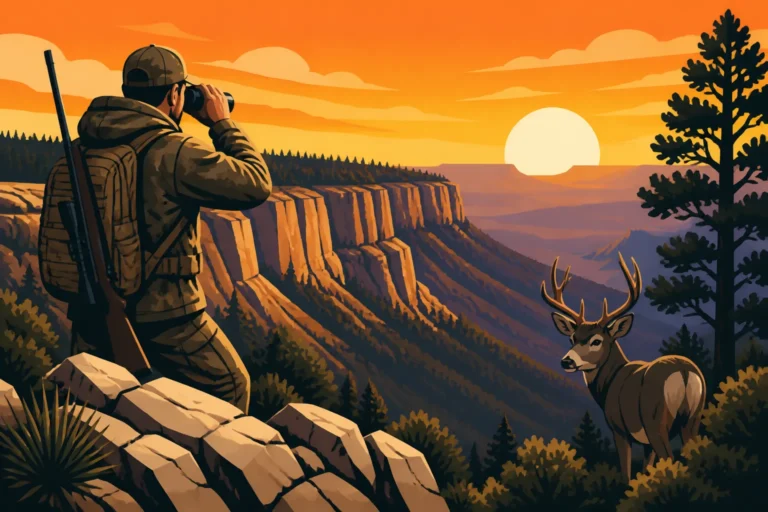
First and foremost, optics are king. You will spend far more time behind glass than walking, so top-tier binoculars (10x or 12x), a powerful spotting scope (20-60x or 25-75x), and a rock-solid tripod are not luxuries – they are absolute necessities. You'll be picking apart vast, distant slopes for hours, looking for the tell-tale flicker of an ear or the slight shadow of an antler. Spotting Scope Power for Coues Country applies just as much, if not more, to mule deer in the wide-open Strip.
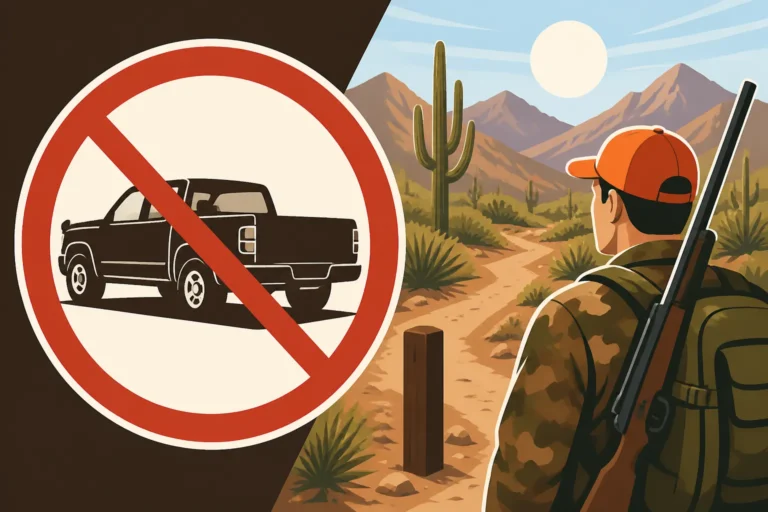
Next, consider your vehicle. A reliable 4×4 with excellent ground clearance, robust off-road tires, and a full-size spare (or two) is essential. Many of the two-track roads are brutal on vehicles, and breakdowns are common. Carry extra fuel, tools, a tire repair kit, a compressor, a shovel, and recovery straps. This is not the place to skimp on vehicle preparedness.
Water, food, and emergency supplies cannot be overemphasized. You need to carry significantly more water than you think you’ll need for yourself, your camp, and emergency vehicle use. A satellite communication device (like an inReach or Zoleo) is also critical, allowing you to call for help in areas without cell service. Pack a comprehensive first-aid kit, extra layers for drastic temperature swings, and a robust navigation system (GPS in addition to your phone with offline maps). Water You Must Carry on a Day Hunt should be an extreme minimum multiplied by many days.
Adopt a "Glass-and-Stalk" Mentality
The sheer scale of the Arizona Strip dictates a specific hunting approach: heavy on glassing, strategic on stalking. You'll likely spend the majority of your hunting hours sitting on a high vantage point, patiently dissecting every inch of the landscape with your optics. This isn't about covering miles on foot; it's about covering miles with your eyes.
Mastering techniques like The Grid Glassing Method, Step by Step is fundamental. You'll methodically scan a vast area, breaking it down into smaller, manageable grids, searching for the subtle clues that betray a mule deer's presence. Patience is key. It can take hours to find a buck, and many more hours might pass before you spot another. These deer blend in perfectly with their surroundings, appearing almost as part of the rocky outcrops or stunted juniper trees. Your eyes will play tricks on you, but persistence will eventually pay off.
Once a buck is spotted, the real work begins: the stalk. This is where your physical conditioning and knowledge of the terrain are put to the ultimate test. A stalk on the Strip can be several miles long, traversing deep washes, climbing steep, rocky slopes, and navigating dense brush. You'll need to meticulously plan your approach, paying careful attention to wind direction, thermals, and every piece of cover available. Closing the distance on an alert, mature mule deer in such open country demands extreme stealth and a profound understanding of animal behavior. How Far to Stalk a Bedded Coues Buck (or a Strip mule deer) means getting within effective shooting range while remaining undetected, which is a monumental feat in this environment. It's a mental game as much as a physical one, demanding discipline, focus, and a deep well of resilience.
Disclaimer
This article is for general informational purposes only and does not constitute professional advice. Laws, prices and regulations vary by location and change over time. Consult a qualified professional for guidance on your specific situation.