Waterfowl Areas Along the Colorado River
Hunting waterfowl along Arizona's stretch of the Colorado River can feel like navigating a maze of fluctuating water levels, ever-changing regulations, and a mix of public and private land. Many hunters dream of those crisp mornings with ducks cupping wings over decoys, but the reality of finding consistent action in this unique desert riparian zone often leads to frustration. This comprehensive guide will walk you through everything you need to know about pursuing ducks and geese on the Colorado River, from understanding prime habitats to deciphering access rules and honing your hunting strategies, helping you turn those dreams into successful hunts.
The Colorado River: A Waterfowler's Oasis in the Desert
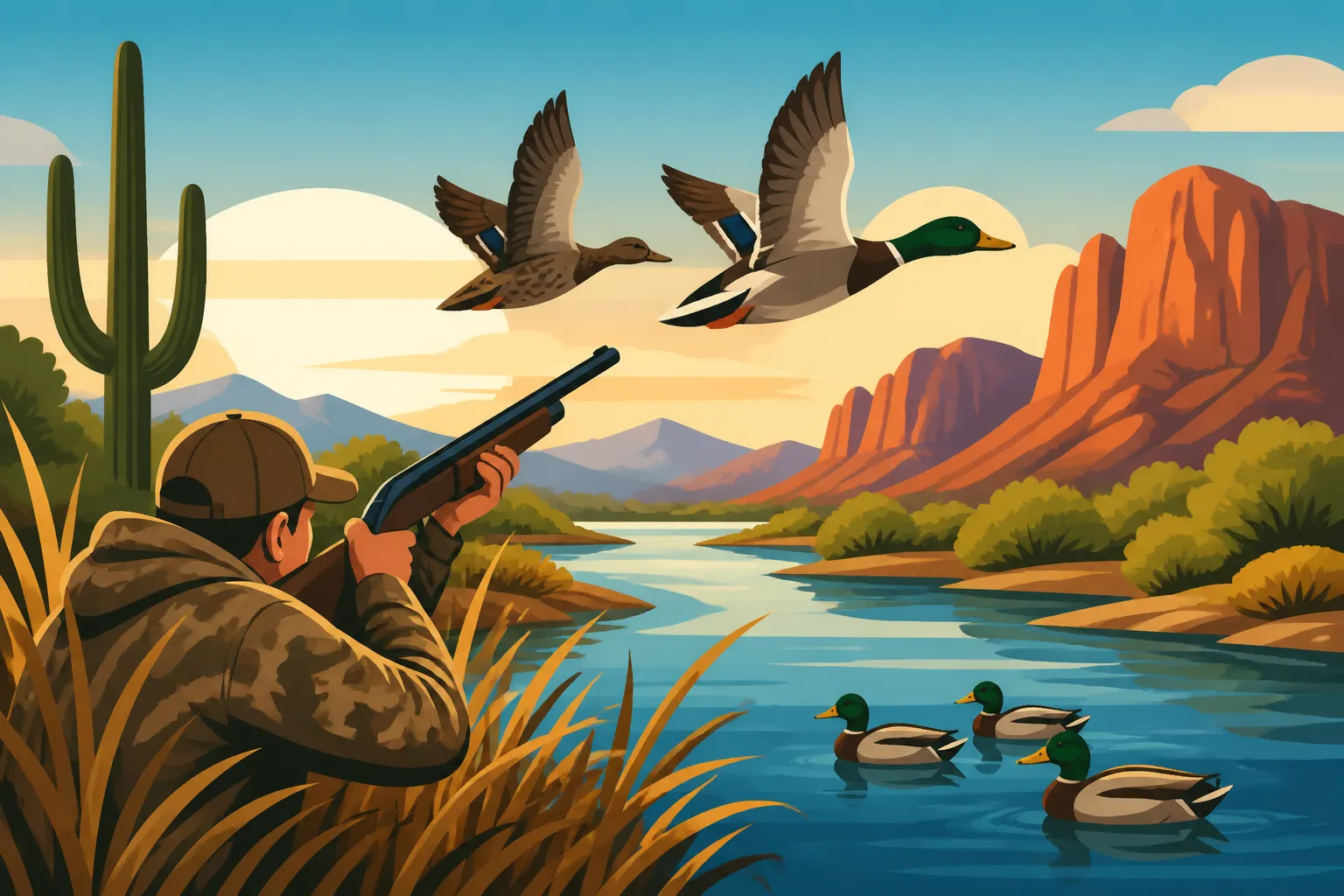
Imagine a ribbon of vibrant life cutting through the arid Arizona landscape, teeming with migratory birds. That's the Colorado River for waterfowl. While much of Arizona is known for its deer and elk, the river corridor, especially the lower stretches, transforms into a crucial wintering ground and migratory pathway for countless ducks, geese, and other waterbirds. It's a stark contrast to the surrounding desert, offering a truly unique hunting experience that blends the tranquility of waterfowling with the rugged beauty of the Southwest.
Why the Colorado River Attracts Waterfowl
The river's significance lies in its unique hydrology and vegetation. Unlike ephemeral desert washes, the Colorado River maintains a consistent flow, creating a diverse array of habitats from slow-moving backwaters and oxbow lakes to marshy sloughs and agricultural fields fed by irrigation. These areas provide vital resources: open water for resting and roosting, abundant aquatic vegetation and invertebrates for food, and dense cover along the banks for protection. As temperatures drop further north, birds funnel down this corridor, drawn by the milder climate and reliable sustenance, making it a critical flyway. The river acts as a natural magnet, pulling in birds from the Pacific Flyway and offering them a refuge from colder climes, which is why diligent scouting is so important for success here.
Prime Waterfowl Habitat Along the River
From the northern reaches down to the Yuma area, the Colorado River offers varied habitats. The upstream sections, particularly around Lake Havasu and Topock Gorge, feature clearer water and more rocky shores interspersed with marshy inlets. Further south, towards Parker and Yuma, the river broadens, becoming slower and muddier, with extensive backwaters, irrigation canals, and agricultural fields (alfalfa, wheat, and corn are common) becoming more prevalent. These agricultural areas, especially when flooded, are goldmines for dabbling ducks and geese, offering rich foraging grounds. It’s in these lower river stretches where you'll often find the highest concentrations of birds, particularly during the peak of migration in late fall and winter. The mixture of deep water, shallow mud flats, and agricultural forage creates a buffet that attracts and holds a wide variety of species.
Key Waterfowl Species and Their Habits
Hunting the Colorado River means you'll encounter a diverse array of species. Understanding their habits, preferred foods, and typical behaviors is crucial for tailoring your hunting strategy. While every day is different, knowing what to expect from common ducks and geese will give you a significant advantage.
Common Duck Species You'll Encounter
The Colorado River is a bustling highway for ducks. You can expect to see a good mix of both dabblers and divers.
- Dabbling Ducks: Mallards, gadwall, green-winged teal, cinnamon teal, wigeon, and pintails are frequent visitors. These birds typically feed in shallow water, tipping up to graze on submerged vegetation, seeds, and small invertebrates. They prefer the calmer backwaters, sloughs, and flooded fields. Their flight patterns tend to be more agile, and they often respond well to calling and decoys set in shallow water. You'll often find them working the edges of thick stands of cattails or smartweed, looking for sheltered spots to feed and rest.
- Diving Ducks: Redheads, canvasbacks, scaup, and ruddy ducks also frequent the deeper, more open sections of the river and larger impoundments. These ducks dive underwater to feed on aquatic plants, mollusks, and small fish. They often require a different decoy spread, typically larger and more spread out in deeper water, and may not respond to calling in the same way dabblers do. Understanding where the deeper channels and open water exist, often with the help of a detailed mapping application like onX Hunt, can significantly improve your chances of setting up in the right spot for divers.
Goose Species That Use the River Corridor
Geese are also a major draw to the Colorado River, primarily Canada geese and sometimes specklebellies (white-fronted geese). These birds are often found in large flocks, especially in agricultural fields adjacent to the river, where they graze on waste grain and tender shoots. They'll use the river itself for roosting and loafing, flying out to feed in fields at dawn and dusk.
- Canada Geese: These are the most common geese along the river. They are notoriously wary and require careful scouting to locate their feeding and roosting patterns. Large, realistic decoy spreads, often paired with a blind that offers excellent concealment, are usually necessary for success. Their calls are distinctive, and mastering various honks and clucks can be highly effective. They'll often land far from a perceived threat, so patience and meticulous hide construction are paramount.
- White-fronted Geese (Specklebellies): While less common than Canadas, specklebellies do migrate through and winter along the Colorado River. They are often even warier than Canada geese and have a distinctive "laughing" call. Hunting these requires specialized calls and decoys, and often demands even more precise scouting to intercept them between their roosting and feeding areas.
Navigating Access and Regulations for River Hunting
Hunting along the Colorado River isn't as simple as just showing up with a shotgun. It involves understanding a patchwork of land ownership, specific regulations for migratory birds, and the unique challenges of a dynamic river system. Proper preparation and knowledge are your best defense against inadvertently breaking rules or wasting precious hunting time.
Understanding Land Ownership and Public Access
The Colorado River corridor features a complex mosaic of land ownership. You'll find sections managed by the Bureau of Land Management (BLM), national wildlife refuges, state parks, tribal lands, and private property.
- BLM Land: Much of the undeveloped river frontage is managed by the BLM and is generally open to hunting. However, access points can be limited, and some areas may be designated as wilderness or special management zones with restrictions on vehicle use. Always consult BLM maps and local field offices for current regulations.
- National Wildlife Refuges: Several national wildlife refuges, such as Cibola National Wildlife Refuge and Bill Williams River National Wildlife Refuge, are found along the river. These refuges often have specific waterfowl hunting seasons, designated hunt areas, and permit requirements that differ from general state regulations. Some might require a separate drawing or fee. It's crucial to check each refuge's specific rules well in advance.
- State Trust Land: Arizona Holds 9.2 Million Acres of State Trust Land, and some parcels abut the river. While a hunting license typically grants access for hunting on these lands, always confirm the boundaries and specific regulations, as some areas might be leased for agriculture or other uses, potentially impacting access. You can often discern these boundaries using mapping apps like onX Hunt, which clearly delineates land ownership.
- Tribal Lands: Portions of the river run alongside or through tribal reservations. Hunting on tribal lands is strictly prohibited without specific tribal permits and adherence to their regulations, which are separate from state laws. Never assume you can hunt tribal land even if it looks like public access.
- Private Property: Agricultural fields and some riverfrontage are privately owned. Trespassing is a serious offense. Always obtain explicit permission from landowners before setting foot on private property. Sometimes, outfitters have secured leases on prime private ground, which can be an option if you're looking for exclusive access.
Essential Licenses, Stamps, and Permits
Before you even think about setting out decoys, ensure all your paperwork is in order.
- Arizona Hunting License: This is your fundamental requirement for any hunting in the state.
- Arizona Waterfowl Stamp: A state-specific stamp dedicated to waterfowl conservation.
- Federal Migratory Bird Hunting and Conservation Stamp (Federal Duck Stamp): This federal stamp is required for all waterfowl hunters 16 years of age and older. It's a critical piece of conservation funding.
- HIP (Harvest Information Program) Validation: You'll need to register with the HIP program annually, which helps biologists gather data on migratory bird harvests.
- Specific Refuge Permits: As mentioned, if you plan to hunt within a national wildlife refuge, you will likely need additional permits or might have to participate in a draw. Always check the refuge's website for their current requirements.
Here's a quick overview of typical requirements:
| Requirement | Applies To | Notes |
|---|---|---|
| Arizona Hunting License | All hunters, general state requirement | Check resident/non-resident fees and age requirements |
| Arizona Waterfowl Stamp | All waterfowl hunters | Supports state-level conservation programs |
| Federal Duck Stamp | Waterfowl hunters 16 years and older | Funds habitat acquisition and conservation across the US |
| HIP Validation | All migratory bird hunters (ducks, geese, doves) | Annual registration for harvest data collection |
| Refuge-Specific Permit | Hunters on National Wildlife Refuges | Varies by refuge; may involve draw or special fees |
| Written Permission | Hunting on private land | Always required for private property access |
Waterfowl Hunting Regulations Unique to Arizona
Arizona adheres to federal guidelines for migratory bird hunting, but also has its own specific rules you must follow.
- Season Dates and Bag Limits: These are set annually and can vary by species and management unit. Always consult the current Arizona Game and Fish Department (AZGFD) hunting regulations booklet. Bag limits are strict, and knowing your species identification is paramount to avoid overharvesting certain birds.
- Legal Shooting Hours: Migratory bird hunting typically begins a half-hour before sunrise and ends at sunset. Stick to these times rigorously. Arizona Legal Shooting Hours for Big Game are similar, but always verify for specific species.
- Shotgun Requirements: Shotguns must be plugged to hold no more than three shells (one in the chamber, two in the magazine).
- Non-Toxic Shot: Only non-toxic shot (steel, bismuth, tungsten-iron, etc.) is permitted for all waterfowl hunting throughout the state. Lead shot is strictly prohibited to prevent lead poisoning in birds.
- Decoys and Blinds: While general rules apply, some refuges might have specific restrictions on the type or number of decoys, or on permanent blinds. Always confirm.
- Retrieving Game: Make every effort to retrieve all downed birds. It's not only ethical but often a legal requirement.
Essential Strategies for a Successful Colorado River Waterfowl Hunt
Successfully hunting waterfowl on the Colorado River requires more than just a gun and some shells. It demands meticulous scouting, strategic decoy placement, effective calling, and adaptable blind techniques. The ever-changing nature of the river and the birds means you need to be prepared to adjust your plan on the fly.
Pre-Season Scouting and In-Season Adaptability
Scouting is, arguably, the most critical component of a successful Colorado River waterfowl hunt. Birds are constantly moving, driven by food availability, hunting pressure, and weather patterns.
- Identify Roosts and Feeding Areas: Before the season, and especially in the days leading up to your hunt, spend time glassing the river, backwaters, and adjacent fields at dawn and dusk. Look for large concentrations of birds flying to and from feeding areas. Identifying these patterns will dictate where you set up. Use applications like onX Hunt to mark potential spots, scout land ownership, and understand topography without stepping foot on the ground.
- Monitor Water Levels and Habitat Changes: The Colorado River's water levels can fluctuate due to dam operations or natural events. What was a prime shallow feeding flat one week might be a deep channel the next. Always check current conditions and adjust your plans accordingly. This might mean shifting from a shallow water dabbler spread to a deeper water diver setup.
- Observe Bird Behavior: Pay attention to how birds react to pressure. If they're shying away from a particular type of blind or decoy spread, try something different. Sometimes, simply moving your spread 50 yards can make all the difference. E-Scouting an Arizona Unit Before the Season is a great way to start, but there's no substitute for eyes on the ground.
Decoy Spreads and Calling Techniques
Your decoy spread and calling ability are your primary tools for luring birds into range.
- Decoy Selection and Placement: For dabbling ducks in shallow water, a spread of 12-36 decoys, predominantly mallards with a few teal and wigeon, is often effective. Consider using motion decoys, like spinning-wing decoys (where legal), to add realism. Place some decoys upwind, leaving an open "landing zone" directly in front of your blind. For divers on larger water, you might need more decoys (up to 50 or more) spread out in long lines or J-hooks, mimicking a raft of birds. Geese, being larger and warier, often require larger spreads of full-body or shell decoys, numbering 2-4 dozen or even more in large fields. Always prioritize realism and motion.
- Effective Calling: Mastering a variety of calls is essential. For ducks, a sharp greeting call to get attention, followed by a series of feed calls and contented quacks, can be highly effective. Learn to "read" the birds and adjust your calling based on their response. For geese, a deep honk to get their attention, followed by clucks and moans, works well. Practice is key, and less is often more – don't overcall, especially once birds are committed. Be mindful of hunting pressure; if birds are call-shy, a quiet, realistic spread might be more successful.
Concealment and Ethical Considerations
Good concealment is non-negotiable for waterfowl hunting, and ethical behavior is the cornerstone of the sport.
- Blind Building and Camouflage: Whether you're using a pop-up blind, a layout blind in a field, or constructing a natural blind from reeds and vegetation, ensure you blend seamlessly with your surroundings. Pay attention to your silhouette against the sky. Waterfowl have incredible eyesight, and even a slight glint of sunlight off an exposed face or gun barrel can flare birds. Make sure your blind allows for comfortable shooting and quick access to downed birds.
- Shooting Ethics: Only take shots at birds within your effective range. Wounded birds are often lost birds, which is unethical. Practice shooting consistently before the season. When retrieving downed birds, do so quickly and efficiently, especially if other hunters are in the area. Always follow The Ethically Hunting Arizona Course Explained principles, not just for big game, but for all hunting. Be respectful of other hunters and landowners, and leave no trace behind.
This article is for general informational purposes only and does not constitute professional advice. Laws, prices and regulations vary by location and change over time. Consult a qualified professional for guidance on your specific situation.