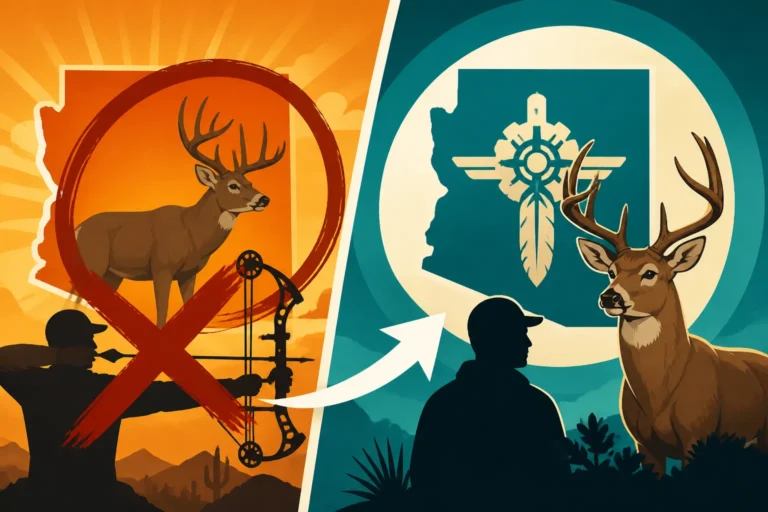
Why Tribal Tags Sit Outside the State Draw
For many hunters new to Arizona, the rules and regulations can feel like navigating a maze, especially when they first encounter the concept of hunting on tribal lands. It’s a common point of confusion to realize that tags issued by Arizona Game and Fish don't necessarily grant access to prime hunting areas on sovereign tribal nations within the state's borders. This guide will clarify why tribal tags are distinctly separate from the state draw and how these unique opportunities work.
The Foundation of Tribal Sovereignty in Arizona
Understanding why tribal hunting tags operate outside the Arizona state draw system begins with recognizing the fundamental legal status of Native American tribes in the United States. These aren't just tracts of land set aside; they are sovereign nations with inherent rights to self-governance, which extends directly to how they manage their natural resources, including wildlife. This concept can be a little difficult to grasp at first, especially when you're used to a single state agency overseeing all hunting regulations.
Understanding Tribal Self-Governance and Jurisdiction
Imagine a small, independent country situated right in the middle of a larger one. That's essentially the relationship between tribal nations and the state of Arizona, or any other state for that matter. Federally recognized tribes possess inherent sovereign powers. This means they have the authority to create and enforce their own laws, govern their citizens, and manage their lands and resources as they see fit, often guided by their own cultural values and traditions. When it comes to hunting, this translates into the ability to establish unique hunting seasons, bag limits, weapon restrictions, and permitting processes that are entirely separate from those of the state.
This distinct jurisdiction means that Arizona state hunting laws and regulations generally do not apply within the boundaries of tribal reservations, unless specific agreements or federal laws dictate otherwise. Hunters often get frustrated because they've studied the Arizona regulations inside and out, only to find out those rules don't apply where they really want to hunt. It's not about being exclusive; it's about respecting long-standing legal frameworks that acknowledge tribal nations as independent governmental entities.
Distinct Land Ownership and Resource Management
The lands within tribal reservations are not public lands in the same way that Bureau of Land Management (BLM) or National Forest lands are. They are held in trust by the federal government for the benefit of the tribe or are owned directly by the tribe. This unique form of land ownership gives tribes exclusive rights to manage access and resource utilization on their territories. When you hunt on tribal land, you are essentially a guest on sovereign territory, subject to their laws, not Arizona's.
This self-determination allows tribal nations to implement wildlife management strategies that align with their specific goals, which might include cultural preservation, economic development, or maintaining robust trophy animal populations. They fund their own game and fish departments, employ their own biologists, and conduct their own wildlife surveys, all geared towards sustaining healthy ecosystems on their lands. This direct control means they don't have to wait for the state draw results or adhere to statewide season dates; they can set their own.
Separate Wildlife Management and Regulations
Because tribal nations hold sovereign authority over their lands and resources, they also establish their own distinct wildlife management practices and regulatory frameworks. This leads to a completely separate system for tags, licenses, and hunting rules compared to what you'd find on state or federal lands in Arizona. It’s a parallel universe of hunting regulations, and it's vital for any hunter to understand this distinction before planning a trip.
Tribal Game and Fish Departments
Just as Arizona has its Game and Fish Department, many tribal nations have their own fully functioning game and fish departments or natural resource agencies. These departments are responsible for everything from wildlife surveys and habitat improvement to law enforcement and permit issuance within their reservation boundaries. They employ biologists, game wardens, and administrative staff who work diligently to manage and protect the wildlife resources crucial to their communities.
These tribal agencies often have deep, generational knowledge of their lands and the animals that inhabit them. Their management decisions are frequently influenced by traditional ecological knowledge alongside modern science, offering a unique perspective on conservation. When you interact with a tribal game and fish office, you're engaging with a distinct governmental body, not a branch of the state. Hunting Arizona Tribal Land Through an Operator can sometimes involve navigating these tribal departments, or the operator handles it for you.
Unique Tag Structures and Application Processes
Perhaps the most significant difference for hunters is the tag acquisition process. You won't find tribal tags in the Arizona Game and Fish Department's state draw. Instead, you apply directly to the specific tribe offering the hunt. Each tribe has its own application period, forms, fees, and drawing or purchasing methods. Some tribes run competitive draws for high-demand tags, similar in spirit to state draws but entirely independent. Others may sell tags over-the-counter or through an auction process.
The costs associated with tribal permits can also vary widely and are generally set to fund tribal wildlife programs and services. These aren't just "extra" fees; they are the primary mechanism for supporting the tribal game and fish department and managing the wildlife on their lands. It's a completely different revenue stream and management model, which is why What an Arizona Tribal Hunting Permit Includes can differ so much from a state tag.
Specific Rules You'll Encounter on Tribal Lands
Beyond the application process, hunters must pay close attention to the specific hunting regulations of each tribe. These can differ significantly from Arizona's state regulations. For example, season dates for elk or deer might not align with state seasons, weapon restrictions could be different, or there might be unique requirements for hunter orange, legal shooting hours, or even camping.
It's common for tribes to have specific rules about guiding, requiring hunters to use tribal-approved outfitters or guides. Some tribes might have specific rules about off-road travel, trespass on certain areas, or cultural sites. You might also find that for some tribal hunts, a state hunting license is not required, as the tribal permit replaces it entirely for the duration of the hunt on tribal lands. However, it's always crucial to verify this with the specific tribal game and fish department before you go. Do Arizona Tribal Hunts Require a State License? is a question you should always research directly with the tribe you plan to hunt with.
Hunting Opportunities on Arizona's Tribal Lands
Despite the separate regulations and application processes, Arizona's tribal lands offer some of the most sought-after hunting experiences in the Southwest. These lands are often rich in wildlife, well-managed, and can provide incredible opportunities for trophy animals due to careful stewardship and sometimes limited hunting pressure. Understanding which tribes offer what can open up a whole new world of hunting possibilities.
White Mountain Apache: Renowned Elk and Deer Hunts
When Arizona hunters think of tribal hunts, the White Mountain Apache Tribe's lands are often top of mind, especially for elk. The Fort Apache Reservation, located in the east-central part of Arizona, is famous for its large, healthy elk herds and the potential to harvest truly magnificent bulls. Their management focuses on quality over quantity, and their premium elk tags are highly coveted.
The White Mountain Apache Game and Fish Department runs a sophisticated hunting program, offering various elk hunts, including archery, muzzleloader, and rifle opportunities. They also offer excellent deer hunting for both Coues and mule deer, as well as bear, mountain lion, and turkey. The unique terrain, ranging from high ponderosa pine forests to lower desert-like areas, provides diverse habitats for a wide array of species. Many hunters consider a White Mountain Apache Guided Elk Hunts an experience of a lifetime.
San Carlos Apache: Diverse Big Game Potential
Further south, the San Carlos Apache Tribe also manages a substantial reservation that offers outstanding hunting. Their lands are diverse, spanning various elevations and ecosystems, which supports a healthy population of big game. The San Carlos Apache are well-known for their quality Coues deer, mule deer, and especially for their desert bighorn sheep. While less publicized than the White Mountain Apache elk hunts, their opportunities are just as valuable.
The San Carlos Apache Game and Fish Department also oversees a detailed permit system, offering a range of hunts throughout the year. For hunters looking for a unique challenge, the opportunity to hunt a desert bighorn sheep on San Carlos lands is truly special, often involving rugged terrain and a physically demanding experience. San Carlos Apache Trophy Hunts are typically for discerning hunters seeking a high-quality experience.
Other Tribal Hunting Programs
While the White Mountain and San Carlos Apache Tribes are perhaps the most widely recognized for their big game hunting programs, it's important to remember that other tribal nations in Arizona may also offer hunting opportunities. Each tribe is autonomous, and their programs can change. Some may focus on specific species, or have more limited permits available. For example, some tribes might offer hunts for javelina, bear, or even small game.
It's always recommended to directly contact the specific tribal game and fish department you are interested in to inquire about their current hunting regulations, available permits, and application processes. Information changes, and relying on outdated resources can lead to disappointment. A quick call or visit to their official website is always the best first step.
Navigating the Logistics and Respecting Tribal Customs
Hunting on tribal lands is a unique privilege that requires a different approach than hunting on state-managed public lands. From securing your permit to understanding the local customs, a successful and respectful experience hinges on good preparation and an open mind.
Obtaining Permits and Understanding Costs
As mentioned, permits for tribal hunts are acquired directly from the specific tribal game and fish department. This usually involves navigating their specific website or contacting their office. The application windows, draw dates, and permit fees will vary significantly between tribes and even between different hunts offered by the same tribe. For example, a trophy elk tag might be substantially more expensive than a javelina tag.
It's crucial to understand the total cost involved. Tribal permits often represent a significant investment, reflecting the quality of the hunting opportunity and supporting tribal wildlife conservation. These costs are separate from any state hunting license you might hold. Before you apply, make sure you know exactly what is included in the permit fee and what additional costs you might incur, such as guide fees, accommodation, or specific access fees. This is where researching options and understanding all the components is key.
Here’s a simplified comparison of key differences:
| Feature | Arizona State Land Hunts | Arizona Tribal Land Hunts |
|---|---|---|
| Governing Body | Arizona Game and Fish Dept. | Individual Tribal Game & Fish Dept. |
| Land Ownership | Public (BLM, Forest Service), State Trust | Sovereign Tribal Lands (held in trust or owned by tribe) |
| Tag Acquisition | State draw, OTC from AZGFD | Directly from specific Tribe's office/website (draw, OTC, auction) |
| State License Req. | Yes, always | Varies by tribe; often no state license needed on tribal lands |
| Jurisdiction | State law, Federal law on public lands | Tribal law, Federal law where applicable |
| Revenue Use | State wildlife programs, conservation | Tribal government services, wildlife programs |
| Guide Requirement | Generally no, unless specific hunt type | Often required or highly recommended by tribe |
Working with Tribal-Approved Outfitters
For many premium tribal hunts, particularly those for trophy elk or bighorn sheep, using a tribal-approved outfitter is either highly recommended or, in some cases, mandatory. These outfitters are familiar with the specific tribal regulations, the terrain, and the habits of the local game. They often have long-standing relationships with the tribal game departments and can greatly enhance your chances of a successful hunt.
Finding a reputable outfitter for a tribal hunt means doing your homework. Look for outfitters with a proven track record on that specific reservation, good references, and who are transparent about their fees and what's included. Some hunters use platforms like GoHunt for research into units and success rates, though specific tribal hunt data might be more limited there compared to state data. Resources like BookYourHunt can also connect you with outfitters who specialize in tribal land hunts, simplifying the search for those who truly understand the distinct system. Just ensure they are indeed tribally approved. Booking an Arizona Hunt Around the February Deadline usually means state tags, but some tribal tags might have similar timing.
Cultural Respect and Ethical Considerations
When hunting on tribal lands, you are a guest in someone else’s home, with a rich history and culture. It's paramount to approach the experience with respect and humility. This means not only adhering strictly to all tribal hunting regulations but also being mindful of cultural sites, sacred areas, and the customs of the community. Always ask if you are unsure about something, and defer to tribal game wardens and officials.
Being a good guest means leaving no trace, respecting private property within the reservation, and understanding that hunting is often intertwined with traditional values for the tribe. Ethical hunting practices, of course, apply equally strongly on tribal lands, if not more so, given the unique relationship with the land and wildlife. Remember, the privilege of hunting on these lands can be revoked if rules are not followed or respect is not shown. The Ethically Hunting Arizona Course Explained covers some general principles, but tribal ethics might have unique components.
Disclaimer
This article is for general informational purposes only and does not constitute professional advice. Laws, prices and regulations vary by location and change over time. Consult a qualified professional for guidance on your specific situation.