Is Night Hunting Legal for Coyotes Out West?
The challenges of managing coyote populations in Arizona are well-known to anyone living or ranching out West. These intelligent predators can have a significant impact on local wildlife and livestock, leading many to wonder about the best, and most effective, methods for control. If you've ever pondered whether heading out under the stars to target coyotes is a legal option in Arizona, you're not alone. This guide will clarify the specific regulations, allowed methods, and critical considerations for legal night hunting of coyotes in the Grand Canyon State.
Understanding Arizona's General Night Hunting Regulations for Coyotes
For many species in Arizona, hunting hours are strictly defined from one-half hour before sunrise to one-half hour after sunset. However, coyotes, classified as predatory and furbearing animals, often operate under different rules. This distinction is crucial, as it opens up opportunities for hunters to pursue them outside of traditional daylight hours, presenting both unique challenges and effective strategies.
General Rules for Coyotes and Predatory Animals
In Arizona, coyotes fall into the category of predatory and furbearing animals. This classification is vital because it often exempts them from the standard legal shooting hours that apply to big game and small game. The Arizona Game and Fish Department (AZGFD) understands the need for flexible management of these species, particularly given their nocturnal habits and impact on other wildlife populations, as well as ranching operations. Therefore, yes, night hunting coyotes is generally legal in Arizona, but it comes with specific stipulations, primarily concerning the use of artificial light. It's not a free-for-all, and understanding the nuances is critical to stay within the law and maintain ethical hunting practices. When you're considering your next hunt, remember that while you can hunt them year-round, the methods for doing so change significantly after dark.
Weapon Restrictions and Exemptions for Night Hunting
When it comes to weapons, Arizona is fairly permissive for coyote hunting, but the application of light is where the rules become specific. For night hunting coyotes, you can use legal firearms, bows, and crossbows. The critical restriction isn't necessarily on the weapon itself, but on how you utilize artificial light in conjunction with it. For rifles, the rules on weapon-mounted lights can be a bit more stringent than for handheld lights or those not directly affixed to your firearm. This means you need to be very aware of what type of light you're using and how it's mounted, especially if it's integrated with your shooting system. It's a different game than during the day, and being prepared means knowing your gear's limitations and legalities.
Spotlighting and Light Use Explained in Arizona
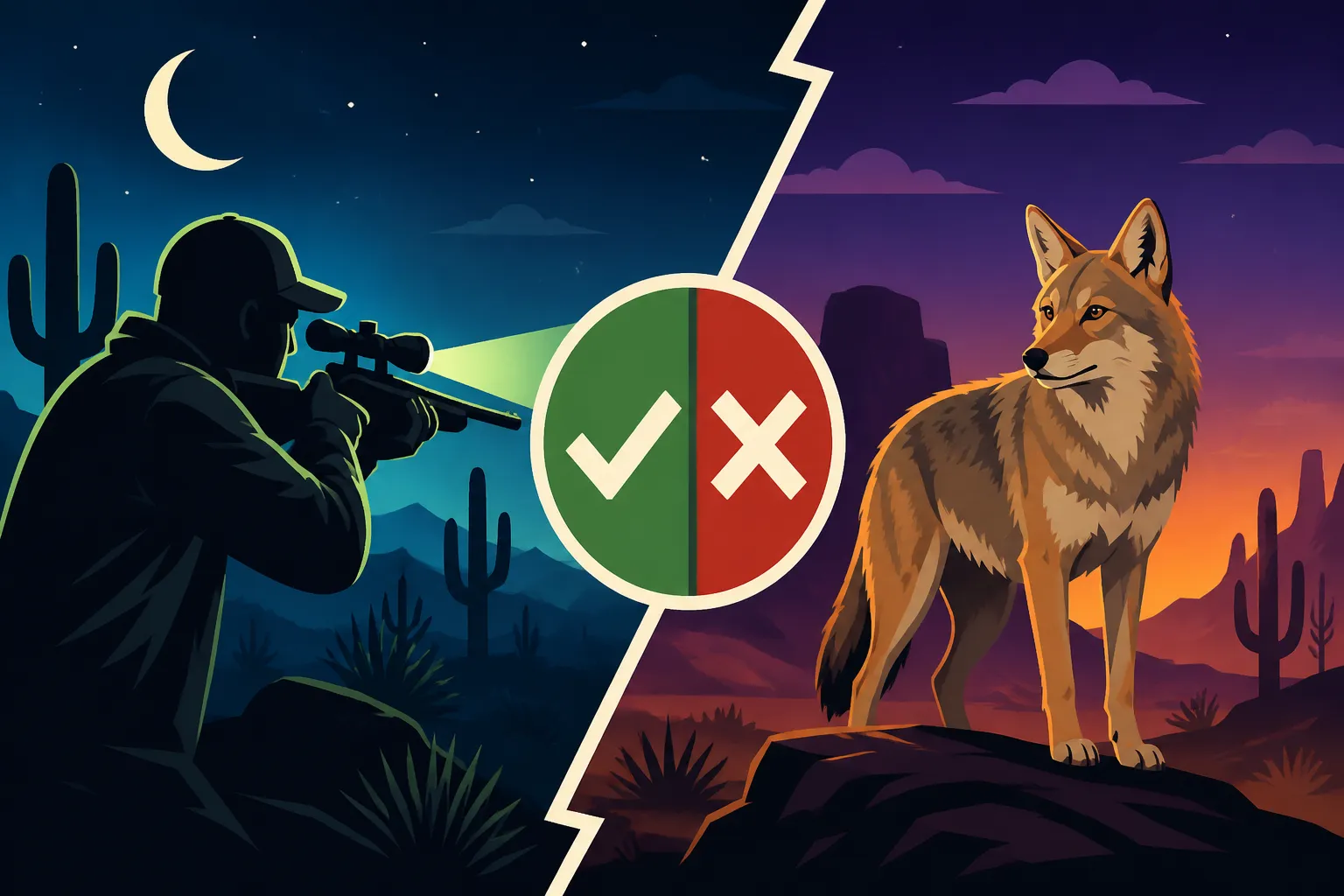
This is where many hunters get tripped up. The use of artificial light, commonly referred to as "spotlighting," is permitted for predatory and furbearing animals in Arizona, but with very specific wattage limitations when used with a rifle. The law states that a rifle may not be used in conjunction with any artificial light that produces more than 10 watts of power. This 10-watt rule is a critical detail to commit to memory. Handheld lights, or lights not attached to a rifle, do not have this 10-watt restriction. This allows for powerful standalone spotlights to be used for scanning and locating animals, provided the light directly attached to your shooting platform remains within the limit. Remember, the goal is not to blind or disorient game excessively but to aid in identification and ethical shot placement. For more detailed information on light regulations, it's always wise to check the official "Spotlighting Rules for Predator Hunting" in Arizona.
Strategies and Legal Equipment for Nighttime Coyote Hunts
Night hunting coyotes is a distinct discipline from daytime hunting, requiring specialized gear and different strategies. To be successful and legal, you'll need to focus on approved light sources, effective calling techniques, and understanding the role of modern optics.
Approved Light Sources and Techniques for Coyotes
As mentioned, the 10-watt restriction on rifle-mounted lights is paramount. This means many popular tactical lights designed for other purposes might exceed this limit. Hunters often opt for dedicated hunting lights with adjustable power settings or specific low-wattage bulbs. Beyond the rifle-mounted light, a powerful handheld spotlight is invaluable for scanning the landscape and initially locating coyotes. Many hunters prefer red or green colored lights, believing these colors are less alarming to coyotes and can help preserve human night vision. While Arizona regulations don't specifically mandate red or green for coyotes, many hunters find them advantageous. The technique often involves scanning with the handheld light, identifying the coyote, then bringing the rifle up with its lower-wattage mounted light for the shot. This two-light system is a common and legal approach.
Electronic Calls and Their Legality for Predators
Electronic calls are absolutely legal and incredibly effective for hunting coyotes and other predators in Arizona, day or night. These devices can replicate a vast array of sounds, from rabbit distress calls to pup whines, and can be crucial for drawing in wary coyotes, especially during nocturnal hunts when visibility is limited. Many hunters swear by them, and reputable brands offer models with pre-loaded sounds that are highly successful. Whether you're using a simple handheld caller or a more advanced remote-controlled unit, they are a powerful tool in your arsenal. The strategic deployment of these calls, considering wind direction and terrain, is just as important as the call itself. You can learn more about their use in the "Electronic Calls for Predators and Varmint Hunting" guide.
Thermal and Night Vision Considerations in Arizona
With advancements in technology, thermal and night vision optics have become increasingly popular. The legality of using thermal and night vision devices for hunting coyotes at night in Arizona is a frequently asked question. Generally, the use of night vision and thermal imaging devices for hunting predatory and furbearing animals is legal in Arizona. These technologies offer a significant advantage, allowing hunters to detect body heat or amplify ambient light, making it possible to spot coyotes in complete darkness without relying on a visible light source.
However, a critical distinction remains: while these devices can be used for spotting and aiming, the 10-watt rule for rifle-mounted visible light still applies if you choose to also use a traditional light source. If you're using a thermal scope for aiming and have no visible light attached to your rifle, the 10-watt rule wouldn't be a factor for the scope itself. Always ensure any visible light source you also employ on your rifle adheres to the wattage limit. This blend of traditional light for identification and advanced optics for detection can be a highly effective combination.
Navigating Public and Private Land for Night Hunting Coyotes
Understanding land ownership and access rules is paramount for any hunting activity in Arizona, and night hunting coyotes is no exception. Whether you're on vast public lands or private ranchland, knowing where you can legally be and what permissions you need is non-negotiable.
Hunting Coyotes on Public Land After Dark
Arizona offers millions of acres of public land managed by the Bureau of Land Management (BLM) and the U.S. Forest Service (USFS). Generally, night hunting coyotes is permitted on these public lands, provided you adhere to all state regulations regarding weapon-mounted lights and methods. However, simply being on public land doesn't mean you can drive wherever you please. Access might be restricted to established roads, and seasonal road closures, especially in higher elevations or during wet conditions, are common. Always consult MVUMs (Motor Vehicle Use Maps) for specific National Forests or BLM field office maps to understand motorized travel rules. Tools like GoHunt can be invaluable for layering land ownership maps with satellite imagery, helping you pinpoint public access points and avoid trespassing onto private parcels or designated wilderness areas where motorized travel is prohibited. Being prepared with a reliable navigation app is just as important as your weapon.
| Feature / Consideration | Public Land (BLM/USFS) | Private Land |
|---|---|---|
| Night Hunting Coyotes | Generally permitted with legal light/weapon use | Requires explicit permission from landowner |
| Light Restrictions | 10-watt max for rifle-mounted light | Same state regulations apply |
| Electronic Calls | Legal and effective | Legal and effective |
| Thermal/Night Vision | Legal | Legal |
| Access | Generally open, but check MVUMs for vehicle access | Owner's permission dictates access |
| Scouting Tools (e.g., GoHunt) | Essential for land ownership, roads, and terrain | Useful for identifying property boundaries |
| Ethical Considerations | Avoid disturbing campers, residents, or livestock | Respect property, notify owners of activities |
Private Land Permissions and Considerations for Coyotes
Hunting coyotes on private land at night offers some unique advantages, such as potentially less pressure from other hunters and closer proximity to areas where coyotes might be impacting livestock. However, the golden rule here is: you must have explicit permission from the landowner. Verbal permission is a start, but written permission, especially if you're hunting at night, is always a safer bet. This protects both you and the landowner. When seeking permission, be transparent about your intentions, including night hunting, the use of lights, and any calling techniques. It's also a good practice to let the landowner know when you'll be there, and what type of vehicle you'll be driving. Many landowners are receptive to coyote control, but they need to be confident that you're a responsible hunter. Remember, retrieving game from private land without permission, even if you shot it on public land, is trespassing.
Safety and Ethical Practices at Night
Night hunting demands an even higher degree of safety and ethical consideration than daytime hunting. Visibility is inherently limited, increasing the risk of misidentification or shooting beyond your effective range. Always be 100% certain of your target and what lies beyond it. Never shine lights towards residences, vehicles, or other people. Communicate clearly with hunting partners, especially if using multiple light sources or splitting up. Consider wearing some blaze orange when moving, even though it's not strictly required for archery hunting or most predator hunting, as an extra safety measure during low-light conditions.
Being aware of livestock is also paramount, particularly on public lands where cattle graze or adjacent to private ranches. A coyote howling or a distress call could bring in a ranch dog, which you absolutely do not want to mistake for a coyote. GoHunt's mapping capabilities can help you identify ranching infrastructure, such as stock tanks and fences, that might indicate livestock presence. Responsible night hunting isn't just about legality; it's about being a good steward of the land and a respectful hunter. Always err on the side of caution.
The Year-Round Opportunity of Arizona Coyote Hunting
The beauty of coyote hunting in Arizona is that it's generally a year-round endeavor, offering consistent opportunity for those looking to manage populations or simply enjoy the thrill of the chase. This lack of a closed season, combined with the allowance for night hunting, makes coyotes one of the most accessible and exciting species to pursue in the state.
How Night Hunting Differs from Day Hunting
The experience of night hunting a coyote is fundamentally different from a daytime pursuit. During the day, you rely heavily on sight, covering ground, and glassing. At night, your ears and your light sources become your primary tools. Coyotes, often more active after sunset, respond differently to calls in the darkness. The element of surprise is heightened, and the lack of visual cues can make for incredibly intense encounters. Calls that might seem subtle during the day can carry further and sound more realistic under the quiet of the night sky. Your setup location becomes even more critical, as you need to anticipate the direction a coyote might approach from, considering wind and available cover, all while managing your light discipline.
Benefits of Night Hunting for Coyote Control
Night hunting isn't just a different experience; it's often a more effective method for coyote control. Coyotes are naturally nocturnal or crepuscular (active at dawn and dusk), meaning they are often most responsive and active when the sun goes down. Targeting them during these peak activity periods can yield higher success rates, especially for those dealing with persistent coyote issues on ranches or in areas where they impact deer and antelope fawn survival. The ability to use specialized equipment like powerful spotlights, electronic calls, and even thermal optics means hunters can apply pressure when coyotes are most vulnerable. It's a strategic approach that acknowledges the animal's natural behavior, making it a valuable tool in wildlife management. For a broader understanding of coyote behavior, consider resources on "Hunting Coyotes Year Round in the Desert."
Maintaining Ethical Standards Under the Stars
Even though coyotes are often considered nuisance animals, maintaining high ethical standards is crucial. This means taking clean, humane shots, knowing your effective range with your chosen weapon and light setup, and always striving for quick recovery of any animal you harvest. The temptation to take a marginal shot can be higher in the dark, but resisting that urge is part of being a responsible hunter. Familiarize yourself with how your rifle-mounted light performs, and practice shooting at night to ensure you're comfortable and accurate. Always carry sufficient water and be prepared for potential challenges, like field dressing in desert heat, especially in warmer months. Ethical hunting is about respect for the animal and the landscape, regardless of the time of day or the species being pursued.
Disclaimer
The information provided in this guide is intended for educational and informational purposes only and is not a substitute for official legal advice or current Arizona Game and Fish Department regulations. Hunting laws and regulations can change, and it is the responsibility of every hunter to consult the most current Arizona Hunting Regulations booklet and any emergency orders before engaging in any hunting activity. Always verify local and state laws, and ensure you possess all necessary licenses and permits.