Packing an Elk Out of Rim Country Alone
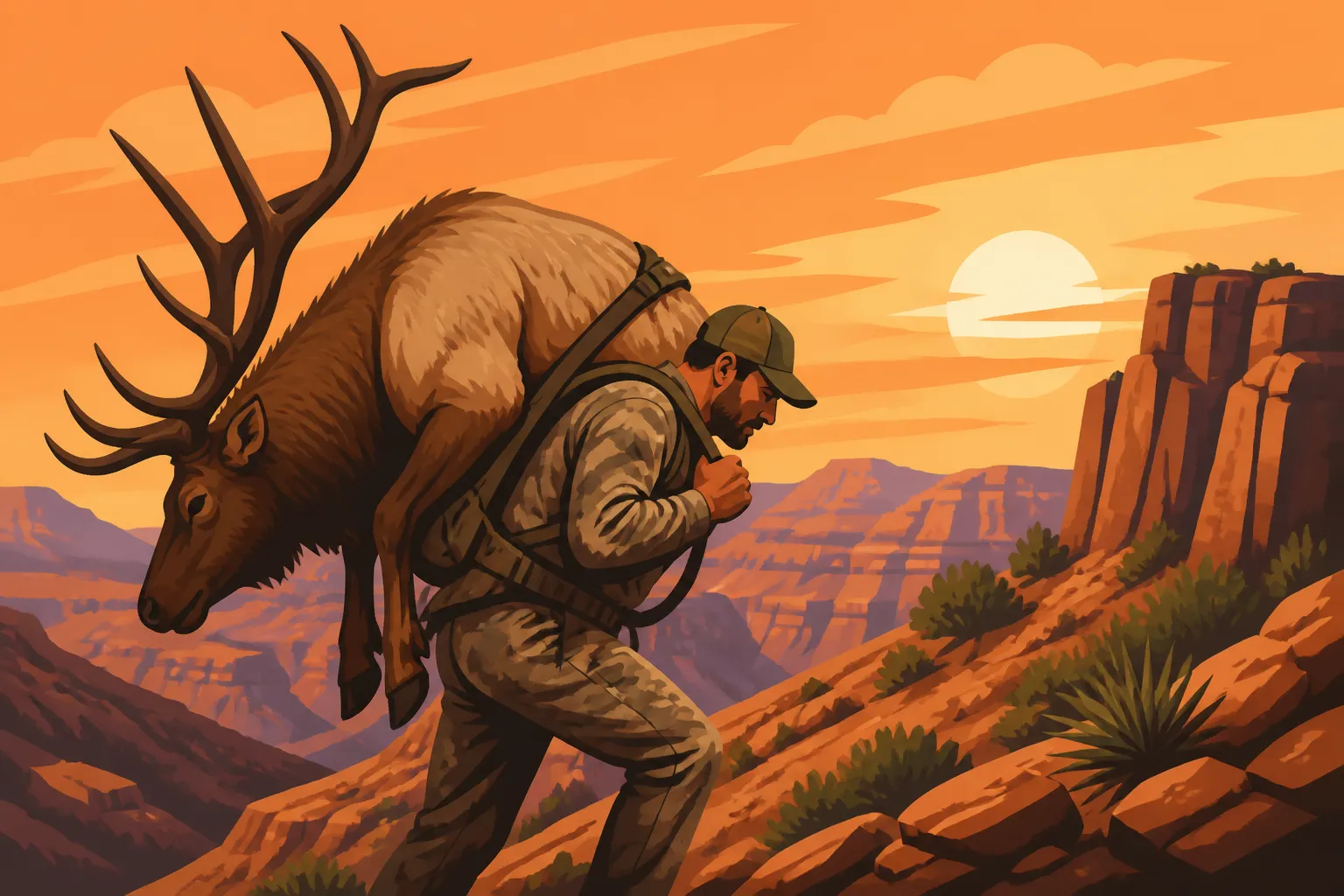
There’s a unique dread that washes over a solo elk hunter the moment that majestic bull hits the dirt in Arizona's Rim Country, especially when you’re miles deep in rugged canyons. The exhilaration of the hunt quickly gives way to the daunting, often overwhelming, reality of packing out hundreds of pounds of meat, bone, and hide entirely by yourself. This guide is for every hunter who's faced that stomach-dropping moment, offering practical strategies, gear advice, and mental preparations to conquer the formidable task of packing an elk out alone.
The Overwhelming Reality of Solo Elk Packing in Arizona's Rim Country
Let's be real: harvesting an elk is a monumental achievement, a culmination of scouting, patience, and skill. But for the solo hunter, that moment of triumph immediately ushers in the most physically demanding part of the entire experience. Rim Country, with its steep canyons, dense timber, and unpredictable weather, amplifies these challenges tenfold. You’re not just moving meat; you’re battling gravity, fatigue, and the clock. Many seasoned hunters will tell you that the hardest part of the hunt often begins after the shot.
The Brutal Reality of Weight and Distance
An adult bull elk can easily weigh 700 to 1,000 pounds or more, yielding hundreds of pounds of usable meat, hide, and antlers. When you're standing over such a magnificent animal, alone, deep in a draw, the sheer scale of the task ahead can feel paralyzing. Unlike hunting with a partner or a large group, where you can divvy up loads and rely on shared strength, the solo hunter carries the full burden, literally. This isn't just about making one trip; it's about making multiple, grueling trips, often across miles of unforgiving terrain, each load pushing your physical and mental limits. The distance back to your vehicle, which might have felt like a reasonable hike with just your day pack, suddenly transforms into an epic journey when you’re carrying 80-100 pounds of fresh meat. It's a true test of endurance, and understanding the weight you'll be dealing with is the first step in preparation.
The ethical responsibility to retrieve all edible meat swiftly and cleanly adds another layer of pressure. You can't just leave it; you committed to this animal. This means you need a system, a plan, and the physical conditioning to execute it flawlessly, often under less-than-ideal circumstances. The clock is always ticking, especially if the weather is warm, demanding efficiency and tough decision-making from the moment the animal is down. It's a stark reminder that hunting isn't just about the shot; it's about the entire process, including the heavy lifting that follows.
Navigating Rough, Unforgiving Terrain
Arizona's Rim Country is absolutely breathtaking, but it’s also notoriously rugged. Picture steep, rocky slopes, thick ponderosa pine forests, juniper thickets, and deep, eroded washes. This isn't flat, easy walking, even when you're empty-handed. Add a heavy pack, and every fallen log becomes an obstacle, every loose rock a potential ankle-twister, and every incline a grueling climb that saps your energy with alarming speed. The ground often seems to conspire against you, with loose scree, treacherous creek crossings, and dense brush that grabs at your pack and slows your progress.
Furthermore, getting off-trail, especially in the dark, is a real possibility when you're making multiple trips. Even with a GPS, the physical act of bushwhacking with a loaded pack through thorny catclaw or thick oak brush is a miserable experience that can turn a half-mile into an hour-long ordeal. Hunters often scout their routes in during the light, thinking about the best approach to find an animal. However, the exit route with a heavy load might need a different perspective. Considering Terrain That Hides an Approach in Desert Country is useful not just for the stalk, but for your extraction plan too. You’ll want to choose a route that, while perhaps longer, offers more stable footing and fewer major obstacles, even if it means sacrificing some directness.
The Relentless Arizona Conditions
While many think of elk hunting in crisp, cool autumn, early archery seasons in Arizona can still be brutally hot, especially in the canyons and lower elevations of the Rim. Even in late fall, midday temperatures can climb, and prolonged physical exertion with a heavy pack can quickly lead to overheating and dehydration. The arid environment means every drop of sweat counts, and inadequate water intake can rapidly lead to cramping, exhaustion, and even heat stroke. Heat Management on an Arizona Early Season Hunt is absolutely crucial for success and safety.
Conversely, late-season hunts can bring snow, ice, and bitter cold, adding new layers of challenge. Slippery footing, freezing temperatures, and the added weight of cold-weather gear can make an already tough pack out even more dangerous. Regardless of the season, Arizona's conditions demand respect and meticulous preparation. The weather here can be unpredictable, and what starts as a cool morning can quickly turn into a scorching afternoon or a freezing evening. Your clothing system and hydration plan need to be robust enough to handle these swings, ensuring you stay safe and can focus on the monumental task at hand.
Strategic Field Dressing and Carcass Management for Solo Hunters
Okay, the bull is down. Breathe. Take a moment. The real work begins now, and efficiency is your best friend when you're alone. Your primary goal is to cool the meat as quickly as possible and break the animal down into manageable pieces for transport. This isn't the time for a textbook field dress if you're alone and far from the truck; it's time for a practical, efficient, and ethical approach.
Breaking Down an Elk into Manageable Loads
For a solo hunter, quartering an elk bone-in is often too heavy for a single load. The most efficient method for a lone hunter, especially if far from the truck, is usually the "gutless method" or a variations thereof. This involves skinning the animal on one side, removing the quarters, backstraps, tenderloins, neck meat, and any other desirable meat without ever gutting the animal. You then flip the animal over (which is a workout in itself!) and repeat on the other side. This method minimizes exposure of the meat to internal contaminants and allows you to break the animal down into smaller, lighter, and more convenient portions.
Each quarter, once deboned, can be put into a game bag. The backstraps can be cut into smaller pieces, and the tenderloins removed from the inside cavity. Don’t forget the neck meat, which is excellent for grinding. Your goal is to create separate, distinct packages of meat, each in its own game bag, which can then be organized into separate pack loads. This modular approach is key to making multiple trips feasible and ensures that you're only carrying what you absolutely need in each load. Remember, the less weight per trip, the more safely and efficiently you can move through the rugged terrain.
Essential Tools and Techniques for Efficiency
Having the right tools is non-negotiable for a solo pack out. A sharp, durable knife is paramount, and carrying a spare or a sharpening steel isn't a bad idea. A small bone saw can be invaluable if you opt to take bone-in sections or need to remove the skull cap for antlers. Good quality game bags, like those from robust brands such as Caribou Gear or Alaskan Game Bags, are essential for keeping meat clean and allowing it to breathe. These aren't just fancy accessories; they are critical for preserving the quality of your hard-earned meat.
Beyond the cutting tools, a lightweight tarp or ground sheet can be incredibly useful. Laying it out next to the animal provides a clean surface to place meat as you work, keeping it free from dirt, pine needles, or other debris. Headlamps are also absolutely critical; you might start field dressing in daylight but find yourself finishing under the stars. Good illumination allows for precision and safety, preventing accidental cuts and ensuring you don't miss any valuable meat. Efficiency in Field Dressing in Desert Heat means not wasting motion, knowing your cuts, and working systematically.
Keeping Meat Cool in Arizona's Environment
The Arizona sun is no joke, and heat is the enemy of fresh meat. Your number one priority after breaking down the elk is to cool the meat as rapidly as possible. Once the meat is in game bags, get it off the ground. Hang it from a tree branch if possible, allowing air to circulate around all sides. If trees are scarce, place the bags on rocks or logs to prevent ground heat transfer. Airflow is key to preventing spoilage.
If temperatures are particularly warm, consider starting your pack-out immediately with the most perishable cuts (tenderloins, backstraps) or those you need for immediate cooling. Shade is your best friend; position the carcass and your subsequent meat piles in the deepest shade you can find. For longer pack-outs or warmer weather, you might even consider bringing a few small, flexible, reusable ice packs to place strategically inside your pack with the meat, though this adds weight. For more comprehensive advice, check out Getting Meat Cooled on an Early Season Hunt which covers specific techniques for warm-weather conditions. Ultimately, the faster you get the meat out and into a cooler filled with ice, the better the quality will be.
The Art of Packing: Gear, Techniques, and Mental Fortitude
Packing an elk out alone is as much a mental game as it is a physical one. You need to be methodical, patient, and prepared to push through discomfort. It’s not about heroics; it’s about smart planning and steady progress.
Choosing the Right Pack System
Your pack is your lifeline, and for a solo elk hunter, it needs to be a beast of burden. A high-quality external frame pack or a robust internal frame pack designed for heavy loads is non-negotiable. Look for a pack with a strong, adjustable suspension system, a comfortable hip belt that can truly bear weight, and plenty of compression straps to keep your load stable. Brands like Kifaru, Mystery Ranch, or Stone Glacier are popular for a reason; they build packs that can handle the extreme stress of hundreds of pounds.
The pack should have a dedicated meat shelf or a design that allows you to integrate game bags directly against the frame, keeping the load centered and close to your body. Carrying meat in the main compartment, without proper support, will quickly become unstable and painful. Also, consider the total volume you'll need. While you won't be carrying an entire elk in one go, you'll want enough space to accommodate a deboned quarter, your essential day gear, and water. A solid pack will distribute weight effectively, transforming what would be an agonizing carry into a merely grueling one.
| Pack System Type | Pros | Cons | Best For |
|---|---|---|---|
| External Frame | Excellent weight distribution, airflow | Can be bulky, snag on brush, less body-hugging | Very heavy loads, long distances, open terrain |
| Heavy-Duty Internal Frame | Good weight distribution, better stability | Can be hot, less airflow, complex adjustments | Moderate to heavy loads, varied terrain, bushwhacking |
| Hybrid (e.g., Load Shelf) | Combines benefits, versatile | Often expensive, can be heavier | All-around hunting, variable load sizes |
Load Distribution and Carrying Strategies
When packing, always aim for a balanced, stable load. Place the heaviest items (like a deboned elk quarter) as close to your back as possible, centered between your shoulders. Use compression straps to cinch everything down tightly, preventing shifting as you move. A shifting load is an unstable load, and instability leads to falls and wasted energy. For example, if you're carrying a front quarter, try to balance it with water, your rifle, or other gear on the opposing side to maintain equilibrium.
Breaking the elk into multiple trips is the reality for almost every solo hunter. Prioritize which meat to take first. Often, the hindquarters are the largest, heaviest pieces, and you might save those for a second or third trip after you’ve already created a path. Alternatively, if temperatures are soaring, you might take the backstraps and tenderloins first, as they are often considered the prime cuts and spoil faster. When you drop a load of meat, make sure it’s in a visible spot, off the ground, and covered to protect it from scavengers. You can use your GoHunt app to mark your meat drops and your vehicle's location, ensuring you don't get disoriented. Each trip should be thought out, not just a frantic dash.
Mental Preparation and Pacing Yourself
The physical demands of packing an elk are immense, but the mental fortitude required is arguably even greater. You’re going to be tired. You’re going to hurt. Doubt will creep in. This is where pre-hunt physical conditioning pays off, but also where your mental game needs to be iron-clad. Break the task down into smaller, manageable chunks. Focus on getting to the next ridge, the next marker, rather than dwelling on the multi-mile journey ahead. Celebrate those small victories.
Pacing yourself is crucial. Don't start out at a sprint; find a steady, sustainable rhythm. Short, frequent breaks are more effective than long, infrequent ones. Use these breaks to hydrate, refuel with a snack, and adjust your pack. Visualize successfully reaching your vehicle, savoring that hard-won meat. Remember that this is part of the hunting experience, a true test of your commitment. Having a positive mindset, even when your body screams for a rest, is the key to pushing through. Many refer to this as the "grit" factor, and it's something every successful solo hunter develops over time.
Planning Your Exit: Logistics and Contingencies
Before you ever leave the truck, you should have a plan for what happens if you're successful. A solo elk pack-out is not something to improvise on the fly. Proactive planning can significantly reduce stress and improve your chances of a safe and successful meat recovery.
Mapping Your Route and Stash Points
E-scouting is an invaluable tool for planning your pack-out strategy. Use satellite imagery on platforms like GoHunt to identify potential game trails, ridgelines, and drainages that might offer the easiest path to your vehicle. While scouting your hunt unit, actively look for natural features that could serve as "stash points" – places where you can leave a meat load securely for a later trip. These could be large rock formations, dense clumps of trees, or even a specific bend in a dry creek bed. Mark these points on your GPS.
Consider the elevation profile of your intended exit route. A slightly longer route with less dramatic elevation change might be far preferable to a direct, steep ascent or descent. Also, be aware of natural obstacles like thick thorny brush or impassable rock faces. Knowing your unit inside and out, perhaps through past scouting trips like Scouting an Arizona Unit Before the February Deadline, will give you a huge advantage. Remember to mark the exact spot where the animal fell, and each meat drop location, with your GPS. This is not the time to rely solely on memory, especially when fatigued or in low light.
Communication and Emergency Protocols
Hunting alone, especially in remote areas like the Rim, carries inherent risks. Before you head out, make sure someone knows your detailed plans: where you're going, your intended route, when you expect to return, and what your contingency plans are. Consider carrying a satellite communication device, such as a Garmin inReach or a Zoleo. These devices allow you to send check-in messages, track your location, and most importantly, send an SOS in a true emergency, even where cell service is nonexistent. This is a small investment for massive peace of mind, both for you and your loved ones.
Carry a well-stocked first-aid kit that includes items for blisters, cuts, and any personal medications. Dehydration and exhaustion are real dangers, so ensure you have enough water, or a reliable filter system, to last multiple trips. Understand basic wilderness first aid and how to self-rescue if necessary. The reality is, if you're alone and something goes wrong, you are your own first responder. Being prepared for emergencies isn't about being paranoid; it's about being responsible and realistic about the inherent risks of backcountry hunting.
Using Technology for Efficient Retrieval
Modern hunting technology has transformed how we approach big game retrieval. As mentioned, GPS devices or hunting apps like GoHunt on your smartphone are invaluable. Not only for marking your kill site and meat drops but also for navigating back to your vehicle in the dark or through unfamiliar terrain. Before you leave home, download offline maps of your hunting unit to your device, as cell service is rarely available in the backcountry. This ensures you can always see your location, even without a signal.
Consider using a headlamp with a red light setting. While white light is essential for field dressing, red light preserves your night vision and is less disruptive to wildlife on subsequent trips back to retrieve meat. A portable power bank for your phone or GPS device is also a smart addition, ensuring your essential electronics don't die on you mid-pack. Remember that technology is a tool, not a crutch; always carry a physical map and compass as a backup, and know how to use them.
Disclaimer
Please remember that hunting regulations and best practices can change. Always consult the latest Arizona Game and Fish Department regulations before heading afield. This guide offers general advice and should not replace official guidelines or common sense when hunting in the backcountry.