Cottontail and Jackrabbit Seasons
It’s easy to get caught up in the big game hype here in Arizona. Everyone dreams of that giant bull elk or a massive mule deer buck, and honestly, who can blame them? But sometimes, we forget the incredible opportunities closer to home, the ones that don't require years of bonus points or a miracle draw. If you're looking to get out in the field often, hone your stalking skills, introduce new hunters to the sport, or simply enjoy some fantastic wild game for the dinner table, Arizona's cottontail and jackrabbit seasons offer an accessible and immensely rewarding experience. This guide will walk you through what makes these hoppers such a fantastic option for hunters across the Grand Canyon State.
Unpacking Arizona's Rabbit Seasons: Cottontail and Jackrabbit Dynamics
When you think about hunting seasons, you usually think of specific dates, opening days, and closing times. With Arizona's cottontail and jackrabbit, things are a little different, and often, much more forgiving. These species generally boast incredibly generous, often year-round or nearly year-round, seasons in many parts of the state. This makes them perfect for filling those gaps between big game draws or getting out on a whim.
Cottontail Season Structure
Cottontails are the quintessential rabbit – smaller, stockier, and often found closer to thick cover. In Arizona, their seasons are typically very long, often extending for many months, and in some areas, nearly year-round. This is fantastic news for hunters because it means you don't have to stress about a narrow window to get out. You can plan trips around your schedule, when the weather is most comfortable, or when you simply need to scratch that hunting itch.
The length of the cottontail season allows for a lot of flexibility. If you miss a weekend, there's always another. If the weather turns foul, you can push your hunt back a bit without losing your opportunity. This accessibility is a huge part of their appeal. However, don't mistake a long season for a free-for-all. There are still daily bag limits and possession limits you need to be aware of, which are crucial for sustainable hunting and are clearly laid out in the official Arizona hunting regulations. Always check the current regulations before you head afield; they are your best friend for staying legal.
Jackrabbit Season Structure
Jackrabbits, on the other hand, are a different beast entirely. Long-legged, incredibly fast, and typically found in more open desert and grassland environments, they are a fantastic challenge. Like cottontails, Arizona offers very extended or even continuous hunting seasons for jackrabbits. This almost perpetual season is a huge draw for hunters who want consistent action and the chance to chase these speedsters throughout the year.
The liberal jackrabbit seasons mean you can dedicate entire weekends, or even just a few hours after work, to pursuing them. This continuous opportunity allows you to learn their habits and preferred terrain over different times of the year, witnessing how their behavior shifts with the seasons. Just like with cottontails, even with an open season, you must always adhere to the daily bag and possession limits. These aren't just suggestions; they are regulatory requirements designed to manage the population responsibly. Relying on detailed mapping and regulation tools like GoHunt can be immensely helpful here, ensuring you know exactly where you are and what the current rules are.
The Allure of Small Game Hunting in Arizona
Beyond the open seasons, small game hunting, particularly for rabbits, offers a unique set of benefits that often get overlooked. It's not just about filling a tag; it’s about refining skills, exploring new areas, and creating unforgettable outdoor memories, often with less pressure than big game hunts.
Accessible and Low-Pressure Hunting Opportunities
One of the biggest frustrations in Arizona hunting can be the draw system for coveted big game tags. Years of applying for elk or antelope can wear on even the most patient hunter. This is where cottontails and jackrabbits shine. You don't need a special draw tag for them; your general hunting license is usually all you need, making them incredibly accessible. This significantly lowers the barrier to entry, especially for new hunters or those visiting the state.
The sheer abundance of cottontails and jackrabbits across vast expanses of public land also means less pressure. While popular areas might see more foot traffic, there are countless places where you can enjoy a peaceful hunt without constantly bumping into other hunters. This allows for a more relaxed and immersive experience, focusing on the hunt itself rather than navigating crowds. For many, it's a chance to truly decompress and connect with the landscape, much like scouting a new unit before the February deadline for big game applications.
Skill-Building and Practice for Bigger Pursuits
Let's be honest, we all need practice. Whether it's stalking, reading terrain, or simply getting comfortable with our firearms or bows, consistent time in the field makes a huge difference. Small game hunting provides an unparalleled training ground for developing these essential hunting skills. Stalking a wary cottontail through thick brush, or trying to intercept a fast-moving jackrabbit across open ground, demands patience, keen observation, and quick decision-making.
For archers, closing the distance on a rabbit hones your stealth and yardage estimation, skills that are directly transferable to hunting deer or javelina. For rifle hunters, it's a chance to practice off-hand shooting or quick target acquisition in a dynamic environment, simulating the unexpected opportunities that often arise on a big game hunt. Think of it as your personal proving ground, a low-stakes way to refine your craft. It’s an excellent way to keep your shooting skills sharp and your field senses honed. Building a Practice Routine Before Opener can certainly include frequent small game hunts.
Family-Friendly and Engaging Hunts
Introducing new hunters, especially younger ones, to the sport can be tricky. Big game hunts often involve long periods of sitting, intense patience, and sometimes, physically demanding pack-outs. These can be daunting for kids or those new to the outdoors. Rabbit hunting, with its typically active nature and frequent opportunities for engagement, is a perfect gateway.
Kids can learn about tracking, identifying fresh sign, using binoculars, and practicing safe firearm handling in a dynamic setting. The chances of seeing game are usually much higher, which keeps spirits up and makes the experience more immediately rewarding. It's a fantastic way to teach ethics, respect for wildlife, and the importance of responsible harvesting in a fun, hands-on environment. Plus, the quick turnaround from field to table means they can often enjoy the fruits of their labor very soon after the hunt, reinforcing the connection to where their food comes from. For a beginner, understanding The Arizona Hunter Education Age Requirement is the first step.
Tactics and Habitat: Finding Arizona's Hoppers
Arizona's diverse landscapes offer a range of habitats for both cottontails and jackrabbits. Understanding where to look and how to approach them is key to a successful hunt.
Cottontail Havens: From Desert Washes to High Country
Cottontails are masters of camouflage and cover. You'll find them almost everywhere in Arizona, from the low desert washes near Phoenix and Tucson up into the pine forests of the Mogollon Rim. They thrive in areas with dense vegetation that provides both food and quick escape routes. Think prickly pear cactus thickets, mesquite bosques along dry creek beds, brushy hillsides, and the edges of agricultural fields. In higher elevations, look for them in rocky outcroppings and dense stands of oak brush or junipers.
Still-hunting is a highly effective method for cottontails. Move slowly, pausing frequently to scan ahead, looking for the tell-tale twitch of an ear or a camouflaged form under a bush. They often won't move until you're very close, so sharp eyes are crucial. When you spot one, a careful stalk can get you into shooting range. Another popular method, especially in thicker cover, is to walk them up, pushing through brushy areas to flush them out. A good pair of Choosing Boots for Rocky Desert Ground will be your best friend.
Jackrabbit Domain: Speed and Sight in Open Country
Jackrabbits prefer more open country where their incredible speed and keen eyesight can be used to their advantage. You'll primarily find them in the vast grasslands of southeastern Arizona, the open desert flats dotted with creosote, and the fringes of agricultural areas throughout the state. They love areas where they can see a long way and then flat-out run if threatened.
Hunting jackrabbits often involves more walking and glassing. Spotting scopes and binoculars can be incredibly useful to pick out a jackrabbit's long ears or subtle movement from a distance. Once spotted, you can attempt a long-range shot with a rifle, or plan an intercept course if they are on the move. For a close-up challenge, a shotgun can be exhilarating, requiring you to flush them and take fast-moving shots. Utilizing digital mapping applications, such as those offered by GoHunt, can help you identify open public land and potential jackrabbit hotbeds, mapping out your approach routes and escape paths. For these open spaces, it's wise to carry Water You Must Carry on a Day Hunt, as shade can be scarce.
Regulations, Licenses, and Responsible Hunting
Even for small game, understanding and adhering to regulations is paramount. Arizona has a robust system in place to ensure fair chase and sustainable populations.
General License Requirements
The great news about hunting cottontails and jackrabbits in Arizona is that you generally don't need a special permit. A valid Arizona hunting license is typically all that's required. This significantly simplifies the process compared to the often complex big game draw system. However, it's crucial to understand that there are different license types (resident, non-resident, youth, apprentice) and to ensure you have the correct one for your situation. The Arizona Hunter Education Age Requirement is important for younger hunters.
Make sure your license is current and in your possession while hunting. This seems obvious, but it’s a detail that can easily be overlooked in the excitement of a new season or a spontaneous trip. Always verify the specific license requirements directly from the Arizona Game and Fish Department's official regulations, as rules can occasionally change.
Understanding Bag and Possession Limits
While seasons for rabbits are often very liberal, bag and possession limits are always in place. The daily bag limit refers to the maximum number of animals you can harvest in a single calendar day, while the possession limit is the maximum number of animals you can have in your possession, either in the field, in your vehicle, or at home. These limits are designed to prevent overharvesting and ensure healthy populations for future hunting opportunities.
It's critical to know these numbers before you head out. Misinterpreting or ignoring them can lead to serious legal consequences. These figures are always clearly stated in the annual Arizona hunting regulations. A quick glance at the small game section will give you all the information you need. Many hunters use digital tools like GoHunt to quickly look up regulations on their phones while in the field, ensuring they stay compliant.
Ethical Considerations and Safety
Hunting any animal carries ethical responsibilities. For rabbits, this means taking clean, humane shots, avoiding unnecessary suffering, and respecting the animals you pursue. It also means only taking what you will use, whether for personal consumption or sharing with others. Small game hunting is an excellent opportunity to instill these ethical principles in new hunters.
Safety is, of course, non-negotiable. Always follow the fundamental rules of firearm or archery safety: treat every weapon as loaded, never point it at anything you don't intend to shoot, keep your finger off the trigger until ready to fire, and be sure of your target and what's beyond it. When hunting in groups, communication is key, and understanding safe zones of fire is essential. Legal Shooting Hours and Blaze Orange in Arizona rules generally apply to small game too, so be aware of any requirements for your specific hunt area or weapon type.
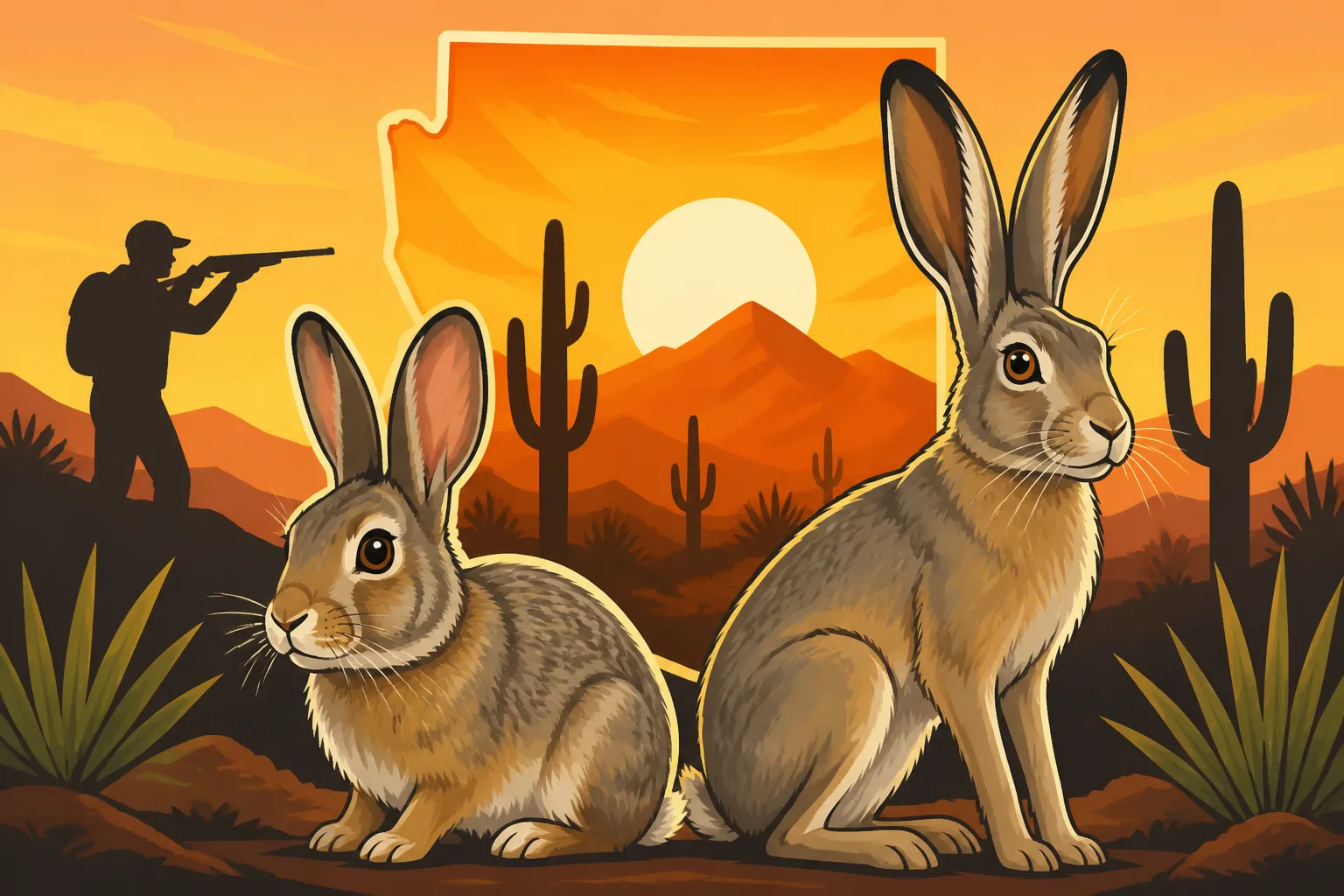
Here’s a quick overview of some differences between Arizona’s most common hoppers:
| Feature | Desert Cottontail | Black-tailed Jackrabbit |
|---|---|---|
| Size | Small to medium, stocky body | Large, slender, very long legs and ears |
| Typical Habitat | Brushy cover, thickets, washes, rocky areas, varied elevations | Open grasslands, desert flats, sparse brush, agricultural edges |
| Speed | Fast bursts, often dives into cover | Extremely fast, sustained running over open ground |
| Ears | Shorter, proportionate to head | Very long, prominent ears |
| Tail | Small, fluffy white "cotton" tail | Black stripe on top, dark underside, longer |
| Primary Defense | Freezes, then sprints to cover | Relies on speed and keen eyesight to flee from a distance |
| Hunting Method | Still-hunting, flushing, jump shooting | Spot-and-stalk, long-range shooting, driving roads |
| Taste | Mild, lean, popular for stew/frying | Leaner, tougher, often ground or stewed |
Disclaimer
This article is for general informational purposes only and does not constitute professional advice. Laws, prices and regulations vary by location and change over time. Consult a qualified professional for guidance on your specific situation.