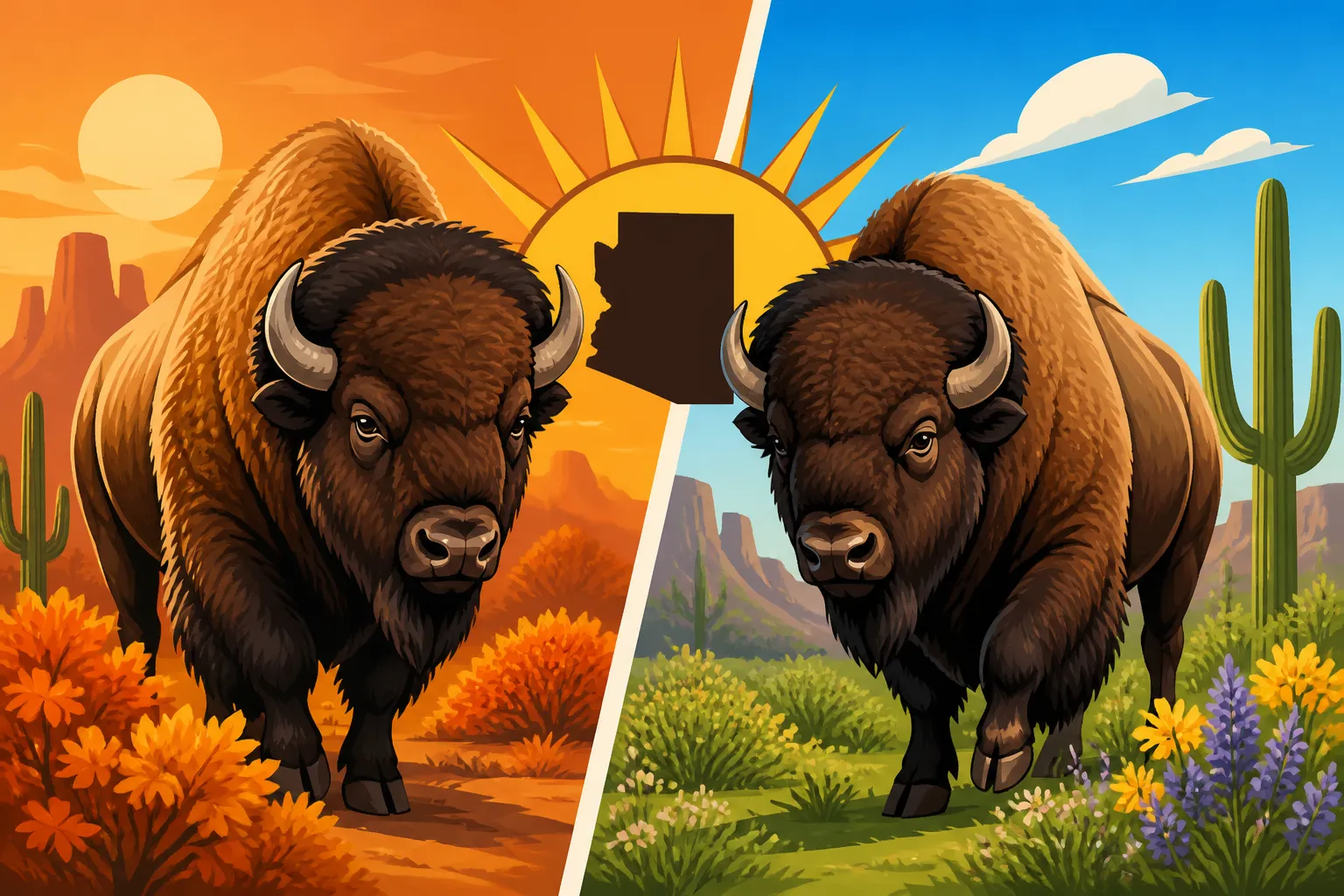
Arizona Fall Bison Against Spring Bison
Trying to figure out the Arizona bison hunt draw can feel like deciphering an ancient scroll, especially when you're faced with "spring" versus "fall" seasons. It's not just about when you hunt, but when you apply, what conditions you'll face, and how these unique tags are allocated. This guide will meticulously break down the differences between Arizona's spring and fall bison hunts, helping you understand the application process, what to expect in the field, and how to build a strategy for pursuing one of North America's most iconic big game animals in the Grand Canyon State.
Understanding Arizona's Bison: Two Herds, Two Hunts
Arizona is home to two distinct, free-ranging bison herds, each managed by the Arizona Game and Fish Department (AZGFD) with unique regulations and hunt opportunities. While both offer a once-in-a-lifetime experience, understanding their origins and locations is key to appreciating the different hunt structures.
The House Rock Herd: A Legacy of Conservation
The House Rock Valley, nestled just south of the Utah border and east of the Grand Canyon, is home to Arizona's original bison herd. This herd, with a history stretching back to a small release of animals in the early 1900s, has been carefully managed for over a century. It's a testament to dedicated conservation efforts that these majestic animals thrive in this relatively remote and rugged landscape. Hunters pursuing a House Rock bison tag often envision a true wilderness experience, navigating challenging terrain and unpredictable weather that can range from harsh winter conditions to early spring warmth. The management of this herd focuses on maintaining a healthy population within its habitat, with tags issued to control numbers and ensure ecological balance. These hunts are highly coveted, not just for the animal itself, but for the wild, authentic hunt experience they offer in a stunning corner of Arizona.
The Grand Canyon Herd: Managing a Unique Challenge
More recently, the attention has shifted to the bison herd residing within and around the Grand Canyon National Park. These bison, descendants of animals moved to the Kaibab Plateau in the 1900s, have significantly expanded their range and population, impacting park resources and ecological balance. Unlike the House Rock herd, which is primarily managed for sustainable hunting, the Grand Canyon bison herd presents a unique challenge due to its presence within a national park where hunting is generally prohibited. This has led to cooperative management efforts between the AZGFD and the National Park Service, resulting in special hunt opportunities designed to reduce the herd's size and mitigate its impact on sensitive park ecosystems. These hunts, often occurring on national forest land adjacent to the park and sometimes even within designated areas of the park itself, represent a distinct and critical conservation effort. Hunters who draw a Grand Canyon bison tag become part of a vital solution to a complex wildlife management issue. You can learn more about how the state manages these specific animals by looking into "Bison Inside Grand Canyon National Park".
Why Arizona's Bison Seasons are Distinct
The existence of these two herds, coupled with varying management objectives and environmental conditions, is precisely why Arizona offers both spring and fall bison hunting seasons. The AZGFD strategically schedules these hunts to align with biological factors, management goals, and logistical considerations for each herd. For the House Rock herd, traditional seasons are often set to coincide with optimal hunting conditions or population control needs. For the Grand Canyon herd, hunt timing is often driven by the urgent need for population reduction and can sometimes be influenced by agreements with the National Park Service or specific habitat concerns. This distinction means that hunters aren't just choosing a season; they're often choosing a specific herd, a unique landscape, and a different set of challenges and experiences. Understanding these underlying reasons can significantly inform your application strategy and manage your expectations for the hunt itself.
Navigating the Arizona Bison Draw: Spring Versus Fall Applications
Applying for a bison tag in Arizona means entering one of the most competitive draws in the country. The AZGFD manages these applications through two distinct draw cycles, each with its own deadlines and species. Knowing which draw to apply for, and when, is paramount to even having a chance at an Arizona bison tag.
Spring Bison Applications: The February Deadline Cycle
If you're eyeing a spring bison hunt, you'll be submitting your application during Arizona's first major draw cycle, which typically carries a deadline in early February. This application period is shared with other highly sought-after species like elk and antelope. This means that if you're a multi-species applicant, you'll be managing your applications and bonus points for several premier hunts all at once. The spring bison hunts are generally focused on population control and management objectives for specific herds, and the weather can be a real wildcard. Hunters need to be prepared for anything from mild, sunny days to late-season snowstorms, depending on the unit and elevation. If you want to dive deeper into these dates, check out "When Arizona Spring Bison Applications Run" and "The Arizona Elk and Antelope Application Deadline". The units offered for spring bison often align with areas where specific management actions are needed to reach herd objectives, making these hunts critically important for the state's wildlife conservation goals.
Fall Bison Applications: The June Deadline Cycle
For those hoping to pursue a fall bison, your application will fall into Arizona's second major draw cycle, with a deadline usually in early to mid-June. This cycle is shared with deer, bighorn sheep, and sometimes other fall bison opportunities. Again, planning your applications becomes a strategic chess match if you're also applying for deer or sheep. Fall bison hunts often benefit from more stable weather patterns compared to spring, though desert temperatures can still be formidable in the early fall. These hunts might also coincide with the bison rut, offering different behavioral patterns and opportunities for hunters. The type of unit and the specific herd targeted can vary greatly between spring and fall. For instance, sometimes a specific unit will only have a spring hunt, while another may offer only a fall hunt, or even both. It’s essential to meticulously read the regulations for each year to understand the specific opportunities presented in each draw. You can find more details on this period by exploring "The Arizona Deer, Sheep and Bison Deadline".
Strategizing with Bonus Points and Draw Odds
Let's be real, drawing an Arizona bison tag is an incredibly long shot for most hunters. These tags are rare, and the demand is astronomically high. This is where Arizona's bonus point system comes into play. Every year you apply and are unsuccessful, you accrue a bonus point for that specific species (bison points don't carry over to elk, for example). These points multiply your odds in the draw, but they don't guarantee a tag. You'll often hear about hunters with 20+ points still waiting for their number to be called. Understanding "How Arizona Bison Tags Are Allocated" is vital here, as some tags go to the highest point holders, and others are in a random drawing.
To even begin to formulate a strategy, you'll need reliable data. Tools like GoHunt's INSIDER membership provide critical insights into draw odds, unit information, and application trends. They break down the numbers, showing you how many points it actually took to draw in previous years, which units might have slightly better odds (though "better" is a relative term with bison), and how the bonus pass and random pass work. This kind of detailed analysis is indispensable if you're serious about applying. Without it, you're essentially applying blind. Remember, once you draw a tag, your bonus points for that species are reset, which is a major factor to consider when you finally get that coveted tag. Consider looking into "What Happens to Arizona Points When You Draw" for more context.
Here's a quick comparison of the two draw cycles for bison:
| Feature | Spring Bison Draw | Fall Bison Draw |
|---|---|---|
| Application Deadline | Typically early February (with Elk, Antelope) | Typically early-mid June (with Deer, Bighorn Sheep) |
| Hunt Timing | Generally March – May | Generally October – December |
| Weather Conditions | Variable: mild to cold, potential for snow or rain | More stable: can range from warm to cold, less precipitation risk |
| Herd Focus | Often Grand Canyon (Kaibab Plateau) management hunts, sometimes House Rock | Can be House Rock, Grand Canyon, or other specific management needs |
| Logistical Challenge | Spring runoff, fluctuating temperatures, potential for mud | Later season access might mean snow, colder temperatures |
| Animal Behavior | Post-winter, potentially more scattered; post-calving cows | Pre-rut/rut activity possible, animals more concentrated as winter approaches |
The Realities of a Spring Arizona Bison Hunt
A spring bison tag in Arizona can be an incredible experience, but it comes with a unique set of challenges that demand thorough preparation. You're often hunting as the landscape is waking up from winter, which brings its own dynamic.
Weather, Terrain, and Animal Location in the Warmer Months
Hunting Arizona bison in the spring means contending with weather that can change on a dime. One day you might be glassing under a warm, blue sky, and the next you could be trudging through a late-season snowstorm or a cold, driving rain. Temperatures in the high country, especially on the Kaibab Plateau or near the House Rock Valley, can still drop significantly overnight, creating icy conditions on roads and trails. The terrain itself will still be rugged, with deep canyons, thick timber, and sprawling open country. However, as the snow melts and green-up begins, animals might start to disperse from wintering grounds and move higher up the plateaus. They might be utilizing fresh growth in meadows or seeking out new water sources.
Locating these massive animals in spring can be a test of patience and endurance. While they are enormous, bison can disappear into timber or deep draws with surprising ease. They may be less concentrated than in winter, spreading out to take advantage of new forage. This often means covering a lot of ground, either on foot or with an ATV where allowed, and extensive glassing sessions from high vantage points. Expect mud in certain areas from melting snow or spring rains, which can make vehicle travel and hiking significantly more challenging. Access roads might also be closed for a portion of the spring, depending on snowpack and ground conditions, requiring you to plan for longer hikes or alternative entry points.
Logistics and Meat Care for an Early Season Harvest
One of the biggest logistical hurdles for a spring bison hunt, especially in the warmer portions of the season, is meat care. A bull bison can weigh over 2,000 pounds, yielding hundreds of pounds of meat. If you're hunting in May when daytime temperatures can easily climb into the 70s or 80s, you're in a race against the clock. Field dressing must be efficient and meticulous to get the hide off and the carcass cooling as quickly as possible. This isn't a task for one person; you'll need a robust team with plenty of experience and the right tools.
You’ll need a solid plan for getting that meat out of the field and into a cooler. This might involve packing it out on horseback, using a game cart, or having vehicle access close by. Even then, you'll need a serious amount of ice and large coolers to cool the meat down rapidly. Think multiple large coolers per animal, especially for a bull. Knowing "Getting Meat Cooled on an Early Season Hunt" before you even leave home is not just good practice, it's essential for a successful and ethical harvest. For spring hunts, scouting water sources and understanding access points that can accommodate a heavy pack-out are crucial. You cannot afford to lose that much valuable meat.
Understanding Bison Behavior Post-Calving
Depending on the exact timing of your spring hunt, you might encounter bison in various stages of their annual cycle. Late spring hunts can coincide with the calving season. While hunting cows might be part of the management objectives for the Grand Canyon herd, it's critical to be aware of the presence of calves and act ethically and responsibly. Bulls might be more solitary or in smaller bachelor groups as they recover from the previous rut and begin to put on condition. They might be focused intently on feeding in lush new growth.
Their behavior can also be influenced by fluctuating temperatures. On cooler days, they might be more active throughout the day, while warmer spells could see them bedding down in thick cover during midday to escape the heat and flies. Understanding these nuances will help you predict their movements and preferred bedding areas. A spring bison hunt, therefore, isn't just about finding the animal; it's about interpreting its behavior in a changing landscape.
Embracing the Challenge of a Fall Arizona Bison Hunt
A fall bison hunt in Arizona presents a different set of opportunities and demands. As the landscape transitions from the heat of summer to the chill of winter, bison behavior changes, and so do the hunting conditions.
Later Season Conditions and Rugged Access
Fall hunts, typically ranging from October to December, bring cooler temperatures and often more stable weather patterns compared to spring. This can be a huge advantage for hunters, making strenuous hikes more comfortable and reducing immediate concerns about meat spoilage. However, later fall hunts, especially in November and December, can introduce winter conditions, particularly in the higher elevations of the Kaibab or House Rock. Snowfall, icy roads, and deeply frozen ground can become significant challenges. Road closures might still be a concern if heavy snow arrives early.
Access to remote units can become more arduous. Mud, if it's an earlier fall hunt following monsoon rains, or snow and ice later in the season, can transform a bumpy forest road into an impassable obstacle course. You'll need reliable 4×4 vehicles, tire chains, and potentially snowshoes or skis for deep backcountry penetration. "Preparing Physically for a Desert Hunt" is important regardless of season, but fall hunts can test your cold-weather endurance and ability to move through varied terrain. Bison are powerful animals, and tracking them through snow or across frozen ground can be a truly physically demanding endeavor.
Targeting Mature Bulls During the Fall Rut
One of the most exciting aspects of a fall bison hunt is the potential to encounter bison during or immediately following their rut. While the primary rut for bison typically peaks in late summer, some breeding activity can extend into the early fall, especially for cows that weren't bred earlier. Even if the full-blown rut is over, the bulls will still be in peak physical condition, showcasing their immense size and power. This is when you'll see those impressive shoulders and thick neck muscles that make bison such a coveted trophy.
Bulls might be more vocal, sparring, or generally more active than in the spring. They might also be more concentrated as they prepare for winter, or as cows come back into estrus. This can sometimes make them easier to locate, as they'll often be in larger groups or more visible in open country. Identifying mature animals might also be more straightforward, as their physical characteristics will be at their prime. Scouting efforts using tools like GoHunt can help you pinpoint areas where these animals historically congregate during the fall, giving you a valuable head start.
The Demands of a Backcountry Pack Out
Regardless of the season, harvesting a bison is only half the battle; getting it out is the other. A fall hunt can still demand an arduous pack out, especially if you connect with an animal deep in a wilderness area or far from a road. While cooler temperatures ease the pressure on meat care, the sheer weight remains. You will need a significant amount of manpower or animal power (horses or mules) to quarter and pack out a mature bison. This is where pre-hunt planning and a solid team come into play.
Consider what you'll need for skinning, quartering, and transporting hundreds of pounds of meat and hide. Sharp knives, a bone saw, game bags, tarps, and plenty of water are just the starting point. The physical exertion required to navigate rough terrain with heavy loads can be intense, and every member of your hunting party needs to be prepared for the effort. You also need to be acutely aware of "The Meat Salvage Requirements for Big Game" in Arizona, ensuring that all edible portions are recovered, which is a major undertaking for an animal of this size.
Crafting Your Arizona Bison Hunting Strategy
With such limited opportunities, a successful Arizona bison hunt, from application to harvest, demands meticulous planning and a realistic outlook. It's not just about luck in the draw, but about being fully prepared for the hunt of a lifetime.
Assessing Personal Readiness and Hunt Expectations
Before you even fill out that application, take a hard, honest look at what you're truly ready for. An Arizona bison hunt is a significant undertaking, both physically and financially. Are you in the physical condition to hike miles in rugged terrain, potentially at high elevation, and then handle hundreds of pounds of meat? Do you have the necessary equipment for whatever weather mother nature throws your way, be it scorching sun or deep snow? These aren't hunts for the faint of heart or the unprepared.
Moreover, manage your expectations. Drawing a tag is incredibly difficult, and even with a tag in hand, successfully harvesting a bison is challenging. These are wild animals in wild country. You might face adverse weather, difficulty locating animals, or simply the sheer physical grind of it all. Have a clear understanding of whether you prioritize a specific herd (House Rock vs. Grand Canyon) or a specific season (spring vs. fall), weighing the unique conditions each offers against your personal capabilities and preferences. This realistic assessment is the first step in a successful journey.
Analyzing Unit Success and Pressure
Once you've decided which draw cycle you're applying for, the next critical step is deep-diving into unit-specific data. This is where tools like GoHunt's INSIDER truly shine. You need to look beyond just overall draw odds and examine harvest success rates for specific units and seasons. Some units might consistently have higher success rates due to more accessible terrain or higher bison densities, while others might be more challenging. You'll also want to consider hunter pressure, especially on public lands. While bison hunts are limited, some units might see more activity from other hunters or even other recreational users, potentially influencing animal movement.
Analyzing "Arizona Bison Draw Odds" by unit and season is crucial. Are you chasing the absolute best odds, however slim, or are you prioritizing a specific type of hunt experience? For example, some units might offer more wilderness-style hunting, while others might have more road access. This research helps you make an informed decision about where to apply your hard-earned bonus points. Remember, this isn't just a random application; it's a strategic investment in a dream hunt. For even more detailed scouting, consider "E-Scouting an Arizona Unit Before the Season" to get a lay of the land from afar.
Beyond the Draw: Preparing for Success
Drawing an Arizona bison tag is like winning the lottery, but that's just the beginning. The real work starts then. Once you have a tag in hand, your preparation needs to kick into high gear. This includes:
- Physical Conditioning: Start a rigorous fitness regimen well in advance. You'll need strong legs, a strong back, and good cardio for hiking, climbing, and packing heavy loads.
- Gear Acquisition: Ensure you have appropriate clothing for extreme weather variations, a reliable rifle capable of ethically taking a bison, quality optics for extensive glassing, and all the necessary meat care equipment.
- Team Building: Assemble a reliable and capable team. Bison are too large for one person to handle alone, especially for field dressing and packing out.
- Logistics Planning: Map out every detail: travel to the unit, potential camping spots, access roads, and your exact plan for meat removal and processing. Have contingencies for weather, vehicle breakdowns, or unexpected challenges.
- On-the-Ground Scouting: If possible, visit your unit before the season. Familiarize yourself with the terrain, water sources, and potential bison movements. Even "Glassing From a Vehicle Along a Forest Road" can provide valuable insights.
Ultimately, whether you're fortunate enough to draw a spring or a fall Arizona bison tag, it will be an unforgettable adventure. By understanding the distinct characteristics of each season and herd, and by meticulously planning every aspect of your application and hunt, you'll maximize your chances of success and ensure a truly ethical and rewarding experience.
Disclaimer
Please be aware that hunting regulations, season dates, and application deadlines are subject to change annually by the Arizona Game and Fish Department (AZGFD). It is always the hunter's responsibility to consult the most current official AZGFD hunting regulations booklet and website before applying or heading into the field. This guide provides general information and should not be considered a substitute for official sources.