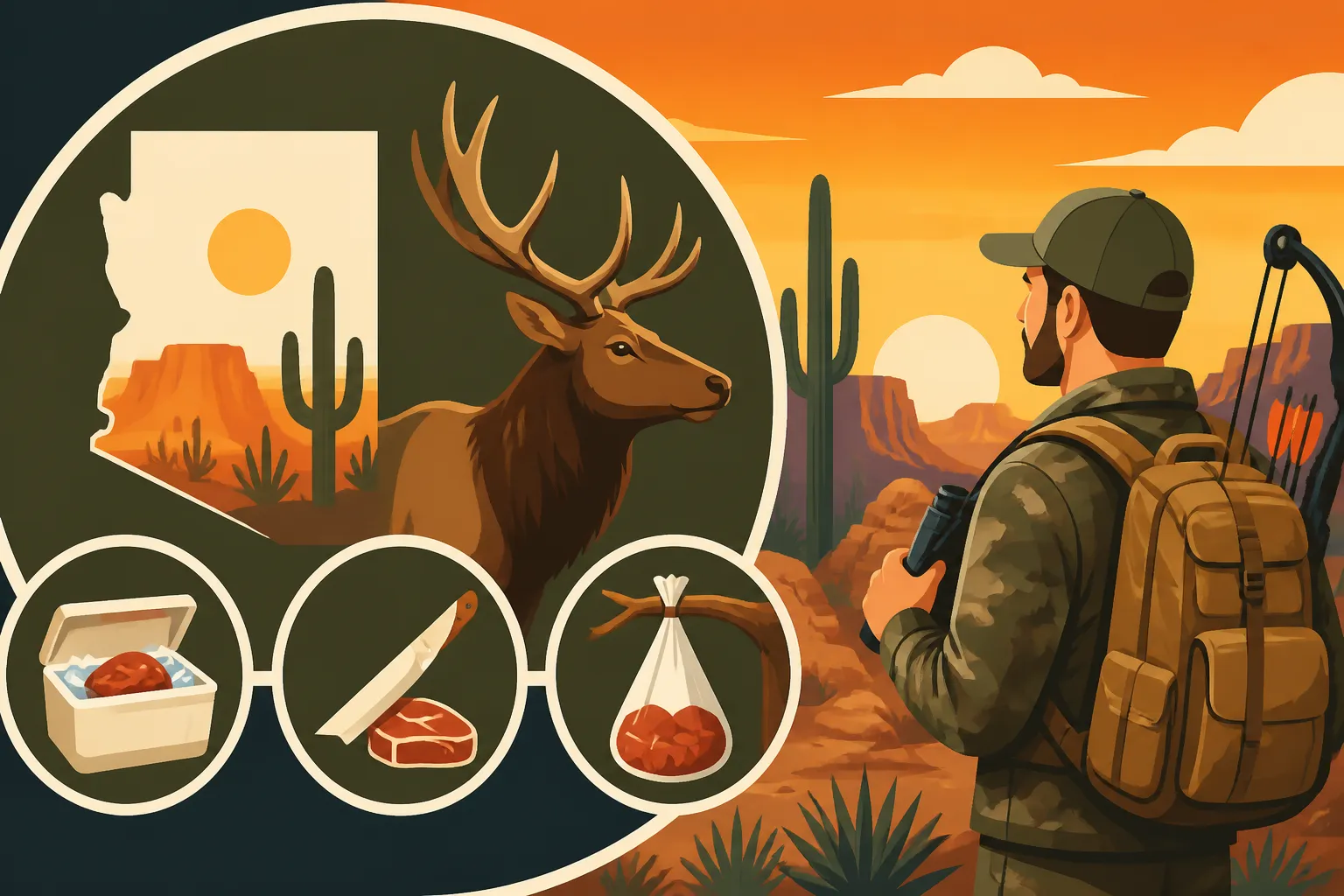
The Meat Salvage Requirements for Big Game
Harvesting a big game animal in Arizona is an incredible achievement, the culmination of countless hours of scouting, preparation, and patient hunting. But when that moment arrives, many hunters find themselves grappling with a critical, ethical, and legal responsibility: ensuring every edible portion of that animal is properly salvaged. It's a daunting task, especially in Arizona's often rugged terrain and scorching temperatures, leaving many wondering exactly what the rules entail and how to navigate them effectively. This guide will walk you through Arizona's meat salvage requirements for big game, ensuring you can confidently and legally honor your harvest.
Understanding Arizona's General Meat Salvage Rule
It's a foundational principle of ethical hunting, and in Arizona, it's also the law: hunters are legally obligated to make a reasonable effort to retrieve and care for all edible portions of a harvested big game animal. This isn't just about preventing waste; it’s about respect for the animal, the resource, and the integrity of hunting itself. The Arizona Game and Fish Department (AZGFD) takes this seriously, and understanding the nuances is paramount for every hunter venturing into the state's diverse landscapes.
The spirit of the law is clear: don't let good meat go to waste. This means that after you make a kill, your work isn't done. In fact, in many ways, it’s just beginning. You need to be prepared, both mentally and physically, to field dress, debone, and pack out your animal. This often overlooked aspect of the hunt can be the most challenging, especially when you're miles deep in the backcountry, the sun is beating down, or the thermometer is plummeting.
The Ethical Imperative Behind Salvage Laws
Beyond the legal texts, there's a deep-seated ethical responsibility that underpins these regulations. As hunters, we are stewards of the wildlife resource. We respect the life taken and commit to utilizing it fully. Leaving edible meat in the field is not only wasteful but can also diminish the public perception of hunting. Every hunter carries the torch for our shared tradition, and demonstrating respect for the animal by salvaging its meat is a powerful statement.
Consider the immense effort that goes into drawing a tag, preparing for the hunt, and finally, executing a clean shot. To then abandon the meat would render all that effort, and the animal's sacrifice, meaningless. It speaks to a core tenet of responsible hunting: "if you're going to take a life, you're going to use it." This commitment to utilizing the harvest is a testament to the hunter's connection to nature and the food chain.
How Terrain and Weather Impact Salvage Efforts
Arizona's landscape presents unique challenges for meat salvage. From the towering Ponderosa pine forests of the Mogollon Rim to the unforgiving Sonoran Desert, temperatures can swing wildly, and the terrain can be brutal. A deer or elk taken in August during an archery hunt, for example, might be in 100-degree heat, demanding immediate and aggressive cooling. Conversely, a late-season rifle hunt in December on the Kaibab Plateau could see temperatures drop below freezing, offering a bit more grace period but still requiring careful attention to prevent freezing and thawing cycles that can compromise meat quality.
The distance from a road or trailhead also plays a huge role. Dragging an entire deer or packing an elk out whole is often not feasible, both physically and legally (as the animal must be tagged immediately and then quartered or deboned for transport). This is where having a plan for Field Dressing in Desert Heat or Getting Meat Cooled on an Early Season Hunt becomes absolutely crucial. You need to anticipate these challenges before you even head out, incorporating them into your hunt plan, rather than reacting to them in a stressful, time-sensitive situation after a successful harvest. Having the right gear – game bags, sharp knives, a bone saw, and a first aid kit – is non-negotiable for an effective and ethical retrieve.
What "Edible Portions" Truly Means in Arizona
The term "edible portions" might seem straightforward, but it’s worth a deeper dive to understand what Arizona Game and Fish specifically expects. It’s more than just a few choice cuts; it encompasses the bulk of the muscle tissue that provides sustenance. While it doesn't typically mean every last scrap of sinew or organ meat, it certainly implies a significant recovery.
The general interpretation is that all muscle tissue that is customarily consumed by humans should be salvaged. This primarily includes the four quarters, the backstraps, and the tenderloins. Think about what you'd typically take to a butcher or process yourself for consumption – that's your target.
Defining the Primary Cuts for Salvage
When AZGFD regulations refer to "edible portions" for big game, they are generally focused on the main muscle groups that provide the most meat. These universally accepted portions include:
- The Four Quarters: This means the entire front and hind legs, often separated at the knee and hock joints or deboned.
- Backstraps (Loins): These are the long strips of muscle that run along the top of the animal's spine, from the neck area down to the hindquarters. They are prized cuts and absolutely must be salvaged.
- Tenderloins: These are smaller, incredibly tender strips of muscle located on the inside of the body cavity, tucked along the spine. While sometimes harder to locate, especially on smaller deer, they are considered prime cuts and must be retrieved.
It’s important to note that organs like the heart and liver, while certainly edible and delicious, are usually not legally mandated for salvage, though many ethical hunters choose to take them. The focus is squarely on the muscle tissue.
The "Reasonable Effort" Clause and Its Interpretation
Arizona's regulations often include the phrase "reasonable effort" when discussing salvage. This isn't a loophole to abandon meat; rather, it acknowledges that unforeseen circumstances can arise. For instance, if an animal falls into an inaccessible canyon where retrieval would put a hunter's life at extreme risk, or if it crosses onto private land where permission to retrieve cannot be obtained, a hunter might be excused from full salvage. However, these are rare exceptions, not common occurrences.
A "reasonable effort" means you've come prepared with the right tools, knowledge, and a plan. It means you've put in the physical exertion necessary to get the meat out, even if it's tough going. It's about being proactive. For example, using scouting tools like GoHunt to understand the terrain and identify potential extraction routes before the hunt can be part of making a reasonable effort to ensure a clean retrieval. If you neglect to pack game bags or a sharp knife, and then can't properly care for the meat, that wouldn't likely be considered a "reasonable effort."
It's also crucial to remember that your tag must be attached to the carcass immediately after harvest, according to Arizona's How Soon You Must Tag a Downed Animal rules, regardless of how challenging the salvage might be. Then, the process of cooling and packing out begins.
Here's a quick look at the typical "edible portions" expected for salvage:
| Animal Species | Primary Edible Portions Expected for Salvage | Notes on Salvage |
|---|---|---|
| Elk | All four quarters, backstraps, tenderloins | Often requires deboning due to size and weight. |
| Mule Deer | All four quarters, backstraps, tenderloins | Can be packed out bone-in if conditions allow. |
| Coues Deer | All four quarters, backstraps, tenderloins | Smallest of the deer, but all prime cuts required. |
| Pronghorn | All four quarters, backstraps, tenderloins | Meat can spoil quickly in warm weather due to thin hide. |
| Javelina | All four quarters, backstraps, tenderloins | Smaller animal, but still requires full salvage of edible meat. |
| Bison | All four quarters, backstraps, tenderloins | Requires significant effort, often professional help. |
| Bear | All four quarters, backstraps, tenderloins | Special considerations for fat rendering; must check season rules. |
| Mountain Lion | All four quarters, backstraps, tenderloins | Like bear, often processed with less fat; still requires salvage. |
Practical Steps for Meeting Salvage Requirements in the Field
Knowing the rules is one thing; putting them into practice in the field is another. After a successful harvest, the clock starts ticking, especially in Arizona's often warm conditions. Being prepared with a clear plan and the right gear will make all the difference.
Immediate Post-Harvest Procedures
As soon as you’ve confirmed the animal is down and safe to approach, your first priority is to properly tag it as per regulations. Then, move swiftly into field dressing. This involves removing the viscera (guts) to allow the carcass to cool down as quickly as possible. This step is non-negotiable for preserving meat quality.
- Cooling is Key: In Arizona, especially during early seasons, heat is your enemy. Getting that body heat out of the animal is paramount. Prop the cavity open with sticks, hang the animal if possible (even partially off the ground), and get air circulating around it. This is where a plan for Heat Management on an Arizona Early Season Hunt becomes invaluable.
- Cleanliness: Always strive for cleanliness. Use clean knives, avoid contaminating meat with dirt or stomach contents. Many hunters carry small spray bottles with water or a mixture of water and vinegar to rinse out the cavity.
- Skinning: While not always required immediately for salvage, skinning greatly aids in cooling. If conditions are hot, getting the hide off quickly will drop the meat temperature significantly.
Deboning vs. Bone-in Transport
For larger animals like elk, or when facing long pack-outs, deboning the meat is almost always the most practical and often the only feasible option. It reduces weight significantly, making it possible to carry out multiple loads. For smaller animals, like Coues deer or javelina, you might be able to quarter them bone-in, especially if you have an ATV or vehicle access nearby.
- Deboning: To debone, you remove all muscle tissue from the bone. This involves careful knife work to separate the quarters, backstraps, and tenderloins from the skeleton. Place the deboned meat into breathable game bags immediately. High-quality, breathable game bags are essential to protect the meat from flies, dirt, and to allow for air circulation, preventing a "sweaty" environment that can quickly spoil meat.
- Bone-in: If transporting bone-in, the quarters should still be separated, and the backstraps and tenderloins removed. This makes handling easier and helps with cooling. Again, game bags are critical.
Remember, the goal is to get the edible meat into a cool, clean environment as quickly as possible. This might mean making multiple trips, or having hunting partners assist. Tools like a quality backpack frame, a sharp knife set, and plenty of game bags are essentials. Many hunters also rely on digital maps and GPS from services like GoHunt to mark the kill site and plan the most efficient retrieval routes, especially if a return trip is needed or if they need to direct a vehicle to a pick-up point.
Packing Out Your Harvest
The final step in meeting salvage requirements is successfully packing all those edible portions out of the field and into appropriate cold storage. This is often the most physically demanding part of the hunt.
- Weight Management: Deboned meat will weigh less, but it's still heavy. Plan your loads realistically. Don't try to be a hero and injure yourself. Multiple, manageable loads are always better than one back-breaking attempt.
- Protection: Once out of game bags, the meat needs to go directly into coolers with plenty of ice. Drain water from the coolers regularly to prevent the meat from sitting in it, which can accelerate spoilage. Some hunters prefer to freeze water bottles or use dry ice for longer journeys.
- Transportation: Ensure your vehicle is ready to transport the meat cleanly. This might mean having tarps, extra coolers, and a well-thought-out plan for the drive home or to a processor. The meat needs to remain cool during transit.
By meticulously following these steps, you not only comply with Arizona's meat salvage laws but also ensure that your hard-earned harvest results in delicious, high-quality meat for your table. It's a testament to the comprehensive approach expected from ethical hunters, from the moment the trigger is pulled to the final processing.
Consequences of Failing to Salvage Game Meat
Ignoring Arizona's meat salvage requirements isn't just an ethical lapse; it carries tangible legal repercussions that every hunter needs to understand. The Arizona Game and Fish Department takes waste seriously, and violations can lead to significant penalties, impacting your hunting privileges and your wallet.
Legal Penalties and Fines
Failing to make a reasonable effort to salvage edible portions of a big game animal is considered a waste of game meat, and it's classified as a serious offense under Arizona law. The penalties can be substantial, designed to deter such irresponsible behavior.
- Misdemeanor Charges: Typically, this type of violation is a Class 2 or Class 3 misdemeanor, depending on the severity and specific circumstances. Misdemeanor convictions can result in fines, probation, and even potential jail time, though jail is less common for first-time, non-aggravated offenses.
- Fines: Fines for wasting game meat can range from hundreds to thousands of dollars. These aren't minor tickets; they reflect the state's valuation of its wildlife resources.
- Restitution: In addition to fines, a hunter may be ordered to pay restitution for the value of the animal wasted. This can add significantly to the financial burden, especially for larger game species.
These consequences underscore the importance of preparation and commitment to ethical hunting practices. It's not just about drawing a tag and making a shot; it's about seeing the entire process through responsibly.
Impact on Hunting Privileges
Perhaps even more impactful than the financial penalties is the potential loss of hunting privileges. Arizona, like many states, employs a point system for hunting violations.
- Bonus Point Loss: Any violation that leads to a conviction will result in a loss of any accumulated bonus points for future draws. This can be devastating for hunters who have spent years building up points for coveted tags like elk or bighorn sheep. The Arizona Bonus Point Pass Awards the First Twenty Percent is a crucial part of the draw system, and losing those hard-earned points can set you back years, if not decades.
- License Suspension/Revocation: Depending on the severity of the violation, your hunting license could be suspended or even permanently revoked. This means you would be prohibited from hunting in Arizona for a specified period, or potentially forever. Furthermore, such suspensions can often be reciprocated by other states that are part of interstate wildlife compacts, meaning a suspension in Arizona could prevent you from hunting in many other parts of the country.
- The Ethically Hunting Arizona Course: While taking the Ethically Hunting Arizona Course Earns a Permanent Point, demonstrating a commitment to ethical practices, a serious violation related to meat salvage can easily negate such efforts and reflect poorly on a hunter's overall record.
The message is clear: Arizona expects its hunters to be responsible stewards of its wildlife. Failing to salvage edible meat is a direct affront to that responsibility and carries consequences that can echo through your hunting future for years to come. Always prioritize preparation, planning, and ethical decision-making in the field to ensure you honor your harvest and uphold the integrity of hunting.
Disclaimer
This article provides general information about Arizona's meat salvage requirements for big game. While we strive for accuracy, hunting regulations can change. It is always the hunter's responsibility to consult the most current Arizona Game and Fish Department hunting regulations booklet or website before heading afield. This information should not be considered legal advice.