Arizona’s Ten Percent Nonresident Cap
Applying for an Arizona big game tag as a nonresident can feel like trying to win the lottery with fewer tickets than everyone else. It's a common frustration, the sense that the deck might be stacked against you when you dream of hunting Arizona's legendary elk or trophy mule deer. This comprehensive guide is here to demystify one of the biggest factors influencing those odds: the state's 10% nonresident cap, explaining exactly how it works and what it means for your application strategy.
Understanding Arizona's Nonresident Cap System
For anyone looking to hunt big game in Arizona, especially if you're coming from out of state, understanding the nonresident cap is absolutely critical. It’s not just a minor detail; it’s a foundational element of the entire draw system that directly impacts your chances of drawing a coveted tag. Many hunters get discouraged, seeing the high bonus point totals of residents and assuming there's no hope for a nonresident. While it's true that the competition is stiff, the system isn't entirely a black box once you understand its rules.
What the 10% Cap Actually Means
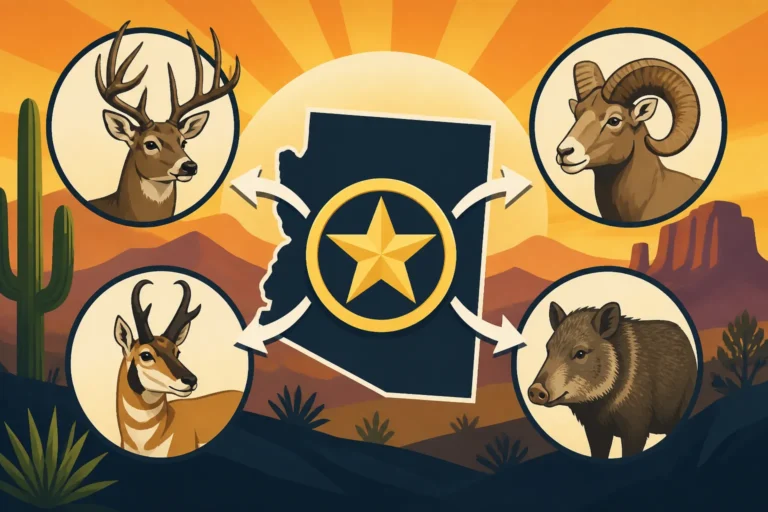
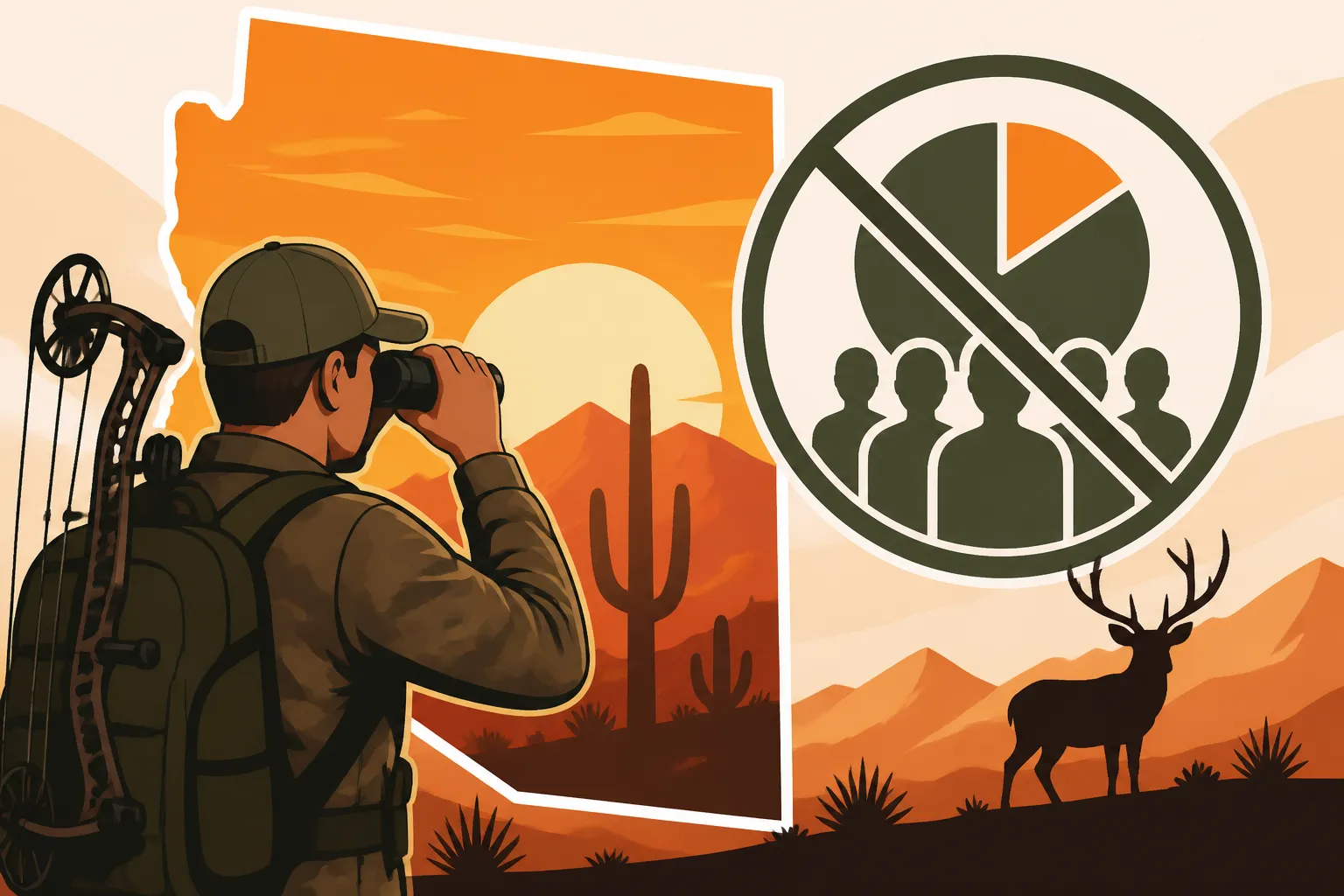
The Arizona Game and Fish Department (AZGFD) has a regulation that dictates no more than 10% of any given hunt's total tag allocation can go to nonresident applicants. This applies across the board, from elk and deer to bighorn sheep and pronghorn. It's not 10% of all tags in the state; it's 10% per hunt code. So, if a specific elk hunt in Unit 1 has 100 tags available, a maximum of 10 of those tags are reserved for nonresident hunters. The remaining 90 tags are allocated exclusively to Arizona residents. This cap ensures that the vast majority of hunting opportunities remain available to the state's residents, while still allowing a segment for out-of-state hunters who contribute significantly to the state's wildlife conservation efforts through license and tag purchases.
It's a simple percentage on paper, but its implications are profound. It means that while you're technically competing in the same draw pool, there's an invisible barrier that segregates the nonresident applications into their own smaller lottery. This cap can make the draw particularly challenging for nonresidents seeking high-demand units or species, as those 10% of tags quickly become hot commodities, often requiring maximum bonus points. This concept is further elaborated in the details around Arizona Caps Nonresidents at Ten Percent of Every Hunt.
Why Arizona Implemented the Cap
States implement nonresident caps for a variety of reasons, primarily to manage wildlife resources and to ensure that local populations have priority access to hunting opportunities. Arizona is no different. The decision to cap nonresident tags at 10% reflects a balance between generating revenue from out-of-state hunters – which is vital for funding wildlife management, habitat projects, and law enforcement – and satisfying the expectations of resident hunters. There's a strong argument that residents, through their taxes and long-term contributions, should have primary access to the state's natural resources.
Moreover, the cap helps to distribute hunting pressure. Without such a limitation, it's possible that extremely popular hunts could be overwhelmed by nonresident demand, potentially impacting local economies and the quality of the hunting experience for residents. Arizona is a premier hunting destination, drawing interest from across the country, so this cap acts as a regulatory mechanism to maintain control over who hunts where and how often. It’s about sustainability for the game populations and preserving the hunting heritage for those who call Arizona home.
How the Cap Interacts with the Bonus Point Pass
Understanding how the 10% nonresident cap plays out in conjunction with Arizona's bonus point draw system is where things can get a little complex. It's not just a straightforward cut-off; the cap is applied at different stages of the draw, creating distinct challenges and opportunities for nonresident applicants. This interaction is key to developing any successful nonresident application strategy.
The First 20% to Highest Point Holders
Arizona's draw system first allocates a significant portion of tags to applicants with the most bonus points, regardless of their residency status, up to a certain point. Specifically, the first 20% of all tags for each hunt code are awarded to the applicants with the highest bonus point totals. This is known as the "Bonus Point Pass," and it's where your accumulated points truly shine. For nonresidents, this initial pass offers a crucial window of opportunity, especially for highly sought-after tags where drawing in the random pass is nearly impossible. More details on this process can be found by researching how Arizona's Bonus Point Pass Awards the First Twenty Percent.
However, even within this bonus point pass, the 10% nonresident cap is still in effect. This means that if, for example, a specific hunt has 100 tags, only 20 tags are allocated in this first pass. Of those 20 tags, a maximum of 10% (or 2 tags in this hypothetical scenario) can go to nonresidents, even if more nonresidents have high enough points to draw one. This creates a highly competitive environment for nonresidents with top points, as they are vying for a very limited number of tags against other high-point nonresidents. It validates the frustration many nonresidents feel – even with maximum points, you're not guaranteed a tag because the state caps your share.
The Remaining 80% in the Random Draw
After the bonus point pass concludes, the remaining 80% of the tags are then allocated in a random draw. This is where the majority of tags are distributed, and where many applicants, both resident and nonresident, hope to find success. In this phase, each applicant's bonus points are squared, and that number is added to their total entries into the random drawing. For example, if you have 5 bonus points, you'd get 25 "extra" entries into the random draw, plus your one base entry.
Crucially, the 10% nonresident cap continues to apply to the tags distributed in this random pass. If our hypothetical hunt had 100 tags total, and 2 were allocated to nonresidents in the bonus point pass, that leaves 8 remaining nonresident tags from the original 10% allocation. These 8 tags would then be distributed among the remaining nonresident applicants in the random draw. This system ensures that the 10% cap is rigorously adhered to across the entire allocation process, from the most experienced, high-point hunters to those just starting their point-building journey. It's a tough pill to swallow for many, realizing that even with some points, you're still in a much smaller lottery pool than your resident counterparts. This also means that even if you're applying with a group, the group's highest point total will be used, but the overall cap still applies.
Strategic Implications for Nonresident Applicants
Given the constraints of the 10% nonresident cap, approaching the Arizona draw as an out-of-state hunter requires a very specific, well-thought-out strategy. Simply throwing your application into the highest-demand units year after year without understanding the system is a recipe for perpetual disappointment.
Maximizing Your Odds with Bonus Points
The most direct way to improve your odds as a nonresident, especially for premier tags, is to meticulously build your bonus points. In a state like Arizona, where drawing a tag can take many years, committing to earning an Arizona Point by Applying every year is essential. Even if you don't draw, you're investing in your future chances. Consider applying for "point only" if your finances are tight or if you know your point total isn't competitive for the current year's hunts. This is a common strategy, especially as a Nonresident Arizona Hunting License Price can add up.
Many seasoned nonresident hunters will apply for less popular units or species in their early years of point building, just to get that point without tying up their funds on a tag they know they won't draw. The goal is to accumulate enough points to eventually be competitive for a tag in the bonus point pass, where the 10% cap has less of a crushing impact on individual success (though it still limits the total number of nonresident tags). Remember that Why Arizona Bonus Points Never Cross Species, so decide early which animal you want to prioritize for points. For many, it's elk, given the state's reputation for trophy bulls. Resources like GoHunt's insider information can be invaluable here, helping you track draw odds and point creep.
Choosing Units and Species Wisely
This is where strategic thinking really comes into play. As a nonresident, blindly applying for Unit 9 elk or a premier Coues unit with a handful of points is almost certainly a waste of time and money. Instead, you need to research draw odds extensively and identify units that realistically offer a chance for a nonresident. This often means looking at units with slightly lower overall success rates, higher tag numbers, or those that might be less "sexy" but still hold quality animals. Websites like GoHunt offer detailed draw statistics and tools to analyze unit-specific odds, showing you precisely where nonresidents have drawn tags in past years.
Consider applying for species that have more available tags or less intense nonresident competition. For example, while elk and mule deer are incredibly popular, tags for javelina are much more accessible and available year-round in some forms. There's also the option of the Arizona's Over-the-Counter Archery Deer Tag Explained, which bypasses the draw entirely, though it requires specific skills and dedication for bowhunting in the desert. Researching Checking Arizona Draw Odds Before You Apply is not just a suggestion; it's a fundamental part of a successful nonresident strategy. Don't be afraid to look at units that require more physical effort or have less comfortable access, as these often have lower applicant numbers and, consequently, better draw odds.
Comparing Nonresident Success: What the Data Shows
When you look at Arizona's draw results, it's easy for nonresidents to feel like they're up against insurmountable odds. However, a deeper dive into the data, particularly when broken down by species and unit, can reveal patterns and offer a more realistic perspective on what it takes to draw a tag.
Analyzing Draw Odds for Nonresidents
The draw odds for nonresidents in Arizona are, for most desirable hunts, significantly lower than those for residents. This is a direct consequence of the 10% cap. For example, a hunt with 100 tags might have 90 tags available for thousands of resident applicants, but only 10 tags for hundreds or even thousands of nonresident applicants. The ratio of applicants to available tags is inherently skewed against the nonresident. For trophy elk or pronghorn hunts, it's not uncommon to see nonresident draw odds plummet to less than 1% for hunters without a significant number of bonus points. This is why many nonresidents will spend years accumulating points, hoping to eventually draw in the "bonus point pass" round.
However, the data also shows that tags are drawn by nonresidents every year. It's often those who have consistently applied for a specific species, built their points, and strategically chosen units that align with their point total. Tools provided by services like GoHunt aggregate historical draw data, allowing you to filter by species, unit, and even nonresident status. This kind of analysis reveals units where the nonresident cap hasn't been met in the bonus point pass, pushing tags into the random draw, or units where the overall applicant pool is smaller, thus increasing your statistical chance. It’s about finding the diamonds in the rough that aren't immediately obvious.
Species-Specific Nonresident Trends
Different species present different challenges and opportunities for nonresidents.
- Elk: This is often the holy grail for nonresident Arizona hunters. Tags for trophy units like 9, 10, or 23 can require 20+ bonus points to draw in the bonus point pass, and even then, it's not a guarantee due to the 10% cap on that allocation. Less prestigious units, or those with more general hunts, might be drawn with fewer points, but still require a significant investment of time building points. The early archery and late rifle seasons are particularly competitive.
- Mule Deer: While still competitive, mule deer tags often require fewer points than elk, especially for units outside the famed Arizona Strip. Nonresidents can sometimes draw good mule deer tags with 5-10 points, though premier units will demand more. The late season rifle hunts are often popular, but don't overlook early archery or muzzleloader seasons.
- Coues Deer: Arizona's elusive "grey ghosts" offer a unique challenge. While still competitive, certain Coues deer units can be drawn with fewer points for nonresidents than comparable mule deer or elk tags. This is often because Coues hunting requires specific skills (like Glassing Arizona's Sky Islands for Coues Deer) and isn't as broadly popular as elk hunting.
- Pronghorn: Pronghorn tags are extremely limited and thus incredibly difficult for nonresidents to draw, often requiring maximum points.
- Bighorn Sheep & Bison: These are once-in-a-lifetime tags and almost universally require max points and a considerable amount of luck for residents, let alone nonresidents.
It's clear that your species choice dramatically impacts your nonresident draw odds. A prudent strategy involves balancing your desire for a trophy animal with a realistic assessment of your point standing and the species-specific trends. For instance, the All-In Cost of an Arizona Nonresident Elk Hunt can be substantial, so applying strategically is not just about drawing a tag, but also about making a sound financial investment.
| Species | Nonresident Draw Difficulty (Typical) | Key Factors | Strategic Advice for Nonresidents |
|---|---|---|---|
| Elk | Extremely High | Low tag numbers, high demand, 10% cap, intense point creep | Max points for premier units. Consider less popular units or late seasons. |
| Mule Deer | High | Moderate tag numbers, high demand for trophy units, some OTC options in archery | Focus on mid-tier units. Archery can offer better odds. |
| Coues Deer | Moderate to High | Good tag numbers in many units, specialized hunting style, still competitive for top units | Excellent point-building option. Learn glassing techniques. |
| Pronghorn | Extremely High | Very low tag numbers, extremely high demand, limited habitat | Only with max points and significant luck. |
| Javelina | Low | Abundant OTC opportunities, shorter seasons for permit hunts, less overall competition, Javelina Is Arizona's Most Accessible Big Game | Excellent for new applicants or those seeking a guaranteed hunt. |
Navigating the Application Process as a Nonresident
The application process itself can seem daunting, with deadlines, license requirements, and choosing the right hunt codes. For nonresidents, an extra layer of complexity is added by needing to be constantly aware of the 10% cap and how it influences every choice.
Essential Steps for Arizona Draw Applications
The first step for any nonresident is to acquire an Arizona hunting license. You must have a valid license before you can apply for any draw tags. Remember that Arizona Runs Two Draw Cycles, February and June, so be aware of the specific deadlines. The Arizona Elk and Antelope Application Deadline usually falls in early February, while the Arizona Deer, Sheep and Bison Deadline is typically in early June. Missing these deadlines means waiting another year, so mark your calendar!
When you apply, you'll need to select your desired hunt codes in order of preference. This is where your research on draw odds and unit selection (as discussed above) becomes paramount. You'll specify if you're applying as an individual or in a group. While group applications are possible, keep in mind that the average bonus points of the group determine the application's standing, and the 10% nonresident cap still applies to the group as a whole. You'll also need to pre-pay for the tag fees, which are held until the draw results are posted. If you don't draw, your money is refunded, minus a non-refundable application fee. Details on What a Nonresident Arizona Elk Tag Costs should be thoroughly reviewed before committing.
Tools and Resources for Nonresidents
In today's digital age, nonresidents have access to an incredible array of tools that can significantly streamline the application process and enhance strategic decision-making. The AZGFD website is the official source for regulations, hunt codes, and application portals. It's crucial to read the current year's hunt regulations booklet cover-to-cover, as rules and dates can change.
Beyond the official channels, third-party platforms like GoHunt are invaluable for nonresidents. They provide:
- Draw Odds Calculators: These tools often show historical draw success rates, broken down by residency and point levels, giving you a realistic picture of your chances.
- Unit Research Tools: Detailed maps, habitat analyses, and historical harvest data for specific Game Management Units.
- Application Strategy Guides: Expert advice tailored for nonresident applicants, helping you pick the best units and species for your point level.
- Deadline Reminders: Notifications so you don't miss crucial application windows.
Utilizing such tools helps to demystify the draw, transforming it from a pure gamble into a calculated risk based on solid data. It helps you decide whether to apply for a tag or simply buy a point, a strategy often employed by those who are new to the state's draw system and want to build up points over time. Consider Buying an Arizona Point Without Applying to Hunt if you’re focusing on point accumulation.
Beyond the Draw: Nonpermit and OTC Opportunities
Even with the 10% nonresident cap making the draw challenging, Arizona still offers fantastic hunting opportunities for nonresidents that don't require navigating the lottery system. These options are often overlooked but can provide thrilling experiences and a chance to hunt some of the state's iconic game.
Over-the-Counter Archery Deer Season
One of the most popular and accessible opportunities for nonresidents is Arizona's over-the-counter (OTC) archery deer season. This season is incredibly unique, often running for several months, with an early season in August/September and a late season in December/January. There's no draw involved; you simply purchase your license and an OTC archery deer tag, and you're good to go. This makes it an excellent option for nonresidents who want to experience Arizona hunting without the uncertainty and waiting periods of the draw. This opportunity is thoroughly detailed in Arizona's Over-the-Counter Archery Deer Tag Explained.
However, "OTC" doesn't mean "easy." Hunting desert mule deer or Coues deer with a bow in Arizona is a demanding pursuit. The August/September hunt often involves extreme heat and requires rigorous physical conditioning. The late season in December/January can offer more comfortable temperatures but often brings different challenges, like finding bucks after the rut. It's a true test of a bowhunter's skills, requiring extensive scouting, patience, and a deep understanding of desert deer behavior. Despite the challenges, the ability to simply buy a tag and go hunting makes this an irresistible option for many, and it often serves as an entry point for nonresidents into Arizona's hunting scene.
Exploring Other Nonpermit Tags
Beyond the OTC archery deer season, Arizona also offers a selection of other nonpermit or readily available tags that can be pursued by nonresidents.
- Javelina: Arizona Javelina Tags Are Available All Year in various formats. While there are permit-only firearm hunts that go through the draw, Arizona also offers extensive archery-only and even some general season OTC javelina opportunities. These are often easier to secure and provide a fantastic hunting experience for a unique desert species. Tracking Arizona Javelina Through Prickly Pear can be an exhilarating experience and a great way to explore the desert.
- Bear & Mountain Lion: These tags are generally available OTC, or through a limited draw with high success rates, but are managed by harvest limits and unit closures. Hunters must check the AZGFD website frequently for real-time closure updates, as units can close on very short notice once specific harvest quotas (especially for female bears or lions) are met. These hunts offer thrilling opportunities for those willing to monitor the regulations closely and adapt quickly.
- Small Game: Arizona boasts incredible small game hunting, including Gambel's, Mearns, and Scaled quail, dove, rabbits, and coyotes. These hunts are generally OTC and offer abundant opportunities for a nonresident to enjoy the state's diverse landscapes and gain valuable experience in desert hunting conditions.
These alternative opportunities provide excellent avenues for nonresidents to experience Arizona's rich hunting tradition, even if drawing a premier elk or deer tag proves elusive for years. They offer a chance to explore the state's vast public lands, hone your hunting skills, and contribute to wildlife conservation through your license and tag purchases, all without the annual stress of the limited entry draw.
Disclaimer
Please note that hunting regulations, season dates, and tag allocations are subject to change by the Arizona Game and Fish Department. Always consult the most current official Arizona Hunting Regulations published by AZGFD before planning any hunt or submitting an application. This article provides general information and strategic advice based on current understanding, but it is not a substitute for reviewing the official regulations.