Maximum Group Size in an Arizona Application
Trying to navigate Arizona's big game draw can feel like a labyrinth, especially when you're coordinating with friends or family. The rules around group applications can be confusing, leaving many hunters frustrated and worried they'll make a mistake that jeopardizes everyone's chances. This guide will meticulously break down the maximum group size allowed in an Arizona hunting application and offer practical insights to help you manage your hunting party successfully.
Understanding the Fundamentals of Group Applications in Arizona
When it comes to applying for those coveted Arizona big game tags, whether it's for elk, deer, or antelope, many hunters dream of sharing the experience with their buddies or loved ones. Arizona Game and Fish Department (AZGFD) understands this and has provisions for group applications. However, these aren't without their specific rules and strategic considerations. The core idea is to allow a party of hunters to apply together for the same hunt number, aiming to ensure that if one person draws, everyone in the group draws. This shared experience is what makes group applications so appealing, but it also means everyone's fate is linked.
Why Group Applications Even Matter
For many, hunting isn't just about filling a tag; it's about the camaraderie, the shared struggle, and the memories made in the field. Group applications facilitate this beautifully. Imagine drawing an archery elk tag in a dream unit, only for your hunting partner to miss out. While you might still go, the experience changes significantly without them. Applying as a group mitigates this risk, ensuring that if any member of the group is successful, all members are successful. This creates a more cohesive hunting trip, allowing everyone to plan together, scout together, and ultimately, hunt together. It's especially vital for those long, arduous hunts like a late-season deer hunt in the desert or a backcountry elk expedition where having trusted partners can make all the difference in terms of safety, logistics, and enjoyment. For those new to Arizona, or non-residents trying to understand the system, applying with a more experienced local can also be a huge advantage, effectively sharing knowledge and reducing the learning curve.
Deciphering the Ten-Person Limit
Arizona sets a clear maximum for group applications: no more than ten individuals can apply together for a single hunt number. This means if you're planning a trip with a large family or a big group of friends, you'll need to stay within this limit. It’s a hard cap, not a suggestion, and the system will simply reject applications that exceed it. This rule applies uniformly across all species and hunt types in the primary draw cycles, whether you're chasing Coues deer in the sky islands or applying for a premium bull elk tag on the Mogollon Rim. This limit is designed to manage the draw system effectively, preventing a single massive group from potentially skewing draw odds for too many tags at once. While ten people might seem like a lot, it ensures that even in larger groups, the overall administrative burden on the draw system remains manageable. Understanding this limit is the first crucial step in planning your application strategy. If your party is larger than ten, you’ll need to split into multiple, separate groups, each with its own designated leader and application strategy.
Navigating the Mechanics of a Group Application
Once you understand the "why" and "what" of group applications, the "how" becomes the next critical piece of the puzzle. Arizona’s online application system is robust, but it requires careful attention to detail when submitting group applications. Any missed step or incorrect entry can invalidate your entire group's application, which is a devastating outcome after months of planning and anticipation. It’s not just about hitting "submit"; it's about ensuring every member is correctly linked and that their individual preferences align.
Setting Up Your Group Application
The process typically begins with one member of the group being designated as the 'Group Leader.' This leader initiates the application process within the AZGFD online portal. Each individual hunter in the group will have their own unique AZGFD account and will apply separately. However, during their individual application submission, they will enter a specific Group Application ID or the AZGFD Customer ID of their designated Group Leader. This is the crucial link that tells the system, "Hey, we're all together!" It’s imperative that everyone enters this information correctly, otherwise, their application might be processed as an individual entry, defeating the purpose of a group application.
Before anyone even logs in, the group should collectively decide on their preferred hunt numbers. This means everyone needs to agree on their first, second, third (and so on) choices, as consistency is key. If members of the same group apply for different hunt numbers, the application will likely be rejected or processed incorrectly. Tools like GoHunt can be invaluable here for researching draw odds, unit information, and ensuring everyone is on the same page with their choices. They provide comprehensive data that helps you analyze different hunt codes and make informed decisions as a team, streamlining the sometimes overwhelming process of comparing Arizona elk hunt codes explained. Double-checking every member's choices before submission is a tedious but non-negotiable step. This ensures that when the system reads Reading Arizona Hunt Permit Application Data, it sees a cohesive, unified group.
The Impact of Points on Group Success
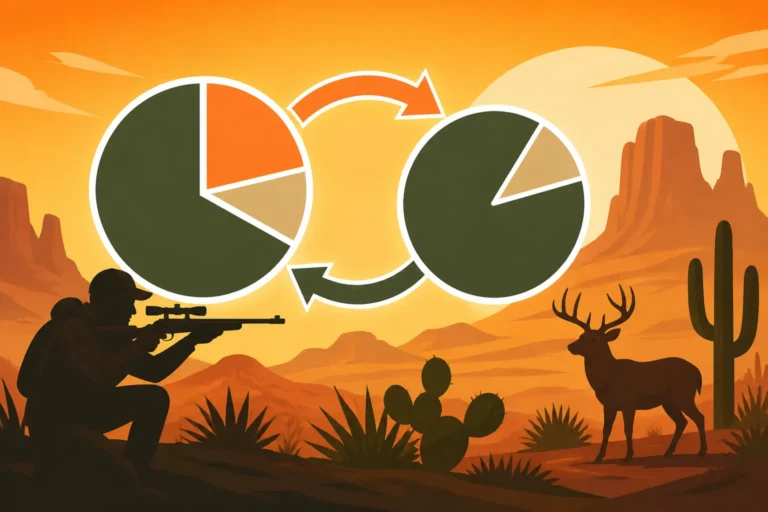
Perhaps the most significant aspect of group applications in Arizona is how bonus points are handled. Unlike some states where the highest point holder in a group dictates the draw, Arizona averages the bonus points of all members within a group. This calculation is a critical factor in determining your group's draw odds. For example, if you have one hunter with 15 points, another with 5 points, and two new hunters with 0 points, their average would be (15+5+0+0)/4 = 5 points. The group then enters the draw with an average of 5 points. This mechanism, detailed further in How Arizona Averages Points Across a Group, can be a double-edged sword.
On one hand, it allows hunters with fewer points to "ride" on the coattails of more experienced hunters. A new hunter, fresh into the system, can join a group with high-point holders and instantly have better draw odds than they would applying alone. This is fantastic for introducing new hunters to big game or for families wanting to hunt together. On the other hand, it can dilute the advantage of high-point holders. A hunter with a significant number of points might see their individual odds reduced if they apply with partners who have considerably fewer points. This trade-off requires a strategic discussion within the group. Are you prioritizing getting everyone a tag, or is the goal to maximize the draw odds for the highest point holder, even if it means splitting up? Understanding this point averaging system is paramount when you're Checking Arizona Draw Odds Before You Apply and trying to strategize for different species, particularly those with very low success rates like trophy elk or bighorn sheep. This point system often influences group size, as hunters weigh the benefits of a larger group experience against the impact on draw odds.
Strategic Considerations for Group Size
The maximum group size of ten might seem straightforward, but deciding on the optimal group size for your specific hunting goals is a nuanced decision. It's not just about who you want to hunt with; it's about maximizing your chances of success, whether that's drawing a tag or simply building points efficiently. Different strategies emerge depending on your individual point totals, the species you're applying for, and your overall objectives.
When a Smaller Group Makes Sense
Sometimes, less is more. For highly sought-after tags, especially those with notoriously low draw odds like trophy elk or premium antelope, a smaller group can often be a more effective strategy. Consider a group of two experienced hunters, each with high bonus points. If they apply together, their combined average will still be high, giving them a stronger chance than if they added several low-point hunters to their application. The higher the collective average, the better the odds in the bonus point pass. This is especially true when considering How the Arizona Bonus Point Pass Allocates Tags.
A smaller group is also significantly easier to manage logistically. Coordinating hunt choices, ensuring everyone applies correctly, and managing point totals becomes less complex with fewer people. If you're trying to draw a specific, hard-to-get tag for a unit known for mature animals, keeping your group compact and point-heavy might be your best bet. It also simplifies the Applying for Two Species in One Arizona Cycle process if you're attempting multiple applications across different draw periods. Small groups can be more nimble and flexible in the field, too, which can be an advantage when chasing wary game like Coues deer through challenging terrain.
Maxing Out Your Group for Point Accumulation
On the flip side, there are definite advantages to forming a larger group, even up to the ten-person maximum, particularly when the primary goal isn't necessarily to draw a tag this year, but to accumulate points for the future. For hunters with very few points, or those just starting out in the Arizona draw system, joining a larger group with a mix of point totals can be a smart play. The average might not be sky-high, but it can still be enough to get you past the initial bonus point pass for some of the easier-to-draw tags or ensure everyone gets a point for applying. Earning an Arizona Point by Applying is the foundation of long-term success in Arizona, and a larger group ensures everyone participates.
This strategy is often employed by non-residents who know it will take years to build enough points for prime tags. By joining a larger group, they spread the costs and efforts of applying, while all steadily building their point totals. It's also a great way for families, including youth hunters who might have zero points, to stay connected in the draw system and work towards a shared goal without overly impacting a single high-point holder's chances. The idea here is that every year everyone applies, everyone gets a point, bringing them closer to that dream tag down the road. Just ensure everyone knows The Nonresident Arizona Hunting License Price and tag fees well in advance!
Common Pitfalls and How to Avoid Them
Even with the best intentions, group applications can go sideways. One of the most common pitfalls is mismatched hunt choices. If even one member of your group enters a different hunt number, a typo, or a different weapon choice, the entire group's application will be invalidated or at best, processed incorrectly. Imagine the heartache of your group's application being tossed out because someone accidentally selected a rifle hunt when everyone else applied for muzzleloader. Careful verification by every member before the submission deadline is crucial.
Another frequent issue is missing the application deadline. Arizona has strict deadlines, and What Happens If You Miss the Arizona Deadline is simple: your application isn't considered. A single late submission from a group member can unravel everyone's efforts. The Arizona Elk and Antelope Application Deadline and the Arizona Deer, Sheep and Bison Deadline are firm dates, and they often involve specific time zones, so be extra cautious. Using a shared spreadsheet or a dedicated app for group members to confirm their selections and submission status can prevent these costly errors.
Finally, ensure every member has a valid hunting license for the current year before applying for big game tags. Arizona will not process a big game application without an active license number. Also, make sure all personal information in each AZGFD profile is up-to-date. Minor discrepancies, such as an old address or an expired credit card on file for payment, can create processing headaches or outright rejections. Thorough communication and a designated "check-in" system within your group will make all the difference.
| Group Size | Average Point Impact (Example) | Draw Odds Strategy | Pros | Cons |
|---|---|---|---|---|
| 1-2 Hunters | High-point focused | Maximize individual odds for tough tags | Higher average points if both have many, easier logistics, more agile in the field. | New hunters don't benefit from higher points, less camaraderie. |
| 3-5 Hunters | Balanced average | Good mix of odds and group experience | Good balance of point averaging benefits, manageable logistics, strong shared experience. | Point average can be significantly diluted by low-point members compared to a 1-2 person group. |
| 6-10 Hunters | Point accumulation / Broad appeal | Get everyone a point, increase general odds | Great for introducing new hunters, higher chance of at least one group member drawing an easier tag, stronger shared experience. | Significantly diluted point average for high-point holders, complex logistics, higher potential for errors. |
Disclaimer
Please remember that hunting regulations and application processes can change. Always consult the most current Arizona Game and Fish Department regulations and official publications for the definitive and most up-to-date information before applying for any hunt. This guide is for informational purposes only and should not be considered legal advice.