Dispersed Camping Limits on BLM Land
It's incredibly frustrating, isn't it? You've spent hours poring over maps, found what looks like the perfect slice of Arizona public land, only to arrive and wonder if you're even allowed to pitch a tent there, or for how long. The vastness of Bureau of Land Management (BLM) land can feel both liberating and utterly confusing when it comes to finding a temporary home for your hunting camp or just a quiet place to unwind. This guide is here to untangle the dispersed camping rules on Arizona's BLM acreage, helping you understand the limits, find legal spots, and be a responsible steward of these incredible landscapes.
Understanding Dispersed Camping on Arizona BLM Land
Arizona is blessed with millions of acres of public land, much of it managed by the Bureau of Land Management (BLM). This land is a treasure trove for hunters, hikers, and anyone looking to escape the hustle and bustle. But with that freedom comes responsibility, and a few rules you absolutely need to understand, especially when it comes to setting up camp.
What Exactly is Dispersed Camping?
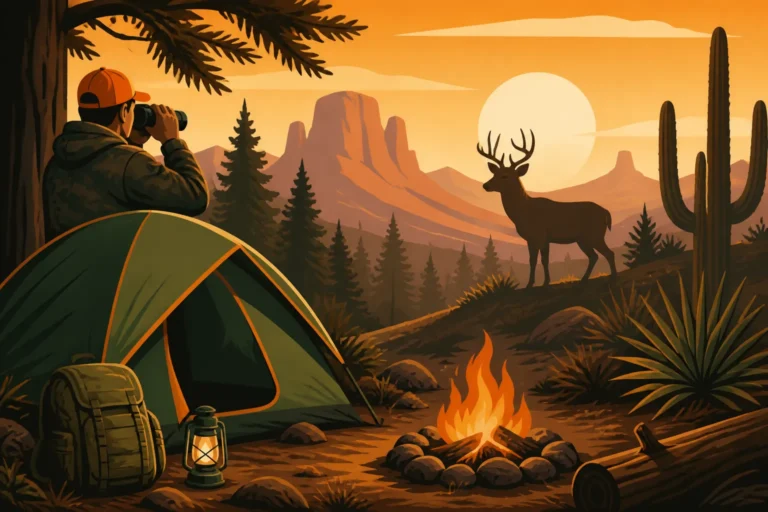
Let's start with the basics. Dispersed camping, often called "primitive camping" or "boondocking," is essentially camping outside of a designated campground. There are no picnic tables, no fire rings, no vault toilets, and certainly no hookups for RVs. It's just you, your gear, and the wide-open country. The beauty of it, especially for hunters, is the ability to get away from crowds and often, closer to your hunting grounds. Imagine pulling your truck off a two-track road, setting up camp under a mesquite tree, and being just a short walk from where you plan to glass for Coues deer at first light. That's the dream of dispersed camping.
However, this freedom means you are entirely self-sufficient. Every drop of water, every bite of food, every piece of equipment, and importantly, every bit of trash (including human waste) is your responsibility to pack in and pack out. It’s all about leaving absolutely no trace that you were ever there, ensuring the next person, or perhaps more importantly, the wildlife, finds the land just as pristine as you did.
The Allure and the Reality of BLM Land in Arizona
The allure of BLM land in Arizona, particularly for hunting, is undeniable. It offers incredible access to diverse ecosystems, from the saguaro-studded Sonoran Desert to the juniper and pinyon forests of higher elevations. You can often camp much closer to your actual hunting spot, saving precious time in the mornings or allowing for late-night stalks back to camp. For those chasing archery javelina or early season deer, being able to set up a primitive camp near a stock tank can be a game-changer. The solitude and connection to nature are powerful draws.
But let's be realistic. This isn't always a postcard-perfect experience. The reality often involves rough, unmaintained roads that require high-clearance 4×4 vehicles. Cellular service is often non-existent, making communication and navigation challenging without a satellite device or reliable offline maps. During the summer and early fall, temperatures can be extreme, and water sources are scarce, requiring careful planning and hauling in significant amounts of water. You're also sharing the land with plenty of other users – off-roaders, target shooters, other campers, and of course, ranchers and their livestock. It’s a mosaic of different uses, and understanding that balance is key to a good experience.
Why Rules Exist: Protecting the Land and Wildlife
You might wonder why such vast, open spaces need rules, especially for something as seemingly innocuous as pitching a tent. The simple truth is, without them, these valuable public lands would quickly degrade. Imagine thousands of people camping in the exact same spot for weeks on end, leaving behind trash, impacting vegetation, and creating permanent fire scars. It wouldn't take long for the very wilderness we seek to be destroyed.
The rules around dispersed camping, particularly the stay limits and requirements to move, are in place to prevent resource damage, reduce human impact on wildlife, and ensure fair access for everyone. They help prevent long-term environmental impacts, allow vegetation to recover, and prevent the de facto establishment of permanent camps. These regulations also reduce human-wildlife conflicts, keeping animals wild and preventing them from becoming accustomed to human food and waste, which can be detrimental to their health and behavior. It’s all about maintaining the ecological health and character of the land for generations to come.
Navigating the General Rules for Dispersed Camping
While the idea of limitless freedom on public lands is appealing, there are indeed limits, and understanding them is crucial for a legal and enjoyable dispersed camping experience. These aren't arbitrary; they're designed to protect the very resource we all enjoy.
The 14-Day Rule: Your Primary Guideline
The cornerstone of dispersed camping regulations on most BLM land, including much of Arizona, is the 14-day stay limit. This means you generally cannot camp in one specific location for more than 14 days within a 28-day period. It's a critical rule that catches many first-timers by surprise. It's not just about staying for two weeks; it's about not exceeding that limit within a rolling month. The intent is to prevent individuals from essentially homesteading on public land or causing localized environmental damage by prolonged use of a single site.
So, if you set up your hunting camp for the first seven days of an early archery deer season, you then have seven days remaining for that 28-day cycle. If you return to that exact spot, or even a very close one, within that same 28-day window, those days count towards your limit. This rule ensures that no single individual or group monopolizes a prime location, and it gives the land a chance to recover from your presence. An enforcement officer might note your license plate or camp setup, so don't try to pull a fast one by just moving your tent 50 feet over. The spirit of the rule is about the area, not just the exact coordinates of your sleeping bag.
Moving Camp: How Far and How Soon?
Now, what happens after your 14 days are up, or if you simply want to move to a new area? The rules require you to physically relocate your camp. But here's where it gets a bit more nuanced: you can't just pack up your tent and move it across the road. The general guideline is that you must move a "reasonable distance," often interpreted as 25 to 50 miles away from your previous campsite. This isn't a hard and fast rule everywhere, and it can vary by specific field office or district, so local knowledge or a quick check with the nearest BLM office is always a good idea. However, the intent is clear: you need to leave the general area, not just relocate within sight of your old spot.
Furthermore, once you've reached your 14-day limit in a given area, you generally cannot return to that specific area for at least 14 days. This "reset" period allows the land to rest and ensures that the spirit of rotating use is upheld. For hunters, this might mean planning your trips to different units or distinct areas if your season is longer than two weeks. For example, if you're chasing elk on the Mogollon Rim and exhaust your 14 days in one section of Unit 23, you might need to shift to a completely different part of the unit, or even to an adjacent unit, for the remainder of your hunt. This is where diligent pre-scouting and using mapping tools become invaluable.
Keeping a Clean Camp: Trash, Waste, and Fire Safety
Dispersed camping is a "leave no trace" activity. Period. This means everything you pack in, you pack out. And we mean everything. Food scraps, packaging, even gray water from washing dishes should ideally be dispersed far from your camp, or better yet, filtered and carried out. Human waste needs to be properly managed; burying it in a cathole at least 6-8 inches deep and 200 feet from water sources, trails, and camp is the standard. Pack out all toilet paper. For longer stays, or larger groups, considering a portable waste system is truly the most responsible approach to protect water quality and soil integrity in Arizona's sensitive desert and high-desert environments.
| Item | Dispersed Camping Rule | Why it's Important |
|---|---|---|
| Stay Limit | 14 days within any 28-day period in one location | Prevents resource damage, ensures fair access, deters "homesteading." |
| Relocation | Move 25-50 miles from previous site after 14 days | Allows previous site to recover, prevents repeated localized impact. |
| Return Policy | Cannot return to the same general area for 14 days | Reinforces rotation of use, gives nature a break. |
| Distance from | 200 feet from water sources, roads, and trails | Protects water quality, ensures privacy, prevents blocking access. |
| Fire Safety | Always check local restrictions, never leave unattended, use existing fire rings if possible. Consider a fire pan. | Prevents wildfires (critical in Arizona!), protects ground from scorching. |
| Waste Disposal | Pack it in, pack it out (all trash). Bury human waste 6-8" deep, 200ft from water. | Protects environment, prevents pollution, maintains aesthetics. |
| Vehicle Access | Stay on existing roads and trails. Designated routes only. | Prevents habitat damage, soil erosion, and unnecessary disturbance. |
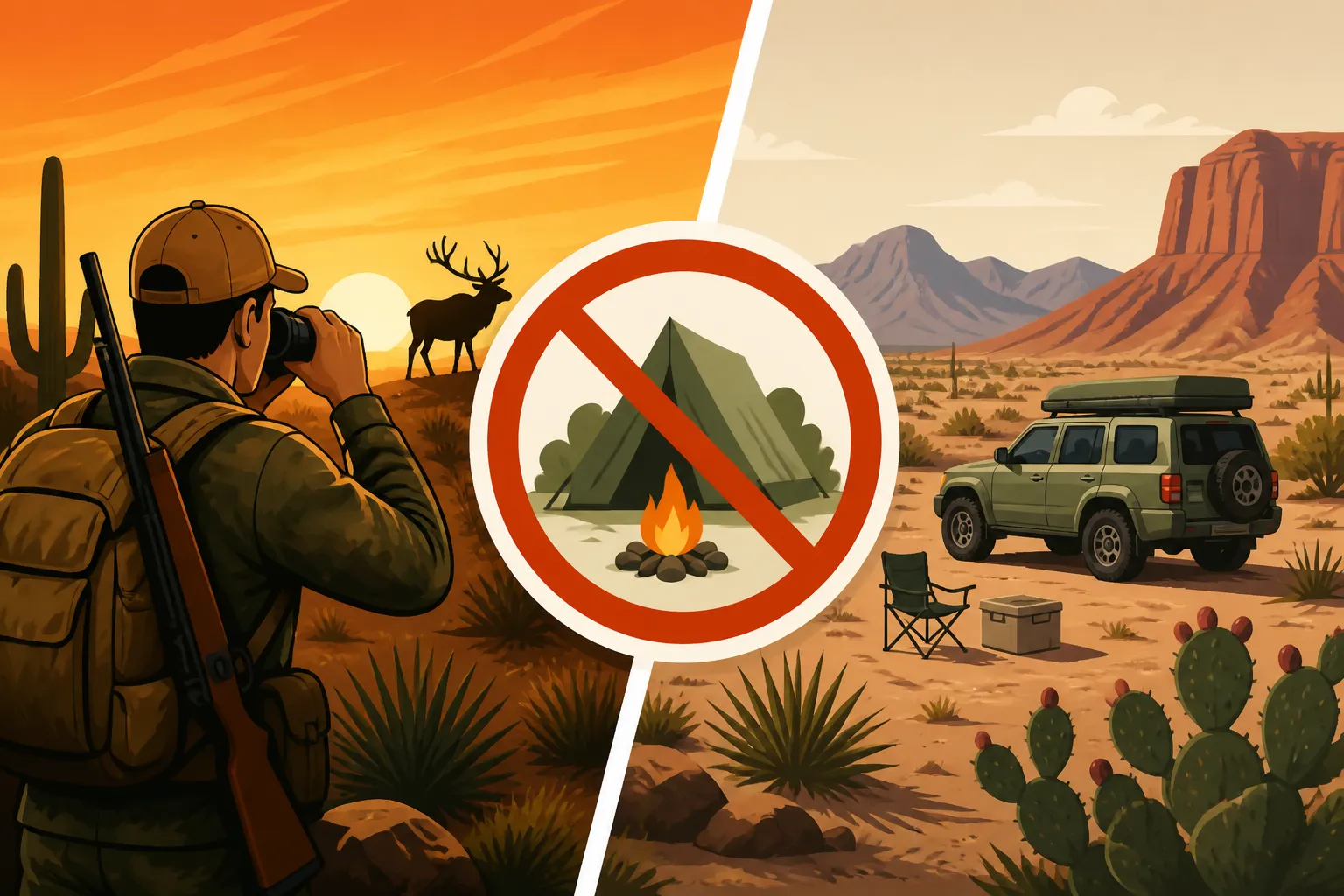
Fire safety is paramount, especially in Arizona's dry climate. Wildfires can devastate vast areas of prime hunting habitat and put lives at risk. Always, always check for current fire restrictions before you even think about lighting a match. These can change daily depending on weather conditions. Never build a fire on bare ground if you can help it; use an existing fire ring if available, or consider a fire pan to contain coals and ash. Ensure your fire is dead out – cold to the touch – before you leave it unattended for even a minute. These aren't just suggestions; they are often legal requirements with severe penalties for non-compliance. Fire Restrictions During Hunting Season can dramatically impact your camping plans, so be informed.
Locating Legal and Ethical Dispersed Campsites in Arizona
Finding a good, legal dispersed camping spot isn't always as simple as pulling off the nearest dirt road. It requires a bit of homework and a keen eye for detail to ensure you're not trespassing, causing damage, or violating local restrictions.
Using Maps and Technology to Find Your Spot
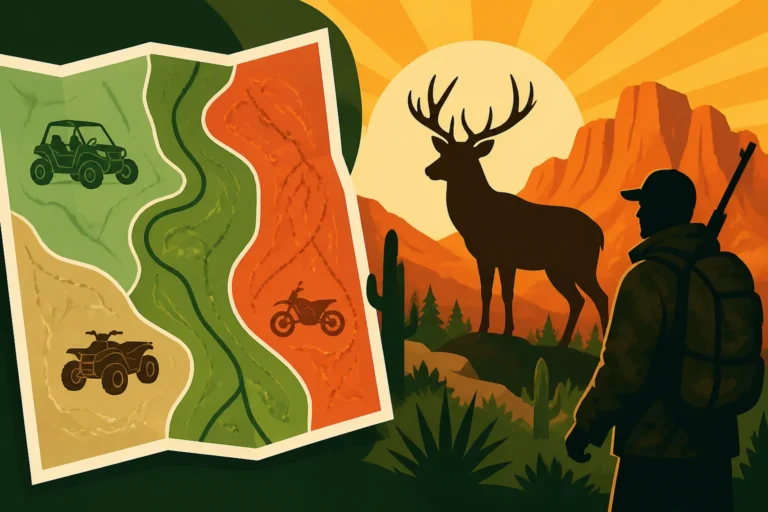
In today's world, maps are your best friend for navigating public lands. While paper maps are still invaluable for understanding the big picture and as a backup, digital mapping applications like onX Hunt and GoHunt are absolute game-changers. These apps provide detailed land ownership overlays that clearly distinguish between BLM, National Forest, State Trust Land, and private parcels. This is critical in Arizona where public and private lands are often a checkerboard, and crossing into private ground or Arizona State Trust Land Needs a Permit, and Your License Counts can land you in hot water.
When you're looking for a dispersed campsite, you'll want to identify BLM land that has existing two-track roads or pull-offs. These roads are generally acceptable for vehicle access, but remember, driving off-road to create a new access point is almost always forbidden and highly damaging to fragile desert ecosystems. Zoom in on your map to look for areas with sparse vegetation where a camp would have minimal impact, or perhaps existing, lightly used clearings that indicate previous dispersed camping activity. Always check the distance to water sources; general rules suggest camping at least 200 feet away to prevent contamination. E-Scouting an Arizona Unit Before the Season with these tools will save you countless hours of driving around on the ground.
Avoiding Restricted Areas and Private Inholdings
One of the biggest pitfalls for new dispersed campers is accidentally setting up on private land or within a restricted zone. Arizona's public land is often interspersed with private ranchlands, mining claims, or state trust lands that have different access rules. A hunting license acts as your permit for most Arizona State Trust Land Needs a Permit, and Your License Counts, but there are specific cases where additional permits might be needed for certain recreational activities, so it's always worth verifying if you're unsure.
Using your mapping app, carefully identify the boundaries. Many private parcels are not fenced, or the fences are in disrepair, making it difficult to tell where public ends and private begins without a reliable GPS-enabled map. Pay close attention to any "No Trespassing" signs you encounter. Even if your map shows public land, local landowners might have historical access arrangements or easements that aren't immediately obvious. When in doubt, err on the side of caution and find another spot. Ignoring these boundaries not only disrespects landowners but can also lead to legal trouble and contribute to a negative image of hunters and outdoor recreationists. Reading a Land Ownership Layer Correctly is a skill every Arizona hunter needs to master.
Reading the Signs: Local Restrictions and Closures
While there are general rules for BLM dispersed camping, specific areas or field offices can have additional restrictions. These might be related to sensitive wildlife habitat, archaeological sites, designated wilderness areas, or simply areas experiencing heavy use. You might encounter signs that say "No Camping," "No Overnight Parking," or "Camping by Permit Only." These signs override the general rules, so always keep an eye out for posted information, especially at major access points or trailheads.
For example, some areas near popular attractions or urban fringes might have tighter restrictions on camping or campfires. Seasonal closures are also common, often due to fire danger or to protect wintering wildlife habitat. It's not uncommon for parts of the Tonto National Forest or other popular hunting units to have specific restrictions on certain activities. Where Arizona Publishes Unit Access Maps can often provide general information, but the most up-to-date local rules are usually found on bulletin boards at trailheads, visitor centers, or on the specific BLM field office website for the area you plan to visit. A quick phone call to the relevant BLM office can also clarify any uncertainties before you head out.
Practical Tips for Dispersed Camping in Arizona
Dispersed camping in Arizona offers an unparalleled experience, but it demands a higher degree of self-reliance and preparedness than a developed campground. To ensure your trip is safe, enjoyable, and leaves no negative impact, consider these practical tips.
Water, Food, and Self-Sufficiency
The desert environment of Arizona is no joke, and water is often the single most critical factor in dispersed camping. Assume there will be no potable water sources available, even if you see a cattle tank or natural seep. Always pack in significantly more water than you think you'll need, both for drinking and for any camp tasks. A good rule of thumb is at least one gallon per person per day, plus extra for cooking and emergency situations. In hot weather, this amount will need to increase dramatically. You'll thank yourself when you're not rationing water on a hot hunt. Water You Must Carry on a Day Hunt is a topic unto itself, and for extended stays, consider water storage solutions beyond just individual bottles.
When it comes to food, plan simple, non-perishable meals that require minimal cooking and cleanup. Keep all food in sealed containers, preferably in a hard-sided cooler or secured in your vehicle, to prevent attracting wildlife. Scavenging animals like javelina, bears, and coyotes can quickly become a nuisance and a danger if they associate campsites with easy food. Also, don't forget the necessities like a first-aid kit, emergency communication device (like a satellite messenger), extra fuel, and spare tires, especially if you're venturing far down those remote two-track roads.
Minimizing Impact and Leaving No Trace
The "Leave No Trace" principles are the golden rule of dispersed camping. Your goal is to leave your campsite looking as if no one was ever there. This means packing out all your trash, including food scraps, cigarette butts, and even seemingly biodegradable items like orange peels or eggshells. These items can take a long time to break down in arid environments and can attract unwanted wildlife. If you burn paper or wood, ensure all ashes are thoroughly cold and scattered, or packed out if you used a fire pan.
When you choose a campsite, try to select an already impacted site if possible, rather than creating a new one. If you must create a new site, choose durable surfaces like rock, dry grass, or dirt, away from fragile vegetation. Avoid trenching around your tent. When you leave, naturalize the area by scattering any rocks you moved, raking out footprints, and generally making it look undisturbed. Remember, the collective impact of many people not leaving a trace is what preserves these wild spaces for everyone.
Being a Good Steward: Reporting Issues and Respecting Others
Being a good dispersed camper also means being a good steward of the land. If you come across trash or signs of abuse, consider packing out what you can safely manage. If you observe significant resource damage, illegal activities, or dangerous situations, report them to the local BLM office or law enforcement. This helps the land managers protect these areas for continued public use.
Finally, remember that you are sharing this space with others. Respect the privacy of other campers by setting up a reasonable distance away – 200 feet is a good minimum, but more is better in open country. Keep noise levels down, especially during quiet hours. Share the roads and trails responsibly, yielding to others and minimizing dust. For hunters, this also means understanding that not everyone out there is hunting, and being respectful of their use of public land. This collaborative approach ensures that everyone can enjoy Arizona's vast and beautiful public lands in harmony.
Disclaimer
This article is for general informational purposes only and does not constitute professional advice. Laws, prices and regulations vary by location and change over time. Consult a qualified professional for guidance on your specific situation.