House Rock Wildlife Area Access
Trying to figure out exactly how to access a premier hunting area like House Rock Wildlife Area in Arizona can feel like deciphering an ancient map, especially with its unique blend of public and managed lands. This guide is here to untangle the complexities of navigating, understanding regulations, and ultimately gaining successful entry into this remarkable landscape, ensuring you're fully prepared for your next adventure.
Understanding the House Rock Wildlife Area
The House Rock Wildlife Area isn't just another patch of Arizona scrub; it's a truly unique and often sought-after destination, particularly for those pursuing big game. Nestled in a remote corner of northern Arizona, south of the Utah border and east of the Grand Canyon, this area holds a special place in the hearts of hunters and wildlife enthusiasts alike.
What is House Rock Wildlife Area?
Imagine a vast expanse of high desert grassland, interspersed with juniper and pinyon pine, bordered by the Vermilion Cliffs to the north and the Kaibab Plateau to the south. That's the House Rock Valley, and within it lies the House Rock Wildlife Area. This roughly 80,000-acre tract of land is primarily managed by the Arizona Game and Fish Department (AZGFD), though it interacts with Bureau of Land Management (BLM) lands and some private holdings. It's most famously known as one of the few places in North America where you can hunt free-ranging bison, a truly once-in-a-lifetime experience for many. Beyond the iconic bison, the area also offers opportunities for mule deer and some scattered elk, making it a diverse and challenging landscape to explore. Its remote nature contributes to its allure, providing a sense of wildness that's increasingly rare.
The history of the House Rock bison herd itself is fascinating, rooted in conservation efforts from the early 20th century to re-establish bison populations. These aren't your typical ranch animals; they are wild, powerful, and demand respect, making a hunt here a serious undertaking. The landscape itself is rugged, characterized by wide-open spaces that can make spotting game a long-range endeavor, often requiring high-quality optics and immense patience. The elevation here typically ranges from about 4,000 to 6,000 feet, offering a different high desert environment than some of Arizona's more southern or timbered regions.
General Access Regulations
Accessing and hunting in the House Rock Wildlife Area comes with specific regulations that are crucial to understand. While it's managed by AZGFD, it functions much like other public lands in terms of general behavior, yet with some key differences due to its special status as a wildlife area and bison habitat. The most important rule of thumb is to always consult the current Arizona Hunting Regulations booklet, as rules can and do change. This document is your bible for any hunting trip in Arizona, and especially for a unique area like House Rock.
Vehicle access is generally restricted to designated roads and established trails. This isn't the place to create your own two-track across the grassland. Motorized Travel Rules on Arizona Public Land are enforced here to protect the fragile desert ecosystem and prevent habitat degradation, which is especially vital in an area managed for specific wildlife populations. Camping is often allowed in designated dispersed camping areas, but specific rules regarding campfires, length of stay, and waste disposal apply. Remember, you're in a wild area, so packing out everything you pack in is not just a courtesy, but often a legal requirement. Disrupting wildlife, particularly the bison, through undue noise or harassment is strictly prohibited, emphasizing the conservation-first approach of the wildlife area's management.
Navigating to House Rock and Within
Reaching the House Rock Wildlife Area is part of the adventure itself, often involving significant travel on less-traveled roads. Once you're there, understanding the internal road system is just as vital for a successful and legal hunt.
Primary Access Routes
The main artery for reaching the general vicinity of the House Rock Valley and the Wildlife Area is U.S. Highway 89A. This scenic highway winds its way from Bitter Springs, through Marble Canyon, past Jacob Lake, and ultimately to Fredonia, Arizona. If you're coming from the south, you'll likely take Highway 89 north from Flagstaff and then turn west onto 89A. From the north, you'd come down from Utah via Kanab and Fredonia. The turn-off for the House Rock Valley Road (BLM Road 1065) is located between Marble Canyon and Jacob Lake, typically marked with signage.
House Rock Valley Road itself is predominantly a dirt road, often well-maintained but susceptible to weather conditions. During dry periods, it can be washboarded and dusty, requiring a careful pace. After heavy rains, especially during monsoon season, sections can become muddy and impassable for vehicles without four-wheel drive and good ground clearance. Monsoon Road Conditions in Rim Country are a serious consideration here, as flash floods can quickly turn a dry wash into a raging river, making crossing impossible or dangerous. Always check weather forecasts and road conditions before heading into the area, as cell service can be spotty or nonexistent once you leave Highway 89A.
Internal Road Systems and Vehicle Restrictions
Once you're on House Rock Valley Road, a network of smaller dirt roads and two-tracks branches off, leading deeper into the wildlife area and surrounding public lands. These internal roads provide critical access for hunters, allowing them to cover significant ground to scout and hunt. However, not all roads are open to all vehicles, and some areas may be closed entirely to motorized travel to protect wildlife or sensitive habitats. This is where tools like Motor Vehicle Use Maps for Forest Ground become absolutely invaluable, even though House Rock is not primarily a Forest Service area. BLM also publishes similar travel management maps, and familiarizing yourself with these is non-negotiable.
Many of these internal roads might require a high-clearance 4×4 vehicle, especially if you plan to venture off the main House Rock Valley Road. Deep ruts, rocky sections, and soft sand can trap less-capable vehicles. It's a common sight to see hunters airing down their tires for better traction and a smoother ride on these primitive roads. Always carry a spare tire, a jack, and possibly even recovery gear like a shovel and traction boards, because help can be a long way off. Respecting signs indicating road closures or wilderness boundaries is paramount. These restrictions are in place for a reason, often to protect wildlife during sensitive periods or to preserve the primitive character of certain areas.
Permits, Licenses, and Land Ownership
Hunting in Arizona, and especially in a unique spot like House Rock, involves more than just having the right weapon and gear. It requires a thorough understanding of the necessary permits, licenses, and the mosaic of land ownership that defines the western landscape.
Required Permits for Hunting
First and foremost, any hunter in Arizona needs a valid Arizona hunting license. This is your base permit, your entry ticket to hunting any game in the state, whether it's an over-the-counter archery deer tag or a coveted bison permit. For specific species, you'll also need the appropriate tag. For House Rock, the most iconic tag is undoubtedly for bison. Arizona Bison Draw Odds are notoriously low, making it one of the most difficult tags to draw in the state, often requiring many bonus points and years of applying. There might also be opportunities for mule deer or even elk with the correct tags, which are typically acquired through the statewide draw cycles.
Beyond the general hunting license and species-specific tags, there aren't typically additional permits required specifically for hunting within the House Rock Wildlife Area itself, as long as you adhere to general AZGFD regulations and respect land ownership. However, it's always wise to double-check the current regulations booklet or the AZGFD website for any localized or temporary restrictions that might apply. For instance, if you plan to camp on State Trust Land in the vicinity, you might need a recreational permit, though a hunting license often covers incidental activities directly related to hunting on such lands. Understanding these nuances is key to avoiding an unwelcome encounter with law enforcement.
Navigating Land Ownership
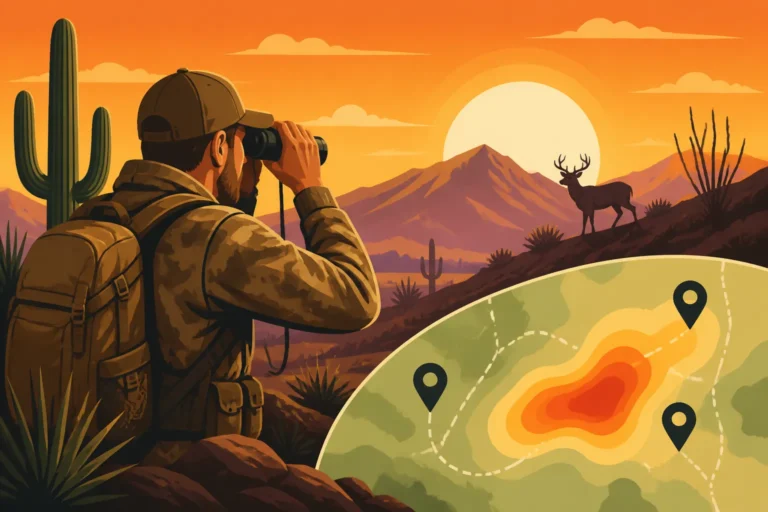
Arizona, like much of the West, is a patchwork of land ownership: state trust land, Bureau of Land Management (BLM) land, National Forest, and private property. The House Rock Wildlife Area primarily consists of AZGFD-managed land, often surrounded by or interspersed with BLM land. The challenge for hunters is discerning these boundaries on the ground, as they aren't always clearly marked. This is where modern mapping technology becomes not just helpful, but absolutely essential.
Smartphone apps and GPS units loaded with public and private land ownership layers are non-negotiable for hunting in this region. Brands like onX Hunt have revolutionized how hunters navigate these complex landscapes. With onX Hunt, you can see exactly where BLM land ends and private property begins, or where the wildlife area boundaries lie. This capability is critical to avoid accidental trespassing, which can carry serious penalties and damage the reputation of hunters. Reading a Land Ownership Layer Correctly involves understanding the color codes and boundary lines on your map to ensure you're always on legal ground. GoHunt also provides valuable mapping resources and often includes data overlays for unit boundaries, water sources, and historical hunt data, which can be incredibly useful for planning your approach to House Rock. Always double-check your maps and pay attention to signage on the ground.
| Aspect | Detail | Importance |
|---|---|---|
| Primary Access | US Highway 89A, then House Rock Valley Road (BLM 1065) | Main route in; check conditions for dirt roads. |
| Internal Access | Network of dirt roads and two-tracks | Requires 4×4, high clearance. Adhere to Motor Vehicle Use Maps. |
| Hunting License | Required for all hunting | Non-negotiable for any hunting in Arizona. |
| Species Tags | Specific tags (e.g., bison, deer) via draw | Essential for legal harvest; very difficult to draw bison tags. |
| Land Ownership | AZGFD Wildlife Area, BLM, State Trust, private | Critical to identify boundaries with mapping apps (onX Hunt, GoHunt) to avoid trespass. |
| Seasonal Closures | Potential for snow in winter, monsoon impact on roads in summer/fall | Can severely restrict access; always check weather and road reports. |
| Camping | Dispersed camping generally allowed; adhere to Leave No Trace principles | Plan for self-sufficiency; no developed facilities. |
| Cell Service | Extremely limited or nonexistent | Carry satellite communication device for emergencies. |
Practical Considerations for Access
Accessing House Rock Wildlife Area effectively and safely isn't just about knowing the roads; it's about being prepared for the realities of the Arizona wilderness. Planning and foresight are your best allies.
Seasonal Challenges and Preparation
The Arizona climate, particularly in the northern high desert, presents distinct seasonal challenges that directly impact access. In late fall and winter, House Rock can experience significant snowfall, especially at higher elevations or in more sheltered canyons. Winter Access to Northern Arizona Units can become severely limited or impossible without a tracked vehicle or snow machine, even on primary dirt roads. Deep snowdrifts can quickly materialize, rendering roads impassable and stranding vehicles. Always monitor weather forecasts closely and be prepared for rapidly changing conditions if you're planning a late-season hunt. Carrying chains, a shovel, and extra warm gear is a must during these colder months.
Conversely, the summer and early fall monsoon season, typically July through September, brings its own set of challenges. While the high desert can appear dry and dusty, intense thunderstorms can quickly turn washes into raging rivers and make dirt roads slick, muddy, and impassable. Flash floods are a real danger in this terrain, and driving through even shallow moving water can sweep a vehicle away. Mud can also bog down even the most capable 4x4s, turning a short drive into an hours-long recovery effort. Monsoon Road Conditions in Rim Country highlight the importance of caution and flexible planning. Beyond road conditions, temperature extremes are also a factor. Early season hunts can be scorching hot, demanding meticulous hydration planning and heat management.
Scouting and Planning Your Trip
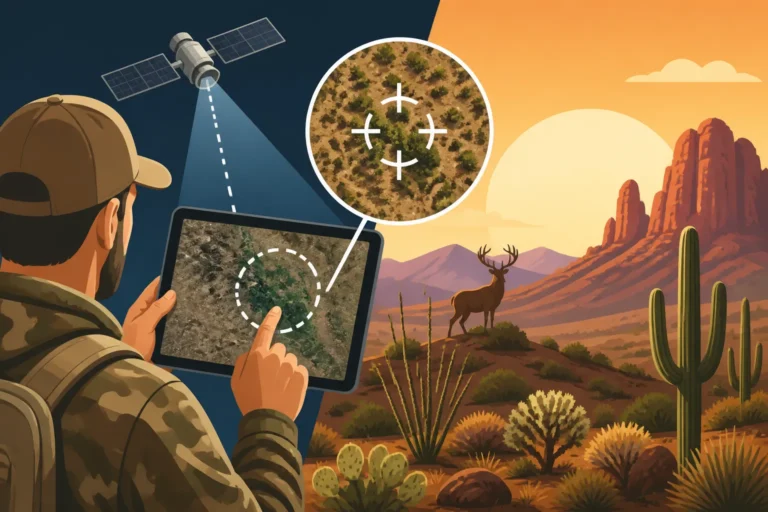
Effective scouting and meticulous trip planning are absolutely critical for a successful hunt in House Rock. Given its remote nature and the size of the area, simply showing up without a plan is a recipe for frustration. E-scouting has become an indispensable tool for many hunters, allowing them to survey the landscape from the comfort of their home. Platforms like onX Hunt and GoHunt allow you to pore over satellite imagery, topo maps, and land ownership layers. You can identify potential access points, likely travel corridors for game, water sources, and suitable camping locations. E-Scouting an Arizona Unit Before the Season empowers you to arrive with a solid understanding of the terrain, rather than spending precious hunt days just trying to get your bearings.
Once you have a general understanding from your e-scouting, if possible, a physical scouting trip can be invaluable. This allows you to verify road conditions, locate fresh sign, and get a feel for the vastness of the area. Even if you can't scout in person, detailed planning for essential supplies is non-negotiable. House Rock is remote, with no services, gas, or potable water readily available. You must carry all your water, food, fuel, and emergency supplies. Cell service is generally poor to nonexistent, so a satellite communication device (like a Garmin inReach or Zoleo) is a wise investment for emergencies. Share your hunt plan with someone reliable before you go, and always be prepared for the unexpected.
Disclaimer
This article is for general informational purposes only and does not constitute professional advice. Laws, prices and regulations vary by location and change over time. Consult a qualified professional for guidance on your specific situation.