Where Hunting Is Closed Near the Grand Canyon
The majestic Grand Canyon calls to many, but for hunters, its proximity often brings a flurry of questions and, frankly, a lot of confusion. It’s easy to look at a map and see vast expanses of wild country, assuming it’s all open to pursuit, only to realize that federal protections create significant, non-negotiable closures. This guide is here to untangle the web of regulations and help you understand precisely where hunting is closed near the Grand Canyon, saving you from a costly and frustrating mistake.
The Grand Canyon National Park: An Absolute No-Hunting Zone
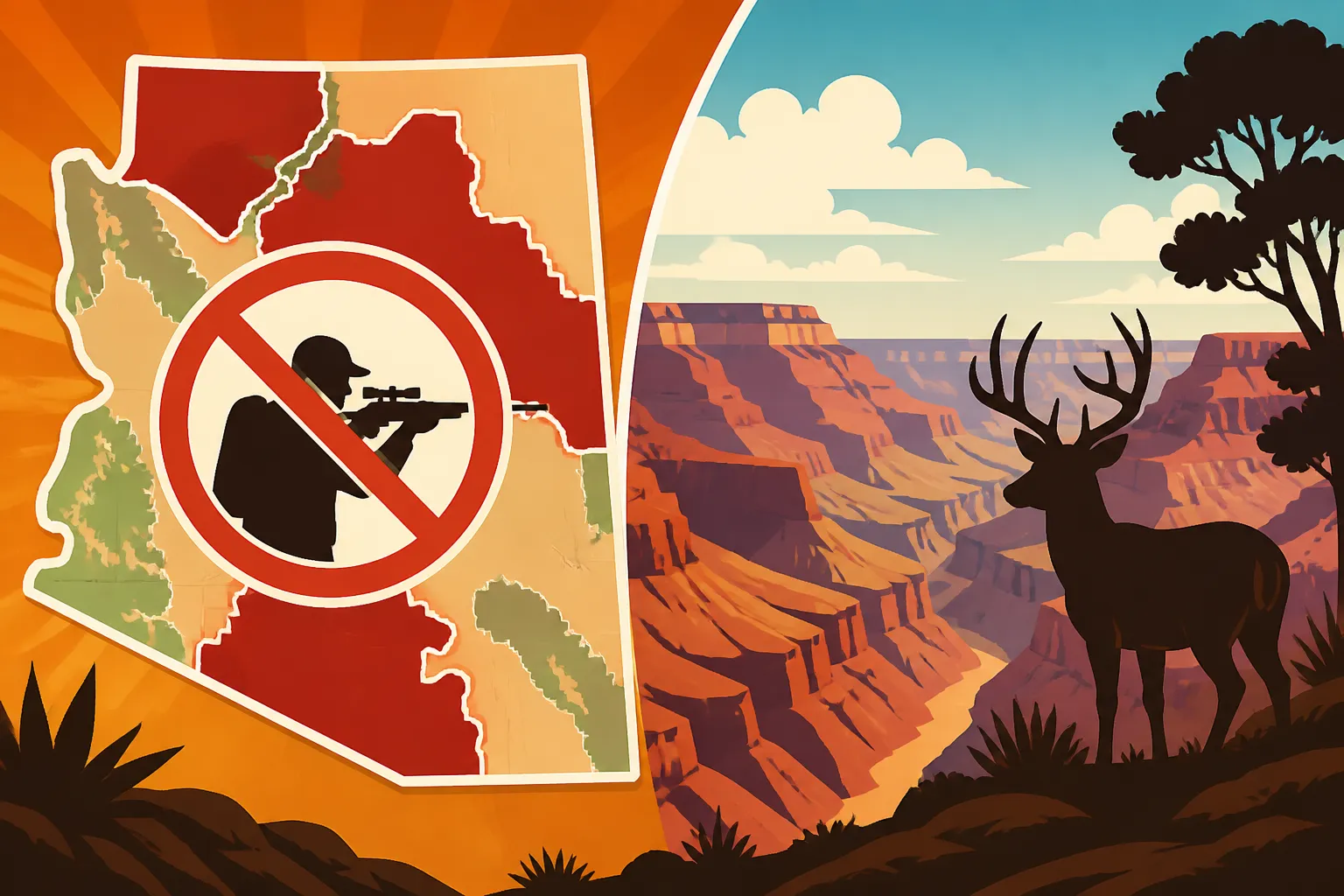
Let's get this out of the way upfront, with no ambiguity: Grand Canyon National Park is entirely closed to hunting. This isn't a partial closure, a seasonal restriction, or a "permit only" situation. It is a federal national park, and within its boundaries, the hunting of any animal is strictly prohibited. This is a fundamental rule that every hunter needs to understand before even thinking about setting foot near the canyon.
The frustration here is real. You see deer, elk, bison, and other game animals thriving within the park's protective embrace, seemingly unpressured. It’s natural to feel that pang of a missed opportunity, especially when these animals might wander just outside the park boundaries, where hunting is permitted. However, the designation of a national park prioritizes preservation and public enjoyment of natural resources in an undisturbed state. This means no hunting, no trapping, and generally, no disturbance of the wildlife. Violating these rules isn't just a minor infraction; it can lead to severe federal penalties, including hefty fines, confiscation of equipment, and even jail time. It’s simply not worth the risk. Hunting Boundaries Around National Parks are meticulously drawn, and ignorance of these lines is no defense.
It's also important to realize that the rules apply to all species. Whether you're thinking about big game like elk or deer, or smaller game like rabbits or squirrels, the answer remains the same inside the national park: absolutely no hunting. This includes the bison herds that have famously inhabited areas of the North Rim, despite their increasing numbers and the challenges they pose to park ecosystems. While there might be occasional, highly controlled management actions involving state agencies, these are not public hunts and are far from the traditional hunting experiences we're discussing. For those interested in the bison population, understanding the distinction between park management and public hunting opportunities is key. Bison in Grand Canyon National Park offers more context on these unique situations.
Navigating Public Lands Surrounding the Grand Canyon
While the national park itself is off-limits, the vast majority of the land surrounding the Grand Canyon is indeed public, managed by agencies like the U.S. Forest Service (primarily the Kaibab National Forest) and the Bureau of Land Management (BLM). These lands are generally open to hunting, provided you have the appropriate Arizona licenses and tags, and adhere to state regulations. This is where the real complexity, and opportunity, for Arizona hunters lies.
The key challenge is knowing exactly where the park boundaries end and where huntable public land begins. These transitions can be subtle on the ground, sometimes marked by small signs or fences, but often simply defined by a line on a map. This is precisely why detailed mapping tools are not just helpful, but absolutely essential. You'll want to have a robust mapping app like onX Hunt, which clearly delineates federal land types—National Park, National Forest, BLM, and even State Trust Land. Relying on an old paper map or assumptions can quickly lead you astray, especially in areas where topography makes clear sightlines difficult. The difference between being legally on Kaibab National Forest land and accidentally crossing into Grand Canyon National Park can be a matter of just a few yards, with drastically different legal implications.
Much of the hunting opportunity immediately adjacent to the Grand Canyon falls within the Kaibab National Forest, a truly legendary area for trophy mule deer and elk, particularly on the North Rim side in units like Unit 9. This area is renowned, but its proximity to the park means hunters must be exceptionally vigilant about their location. Understanding Unit 9 and the Kaibab Plateau North of the Grand Canyon is crucial for anyone considering a hunt here. These areas are vast and rugged, offering incredible experiences, but they demand a high level of preparedness and situational awareness.
Key Areas and Their Specific Hunting Nuances
When we talk about hunting "near" the Grand Canyon, we're really focusing on specific game management units (GMUs) that border the National Park. These units, while separate from the park, carry their own unique characteristics and rules.
The Kaibab Plateau: A Hunter's Mecca, With Caveats
On the North Rim, the Kaibab Plateau is synonymous with exceptional mule deer hunting. It’s a true hunter’s dream, with legendary genetics that produce some of the largest mule deer in the state. Units like Unit 9 are highly sought after in the draw, often requiring many bonus points to secure a tag. However, the entire western edge of Unit 9 and parts of other Kaibab units directly abut the National Park. This means that a buck you've been tracking all day could easily slip into the park, instantly making it unhuntable.
The sheer scale of the Kaibab can also be deceiving. While it feels endless, the proximity to the park means your zone of operation is implicitly bordered. You must know the boundaries intimately, even when the terrain looks identical on either side of the line. Access to Kaibab National Forest Access in Arizona is generally good via a network of forest roads, but these roads can also lead you right up to—or even across—park boundaries if you're not paying attention. Always cross-reference your physical location with a reliable GPS unit and a mapping application like onX Hunt, which shows public and private land boundaries in real-time. This vigilance is paramount to ensure you're always on legal hunting ground. What Unit 9 Offers on the Kaibab Plateau truly highlights the potential, but also the responsibility, of hunting these units.
South Rim and Adjacent Units
On the South Rim side, the Grand Canyon National Park is also bordered by Kaibab National Forest land and some BLM ground. Units here might offer deer, elk, and even mountain lion opportunities, depending on the season and your tag. While perhaps not as globally famous as the North Kaibab for mule deer, these areas still provide excellent hunting experiences. Again, the principle remains the same: the National Park boundary is a hard stop for hunting activities.
Hunters in these units need to be just as diligent about boundaries. For instance, areas around Tusayan or Valle, while outside the park, are still very much in its shadow. Understanding How Arizona Numbers Its Game Management Units and then overlaying those with accurate land status maps is critical. The Arizona Game and Fish Department (AZGFD) provides detailed regulations and maps for each unit, which are your primary legal reference. Supplementing this with a digital mapping system like onX Hunt allows for real-time verification in the field, which can be a literal lifesaver when navigating confusing boundaries.
State Trust Land and BLM Ground
Beyond the immediate forest lands, Arizona also has vast tracts of State Trust Land and Bureau of Land Management (BLM) ground adjacent to the Grand Canyon region. Arizona Holds 9.2 Million Acres of State Trust Land and much of this is huntable. Hunting on State Trust Land requires an Arizona hunting license, which acts as your recreational permit. For BLM land, BLM and Forest Ground Across Arizona Needs No Permit beyond your hunting license, making it broadly accessible.
These areas can offer less crowded hunting opportunities, but they often have more remote access and can be very dry. The same boundary rules apply: if State Trust Land or BLM ground abuts the national park, the park boundary is still a non-hunting zone. It’s your responsibility to know exactly where you are at all times, especially in rugged terrain where visible markers might be scarce. Always scout these areas beforehand, both on a map and ideally in person, to understand access points and identify potential boundary risks.
Essential Tools and Due Diligence for Grand Canyon Area Hunting
To successfully and legally hunt the areas surrounding the Grand Canyon, you need to arm yourself with knowledge and the right tools. There's no substitute for thorough preparation.
Mapping Applications: Your Digital Lifeline
Modern mapping applications are arguably the most critical tool for hunting near the Grand Canyon. Apps like onX Hunt provide detailed land ownership maps, showing you exactly where National Park boundaries are, along with National Forest, BLM, State Trust, and private lands. This isn't just about avoiding trespassing; it's about ensuring you're not illegally hunting within a federal no-go zone.
These apps also offer features like GPS tracking, waypoint marking, and satellite imagery, which are invaluable for navigation in the vast and often featureless terrain outside the park. Before you leave home, spend considerable time on your computer or tablet, downloading offline maps for your chosen unit. Cell service can be spotty to non-existent near the Grand Canyon, so having those maps accessible without a signal is absolutely crucial. Using onX Layers for Arizona Public Land can help you understand how to maximize these tools for your hunt planning.
Understanding Regulations and Unit Information
Your first and most important source of information is the official Arizona Game and Fish Department (AZGFD) hunting regulations. These documents detail all seasons, bag limits, weapon restrictions, and unit boundaries. Always consult the most current regulations, as rules can change.
Beyond the general regulations, researching specific unit information is vital. Services like GoHunt compile historical draw odds, harvest success rates, and unit overviews, which can be incredibly helpful when planning an application for a coveted tag in a unit bordering the Grand Canyon, such as Unit 9. This data helps you make informed decisions about where to apply and what to expect. Reading an Arizona Game Management Unit Map will empower you to interpret the official maps and understand the lay of the land, including those crucial park boundaries.
Scout, Scout, Scout
Whether you're hunting an iconic unit like the Kaibab Plateau for Kaibab Plateau Mule Deer Quality or exploring other public lands, scouting is essential. This means both e-scouting from home using satellite imagery and, if possible, physical scouting trips. E-scouting helps you identify terrain features, water sources, and potential bedding or feeding areas. It also allows you to meticulously trace those critical park boundaries on your digital map before you ever set foot in the field.
Physical scouting reinforces what you see on the map, familiarizes you with access roads, and helps you identify actual boundary markers or natural features that indicate a line. Pay attention to signs indicating "National Park" or "No Hunting" even if they seem minor. In some areas, a well-maintained fence might delineate the boundary, while in others, it might just be a change in vegetation or a cairn of rocks. Never assume; always verify your position.
Here's a quick comparison of land types and hunting implications near the Grand Canyon:
| Land Type | Hunting Status Near Grand Canyon | Key Considerations |
|---|---|---|
| Grand Canyon National Park | Strictly Prohibited | Entirely closed to hunting. Federal penalties apply for violations. Respect boundaries at all times. |
| Kaibab National Forest | Generally Permitted | Excellent hunting for deer, elk, and other species. Requires state license/tag. Crucial to know exact park boundaries as they often abut directly. |
| Bureau of Land Management (BLM) | Generally Permitted | Opportunities for various species. Requires state license/tag. Can be more remote. Again, boundary awareness is key where it borders the park or other restricted areas. |
| Arizona State Trust Land | Generally Permitted | Requires state hunting license (which acts as your permit). Can have private leases that restrict access, though hunting is usually allowed. Verify boundaries and potential access restrictions. |
| Private Land | Requires Permission | Always requires landowner permission to hunt. Many parcels near the Grand Canyon are part of large ranches. Even if adjacent to public land, do not trespass. |
In conclusion, the Grand Canyon itself is a majestic spectacle, and its status as a National Park means it's a no-go for hunters. However, the vast, rugged public lands that surround it offer some of the most incredible hunting opportunities in Arizona. The key to a successful and legal hunt in this region lies in meticulous planning, constant situational awareness of boundaries, and leveraging modern mapping technology. Do your homework, respect the rules, and you can still have an unforgettable hunting adventure in the shadow of one of the world's natural wonders.
Disclaimer
This article is for general informational purposes only and does not constitute professional advice. Laws, prices and regulations vary by location and change over time. Consult a qualified professional for guidance on your specific situation.