Which Arizona Units Border Utah
Figuring out exactly where one state ends and another begins on a hunting map can feel like trying to untangle a bowl of spaghetti, especially when you're dealing with vast public lands and complex unit boundaries. For hunters looking at Arizona's northern reaches, knowing precisely which Arizona units border Utah isn't just a matter of curiosity; it's critical for planning your applications, scouting trips, and ultimately, your hunt. This guide is going to walk you through those specific Arizona Game Management Units that share a fence line with the Beehive State, offering practical insights for anyone eyeing these unique borderlands.
The Lay of the Land: Understanding Arizona's Northern Edge
Arizona's northern border with Utah isn't just a straight line on a map; it's a dynamic landscape that shifts from high plateaus and dense forests to sprawling desert and rugged canyons. This geographic diversity directly impacts the types of game you'll find and the hunting experiences available. Understanding this relationship is the first step in successful planning.
Arizona's Geographic Relationship with Utah
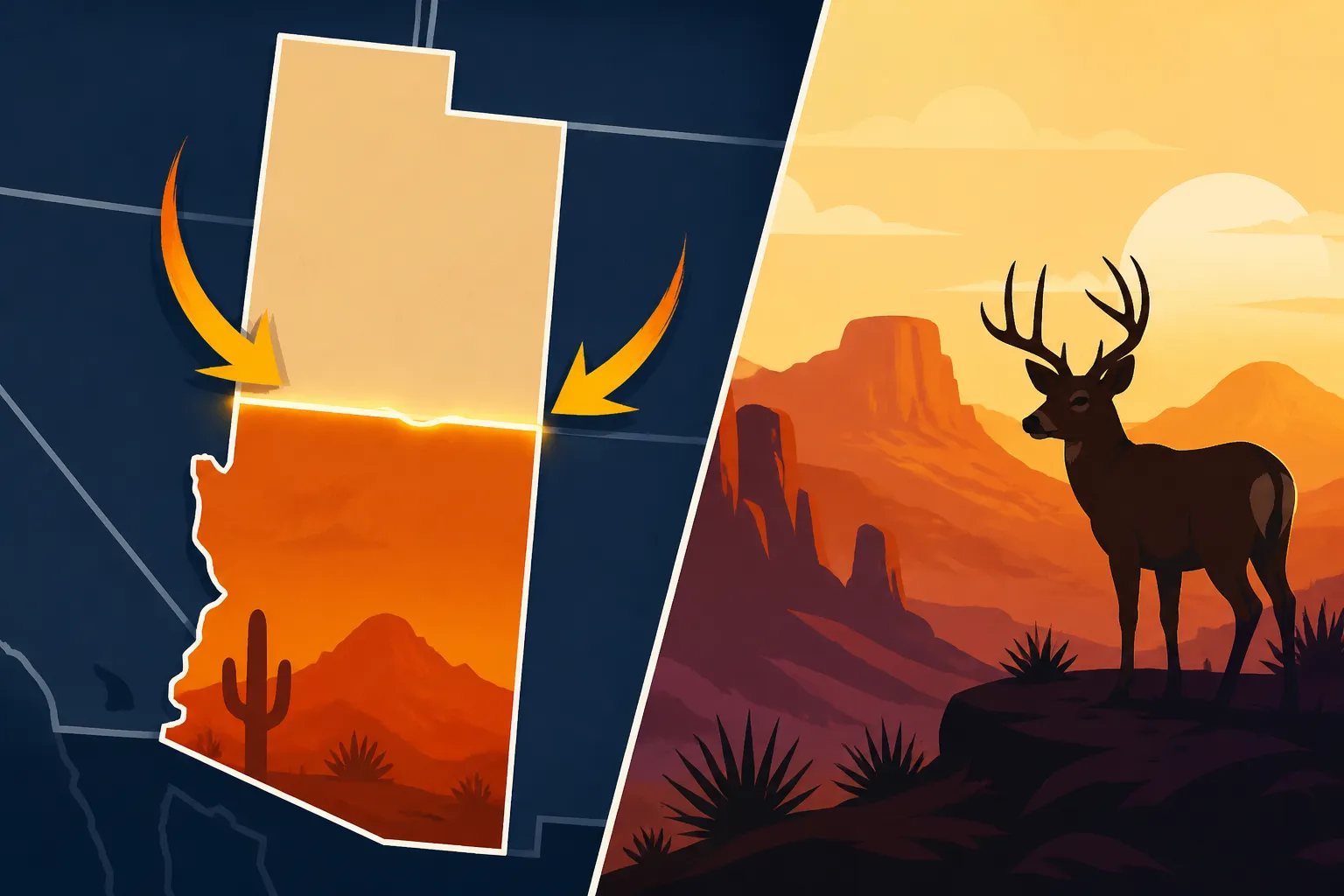
The border between Arizona and Utah stretches for a significant distance, primarily following the 37th parallel north. However, the terrain along this imaginary line is anything but uniform. To the west, you have the vast, remote, and often rugged Arizona Strip, a region synonymous with trophy mule deer. Here, the landscape is characterized by red rock formations, deep canyons, and scattered juniper and pinyon pine. Moving eastward, the border traverses higher elevations, including parts of the Kaibab Plateau, which is well-known for its elk and mule deer populations amidst towering Ponderosa pine forests. Further east, the landscape transitions again, bordering the extensive Navajo Nation, where desert plateaus and mesas dominate.
This varied topography means that weather patterns, vegetation, and wildlife habitats can differ dramatically from one unit to the next, even within a relatively short distance along the border. Hunters need to appreciate this complexity; what might be ideal elk habitat on the Kaibab is a completely different world from the arid mule deer country of the Strip. It's a land of striking contrasts, demanding adaptability and thorough preparation from anyone who ventures there. The sheer remoteness of much of this border country often means limited access, requiring careful logistical planning before you even consider applying for a tag.
Why This Border Matters for Hunters
The proximity of Arizona's northern units to Utah holds several key implications for hunters. First and foremost, it influences game distribution and movement. Animals, especially wide-ranging species like elk and mule deer, don't recognize state lines. Their movements are dictated by forage, water, weather, and breeding cycles. This means that a successful hunt might depend on understanding patterns that extend beyond Arizona's boundaries, particularly if you're hunting right on the edge. You might be scouting in Arizona, but the deer you're after could be just over the line in Utah, or vice-versa, depending on the season and specific conditions.
Secondly, for those who hunt in both states, knowing the border units can help with long-term strategy, such as point accumulation and application timing. Different states have different regulations, draw systems, and harvest reporting requirements. If you're hunting near the border, you must be absolutely clear on which state's laws you're operating under at all times. This is especially true when it comes to game retrieval; understanding Crossing a State Line With a Harvested Animal is paramount. Finally, the reputation of some border units, like the Arizona Strip, draws significant attention from hunters across the country, influencing draw odds and putting some of these areas among the most coveted tags in the West. Understanding How Arizona Numbers Its Hunting Units is fundamental to navigating these applications.
Specific Arizona Units Bordering Utah
Arizona's northern region contains several game management units that directly share a boundary with Utah. Each of these units offers distinct hunting opportunities and unique challenges, reflecting the diverse landscapes along the state line. For any hunter considering these areas, a detailed understanding of their characteristics is essential.
The Northwest Corner: Units 13A and 13B (Arizona Strip)
When people talk about Arizona units bordering Utah, the first places that usually come to mind are Units 13A and 13B, collectively known as the Arizona Strip. These units are legendary for their trophy mule deer, often requiring decades of bonus points to draw a tag. Located north of the Grand Canyon and west of the Kaibab Plateau, this region is rugged, remote, and expansive. The terrain is a mix of sagebrush flats, pinyon-juniper woodlands, and red rock canyons, making it incredibly challenging to hunt but also immensely rewarding for those who are successful. The northern boundaries of both 13A and 13B directly abut the Utah state line.
Hunting here is a test of patience, endurance, and glassing skill. You'll spend countless hours behind optics, searching for the tell-tale gleam of antlers in vast, broken country. Water sources are scarce, and temperatures can swing wildly from scorching heat to freezing cold, depending on the season. Access can be limited to rough dirt roads, and a good 4×4 vehicle is often a necessity. These units are highly sought after not just for mule deer, but also for small populations of desert bighorn sheep. The reputation for massive bucks is well-deserved, and understanding The Arizona Strip Mule Deer Reputation gives you a sense of why so many hunters dream of drawing a tag here. You will definitely want to be using a reliable mapping app like onX Hunt to keep track of where you are in these sprawling, unmarked landscapes and to prevent any accidental cross-border excursions. It's an unforgiving but undeniably iconic piece of Arizona's hunting landscape, especially for its renowned Arizona Strip mule deer quality.
North Central: Units 1 and 27 (Kaibab Plateau and Beyond)
Moving eastward from the Strip, we encounter Units 1 and 27, which form part of Arizona's north-central border with Utah. While Unit 9 (the main Kaibab Plateau) is famous for elk and mule deer, its northern tip also touches the state line. However, Units 1 and 27 also extend northward and meet Utah in different configurations. Unit 1 is further east, a massive unit that covers a large portion of the White Mountains and extends north towards the Navajo Nation border, with its extreme northern edge occasionally reaching close to the Utah border as well, though the direct contact is less extensive than the western units. Unit 27, also a large eastern Arizona unit, has a complex boundary that touches New Mexico, and its far northern reaches are within the general vicinity of the Utah border, though not directly forming a contiguous state line.
The Kaibab Plateau itself, primarily encompassed by Unit 9, is directly north of the Grand Canyon, and its northern reaches are undeniably connected to the Utah border. This area is characterized by vast, high-elevation Ponderosa pine and mixed conifer forests, offering prime habitat for Arizona's biggest elk. The reputation for large bulls on the Kaibab is legendary, making tags here some of the most difficult to draw. While not strictly "bordering" Utah in the same way the Strip does along a continuous line, the northern parts of these units are geographically and ecologically linked to the higher plateaus of southern Utah. Hunters interested in this region should definitely research Unit 9 and the Kaibab Plateau North of the Grand Canyon to understand the environment. The draw for elk here is incredibly competitive, thanks in part to the incredible Kaibab Plateau Elk Genetics that produce truly world-class animals.
The Northeast: Units 10 and 12 (Navajo Nation Proximity)
Further to the northeast, Units 10 and 12 also share segments of the Arizona-Utah border. These units are located primarily within the vast expanse of the Navajo Nation, which itself straddles the borders of Arizona, Utah, and New Mexico. This creates a unique hunting scenario, as significant portions of these areas fall under tribal jurisdiction, meaning state tags and regulations may not apply to all parts of these units. Unit 10, for example, is a very large unit that includes areas like Monument Valley and extends eastward, bordering Utah in its northern reaches. Unit 12 is another expansive unit in the far northeast corner of Arizona, with its northern boundary directly touching Utah.
Hunting in these northeastern border units requires careful planning, as much of the land is Navajo Nation tribal land. Hunters pursuing game on tribal lands must obtain separate permits and adhere to tribal regulations, which are distinct from those enforced by the Arizona Game and Fish Department. This means that even if you've drawn an Arizona state tag for Unit 10 or 12, you may still need to secure additional permission or permits to hunt specific areas that are tribal land. It's imperative to understand Navajo Nation Hunting Permits before planning a trip here. These areas offer opportunities for mule deer and sometimes elk, but the primary challenge often lies in navigating the complex land ownership and regulatory framework. Always check current maps and consult with both state and tribal authorities to ensure you are legally hunting on the correct land and with the appropriate permits.
Navigating the Border: Practical Advice for Hunters
Hunting along a state line introduces a layer of complexity that demands extra attention to detail. From verifying your exact location to understanding how regulations might differ, a prepared hunter considers every angle. Here's some practical advice for navigating Arizona's units that border Utah.
Using Digital Tools for Boundary Confirmation
In today's hunting world, digital mapping tools are absolutely indispensable, especially when you're operating near state or unit boundaries. Applications like onX Hunt and GoHunt provide highly detailed satellite imagery, topographic maps, and crucially, property ownership layers that delineate public land from private, and perhaps most importantly for this discussion, state lines. These tools allow you to zoom in and see precisely where the Arizona-Utah border lies, as well as the exact boundaries of individual Game Management Units.
Before you ever leave home, spend time poring over these digital maps. Use the layering functions to turn on unit boundaries, state lines, and public/private land ownership. This foresight can prevent accidental trespass or unintentional boundary crossings, which can lead to serious legal issues. Using onX Layers for Arizona Public Land is a skill every hunter in these border units should master. Pay close attention to features like fences, roads, or natural landmarks that run along the border, as these can serve as visual cues in the field. Even if you have a physical map, having a GPS-enabled app on your phone or a dedicated GPS device is a non-negotiable safety net. Always remember to download offline maps, as cell service is often non-existent in these remote areas. Being able to visualize and confirm Reading a Land Ownership Layer Correctly in real-time is invaluable.
Understanding Regulations for Border Units
Hunting regulations are state-specific, and while some neighboring states might have agreements, you should always assume that Arizona's rules apply when you're on Arizona soil, and Utah's rules apply in Utah. This means adhering to Arizona's season dates, bag limits, weapon restrictions, and tagging requirements, even if the same species has different regulations just a few yards away in Utah. For instance, draw weights for bows or specific broadhead requirements might differ.
It's crucial to consult the current Arizona hunting regulations booklet for the specific unit and species you intend to hunt. Pay attention to any special provisions or clarifications for border units, as these can sometimes include unique rules. Don't rely on word-of-mouth or assumptions. The official Arizona Game and Fish Department website is your best resource for up-to-date information. Understanding Reading the Arizona Hunt Regulations Booklet from cover to cover will ensure you avoid any costly mistakes. This diligence is especially important for reporting requirements, evidence of sex regulations, and any specific rules about transporting game across state lines.
Strategic Considerations for Border Hunting
When hunting near the Arizona-Utah border, your strategy needs to adapt to the unique challenges and opportunities present. Scouting, for example, becomes even more critical. Animals can move freely across the border, so understanding migratory patterns, water sources, and bedding areas on both sides of the line can give you an edge. However, remember that you can only hunt on the side for which you have a valid tag and license. If you're planning a summer scouting trip, remember Timing a Summer Scouting Trip Around Storms to avoid getting stranded in impassable mud or flash floods.
Access can be another significant factor. Some border areas are extremely remote, with limited maintained roads. You might find that the easiest access point into an Arizona unit is actually through Utah, or vice versa, which requires careful planning and adherence to road use regulations in both states. Always have a plan for vehicle recovery and carry plenty of extra water, fuel, and emergency supplies. Be mindful of land ownership as well; while much of this country is public, there are often checkerboarded private parcels. Respecting private property boundaries and knowing exactly where you stand, literally, is paramount to ethical and legal hunting.
| Arizona Unit | Primary Border State | Key Species | Notable Features |
|---|---|---|---|
| 13A | Utah | Mule Deer, Bighorn Sheep | Arizona Strip, Red Rock Canyons |
| 13B | Utah | Mule Deer, Bighorn Sheep | Arizona Strip, Remote Desert |
| 9 | Utah | Elk, Mule Deer | Kaibab Plateau, Ponderosa Forests |
| 10 | Utah | Mule Deer | Navajo Nation Proximity, Mesas |
| 12 | Utah | Mule Deer | Northeastern Arizona, Navajo Nation |
Knowing which Arizona units border Utah is more than just trivia; it's fundamental knowledge for anyone looking to hunt these unique and often challenging landscapes. The remote beauty and incredible wildlife opportunities are undeniable, but they come with the responsibility of meticulous planning and a deep respect for the land and its laws. Whether you're chasing the legendary mule deer of the Strip or the massive elk of the Kaibab, arming yourself with this information and the right tools will make your Arizona hunting adventure a safe and successful one.
Disclaimer
This article is for general informational purposes only and does not constitute professional advice. Laws, prices and regulations vary by location and change over time. Consult a qualified professional for guidance on your specific situation.