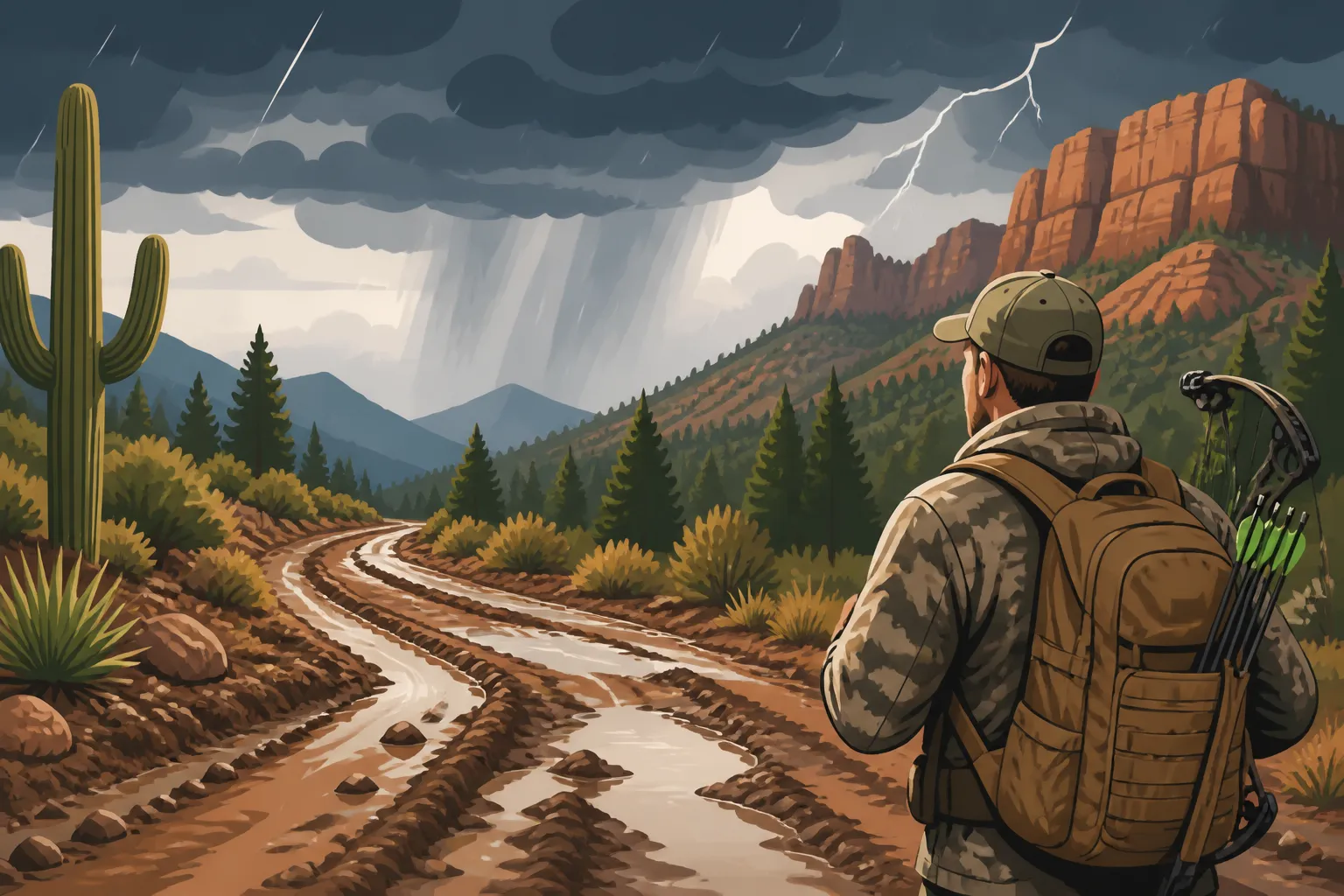
Monsoon Road Conditions in Rim Country
Hunting in Arizona's Rim Country during the summer and early fall means contending with monsoon season, a period when powerful, localized thunderstorms can transform seemingly harmless dirt roads into impassable quagmires in a matter of minutes. This guide will walk you through the realities of monsoon road conditions, how to assess the risks, navigate safely, and plan your adventures to avoid getting stranded miles from nowhere.
The Reality of Arizona's Monsoon Season on Roads
Arizona's summer monsoon is a force of nature that dramatically changes the landscape, especially the vast network of dirt and gravel roads found throughout the Rim Country. What might seem like a minor rain shower elsewhere can quickly become a torrent here, turning your access route into an adventure you didn't sign up for. Understanding this unique weather pattern is the first step to staying safe and mobile.
What is the Arizona Monsoon?
The Arizona monsoon is a seasonal shift in wind patterns that draws moisture from the Gulf of California and the Gulf of Mexico, bringing increased humidity and daily thunderstorms, typically from mid-June through September. Unlike the gentle, widespread rains you might experience in other climates, monsoon storms are often intense, localized, and short-lived, but they pack a punch. They tend to build up in the afternoon, unleash heavy downpours, lightning, and strong winds, and then dissipate, leaving behind a profoundly altered landscape. These storms are unpredictable, forming quickly and sometimes dumping inches of rain in a very small area while a mile down the road, it remains perfectly dry. This localized intensity is what makes them so dangerous for dirt roads, creating sudden and unforeseen hazards.
How Monsoons Impact Dirt and Gravel Roads
The moment heavy rain hits a dry, compacted dirt road, a cascade of impacts begins. Initially, the surface becomes slick and greasy as the dust mixes with water, reducing traction significantly. As the rain continues, the ground becomes saturated, turning firm dirt into thick, sticky mud that can bog down even capable 4×4 vehicles. But the real destruction comes from the sheer volume of water flowing across and along the roads. Water acts like a chisel, carving deep ruts, eroding shoulders, and washing out entire sections. Small drainage dips can become chasms, and culverts can be overwhelmed, causing water to flow directly over the road, carrying rocks, branches, and other debris. What was once a smooth, easy track can become a treacherous obstacle course, often making roads completely impassable until heavy equipment can repair them, which can take days or even weeks in remote areas.
Understanding Flash Floods and Washes
Perhaps the most dangerous aspect of monsoon season for hunters and outdoor enthusiasts is the risk of flash floods, particularly in washes and low-lying areas. Arizona's desert and high-desert terrain is characterized by numerous dry washes, canyons, and arroyos that normally seem harmless. However, during a monsoon storm, these dry beds can transform into raging rivers in mere minutes, carrying incredible volumes of water, mud, and debris. The danger is amplified because the storm causing the flood might be miles upstream, meaning your location could be sunny and calm while a wall of water rushes towards you. Trying to cross a wash that is actively flooding, or even one that has recently flooded, is incredibly risky. The water can be much deeper and faster than it appears, and the bottom can be scoured out, making it impossible to know what lies beneath the turbulent surface. Many hunters have found themselves stranded or worse by underestimating the power of these sudden deluges.
Identifying and Assessing Road Hazards
Navigating Rim Country during monsoon season requires a keen eye and a healthy dose of caution. It's not just about driving; it's about constantly assessing the conditions, reading the signs, and knowing when to push forward and when to turn back. Your safety, and the integrity of your vehicle, depend on it.
Reading the Signs: Mud, Ruts, and Debris
When you're out on those forest roads, your eyes should be glued to the path ahead, constantly scanning for changes. Mud is obvious, but its consistency matters. Is it just a slick top layer, or are there deep, soupy sections that look like quicksand? Deep ruts are a clear indicator of heavy water flow and can cause you to high-center your vehicle or lose control if your tires drop in. Pay attention to the depth and length of ruts; sometimes they can be deceivingly deep. Debris like rocks, branches, and even larger logs can be washed onto the road, posing obstacles that can damage tires, undercarriages, or even block the road completely. Freshly exposed soil on embankments or alongside the road often indicates recent erosion, which means the ground is unstable. If you see signs of recent, significant water flow, even if the road surface itself seems dry now, it's a good idea to proceed with extreme caution, or better yet, find an alternative route. Reading an Arizona Forest Service Road Map before you leave can help you identify areas prone to such issues.
Water Crossings: When to Proceed, When to Turn Back
Encountering water crossing the road is perhaps the most critical decision point during monsoon season. The cardinal rule is: "Turn around, don't drown." Never, ever attempt to cross flowing water if you cannot clearly see the bottom, or if you don't know the depth and current strength. Water can be incredibly deceptive. Even six inches of fast-moving water can sweep a smaller vehicle away, and a foot or two can float an SUV. Look for visual cues – is the water murky? Are there waves or strong currents? Is there a visible "V" downstream, indicating a deep channel? If there's any doubt, it's simply not worth the risk. Wait it out, find another crossing, or turn around. Remember that the water level might be receding, but the damage to the roadbed underneath could be severe, leaving deep holes or washouts. It's always a safer bet to find an alternate route, even if it means a much longer drive. Water You Must Carry on a Day Hunt becomes even more critical if you get stranded.
Tools and Technology for Pre-Trip Assessment
Before you even leave your driveway, leverage modern tools to assess the situation. Weather apps are a must-have, but go beyond the general forecast; look for radar imagery that shows real-time storm activity and direction. Pay close attention to flash flood warnings for the specific areas you plan to visit. The U.S. Forest Service and Arizona Game and Fish Department websites often provide updates on Seasonal Road Closures Across Arizona or conditions in specific units. These can be invaluable. For more detailed insights, mapping applications like onX Hunt are incredibly useful. With onX Hunt, you can download offline maps of your hunting unit, which include topo lines, road networks, and land ownership boundaries. This allows you to identify potential alternate routes or areas that might be less prone to flooding or washouts, even if you lose cell service. Similarly, GoHunt's mapping tools can provide terrain data and overlays that help you understand elevation changes and drainage patterns, assisting in your pre-trip E-scouting. These tools can help you identify areas of concern and formulate backup plans before you're out in the wilderness, struggling with no signal. E-Scouting an Arizona Unit Before the Season is crucial for this.
| Hazard Type | Pre-Monsoon Condition | Post-Monsoon Condition | Risk Level |
|---|---|---|---|
| Road Surface | Dry, dusty, firm dirt, loose gravel | Slick mud, deep ruts, exposed rocks, severely eroded | Moderate to Extreme |
| Drainage Washes | Dry, sandy, easily passable by most vehicles | Raging torrents, deep cut-banks, impassable | Extreme |
| Visibility | Clear, dusty in dry conditions | Impaired by rain, fog, low clouds, blowing dust/mud | Moderate |
| Obstacles | Occasional loose rocks, minor brush | Large rocks, downed trees, washed-out sections, debris | High |
| Traction | Good on dry dirt, some loss on loose gravel | Very poor on mud, slick clay, wet rock | High |
| Travel Time | Predictable, relatively fast | Highly unpredictable, significantly longer, potential for long delays | High |
Navigating Monsoon-Affected Roads Safely
Once you're committed to traveling on Rim Country roads during monsoon season, safe navigation becomes paramount. It's not just about getting through; it's about getting through without damaging your vehicle, getting stuck, or, worst of all, putting yourself in a dangerous situation. Being prepared and knowing how to drive defensively are your best assets.
Vehicle Preparation and Essential Gear
Before you even think about hitting those forest roads, your vehicle needs to be ready. Good all-terrain tires with plenty of tread are non-negotiable; highway tires will quickly pack with mud and offer no traction. Check your tire pressure and consider airing down slightly for better grip in soft conditions, but remember to air back up when you hit pavement again. Recovery gear is vital: a strong tow strap, a shovel, traction boards (like Maxtrax or a similar brand), and a high-lift jack can be lifesavers if you get stuck. A reliable winch is an excellent addition, though it requires proper training to use safely. Carry extra water, first-aid supplies, and emergency rations. Communication is also critical: cell service is spotty in much of the Rim Country, so a satellite messenger device (like an inReach or Zoleo) is highly recommended for emergency contact. A fully charged vehicle battery, spare fluids, and a basic tool kit should also be part of your standard loadout. Preparing Physically for a Desert Hunt extends to preparing your vehicle too.
Driving Techniques for Wet and Damaged Roads
Driving on wet, muddy, or damaged dirt roads is a skill that takes practice. First and foremost, slow down. Speed is your enemy, as it reduces your reaction time and increases the risk of hydroplaning or losing control. Maintain a consistent, low speed, using a lower gear in your 4×4 to provide better control and engine braking. If you encounter mud, try to keep your momentum, but don't hit the gas aggressively, which can cause your tires to spin and dig in. Steer gently and avoid sudden movements. If you start to slide, steer into the slide, just as you would on ice or snow. When navigating ruts, try to keep your tires on the high ground between them if possible, or straddle them carefully to avoid high-centering. If you must cross a section of severe ruts or washouts, get out and walk it first to assess the best line and depth. Remember that once you've committed to a path, it can be very difficult to change course, so make your decisions carefully and deliberately.
Emergency Procedures and Self-Rescue
Despite all precautions, sometimes you just get stuck. The first rule of self-rescue is to stay calm and assess the situation. Don't immediately spin your tires wildly, as this will only dig you in deeper. Try to determine why you're stuck: is it just mud, or are you high-centered on a rock? If you have traction boards, try placing them under your drive wheels in the direction you want to go. Slowly apply power. If that doesn't work, clear mud from around your tires and undercarriage with your shovel. If you have a winch and a solid anchor point (another vehicle or a sturdy tree), use it safely and slowly. Always consider the potential for worsening weather. If you're stranded, ensure you have enough water and supplies to wait for help. If you have a satellite messenger, use it to call for assistance and provide your precise location. If you need to stay overnight, make sure you have adequate shelter and warmth. It's also a good idea to let someone know your travel plans and expected return time before you head into remote areas.
Planning Your Hunt Around Monsoon Realities
Successful hunting in Arizona's Rim Country during the monsoon season isn't just about good gear and driving skills; it's also about smart planning and adaptability. The weather dictates much of the access and animal behavior, so integrating monsoon realities into your hunting strategy is essential.
Timing Your Travel and Hunt Days
The monsoon season typically delivers its most intense storms in the afternoon and early evening. This means your best window for travel on questionable roads is often in the morning, after the previous day's rain has had some time to drain and dry, but before new storms build. Conversely, if a storm rolls in during your hunt, you might want to consider staying put in a safe location until it passes, rather than immediately trying to drive out. Timing a Summer Scouting Trip Around Storms can give you a feel for typical patterns in your chosen unit. Planning your hunt around weather windows means being flexible. If the forecast calls for heavy, prolonged rain, it might be wise to postpone your trip or choose a unit with more paved or well-maintained gravel roads. Sometimes, sitting out a day or two in camp is better than risking your vehicle or your safety on dangerous roads.
Alternative Access Points and Backup Plans
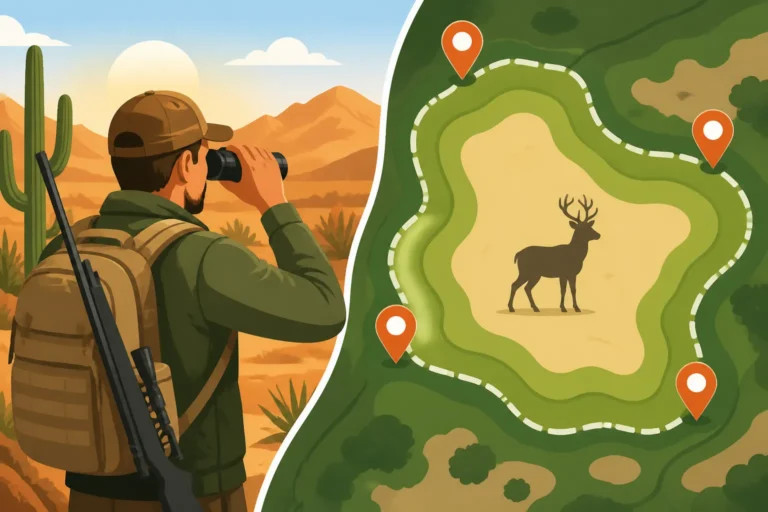
Never rely on a single route to your hunting area. Before you go, use detailed maps, like those from onX Hunt or GoHunt, to identify multiple access points and alternative routes. Look for roads that run along higher ground, as these are generally less prone to flooding or washouts. Scout these alternatives on your map, noting any potential obstacles or difficult sections. Think about where you might be able to park your vehicle and walk in if a road becomes impassable. Having a solid Plan B, and even a Plan C, for getting in and out of your hunting unit can save your trip – and potentially your hide. This kind of diligent preparation is part of Reading a Unit Before You Ever Walk It. When you're out there, always keep an eye on the sky and be aware of your surroundings, listening for the telltale rumble of thunder that signals a new storm's approach.
Post-Monsoon Road Recovery and Forest Service Efforts
Even after the monsoon season officially ends, its effects on the roads can linger for weeks or months. Washed-out sections might remain, ruts can harden into concrete, and debris can still be scattered. The Forest Service and other land management agencies work hard to repair these roads, but it's a monumental task, especially across vast areas like the Mogollon Rim. Sometimes, roads will be officially closed for repairs, and it's crucial to respect these closures for your safety and to allow the crews to work efficiently. Always check current conditions with the local Ranger District or on relevant government websites before heading out, even well after the rains have stopped. Some roads might be graded and repaired quickly, while more remote routes could take longer or even remain in a rough state until the next dry season. Understanding these ongoing impacts is part of being a responsible and well-informed hunter in Arizona. If you plan to set up Camping on Forest Ground During Hunting Season, remember that road access can change daily.
Disclaimer
This article is for general informational purposes only and does not constitute professional advice. Laws, prices and regulations vary by location and change over time. Consult a qualified professional for guidance on your specific situation.