Timing a Scouting Trip Around Monsoon Season
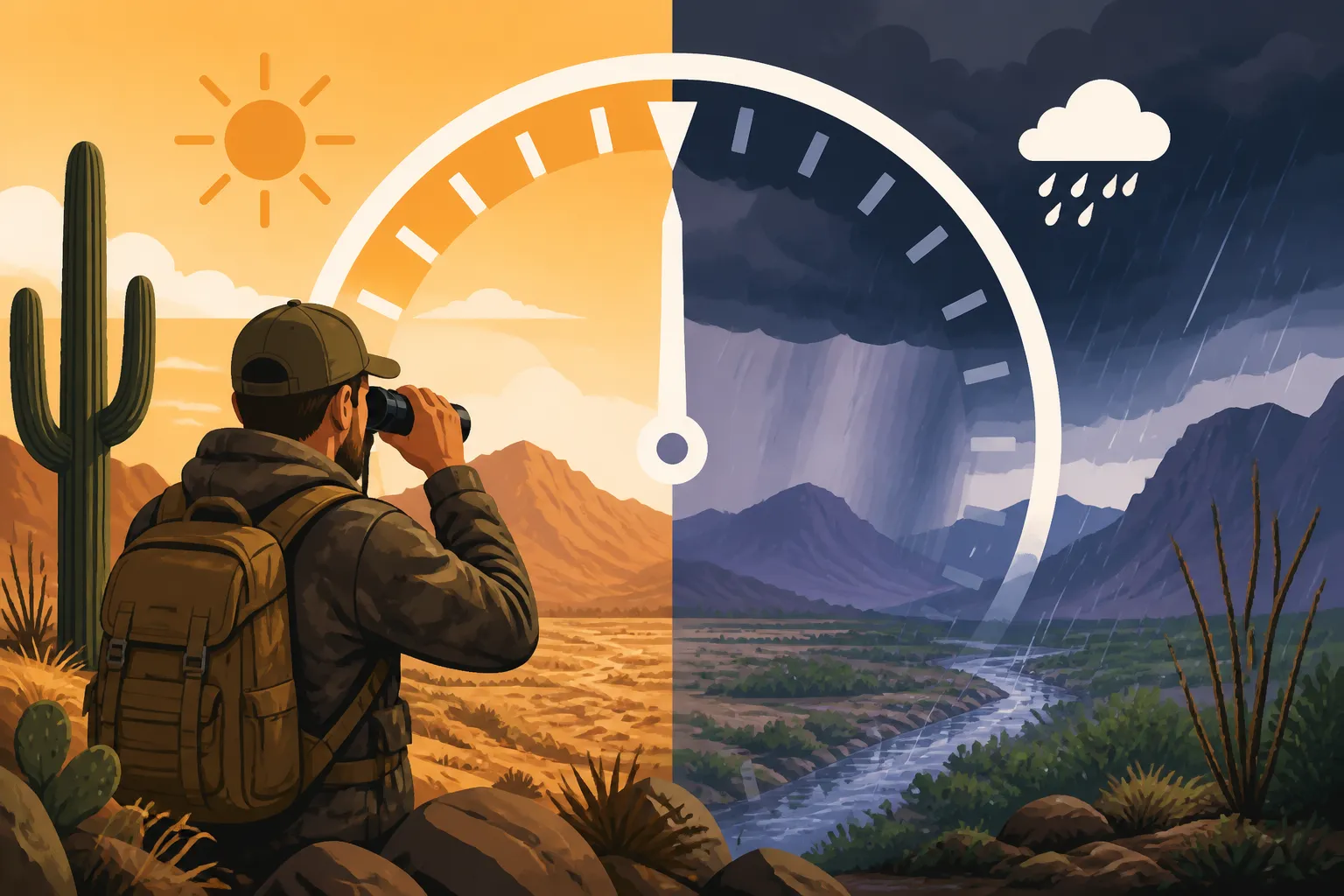
Arizona's hunting opportunities are legendary, but anyone who's spent time in the field knows that trying to get your boots on the ground for a scouting trip can be a massive challenge when the summer monsoons hit. Those intense summer thunderstorms don't just bring welcome rain; they can transform familiar landscapes overnight, making roads impassable, washes torrents, and drastically altering game movement. This guide is all about helping you understand the Arizona monsoon season, anticipate its impact on your scouting efforts, and strategize your trips to be both effective and safe, whether you're hitting the field before, during, or after the storms.
Understanding Arizona's Monsoon Season
The Arizona monsoon is a truly remarkable meteorological event, and if you haven't experienced it firsthand, it's hard to fully grasp its power and implications for hunting. Essentially, it's a seasonal shift in wind patterns that brings a surge of moisture from the Gulf of California and the Pacific Ocean into the desert Southwest. This isn't just a few scattered showers; we're talking about daily, often violent, thunderstorms that can drop an inch or more of rain in a matter of minutes.
When the Monsoon Typically Arrives
While the exact timing can vary slightly each year, the Arizona monsoon generally kicks off in early July and can persist through mid-September. You'll notice the humidity starting to creep up, often several days before the first big storm. Then, usually in the late afternoon or early evening, those towering cumulonimbus clouds start building, turning the sky a dramatic dark gray before unleashing a deluge. For hunters, this means the heart of summer, often when folks are trying to get their early season archery scouting done, is exactly when these disruptive weather patterns are most prevalent.
The Impact of Intense, Localized Storms
One of the most critical aspects of monsoon storms is how localized and intense they can be. You might be driving down a highway in brilliant sunshine, only to look off to the east and see a massive wall of rain. These storms don't always cover huge areas, but where they hit, they hit hard. This hyper-local nature means that even if your camp stays dry, the access road to your hunting spot might be completely washed out. It's not uncommon for a single canyon to be pounded, sending a flash flood roaring through a wash that was bone dry just hours before. This localized intensity is what makes scouting during this period so unpredictable and potentially dangerous.
Navigating the Challenges of Monsoon Scouting
Scouting during the monsoon season isn't for the faint of heart, and it certainly requires a different mindset and approach than a crisp fall morning. There are some very real, very serious challenges that need to be considered if you plan to be in the field during these months.
Flash Flooding and Road Closures
This is, without a doubt, the number one danger and logistical headache. Desert washes and arroyos, which are often your only routes into many prime hunting areas, can become raging rivers in mere minutes. What looks like a harmless dip in the road could be a death trap if a wall of water comes down. It's not just the main washes either; smaller drainages can create deep ruts, erode road beds, and leave behind thick, sticky mud that can swallow a four-wheel-drive vehicle. We've all seen those pictures of trucks half-buried in a wash after a storm. Monsoon Road Conditions in Rim Country are a constant concern, and it's imperative to always have a backup plan.
Beyond the immediate danger, flash flooding leads to road closures. Forest Service and BLM roads that were perfectly passable before a storm might be shut down for days or even weeks while crews assess damage and make repairs. This can completely derail a scouting trip, forcing you to find entirely new access points or even abandon a unit altogether if your primary spots become unreachable. Tools like onX Hunt are invaluable here, as they often have updated maps that show road status or at least allow you to quickly identify alternative routes and potential escape paths if a storm starts to build.
Heat, Humidity, and Lightning Risks
While we often associate Arizona with dry heat, the monsoon season brings oppressive humidity. The air feels thick and heavy, and temperatures can still be scorching, especially in the desert lowlands. This combination significantly increases the risk of heat exhaustion and dehydration, even if you're not exerting yourself as much as you would during a hunt. Carrying Water You Must Carry on a Day Hunt becomes even more critical.
Then there's the lightning. Monsoon thunderstorms are often prolific lightning producers. Being caught on an exposed ridge, or even under a tall tree, during an active lightning storm is incredibly risky. It's not just direct strikes; ground current can be just as deadly. You need to be constantly aware of the sky, watching for those dark, building clouds and listening for thunder. If you hear thunder, lightning is close enough to strike, and it's time to seek shelter immediately, preferably in a hard-topped vehicle or a substantial building, not under a lone tree.
Strategic Scouting: Before and During the Monsoon
Given these challenges, how do you actually make a monsoon-era scouting trip worthwhile and safe? It comes down to timing, preparation, and knowing when to push and when to pull back.
Pre-Monsoon Scouting: The Early Summer Advantage
The weeks leading up to the monsoon, typically late May through June, offer a golden opportunity for scouting, especially for archery hunters eyeing early season deer or elk. The landscape is usually still dry, meaning roads are mostly open, and you won't have to contend with mud or washouts. This is the time to cover ground, find those hidden pockets, locate potential bedding areas, and identify primary travel corridors.
- Road Access and Initial Recon: Before the rains hit, focus on accessing those hard-to-reach areas. Drive every two-track you can find, hike into canyons, and glass from high points. Use this time to get a feel for the terrain and identify potential glassing knobs or ambush points. Reading Terrain Before You Pick a Camp is best done when conditions are dry and stable.
- Water Source Mapping: While natural water might be scarce, this dry period is ideal for finding and mapping existing water sources – springs, stock tanks, and even man-made drinkers. Animals have to hit these spots, and knowing where they are before new rain fills temporary catchments can give you a significant advantage. Finding Water in Arizona's Dry Country is easier when it hasn't rained in months.
- E-Scouting: This can be done year-round, of course, but combining it with pre-monsoon ground truth is incredibly powerful. Use satellite imagery and topographic maps to identify potential areas of interest, then go check them out in person before the weather turns. E-Scouting an Arizona Unit Before the Season can save you countless hours in the field. Websites like GoHunt offer detailed unit data and filtering tools that can help narrow down areas based on historical success rates or terrain features, complementing your on-the-ground efforts.
Scouting During the Monsoon: Calculated Risks and Rewards
Attempting to scout during the active monsoon requires extreme caution, but it can also offer unique insights if done safely and strategically. The key is to be flexible, patient, and prioritize safety above all else.
- Immediate Post-Rain Opportunities: The moment a storm passes, and the immediate flash flood risk subsides, the landscape changes. The air is often cooler and cleaner, and game animals sometimes become more active, moving to browse on new growth or drink from temporary puddles. This can be a prime time for glassing or still-hunting, but you must be mindful of rapidly changing conditions.
- New Water Sources: One of the biggest advantages of monsoon rains is the creation of new, temporary water sources. Ephemeral pools fill, and dry washes might hold water for a few days. Animals will often shift their patterns to these new, closer water points. Scouting immediately after a good rain can help you pinpoint these new attractions. Water Sources That Concentrate Arizona Desert Game are vital to pattern.
- Reading Fresh Sign: Muddy areas, once dry and dusty, will hold fresh tracks like a fingerprint. You can gain invaluable intel on what animals are moving through an area, and when. Just be careful not to get your vehicle stuck while trying to follow tracks!
- Road Condition Assessment: While risky, driving roads after a storm (once floodwaters have fully receded) can give you a realistic picture of what to expect during your actual hunt. What started as a smooth dirt road might now be deeply rutted or require navigating small detours. Always use caution, travel slowly, and consider turning around if conditions look too dicey. Your onX Hunt app can help you spot alternative routes or check for private land boundaries if you have to divert.
Post-Monsoon Scouting: The Green-Up Effect
As the monsoon season wanes, usually late August into September, a new phase of scouting begins. The landscape, once parched and brown, starts to green up dramatically. This "green-up" fundamentally changes where animals feed and congregate.
Tracking the Green-Up
The desert transforms after the rains. New grasses sprout, forbs emerge, and browse plants put on fresh growth. Animals will often move from relying solely on established water sources to seeking out these succulent new food sources, which often provide enough moisture that they don't need to drink as frequently. Your scouting focus should shift to finding these newly productive feeding grounds. Look for areas with lush growth, fresh tracks, and scat. This is also a fantastic time to assess antler growth from velvet to hard horn if you're targeting specific bucks or bulls.
Animal Movement and Behavior Shifts
Post-monsoon, game animals often disperse from their traditional summering grounds as food and water become more widespread. Elk might move out of dense timber pockets into more open country to graze, and deer might spread out from canyon bottoms to higher slopes where new browse is abundant. This period can be particularly good for finding animals in areas that were previously too dry or sparse. Pay attention to how the animals are using the fresh forage. Are they feeding heavily in certain basins? Are they moving into new thermal cover? Understanding these shifts is crucial for developing your hunt plan.
Road Recovery and Access
By late September and October, most of the major monsoon flooding has usually subsided, and forest and BLM roads start to dry out. This makes access much easier and less risky than during the active storm season. However, some roads might still be rough from earlier washouts, and you should always check local conditions or use a reliable GPS mapping app like onX Hunt for real-time updates. This post-monsoon window is often the last, best chance to finalize your scouting before many of the main hunting seasons kick off. Using GoHunt's wealth of data alongside your maps can help you ensure you're focusing on the right areas with the best potential.
Monsoon Scouting Safety Checklist
Before heading out during or near monsoon season, run through this mental checklist:
| Category | Pre-Monsoon Scouting Actions | During Monsoon Scouting Actions | Post-Monsoon Scouting Actions |
|---|---|---|---|
| Weather | Check long-range forecast for storm potential | Monitor radar constantly, watch skies, listen for thunder | Check forecast for residual rain or cooling fronts |
| Roads & Access | Map all primary & secondary routes, note potential washouts | Avoid low-water crossings/washes during or after rain, have recovery gear | Verify roads are passable, note any new ruts or washouts |
| Water | Mark all reliable water sources on maps | Identify new temporary puddles/pools, observe animal use | Look for green-up zones, animal congregation near new forage |
| Safety Gear | Full first-aid kit, extra water, communication device | Extra clothing for rain/cold, powerful headlamp, fire starter, shelter | Basic first-aid, sufficient water, communication |
| Navigation | Fully charged phone with onX Hunt, paper maps, compass | Same as pre-monsoon, plus a mental escape route for every location | Same as pre-monsoon |
| Animal Behavior | Look for typical summer patterns near established water | Observe shifts to temporary water/fresh forage, post-storm activity | Focus on green-up, dispersal from summer ranges, rutting behavior |
| Key Risk | Dehydration, mechanical issues in remote areas | Flash floods, lightning, heat exhaustion, getting stuck | Dehydration, minor road damage, overconfidence |
Remember, safety is paramount. No amount of scouting intel is worth putting yourself or your partners at undue risk.
Final Thoughts on Timing Your Monsoon Scouting
Ultimately, timing your Arizona scouting trips around the monsoon season is a balancing act. The ideal scenario is to get out before the storms arrive to establish a baseline understanding of the unit and its access points. Then, if you must venture out during the monsoon, do so with extreme caution, focusing on observing how the landscape and wildlife react to the rain, particularly in terms of water and feed. Finally, the post-monsoon period offers excellent opportunities to see the full effect of the green-up and how animals have dispersed, giving you crucial, current intel for your upcoming hunt.
Always be prepared, stay flexible, and respect the power of Arizona's summer storms. They are a vital part of the ecosystem, but they demand a hunter's utmost attention and respect. Using resources like onX Hunt for real-time mapping and road conditions, and platforms like GoHunt for strategic unit information, can significantly enhance both the effectiveness and safety of your monsoon-era scouting efforts.
Disclaimer
This article is for general informational purposes only and does not constitute professional advice. Laws, prices and regulations vary by location and change over time. Consult a qualified professional for guidance on your specific situation.