Why Only Broadheads Over 7/8 Inch Are Legal
Navigating the myriad of hunting regulations can feel like trying to untangle a particularly stubborn knot, especially when it comes to the specifics of your gear. It’s frustrating to invest in equipment only to realize it might not meet the letter of the law in a new hunting area. One common point of confusion for bowhunters planning an Arizona big game hunt revolves around broadheads – specifically, why Arizona mandates a minimum cutting diameter of 7/8 inch. This guide is here to unravel that mystery, explaining the why behind this rule and helping you ensure your equipment is not only legal but also aligns with ethical hunting practices.
Understanding Arizona's Broadhead Regulations for Big Game
When you're preparing for an archery hunt in the Grand Canyon State, whether you're chasing elusive Coues deer in the Sky Islands or drawing a hard-earned elk tag, the Arizona Game and Fish Department (AZGFD) has clear rules about your broadheads. These aren't just suggestions; they're codified regulations designed to promote ethical and effective hunting. Ignoring them can lead to a host of problems, from forfeited animals to legal penalties.
The Specific Rule in the Arizona Hunting Proclamation
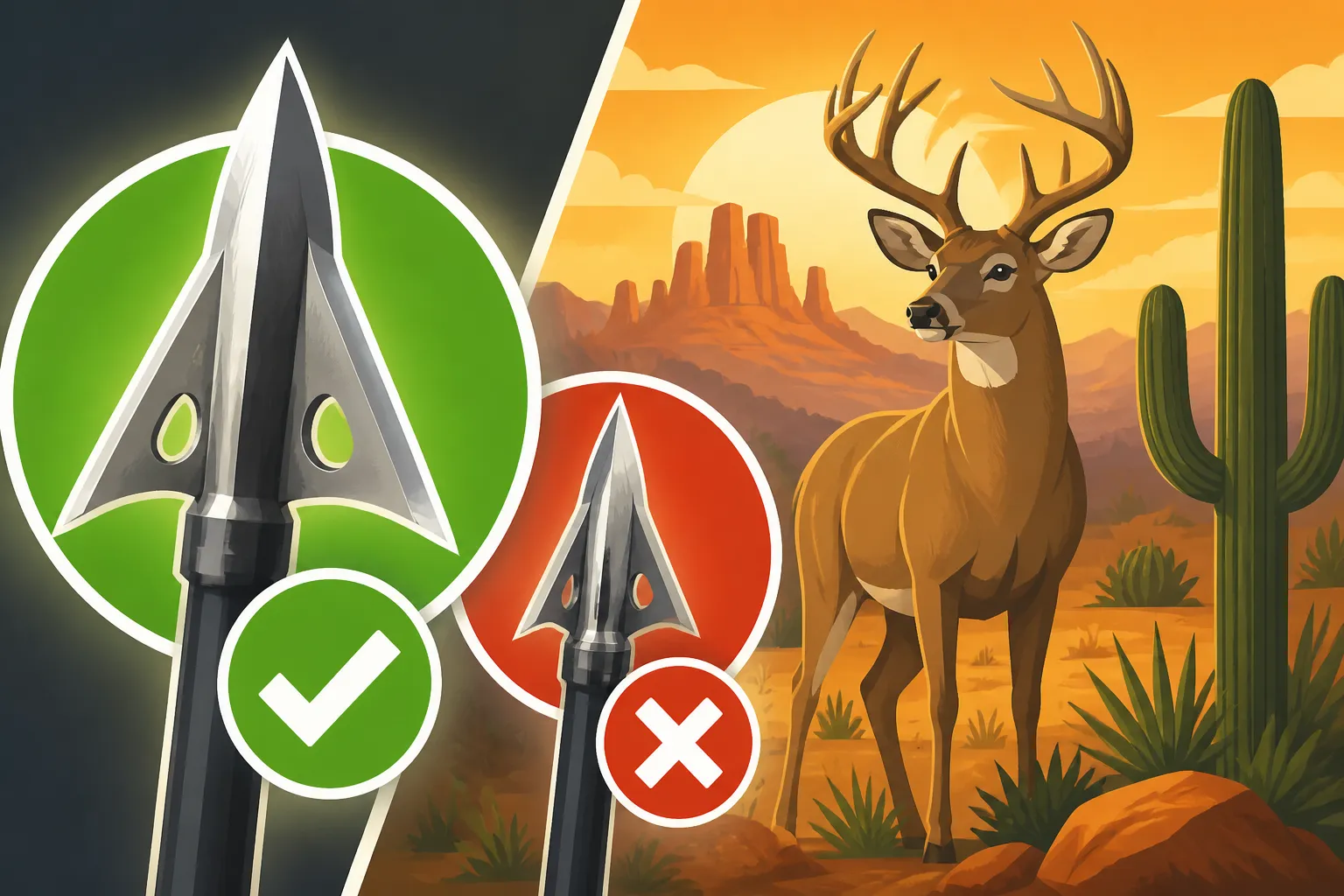
The core of the regulation is straightforward: any broadhead used for taking big game in Arizona must have a minimum cutting width of 7/8 inch. This rule applies to both fixed-blade and mechanical (expandable) broadheads. It's listed clearly within the annual Arizona Hunting Regulations Booklet, a document every hunter should read cover-to-cover. You'll find it under the general archery provisions, alongside other important stipulations like draw weight and bolt length. The intent here isn't to make things difficult for hunters; rather, it’s a foundational requirement aimed at ensuring maximum effectiveness for arrow penetration and wound channel creation. Think of it as a quality control measure for humane harvest. It's a standard that speaks to the state's commitment to responsible wildlife management, prioritizing the quick and clean dispatch of game animals.
Which Species Are Covered by This Regulation
This 7/8 inch broadhead rule isn't limited to just one or two popular species; it applies to all big game animals hunted with archery equipment in Arizona. This includes the state's iconic big game species such as elk, mule deer, Coues deer, bighorn sheep, pronghorn, bear, mountain lion, and javelina. It's a universal standard for all archery big game seasons. For example, if you're out during the exciting five-month OTC archery deer season, your broadheads need to meet this specification, just as they would for a coveted drawn elk tag. This consistency simplifies things for hunters, eliminating the need to remember different broadhead requirements for different animals. You simply ensure your broadheads meet the 7/8 inch minimum, and you're good to go for any big game species you pursue with a bow or crossbow. Remember, while small game often has less stringent broadhead rules, when it comes to the animals that require tags and draws, Arizona is firm on this requirement.
The Ethics Behind Minimum Broadhead Width
At the heart of many hunting regulations, especially those concerning equipment, lies a deep commitment to ethical hunting. The 7/8 inch broadhead minimum in Arizona is a prime example of this. It’s not an arbitrary number; it’s rooted in biological understanding and a desire to minimize suffering in the field. As responsible hunters, our goal is always to achieve a quick and humane harvest, and our equipment plays a critical role in that outcome.
Ensuring a Quick, Clean Harvest
The primary reason for the 7/8 inch minimum cutting width is to promote a quick and clean harvest. When an arrow strikes a big game animal, the broadhead's job is to create a wound channel that causes rapid blood loss and incapacitation. A broader cutting diameter generally translates to a larger wound channel, leading to more immediate and substantial hemorrhage. This increases the likelihood of hitting vital organs – the lungs and heart – effectively and causing the animal to expire rapidly. Smaller broadheads, or those with less effective cutting surfaces, might still penetrate, but the resulting wound channel could be insufficient to cause a quick harvest, prolonging the animal's suffering and increasing the chance of it escaping wounded. Arizona, much like other states, aims to prevent this by setting a floor for broadhead performance. It’s about respect for the animal and ensuring our pursuit is as ethical as possible.
Minimizing Animal Suffering and Tracking Challenges
Beyond the immediate effect on the animal, the 7/8 inch minimum also serves to minimize suffering by making tracking easier and reducing the chances of a lost animal. A broadhead that creates a significant wound channel leads to a better blood trail. In the challenging terrains of Arizona, from the dense oak brush of the Sky Islands to the expansive desert washes, a clear, consistent blood trail is often the difference between recovering your animal and losing it. Imagine pursuing a Coues deer through rocky, broken country; without a strong blood trail, finding a downed animal can be incredibly difficult, especially as darkness falls or temperatures rise, which can impact meat quality if not recovered quickly. The regulation helps ensure that when an animal is hit, the chances of a successful and efficient recovery are maximized. It’s a measure that reflects a broader ethical imperative: if we are going to take an animal's life, we owe it to that animal to do so as humanely and efficiently as possible, and to then recover it thoroughly. This commitment to ethical harvesting is a cornerstone of organizations like AZGFD and is often emphasized in courses like The Ethically Hunting Arizona Course Explained.
Mechanical vs. Fixed-Blade Broadheads and the 7/8 Inch Rule
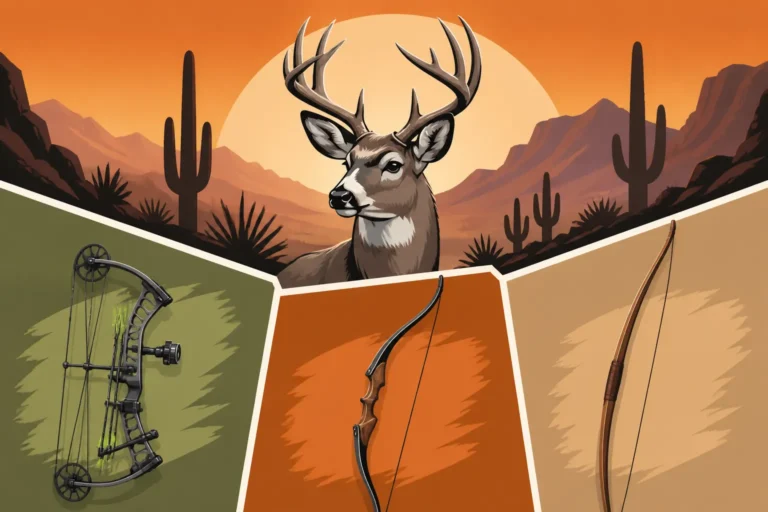
The broadhead market is diverse, offering hunters a choice between traditional fixed-blade designs and modern mechanical (or expandable) broadheads. Both types can be effective, but their design differences mean the 7/8 inch minimum rule needs to be understood in slightly different contexts depending on which style you prefer. It's not enough to just buy a broadhead; you need to understand how its design interacts with the regulation.
Fixed-Blade Broadheads and the Measurement
Fixed-blade broadheads are generally simpler in design, featuring blades that are rigidly attached to the ferrule and do not move. For these, measuring for compliance with Arizona's 7/8 inch rule is quite straightforward. You simply measure the widest cutting dimension of the broadhead from tip to tip across the blades. If your broadhead has three blades, you'd measure the widest point from one blade's edge to the opposite blade's edge. If it's a two-blade design, it's typically the width of the blades themselves.
For example, a traditional two-blade broadhead might have a 1-inch cutting diameter right out of the package. A three-blade design might be marketed as 1 1/8 inches. In both cases, as long as the measured cutting width is 7/8 inch (0.875 inches) or greater, it meets the Arizona requirement. It's crucial not to guess; use a caliper or a precise ruler to verify the actual cutting width. Even a broadhead advertised as "7/8 inch" might, due to manufacturing tolerances, fall just short when measured precisely, which could lead to issues if inspected by a game warden.
Mechanical Broadheads and Their Unique Considerations
Mechanical broadheads present a slightly different scenario when it comes to the 7/8 inch rule. These broadheads feature blades that are tucked back against the ferrule in flight and deploy upon impact, usually expanding to a much wider cutting diameter. The key for Arizona's regulation is that the minimum cutting width must be 7/8 inch when the broadhead is deployed and in its full cutting configuration. It's not about the width of the blades when folded; it's about the cutting width they achieve when they do their job.
Most mechanical broadheads are designed to deploy to cutting diameters much larger than 7/8 inch – often 1.5 inches, 2 inches, or even more. This makes them relatively easy to comply with the 7/8 inch minimum in their deployed state. However, it's still important to understand how they function. Ensure your mechanical broadheads are functioning correctly, with blades that consistently deploy reliably and to their advertised width. Some hunters have concerns about mechanical broadheads failing to deploy, which would then leave a much smaller wound channel. While this is less about legality and more about personal preference and confidence, it's a vital consideration for ethical hunting. Brands like Rage or NAP commonly offer mechanical broadheads that easily exceed the 7/8 inch deployed width. If you're using a mechanical broadhead, it's always a good idea to shoot a few practice broadheads into a foam target to verify proper deployment and flight characteristics. This not only builds confidence but also confirms they operate as intended before you head into the field.
| Broadhead Type | Measurement Point | Arizona 7/8" Rule | Notes for Compliance |
|---|---|---|---|
| Fixed Blade | Widest point of cutting edge, tip-to-tip | Must be >= 7/8 inch | Measure actual physical width with a caliper or ruler. |
| Mechanical/Expandable | Widest point of cutting edge when fully deployed | Must be >= 7/8 inch | Verify reliable deployment; measure deployed width. |
Measuring Your Broadhead Correctly
Ensuring your broadhead is compliant with Arizona's 7/8 inch minimum isn't just about reading the package; it's about physically verifying the measurement. There's nothing worse than having your hunt interrupted or worse, facing a citation, because of a misunderstanding or a slight discrepancy in your equipment. Let's talk about how to get this right.
The Right Way to Measure Fixed Blades
For fixed-blade broadheads, accuracy is key. You'll want to use a precise measuring tool, ideally a set of digital calipers. A standard ruler can work, but calipers offer much greater precision, often down to thousandths of an inch.
Here’s a step-by-step approach:
- Gather Your Tools: Get your broadhead and your digital calipers or a high-quality ruler with clear markings.
- Identify the Widest Point: For a two-blade broadhead, this is straightforward—measure across the widest part of the blades. For three-blade or four-blade designs, carefully identify the point where the blades extend furthest from the ferrule, creating the maximum cutting diameter. This is usually from one cutting edge to the opposite cutting edge.
- Take the Measurement: Place the broadhead between the jaws of the calipers, ensuring the jaws are perfectly perpendicular to the broadhead's cutting edges at their widest point. Gently close the jaws until they make firm, but not damaging, contact.
- Read and Record: Read the measurement displayed on the calipers. If using a ruler, align the broadhead carefully and read the measurement at the widest point.
- Verify: Double-check your measurement. It’s always a good idea to measure a few different broadheads from the same pack to account for any minor manufacturing variances. You’re looking for a consistent measurement of 0.875 inches or greater. If your broadhead is, say, 0.865 inches, it falls short and is non-compliant. Don't leave it to chance.
Verifying Mechanical Broadhead Compliance (Deployed vs. Undeployed)
Mechanical broadheads require a slightly different approach since their cutting width changes. The Arizona regulation is concerned with the deployed cutting width, not the un-deployed width for flight.
Here’s how to properly verify mechanical broadhead compliance:
- Understand Deployment: Familiarize yourself with how your specific mechanical broadhead deploys. Some use O-rings or clips, others use spring tension or a simple ram-point design.
- Practice Deployment (Safely!): It’s imperative to practice deploying your mechanical broadheads safely. Many manufacturers offer specific practice heads or tips that mimic the deployment without damaging the actual hunting broadheads. Alternatively, you can deploy a hunting broadhead into a soft target like a dedicated broadhead target or dense foam. Never deploy a mechanical broadhead by hand or by impacting a hard surface, as this can cause severe injury.
- Measure Deployed Width: Once the broadhead is fully deployed (e.g., after shooting it into a target and carefully removing it), measure its cutting width using the same caliper method as you would for a fixed blade. You'll be measuring the widest point of the cutting edges in their expanded state.
- Confirm 7/8 Inch or Greater: The measured deployed width must be 0.875 inches or more. Most mechanicals will far exceed this, often reaching 1.5 to 2 inches or more, making compliance easy to verify once deployed.
- Check Reliability: While not a direct measurement of width, ensuring your mechanical broadheads reliably deploy every time is crucial for ethical hunting and legal compliance. A broadhead that fails to deploy won't meet the spirit of the 7/8 inch rule, even if its theoretical deployed width is sufficient. Consider shooting a few practice heads from your batch to ensure they're consistent. Tools like GoHunt can help you research gear specifications and reviews, but actual testing is always best.
Consequences of Non-Compliance and Enforcement
It's easy to get caught up in the excitement of hunting and overlook seemingly minor details like broadhead measurements. However, in Arizona, as in any state with well-defined hunting regulations, ignoring these rules can lead to serious repercussions. Game and Fish officers are dedicated professionals who take ethical hunting and wildlife conservation seriously, and they are trained to enforce all aspects of the hunting proclamation.
Potential Fines and Loss of Privileges
The consequences of using an illegal broadhead in Arizona can range from a significant monetary fine to the loss of hunting privileges. Specifically, violations of equipment regulations are often treated as misdemeanors, carrying fines that can easily run into the hundreds of dollars. Beyond the financial penalty, you could also face court appearances and the possibility of having your hunting license suspended or revoked, not just in Arizona but potentially in other states as well through the Interstate Wildlife Violator Compact.
Imagine having waited years to draw a coveted Arizona elk tag, only to have your successful hunt invalidated because your broadhead was found to be slightly undersized. Not only would you lose the animal and the meat, but you'd also lose the memories and face legal trouble. This scenario isn't hypothetical; it happens. Game wardens might perform spot checks in the field, especially during archery seasons, or inspect your equipment during a harvest check. It’s a stark reminder that every detail, no matter how small it seems, matters. It’s a responsibility we accept as hunters, and frankly, it's far easier and cheaper to double-check your gear than to face these kinds of penalties.
How Game and Fish Officers Enforce Broadhead Rules
Arizona Game and Fish Department (AZGFD) officers are the front line of enforcement. They are highly trained and equipped to conduct thorough investigations and inspections to ensure compliance with all hunting regulations, including broadhead requirements.
Here’s what you might expect:
- Field Checks: During archery seasons, especially in popular units, officers may conduct random checks of hunters in the field. They might ask to inspect your bow, arrows, and broadheads. They often carry their own measuring tools, such as calipers, to verify compliance on the spot.
- Harvest Checks: If you harvest an animal, particularly during big game seasons, you may be required to present your animal and equipment for inspection at a check station or to an officer who responds to your call-in. This is a common point where broadheads are inspected. The officer will look at the broadhead retrieved from the animal or inspect the broadheads in your quiver.
- Evidence Collection: If a violation is suspected, an officer will meticulously document the broadhead, take measurements, and potentially collect it as evidence. They will also document all relevant circumstances of the hunt and interview the hunter.
It's important to remember that AZGFD officers are there to protect the state's wildlife resources and ensure fair chase and ethical hunting practices. They are not out to "get" hunters, but they will enforce the law without prejudice. A clear understanding of the rules, like those found in the annual regulations booklet or explored in depth through resources like "Reading the Arizona Hunt Regulations Booklet", combined with diligent preparation, is your best defense against unintended violations. Always be cooperative, polite, and ready to demonstrate that you are a responsible hunter operating within the law.
Beyond the Broadhead: Other Arizona Archery Regulations
While the 7/8 inch broadhead rule is specific and important, it's just one piece of the larger regulatory puzzle for bowhunters in Arizona. To truly hunt legally and ethically, you need a comprehensive understanding of all archery-related rules. These regulations work in concert to ensure fair chase, promote animal welfare, and maintain the integrity of hunting traditions.
Draw Weight and Bolt Length Requirements
Arizona also sets minimum standards for the power and projectile of your archery setup. These aren't just about personal preference; they are tied directly to the ethical objective of achieving a quick and humane harvest.
- Draw Weight: For vertical bows (compound, recurve, longbows), Arizona mandates a minimum draw weight of 30 pounds. This ensures that the arrow can generate enough kinetic energy to adequately penetrate big game animals, especially when using a legal broadhead. Trying to hunt big game with a bow drawing less than 30 pounds significantly increases the risk of a non-lethal hit, causing undue suffering and a lost animal. For crossbows, the minimum draw weight is 125 pounds. These rules are in place because shooting a heavy-boned animal like an elk with insufficient kinetic energy is simply irresponsible. You can learn more about these specifics in "Arizona's 30-Pound Minimum for Vertical Bows" or "The 125-Pound Crossbow Draw Weight Arizona Requires".
- Bolt Length: For crossbows, there's also a minimum bolt length requirement. Crossbow bolts must be at least 16 inches long. This is important for proper function of the crossbow and consistency in flight, ensuring accuracy and energy transfer. Just like broadheads, this ensures the equipment is up to the task of hunting big game. More details can be found in "Minimum Crossbow Bolt Length in Arizona."
It's vital to check your bow and crossbow specifications and ensure they meet these minimums before you head afield. Don't assume your equipment is compliant just because you bought it recently; always verify against the current regulations.
Legal Shooting Hours and Equipment Checks
Beyond the physical specifications of your gear, the "when" and "how" of your hunt are also heavily regulated.
- Legal Shooting Hours: Like most states, Arizona has strict legal shooting hours. For big game, this typically means 30 minutes before official sunrise to 30 minutes after official sunset. This regulation ensures fair chase by preventing hunting in conditions where accurate shot placement is extremely difficult, thereby reducing the risk of wounding an animal and losing it. Hunting outside these hours is a serious violation. These times fluctuate throughout the season, so it's critical to know the precise sunrise and sunset times for your specific hunting date and location. Online tools or hunting apps like GoHunt can provide this information readily, or you can reference the state's official hunting regulations. Understanding "Legal Shooting Hours and Blaze Orange in Arizona" is crucial for any ethical hunter.
- Equipment Checks and Readiness: Beyond the formal regulations, there's an implied ethical responsibility to ensure your equipment is in top working order. This means:
- Bow Tune: Your bow should be properly tuned, and your arrows fletched correctly to ensure consistent and accurate flight.
- Broadhead Sharpening: Broadheads, whether fixed or mechanical, must be razor sharp. A dull broadhead will push tissue aside rather than cut, reducing penetration and the effectiveness of the wound channel.
- Practice, Practice, Practice: No amount of compliant gear can replace consistent practice. You need to be confident in your ability to place an arrow accurately under hunting conditions. This isn't just about hitting a target; it's about making a clean, ethical shot on an animal. Learning "How Close a Bowhunter Needs to Get on Coues" emphasizes this.
Taking the time to ensure all these details are in order not only keeps you on the right side of the law but also upholds the ethical standards that define responsible hunting.
Disclaimer
Please remember that hunting regulations, including those pertaining to broadheads, can change. While this guide provides current information, it is always your responsibility to consult the most recent Arizona Game and Fish Department Hunting Regulations booklet before engaging in any hunting activity. This content is for informational purposes only and should not be considered legal advice.