Best Time of Day to Glass a Sky Island
Finding that elusive Coues deer in Arizona's vast Sky Island country is a challenge that can test even the most patient hunter. It's a game of optics, endurance, and knowing when to put in the time behind the glass. Many hunters spend countless hours staring at distant hillsides, only to feel like they're missing something, wondering if they're even looking at the right time. This guide is dedicated to breaking down the exact best times of day to glass Sky Islands, helping you maximize your efforts and turn those long stretches of searching into successful deer sightings.
Understanding the Sky Island Environment and Deer Behavior
Before we even talk about when to glass, it's crucial to understand why Coues deer behave the way they do in these unique Sky Island ecosystems. These aren't your typical whitetails. They're often called "gray ghosts" for a reason – their ability to vanish into seemingly sparse cover is legendary. Their daily patterns are heavily influenced by the rugged terrain, predator pressure, and perhaps most significantly, the scorching Arizona sun.
How Terrain and Cover Influence Movement
The Sky Islands, like the Chiricahua Mountains, Santa Rita Mountains, or Huachuca Mountains, are essentially isolated mountain ranges rising out of the desert floor. This creates a mosaic of habitats, from Sonoran Desert scrub at lower elevations to Ponderosa pine forests at the top. Coues deer thrive in the mid-elevation oak and juniper belts, where the broken country offers plenty of hiding spots. They use every fold in the earth, every shadow, and every clump of brush to stay out of sight.
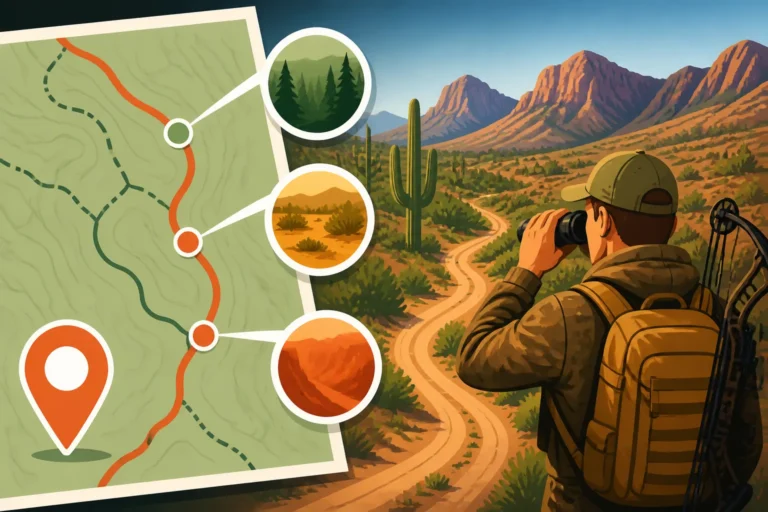
Because of this, you won't often find Coues deer strolling casually across open hillsides in broad daylight, especially during hunting season when they're under pressure. They prefer to stick to areas with good escape routes and ample cover, moving through draws, along shaded slopes, and around the fringes of thicker patches. This innate need for security means they're most active when the light is low and shadows are long, offering them an extra layer of concealment. Understanding these patterns is key to knowing where to focus your glassing efforts. An e-scouting tool like GoHunt can be invaluable for identifying these transition zones and potential bedding areas before you even set foot in the field.
The Impact of Predator Pressure and Hunting Pressure
Coues deer face a host of predators in Arizona, from mountain lions and bobcats to coyotes. This constant threat makes them inherently wary and largely nocturnal or crepuscular (most active at dawn and dusk). They've evolved to minimize their exposure during the times predators are most active, or when their own visibility is compromised. This means movement often occurs under the cloak of darkness or during the transition periods of twilight.
Add in hunting pressure, and their behavior becomes even more guarded. As hunters invade their domain, deer become increasingly skittish, pushing their movement further into the low light hours or into the thickest, most inaccessible terrain. Early in the season, you might catch them moving a bit more freely, but as the season progresses, expect them to be on high alert. This is why patience and precision glassing during those prime windows become paramount. Trying to glass during the middle of the day, when deer are likely bedded down tight, can lead to frustration and wasted time.
Optimizing Your Glassing Strategy: The Golden Hours
When it comes to glassing for Coues deer in Arizona's Sky Islands, there are specific windows of opportunity that consistently outperform all others. These are the "golden hours" – the times when the light is soft, temperatures are cooler, and deer feel most comfortable moving between bedding and feeding areas. Missing these crucial periods means you're fighting an uphill battle.
Dawn: The First Light Advantage
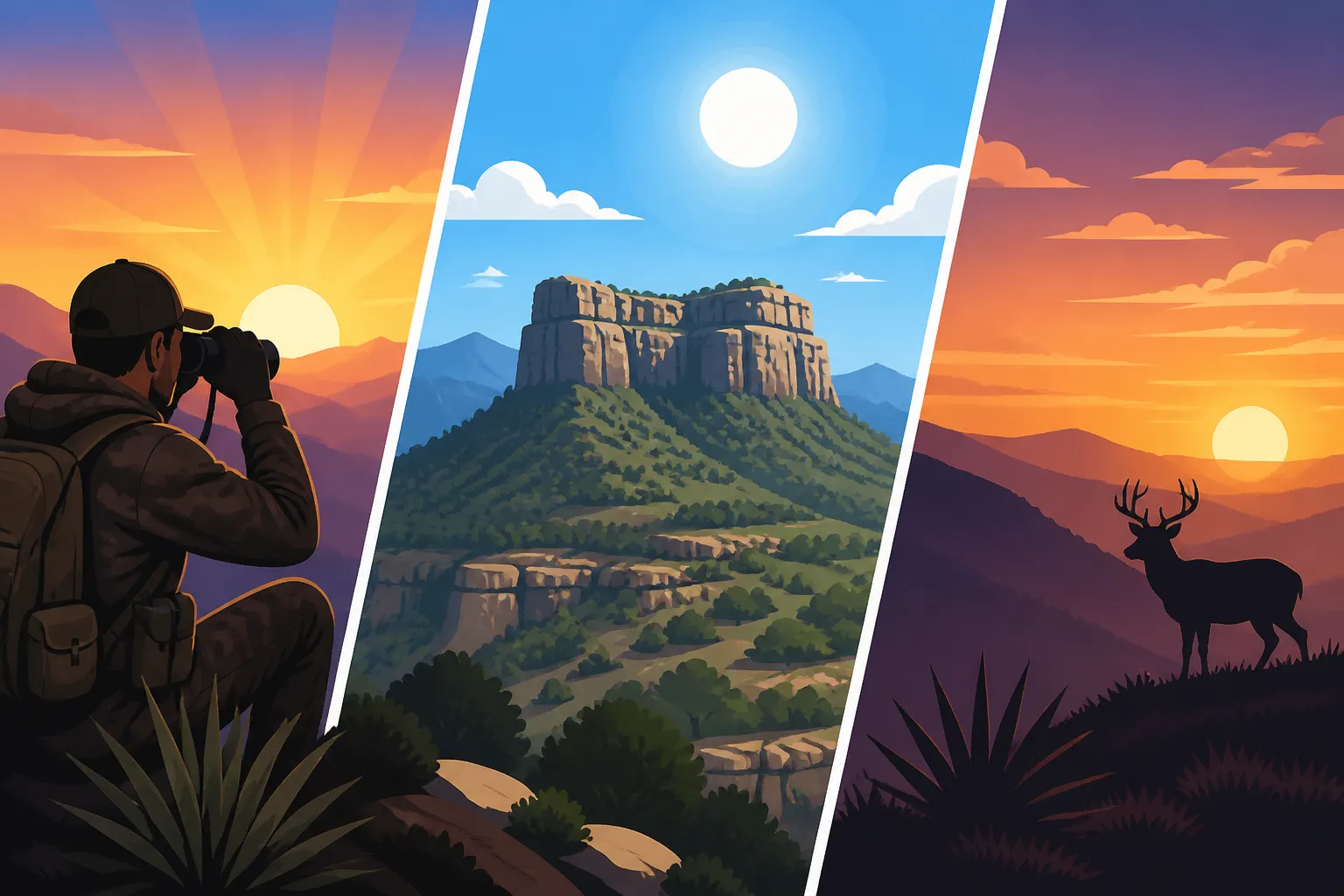
The first hour or two after legal shooting light breaks is arguably the most productive time to glass for Coues deer. As the sun begins to kiss the eastern ridges, illuminating western slopes, deer are often still on their feet, finishing up their nighttime feeding. They're moving from lower elevation feeding grounds back towards their secure bedding areas higher up, or shifting within their bedding zones. The cool morning air, coupled with the soft, indirect light, makes them feel relatively safe.
This is your prime chance to catch a buck before he tucks himself away for the day. You'll want to be on your glassing perch well before dawn, preferably 30-45 minutes before legal light, setting up your Tripod Setup for Glassing From a Ridge. This allows your eyes to adjust to the darkness and ensures you're ready the moment light begins to appear. Focus on glassing western and northern slopes first, as these will be illuminated earliest by the rising sun, and deer will often still be feeding or moving across them. Pay close attention to the fringes of thick brush, the edges of washes, and any saddles or benches that offer easy travel routes. The key is to be still, methodical, and patient, letting your optics do the work. Remember, deer are moving, so you're not just looking for a stationary animal, but also for movement—a flick of an ear, a flash of white rump, or the outline of a body against the skyline.
Dusk: The Evening Push
Just as productive as dawn, the last two hours before darkness fully settles are another critical window. As the sun dips below the western horizon, the temperatures begin to drop, and the shadows lengthen across the eastern slopes. This transition encourages deer to start moving again, emerging from their daytime beds to feed. They'll often move downhill or out from cover towards more open feeding areas.
For evening glassing, concentrate your efforts on eastern and southern slopes first, as these will retain sunlight longer or be the first to fall into shadow, prompting deer movement. Again, you want to be set up and ready to glass well before this prime window. The light will change rapidly, and shadows can play tricks on your eyes, so use your Optics Power for Arizona's Long Desert Sightlines wisely. Many hunters find that the evening push can be even more rewarding than the morning, as deer might feel a bit more relaxed, having spent the day bedded. It's a fantastic time to locate deer that you can then plan a stalk on for the following morning. Be prepared to glass until the absolute last legal minute, as some of the biggest bucks will often only emerge right at the edge of darkness.
Midday: The Strategic Nap and Reposition
While dawn and dusk are the undisputed champions for seeing moving deer, ignoring the midday hours entirely would be a mistake, especially in the Sky Islands. Most hunters will pack up their glassing setup, eat lunch, and head back to camp. But this can be a missed opportunity. During the middle of the day, from approximately 10 AM to 3 PM, Coues deer are typically bedded down, often in heavy cover, seeking shade and security. This doesn't mean they're impossible to find, but it requires a different approach.
Instead of looking for moving deer, you're looking for parts of a deer: an antler tip, an ear, a patch of hide, or an eye reflecting the sun. Focus on shaded slopes, under the canopy of oaks, or in the thickest pockets of brush. This is where high-quality Binocular Size That Survives an All-Day Session and a sturdy tripod become indispensable. While deer aren't moving much, they might shift their position slightly, stand up to stretch, or stand to move to a different bed. These brief moments are your chance. Midday can also be an excellent time to reposition yourself for a better evening glassing spot, moving slowly and deliberately to avoid spooking game, or to scout new terrain using satellite imagery with GoHunt to plan future hunts. Remember, Why Arizona Coues Hunting Is a Glassing Game is all about relentless effort and knowing how to adapt.
Adapting to Conditions: Weather and Pressure
The "best time" to glass isn't a rigid, unchangeable schedule. It's heavily influenced by external factors like weather and hunting pressure. A savvy Arizona hunter knows how to read these cues and adjust their strategy accordingly. Ignoring these variables can lead to unproductive hours behind the glass, while understanding them can unlock new opportunities.
Overcast Days and Stormy Weather
Arizona's weather can be notoriously unpredictable, especially during the monsoon season or in higher elevations. An overcast day, or even light rain, can dramatically alter deer behavior. The diffused light reduces harsh shadows, making deer feel more secure moving during what would typically be midday hours. The cooler temperatures also encourage movement. On these days, deer might stay on their feet longer into the morning and emerge earlier in the afternoon.
If you wake up to a heavily overcast sky or find yourself under the influence of a gentle rain, don't just stick to the dawn and dusk schedule. Consider extending your glassing hours into the mid-morning and starting earlier in the afternoon. Deer might be feeding more consistently, or moving less cautiously between feeding and bedding areas. Be mindful of Reading Wind on a Sky Island Stalk, as shifts in weather often bring shifts in wind, which can either help or hinder your glassing and approach. However, if the weather turns severe with heavy rain, high winds, or lightning, deer will often hunker down, making them incredibly difficult to locate. Safety should always come first in such conditions.
Early Season vs. Late Season Adjustments
The timing of your hunt within the season also plays a huge role. Early archery seasons, often in August or September, present unique challenges. The heat can be brutal, pushing deer movement almost exclusively to the very early morning and late evening, sometimes even into the full darkness of night. During these hunts, you might find deer moving only minutes after legal light and then bedding down incredibly tight for the rest of the day.
As the season progresses into cooler months, especially leading into the late season rifle or archery hunts (often in December or January), deer behavior shifts. The rut for When the Coues Rut Peaks typically peaks in late December through January. During the rut, bucks become far more active during daylight hours, driven by the urge to find does. This means you might find them moving sporadically throughout the day, even in the middle of a sunny afternoon, chasing does or scent-checking areas. The general rule of dawn and dusk still holds, but the midday becomes a much more viable option for finding a cruising buck. Adjust your expectations and glassing intensity based on the time of year you're hunting.
Beyond the Glass: Complementary Tactics
While glassing is undeniably the cornerstone of Why Coues Deer Reward Patience Over Movement, it's not the only tool in your hunting arsenal. Smart hunters combine their meticulous glassing efforts with other tactics to increase their chances of success, especially when deer are being particularly elusive or when conditions aren't ideal.
Still Hunting and Spot-and-Stalk
Sometimes, despite your best glassing efforts, you just can't locate a deer. This is where combining glassing with still hunting can be incredibly effective. Still hunting involves moving very slowly and deliberately through promising terrain, taking a few steps, then pausing to glass and observe for several minutes. This method allows you to cover ground and find deer that might be bedded in thick pockets or draws that are difficult to glass from a distance.
When you do spot a deer, the real work often begins: the spot-and-stalk. This is where your glassing skills transition into precision hunting. Carefully plan your approach, using terrain features like washes, ridges, and dense vegetation to hide your movement. Remember, Using Washes and Draws to Close Distance can be a game-changer in the broken Sky Island country. Always keep the wind in your favor, and move as quietly as possible. Getting within range of a Coues deer is a true accomplishment, requiring patience, stealth, and a deep understanding of the animal's senses. You'll need to know How Far to Stalk a Bedded Coues Buck to ensure an ethical shot, which for bowhunters might mean getting incredibly close.
E-Scouting and Physical Preparation
Before you even step foot in the field, a significant portion of your "glassing" can be done from your computer. E-scouting tools are invaluable for identifying potential glassing points, deer travel corridors, feeding areas, and bedding locations. Using satellite imagery, topo maps, and land ownership layers, you can build a comprehensive plan that maximizes your time once you're on the mountain. GoHunt is an excellent resource for this, allowing you to mark waypoints, measure distances, and understand the lay of the land without burning precious boot leather. This pre-hunt preparation allows you to choose your glassing perches strategically, focusing your efforts on high-probability areas.
And let's be honest, hunting Coues deer in the Sky Islands is physically demanding. You'll be hiking steep, rocky terrain, often carrying heavy optics and a pack. Preparing Physically for a Desert Hunt is non-negotiable. The better shape you're in, the more ground you can cover, the higher you can climb for better vantage points, and the longer you can remain focused behind your glass. Don't underestimate the physical toll of long days on the mountain. Being physically ready means you can maintain your energy and concentration during those critical golden hours, which can make all the difference between seeing a "gray ghost" and just seeing more gray mountains.
Utilizing Technology and Tools for Enhanced Glassing
In today's hunting world, we have access to incredible tools that can significantly enhance our glassing capabilities and overall success in the field. These aren't replacements for fundamental skills, but rather powerful aids that, when used correctly, can give you a distinct advantage.
High-Quality Optics and Tripod Systems
This might seem obvious, but it bears repeating: investing in the best binoculars and spotting scope you can afford is paramount for Glassing Arizona's Sky Islands for Coues Deer. For the vast, open terrain of the Sky Islands, you need powerful, clear optics that can resolve detail at extreme distances. Binoculars in the 10×42 to 15×56 range are excellent for general scanning, but a high-power spotting scope (20-60x or 25-75x) is essential for picking apart distant hillsides and confirming what you've seen.
Equally important is a rock-solid tripod. Trying to hold high-power binoculars steady for hours on end, let alone a spotting scope, is an exercise in futility. A sturdy tripod allows you to keep your optics perfectly still, minimizing shake and eye fatigue. This stillness is what enables you to pick out the subtle details that betray a deer's presence – an antler tip, a horizontal line in a vertical world, or a patch of hide that doesn't quite match the surrounding rocks. Learn to use your tripod effectively, making smooth, methodical sweeps, segmenting the landscape, and systematically picking apart every inch of cover. This systematic approach, sometimes called The Grid Glassing Method, Step by Step, is how dedicated Coues hunters locate these tiny deer in vast landscapes.
Mapping Apps and Digital Scouting Resources
Modern mapping applications, such as Gaia GPS, OnX Hunt, or Basemap, have revolutionized how hunters approach terrain. These apps, often used in conjunction with detailed web-based platforms, allow you to study unit boundaries, public land access, topographical features, and even vegetation types from the comfort of your home. Before you ever head out, you can pinpoint prime glassing locations, potential bedding areas, and travel corridors.
For example, using the terrain layer in a mapping app, you can identify saddles, benches, and draws that funnel deer movement. You can mark potential glassing perches that offer expansive views of these key areas. These tools help you understand The Sky Island Ranges That Hold Coues and where deer are most likely to be. Furthermore, many apps allow you to download maps for offline use, which is critical in remote Sky Island areas where cell service is often nonexistent. Integrating digital scouting into your pre-hunt routine saves you invaluable time in the field, allowing you to focus your physical efforts on high-percentage areas. Remember, a tool like GoHunt can further refine this by offering harvest data and drawing odds specific to Arizona units, helping you narrow down your focus even before you apply for a tag.
Understanding Coues Deer Peculiarities
Finally, to truly excel at glassing Sky Islands, you need to understand the nuances of What Separates a Coues From a Whitetail. They are smaller, often more finely proportioned than their eastern cousins, and their camouflage is incredibly effective in their desert mountain habitat. Their smaller size means you're looking for subtle clues, not big, obvious movements.
Coues deer also tend to be less tolerant of human presence than other deer species. They can often smell, hear, or see you long before you ever know they are there. This is why long-range glassing from a concealed position is so effective – it allows you to observe them without alerting them to your presence. Developing an eye for Coues deer means understanding their preferred bedding spots (often on shady, north-facing slopes with good visibility) and their preferred feeding habits (browsing on a variety of desert plants). The more you learn about their specific behaviors and habitat preferences, the better you'll become at anticipating their movements and knowing precisely where to focus your glass during those golden hours.
| Time of Day | Deer Activity | Glassing Strategy | Pros | Cons |
|---|---|---|---|---|
| Dawn (First 1-2 hrs after legal light) | High activity, moving from feeding to bedding. | Focus on western/northern slopes. Be set up early. | Highest chance to see moving deer. | Light changes quickly, limited time window. |
| Midday (10 AM – 3 PM) | Low activity, typically bedded in cover. | Scan shaded slopes, thick brush. Look for parts of deer. | Less competition from other hunters. | Very challenging to locate deer, often only parts visible. |
| Dusk (Last 1-2 hrs before dark) | High activity, moving from bedding to feeding. | Focus on eastern/southern slopes. Glass until last light. | Excellent chance to see moving deer. | Light fades quickly, can be hard to track. |
| Overcast/Cool Days | Extended activity during midday. | Extend glassing hours beyond typical golden hours. | Deer might move more freely. | Still hard to find if bedded in dense cover. |
Disclaimer
Hunting in Arizona, especially in remote Sky Island areas, carries inherent risks. The information provided in this guide is for informational purposes only and should not replace proper research, safety protocols, or professional guidance. Always consult the most current Arizona Game and Fish Department regulations before heading into the field. Prioritize safety, ethical hunting practices, and respect for wildlife and the environment.